Spend £1,500 on an office chair and still wince by three o’clock. It’s a more common experience than it should be, and the cause is usually the same: the buyer confused “expensive” with “luxury.” Those two things are not interchangeable in office seating. A chair can carry a premium price tag, arrive wrapped in genuine leather, and still leave you in discomfort long before its warranty expires. Choosing well among luxury office chairs comes down to the quality of the materials, the engineering of the mechanism, and how well the chair actually fits your body and your space, and this guide covers all three.
Whether you’re specifying a single chair for a home office, fitting out a boardroom suite, or furnishing the private offices of a boutique hotel, you’ll leave here with a clear shortlist, a confident understanding of materials, and the practical knowledge to buy well in the UK. No fluff. No vague superlatives. Just what you need to make the right decision.
What actually separates luxury office chairs from premium-priced disappointments
The word “luxury” in office seating should describe a measurable standard: exceptional materials, precision-engineered mechanics, and construction that holds up to daily use for a decade or more. What it often describes instead is a generous marketing budget and a high-gloss product page. Before you assess any specific model, you need a mental framework for spotting the real thing.
The craftsmanship hallmarks worth looking for
Run your hand along the seat edge of a well-built chair and you’ll feel no flex in the shell, no gaps at the joins, and no rough transition between the upholstered surface and the frame. These are practical inspection heuristics rather than formal technical criteria, but they’re reliable ones. Stitching on a quality chair is uniform, tightly tensioned, and runs in consistent lines with no puckering at the corners. The base should feel solid when you push down on it, not hollow or slightly springy. Armrests on a genuinely well-made chair move smoothly through their full range and stop precisely where you set them, with no wobble on release. These details separate a chair built to last from one built to impress at first glance.
Why the chair mechanism is the soul of the design
A tilt mechanism is not just a tilt mechanism. The difference between a basic tilt, a synchro-tilt, and a multi-function mechanism is the difference between a chair that reclines awkwardly and one that moves with you naturally. Brands like Steelcase and Herman Miller have built their reputations not primarily on aesthetics but on mechanism engineering: the way the seat and back respond to your movement, the smoothness of the tilt tension adjustment, and the longevity of the pivot points under years of daily use. A beautiful leather shell on a cheap mechanism is a short-lived investment. The mechanism is what you’re actually buying.
Build-quality red flags to spot before you buy
Certain features should give you pause regardless of price point. Bonded leather upholstery is one (more on this shortly). Plastic armrest caps are another: if the top surface of the armrest is a thin plastic overlay rather than a solid moulded or padded surface, it’s likely to crack and fade with regular use, a sign of cost-cutting that rarely stays confined to one component. The third is a gas cylinder that allows lateral movement when you push sideways on the seat; minimal play here is acceptable, but noticeable wobble in a showroom model suggests the tolerances aren’t right. If a display chair already shows these signs, assume daily use will accelerate the problem considerably.
Materials decoded: leather, mesh and fabric in luxury office chairs
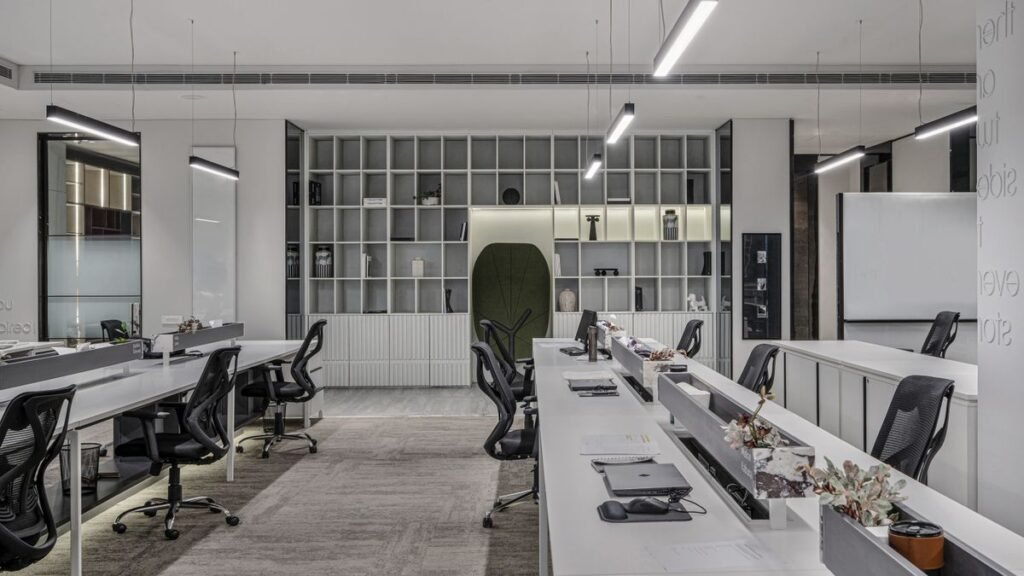
Material choice is arguably the most consequential decision you’ll make when buying a luxury office chair. It determines how the chair ages, how it feels in summer and winter, how easy it is to maintain, and whether it’s still presentable in five years. Here’s what each category actually delivers.
Italian full-grain leather: the benchmark for executive seating
Full-grain leather uses the outermost layer of the hide, the part with the tightest grain structure and the highest natural abrasion resistance. It does not peel: there is no composite surface to delaminate. Over time it develops a patina, a deepening of colour and a softness that improves the aesthetic rather than degrading it. Care requirements are genuinely minimal: periodic conditioning every few months, protection from prolonged direct sunlight, and the occasional wipe-down. For a formal executive office or a traditional boardroom, full-grain leather is not just the best-looking choice; it’s the highest long-term value choice, despite the higher upfront cost. It also sits firmly within the category of premium leather desk chair materials that serious buyers should be specifying.
Bonded leather and why it belongs nowhere near a luxury chair
Bonded leather is a marketing term for a composite material made from leather scraps and fibres bonded together with polyurethane and then pressed onto a fabric backing. It looks like leather at first glance. With regular daily use, the polyurethane surface begins to crack, peel, and flake in strips, not as a quality-tier issue but as a structural one. No amount of conditioning prevents it. Some chairs are sold in the £400 to £800 range with bonded leather upholstery and positioned as luxury or premium seating. They are not. As a rule of thumb, at mid-market prices and above, confirm in writing whether the leather is full-grain, top-grain, or bonded before purchasing any upholstered chair. If the seller can’t or won’t tell you, walk away. For a clear primer comparing different leather grades, see this comparison of full-grain vs top-grain vs bonded leather.
Premium textiles and performance mesh: the modern alternative
High-grade mesh distributes weight evenly across the back, promotes airflow during long sessions, and doesn’t compress or deform with daily use the way foam upholstery does. Chairs such as the Herman Miller Embody (which uses a pixelated seat and flexible back construction rather than conventional mesh) and the Steelcase Gesture represent the upper end of engineered back support, though it’s worth checking the specific material specifications for each model rather than assuming identical construction. Performance fabric upholstery, tightly woven synthetic or wool-blend textiles, offers similar benefits to mesh with better stain resistance and a warmer aesthetic. For contemporary or minimalist workspaces, and for anyone who runs warm or works long hours in summer, quality mesh or performance textile is often the smarter choice than leather. The caveat is that quality varies enormously: weave density, fibre composition, and finishing treatment all affect durability, so ask for technical specifications rather than relying on category names alone. For an independent roundup of top models and buying guidance, consult this best office chairs guide.
Ergonomic features that matter if you sit for eight hours or more
Ergonomics is where the gap between an expensive chair and a genuinely good chair becomes most apparent. A chair that looks authoritative behind a desk but fails to support your spine after three hours isn’t a luxury office chair, it’s an expensive stool with pretensions. Here’s what to evaluate before you commit.
Lumbar support systems: what genuine support actually feels like
Passive lumbar support is a fixed cushion or contour built into the backrest. It may or may not align with your lumbar curve, and it never adjusts to your posture as it changes through the day. Dynamic lumbar support is a different proposition entirely. The Steelcase Leap’s LiveBack technology flexes with your spine as you move, maintaining contact rather than creating a fixed pressure point. The Anthros chair takes this further with individually adjustable pelvic and upper-back supports that can be tuned separately. At the most technical end, the Libernovo Omni offers a motorised back support that forms a custom S-curve to match your spinal profile. Lumbar quality is the single most important ergonomic variable for long-term back health, and the feature most buyers underestimate when choosing by appearance.
Seat depth, tilt tension and armrests: the adjustments most people skip
Seat-depth adjustment allows you to move the seat pan forward or back, so the front edge sits roughly three to four fingers’ width behind the back of your knee. Without this, shorter or taller users end up either perched at the front of the seat or with the edge cutting into their thighs. Tilt tension controls how much resistance the chair offers when you recline: set it too light and you lurch backward; set it too firm and you’re fighting the chair rather than working with it.
The Steelcase Gesture is the clearest reference point for comprehensive adjustability, seat depth, tilt tension, tilt limiter, and 4D armrests that move in, out, forward, backward, up, down, and pivot to support forearms at virtually any angle. Most buyers never adjust these settings after unboxing, and that’s why a £1,200 chair that fits no one properly will feel uncomfortable by the end of the first week.
Headrests: genuine neck support or a design afterthought
A well-integrated headrest adds real value for video calls, reading, and any reclined working posture. A poorly designed one either sits too far back to make contact with your head or locks into a position that only works for a specific height. The Steelcase Gesture’s headrest is height- and angle-adjustable and genuinely tracks the neck across different recline positions. On many other chairs, the headrest is an optional add-on accessory, worth specifying at the point of purchase rather than trying to retrofit later, since aftermarket headrests rarely integrate cleanly with the existing mechanism.
The best luxury office chairs available in the UK in 2026
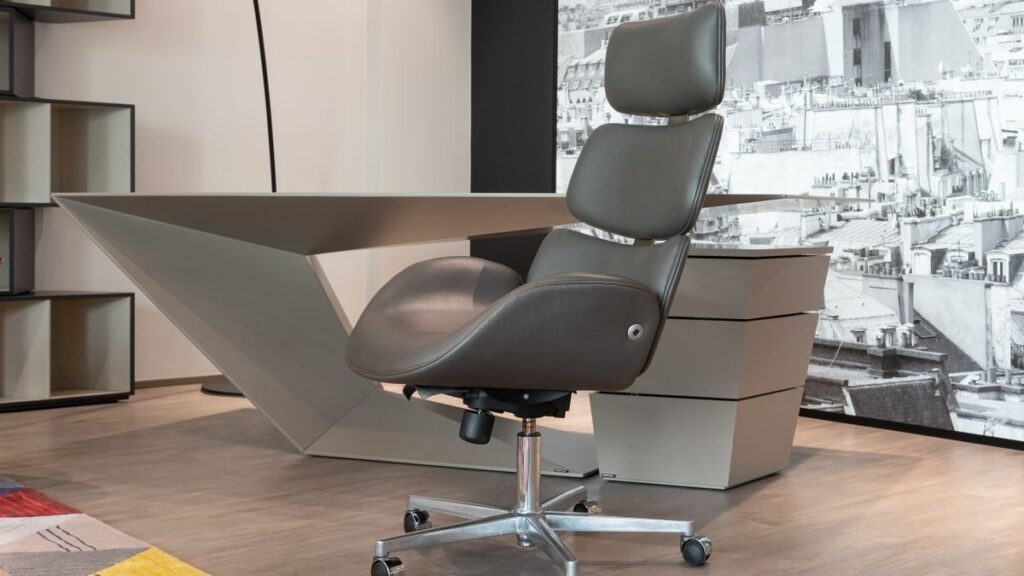
The following chairs represent the strongest options across two categories: designer ergonomic and executive leather. UK prices should be confirmed directly with UK stockists, as list prices differ from US figures and vary by configuration. The Herman Miller Embody, for reference, is listed at £1,775 on Herman Miller UK’s store at the time of writing.
Designer ergonomic chairs worth the investment
The Steelcase Leap, Steelcase Gesture, and Herman Miller Embody are the three most consistently recommended luxury office chairs for serious long-hours work, and each has a distinct character. The Leap delivers the most precise lumbar targeting of the three: its LiveBack system and adjustable lumbar firmness make it the strongest choice for users with existing lower-back concerns or those who need to hold an upright posture consistently. The Gesture is the better choice if your work involves multiple devices, frequent posture changes, or extended arm movement, its 4D arm system is the most adaptable in its class, and its adjustable headrest is notably more functional than the Leap’s optional equivalent. The Embody suits people who naturally sit forward and value spinal micromovement: its pixelated seat and flexible backrest are designed to promote gentle movement rather than holding you in one fixed position. For a specialist review of the Embody’s performance, see this Herman Miller Embody review.
The Haworth Soji is a strong alternative if you want a 12-year warranty at a lower price point than the flagship models, with solid lumbar adjustability and a four-position tilt lock. For UK pricing, contact an authorised Haworth distributor directly; Steelcase’s Amia occupies similar territory and is available through specialist UK retailers at comparable pricing. Both represent genuine value for buyers outfitting multiple workstations without compromising on the features that matter most for all-day use.
Executive leather chairs for a traditional boardroom aesthetic
When evaluating designer executive seating in the leather category, the key questions are: what grade of leather is used, how does the seat depth adjust, what mechanism drives the tilt, and does the chair still look credible in a client-facing environment after two years of daily use? The X-Chair X4 Leather Executive Chair is one of the more transparent options in this space in terms of material specification and mechanism detail, worth reviewing alongside others in the category. The honest trade-off with many leather executive chairs is that they prioritise the visual weight of the piece over ergonomic precision. Those that do both well tend to cost more, adjust more, and specify their leather grade clearly. If a seller is vague about the leather, assume the worst and price accordingly.
Mid-range luxury office chairs that offer strong value
The Haworth Soji and the Steelcase Amia sit just below flagship pricing but deliver genuinely solid ergonomic performance. For UK pricing on both models, request a quote from authorised UK distributors rather than using US list figures, which don’t translate directly to sterling pricing. Both carry proper manufacturer warranties and are available through specialist UK retailers. For buyers outfitting multiple workstations or managing a project budget across several offices, these models represent a sensible step down from the Gesture or Embody without sacrificing the features that matter most for all-day use.
Matching your chair to your office aesthetic
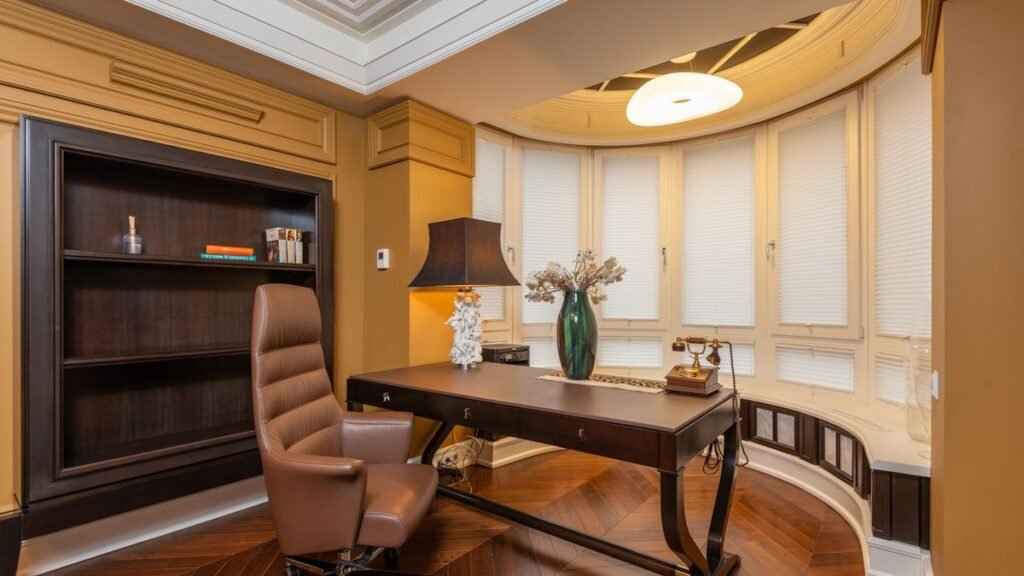
A luxury office chair doesn’t exist in isolation. It sits within a room that has already made design choices, and a chair that contradicts those choices creates visual friction even if the chair itself is excellent. Before specifying, consider whether the chair reinforces the environment or works against it.
Traditional and executive office styles
Full-grain leather executive chairs, deep profiles, and bases with warm timber capping or polished traditional detailing suit a formal, heritage-inspired interior. Parker Knoll remains a useful British benchmark for craftsmanship-led seating in this tradition, a chair that functions as a statement piece rather than a background element. In a client-facing office, material quality is immediately visible and communicates something about the occupant’s standards. A well-specified leather executive chair in this context is not an indulgence; it’s a deliberate signal. If you’re shopping curated retail selections in this tradition, browse Stunning Luxury Chairs“>Luxury Chairs Furniture For Elite Interiors for examples that align with a heritage aesthetic.
Minimalist and contemporary workspaces
Mesh-back ergonomic chairs and clean-lined designs integrate far more naturally into Scandi-influenced, industrial, or glass-and-steel office interiors. The Steelcase Gesture and Herman Miller Embody were designed with visual restraint in mind: neither chair announces itself loudly, which is exactly what a well-curated contemporary workspace needs. Colour and finish choices matter here, neutral tones (black, warm grey, slate) age better in a designed interior than accent colours, which tend to look dated as the broader scheme evolves around them.
When to prioritise function over form (and vice versa)
The decision principle is straightforward once you’re honest about usage. If you’re in the chair for six to eight hours daily, ergonomics must lead the specification, no aesthetic consideration justifies chronic discomfort. If you sit for shorter periods and the chair anchors a client-facing space visually, aesthetic weight becomes a legitimate factor in the decision. Neither priority is wrong. The mistake is applying the wrong framework to the wrong situation.
Where to buy luxury office chairs in the UK and what the warranties actually mean
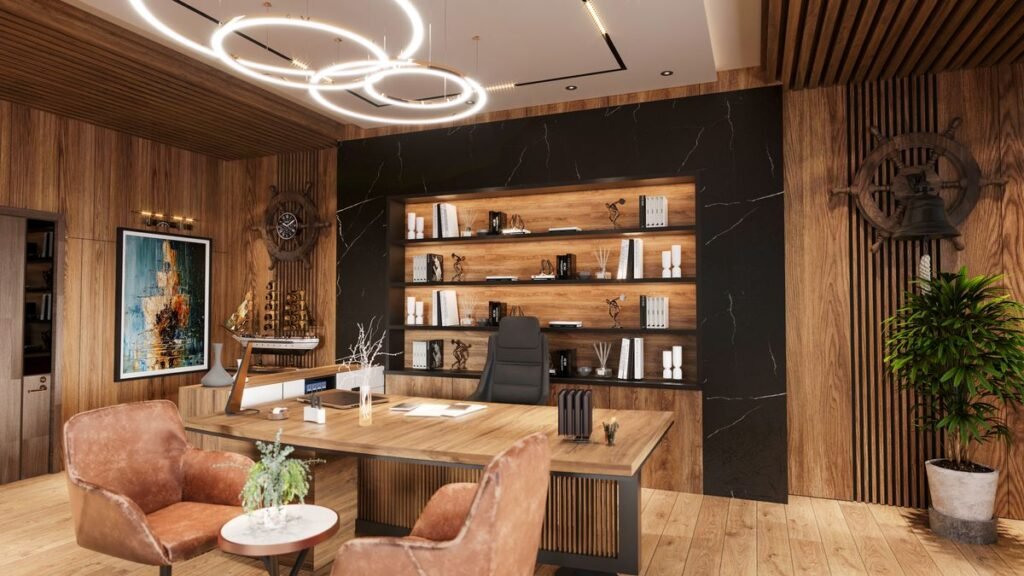
Where you buy matters as much as what you buy. The manufacturer’s warranty and the retailer’s return policy are two different instruments, and understanding both protects you if something goes wrong.
Brand direct versus specialist retailers
Buying directly from Herman Miller UK, Steelcase UK, or Haworth gives you a clean warranty claim route with no intermediary complications. The Herman Miller 12-year warranty covers parts and labour from the day you receive the item, with repairs typically completed within 15 working days of a confirmed claim. Ergohuman UK offers a 10-year warranty as a point of comparison. Specialist retailers such as Workarena and Furniture At Work sometimes provide showroom access, competitive pricing on the same models, and knowledgeable configuration advice. John Lewis is frequently used by buyers who want retailer-backed purchase protection alongside manufacturer warranties. For large-scale or commercial procurement, working directly with the brand’s commercial team often unlocks better pricing and dedicated project support.
Understanding the warranty: what’s actually covered
A 12-year warranty sounds comprehensive, and on the best luxury office chairs it largely is. Read the small print regardless. Most premium warranties exclude wear and tear, cosmetic damage, misuse, and freight damage that occurs after delivery. Bonded leather warranties are often effectively worthless: the material will fail within the warranty period, but the chair manufacturer may classify the delamination as wear rather than defect. For commercial use in the UK, upholstered chairs in hotel and office environments are typically specified against BS 7176:2007 + A1:2011 for low-hazard contract seating, so confirm compliance before purchasing for hospitality or commercial contexts.
Returns, delivery and what to check before committing
Wayfair policies can vary between sellers, check the product page and seller terms carefully before purchasing anything significant. Some specialist retailers and brand showrooms allow chair trials, which is worth requesting for any purchase above £800: your body’s response after 30 minutes of actual sitting tells you more than any specification sheet. For chairs delivered by courier rather than white-glove delivery, inspect the packaging carefully on arrival and note any damage before signing. A chair that arrives damaged and has no straightforward return route is an expensive lesson that’s entirely avoidable with five minutes of pre-purchase due diligence.
When bespoke is the answer: custom luxury office seating for large projects
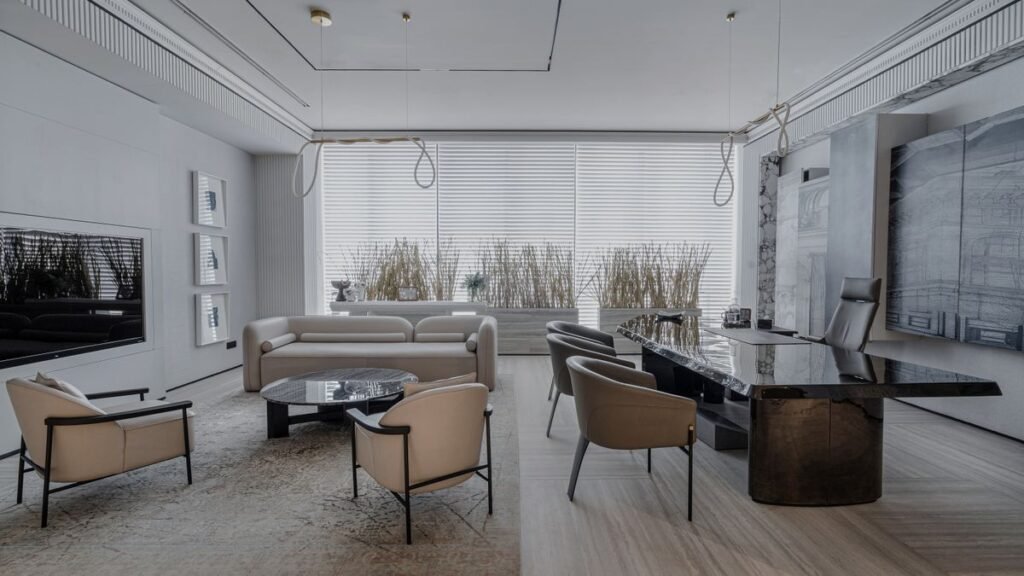
Standard retail solves the problem of outfitting one office. It rarely solves the problem of furnishing thirty rooms in a boutique hotel with seating that aligns with a specific design language, uses matched leathers from the rest of the property, and can be reproduced consistently at scale. That’s a different problem, and it requires a different solution.
Why boutique hotel lobbies and villa studies need something different
A boutique hotel’s private office suites, reading rooms, or executive floors need seating that reads as part of a cohesive interior narrative, not as a recognisable retail product that guests have seen in a showroom. Off-the-shelf luxury chairs produce a curated look within a single space. Custom manufacturing produces a coherent one across an entire property. In high-end hospitality and luxury residential development, where design integrity is part of the product being sold to the end client, that distinction matters considerably. For hospitality-specific inspiration, see this list of 10 Best Luxury Bar Chairs For High-End Hospitality Spaces | YM Furniture.
Factory-direct custom manufacturing: what’s possible at scale
YM Furniture (Foshan Yauming Furniture & Construction Co., Ltd.) is a factory-direct manufacturer with over 17 years of experience producing high-end custom seating for 5-star hotel and villa projects across more than 30 countries, including properties under the Marriott and Sheraton brands. Unlike a retailer, a factory-direct partner at this level can produce luxury office chairs to exact specifications: leather grade, stitch pattern, frame finish, precise dimensions, and branded detailing where required. The process runs from design consultation and sample approval through production, quality control, and logistics, supported by a 70,000 square-metre facility and more than 100 precision machines capable of handling large-scale project volumes. For residential developers or boutique hospitality projects where design coherence and cost efficiency both matter, this route typically delivers significantly better economics per unit than retail sourcing, with savings that can reach up to 70 per cent compared to equivalent-quality UK local market pricing, depending on specification and volume. See their collection of Premium Luxury Office Furniture That Commands Respect.
What to specify when ordering custom office chairs in quantity
The specification decisions that matter most are: upholstery material and grade (full-grain leather, performance textile, or mesh); base finish (polished aluminium, brushed steel, or timber-capped for a warmer aesthetic); mechanism type (basic tilt versus synchro-tilt versus multi-function); armrest configuration; and fire-safety compliance for commercial use. In the UK, luxury desk chairs for hotel and commercial environments need to meet BS 7176:2007 + A1:2011 for low-hazard contract seating, so confirm and document this before production begins. Working with the manufacturer’s design team at the brief stage, rather than after samples are already in production, avoids the costly revisions that derail project timelines. For official guidance on the regulatory approach to domestic upholstered furniture fire safety, consult the government consultation on fire safety regulations.
How to choose luxury office chairs for your budget and workspace
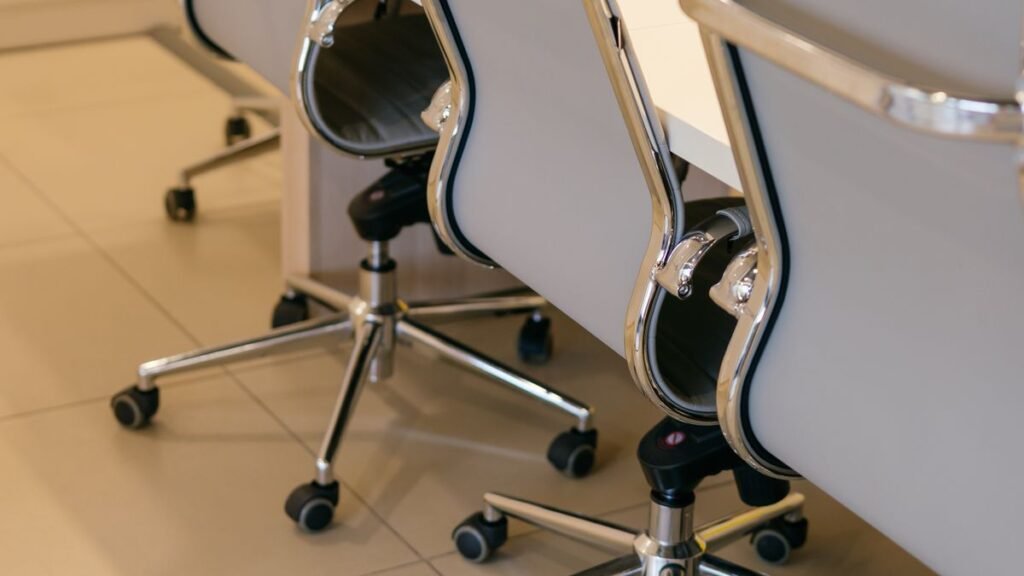
By this point you have the full picture. This section turns it into a decision. Here’s how the market maps by budget, followed by the questions that eliminate most of the remaining indecision.
Budget tiers and what they realistically get you
- Under £500: Genuine luxury options are limited. Look for premium textiles with a solid mechanism rather than bonded leather with a heritage-sounding brand name.
- £500 to £1,000: Steelcase Amia and Haworth Soji territory. Strong ergonomics, proper materials, manufacturer warranties that mean something.
- £1,000 to £2,000: Herman Miller Embody (£1,775 UK list), Steelcase Leap and Gesture. Best-in-class ergonomic engineering and material quality across both leather and mesh configurations.
- Above £2,000: Full-grain leather executive chairs, limited-edition designer pieces, or entry-level bespoke commissioning for multi-unit projects.
Questions to answer before you commit
How many hours per day do you actually sit in this chair? If the honest answer is six or more, clinical ergonomics should lead the specification. If it’s two to three, good support with a strong aesthetic can share equal billing. What is the dominant design language of your office, and does the chair reinforce it or create friction? A well-chosen luxury office chair should feel inevitable in its setting, not like a category decision grafted onto someone else’s interior. Are you buying for yourself or specifying for multiple spaces? Once you’re ordering in quantity, factory-direct custom manufacturing offers better design control and better cost per unit than retail sourcing at the same quality tier.
A quick shortlisting approach
Start by establishing your daily sitting hours and letting that determine whether ergonomic precision or aesthetic weight leads the specification. Confirm your material preference: full-grain leather for formal and traditional contexts, quality mesh or performance textile for contemporary settings and long hours. Set a firm budget before you look at product pages, not after. Then test in person wherever possible, the difference between a chair that fits your body and one that almost fits is something you can only feel, not read. For large-scale projects, add one more step before defaulting to retail: contact a factory-direct manufacturer and explore bespoke options. A well-chosen luxury office chair is a ten-plus-year investment. It deserves the same rigour you’d apply to any other significant business decision.
Bringing it all together
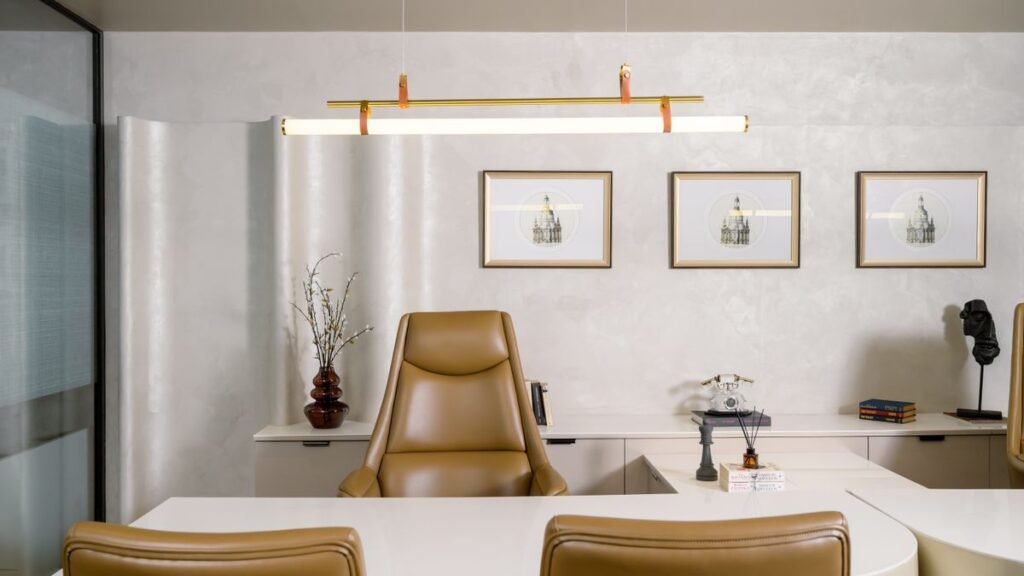
By now you should be able to name two or three chairs that fit your actual requirements, articulate why materials and mechanism quality matter more than price alone, and know exactly where to buy with confidence in the UK. The framework applies consistently: define your usage, match your material to your context, verify the mechanism, and check the warranty before you sign anything.
For anyone furnishing a boutique property, a luxury residential development, or a hospitality project at scale, the most important takeaway is this: retail is not your only option, and for large-scale projects it’s rarely your best one. Bespoke factory-direct luxury office chairs, specified correctly and manufactured by an experienced partner, deliver better design coherence and better economics than anything you’ll find on a retailer’s website. It’s worth a conversation before you commit to a retail purchase.
Across every price point in this market, there are luxury office chairs that genuinely deliver, and others that look the part while falling short on the details that matter. The buyers who end up with the right chair are invariably the ones who knew what to look for before they started browsing.