Sourcing furniture for a luxury hotel is one of the most consequential procurement decisions a hospitality project makes. Get it wrong and you face brand-standard rejections, fire safety non-compliance, or furniture that starts failing in year three. Get it right and you deliver rooms that photograph brilliantly, withstand daily commercial punishment, and hold their value across the full asset lifecycle. Procurement teams evaluating luxury hotel room furniture manufacturers will find that most buying guides either list brand names without context or skip the practical detail entirely. This one does neither.
What follows gives procurement managers, hotel developers, and interior designers the benchmarks they actually need: which manufacturers hold the right certifications, what a realistic per-room budget looks like, how long production genuinely takes, and which questions belong in every RFP. It also covers a segment of the market most UK buyers underestimate. Factory-direct manufacturers supply Marriott, Sheraton, and Pullman to the same specification at a fraction of the domestic price. By the end, you will have a clear shortlisting framework and the confidence to go to market.
What separates genuine luxury hotel furniture from standard contract ranges
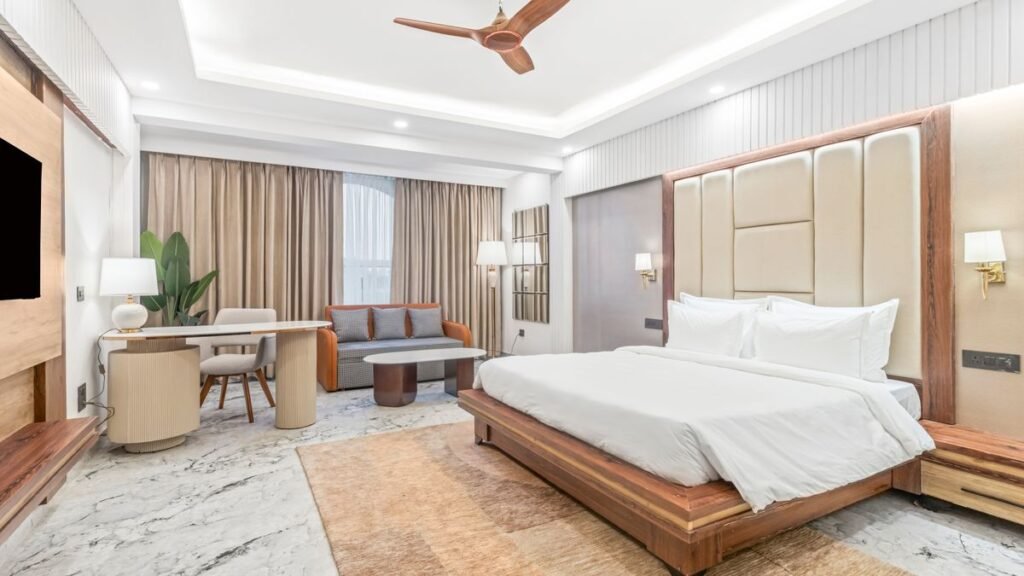
Before you evaluate a single supplier, you need a firm grasp of what luxury specification actually means in physical terms. Marketing language in this sector is generous. “Hospitality grade” and “contract quality” appear on product sheets covering everything from solid hardwood joinery to particleboard units with iron-on edge tape. Knowing the difference protects your project at brand-standard sign-off and at the five-year mark when cheaper furniture starts to degrade.
Construction and material benchmarks
A genuine luxury specification starts with the substrate. Solid hardwood or premium engineered timber with humidity-resistant joinery is the baseline for casegoods; drawer boxes should be dovetail-jointed or machine-cut to a tolerance that eliminates racking over repeated use. Upholstered pieces should feature high-density foam with a commercial-grade Martindale rub count appropriate to the upholstery location and hotel turnover, request test certificates confirming the specific rating, as requirements vary by application and brand standard. Hardware should be precision-machined and specified to resist loosening under sustained commercial use; ask suppliers to provide the test method and cycle count results. Mid-market contract furniture uses particleboard cores with melamine foil and staple-gun upholstery construction. It looks identical in a photograph. It does not perform identically over a 10-year commercial lifecycle.
Surface finish and durability ratings
Luxury hotel finishes must withstand daily cleaning with commercial disinfectants without crazing, lifting, or hazing. That rules out most residential-grade lacquers immediately. Look for cross-cut adhesion testing on painted and veneered surfaces, and ask for Martindale test results on all upholstery fabrics rather than relying on the supplier’s verbal assurance. Furniture in high-turnover guestrooms should be rated for a minimum 10-year commercial lifecycle, and any credible manufacturer can show you the test data that supports that claim.
Why brand-standard compliance matters for 4- and 5-star properties
Hotel brand standards from Marriott, IHG, Hilton, and their peers specify not just aesthetics but structural load ratings, drawer pull-force limits, and finish durability thresholds. Manufacturers who regularly supply these brands understand the documentation trail required: test certificates, finish specifications, and signed-off sample boards. Those who do not will cause costly delays during brand-standard sign-off, and those delays always land at the project manager’s door. Only shortlist manufacturers who can demonstrate a track record with the relevant brand families.
UK fire, safety and durability compliance: the non-negotiables
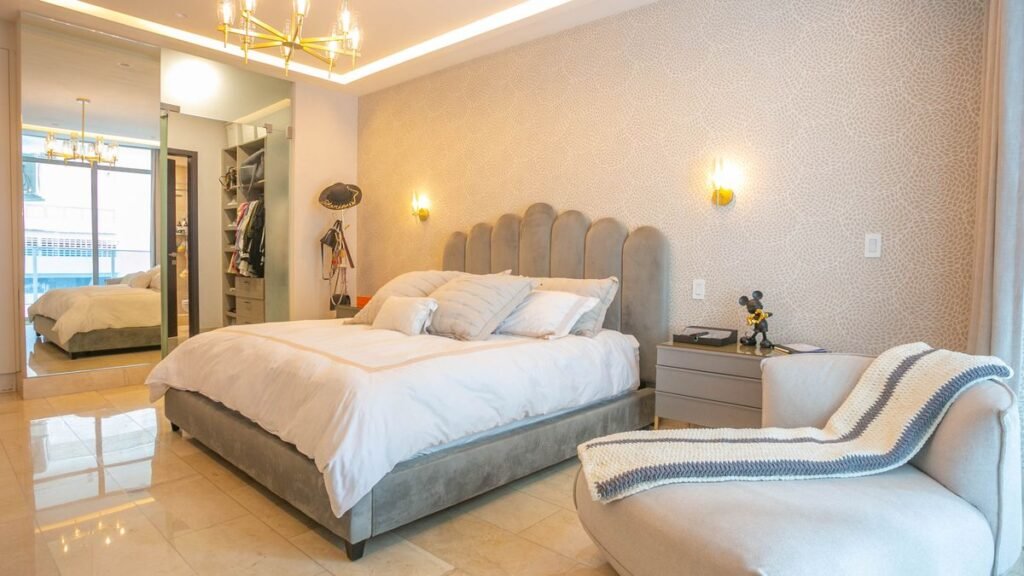
Compliance is not a box-ticking exercise for hotel furniture. It is a legal requirement, a brand-standard prerequisite, and a liability issue. Any manufacturer who cannot provide third-party test documentation to the relevant British Standards is not appropriate for a UK hotel project, regardless of how good the samples look.
Fire safety standards for hotel bedroom furniture manufacturers
BS 7176 governs non-domestic upholstered furniture and is the primary standard for hotel lounge seating, chairs, sofas, and headboards. For hotel use, the applicable level is medium hazard, which requires the upholstery composite to pass the cigarette test, the match-flame test, and the Crib 5 test, formally known as BS 5852 Ignition Source 5. The critical point is that Crib 5 must be passed on the actual upholstered composite, cover and filling together, not on the fabric in isolation.
BS 7177 applies to mattresses, divans, and bed bases in sleeping accommodation, and the hotel requirement here is also Crib 5 compliance. Ask every supplier for the third-party test certificate, not a self-declaration, and confirm the certificate covers the actual cover-and-filling combination specified for your project. Verify whether your specific brand or project requires additional certification beyond these standards before treating any rule as absolute.
Structural and durability standards
BS EN 16139 governs strength and durability testing for non-domestic seating, while BS EN 16121 covers storage furniture. Beds in certain configurations reference BS EN 1725. When you receive a supplier’s compliance pack, check whether these test reports come from an independent test house or are self-certified. Self-declaration is not equivalent to third-party testing, and brand-standard sign-off teams know the difference. If a supplier cites self-declaration, ask which test house conducted the underlying testing and request the raw test report.
Quality management and environmental certifications
ISO 9001 (quality management) indicates that a manufacturer operates structured production processes with documented controls rather than relying on individual craftsmanship alone. ISO 14001 (environmental management) shows a documented system for monitoring and reducing environmental impact, including chemical emissions from finishes and adhesives. These certifications are widely preferred by major hotel brands as evidence of auditable systems, and holding them typically accelerates vendor approval during brand onboarding, though specific requirements vary by brand and project, so verify what your particular scheme mandates. For timber components, FSC and PEFC chain-of-custody certification is increasingly a requirement for hotel groups with ESG commitments. Ask for the certificate number and verify it against the relevant certification body’s database, a logo on a brochure is not the same as a valid, current certificate. Manufacturers who hold all three of these certifications have demonstrably invested in auditable systems, which is worth material weight in any shortlisting process.
Luxury hotel room furniture manufacturers serving the UK market
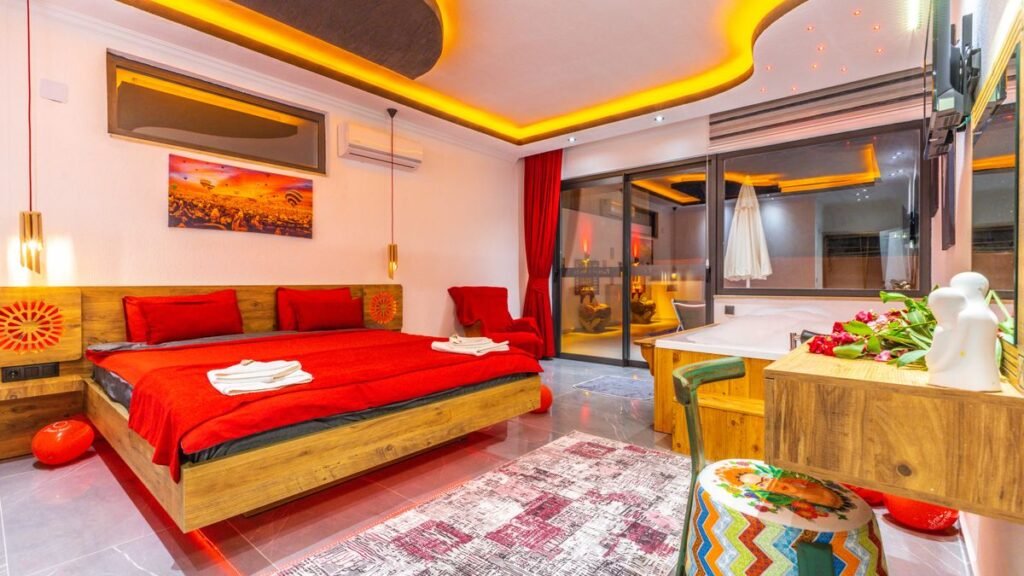
The UK market for luxury hotel furniture organises itself clearly into four specialist categories. Understanding which category a manufacturer sits in tells you immediately whether they are relevant to your project’s scope.
Guestroom casegoods and bespoke bedroom specialists
Curtis Furniture is widely cited among the larger UK bespoke hotel bedroom furniture manufacturers, with a strong position in guestroom casegoods and fitted bedroom sets for major hotel groups. Bourne Furniture serves global hotel chains with bedroom casegoods and extends into restaurant and public-area furniture. RHA Furniture specialises in design-led lounge seating, bespoke headboards, and integrated casegoods for boutique hotels and serviced apartments. Furnotel focuses on fine-quality bedroom casegoods and bespoke joinery. Each of these manufacturers is appropriate for projects where UK production proximity, design collaboration, and phased delivery are the priority requirements.
Luxury upholstery, soft seating and statement pieces
George Smith and The Sofa and Chair Company are well-regarded names when a project requires individually handcrafted upholstered pieces with bespoke fabric specifications. Lugo operates in a similar space, with a stated commitment to recyclable and biodegradable materials and FSC-acknowledged timber sourcing. The lead times and minimum order quantities from these makers reflect the level of craft involved, and they are most appropriate when statement pieces rather than full-room volumes are the requirement.
Banqueting, conference and public-area contract suppliers
Burgess Furniture, Knightsbridge Furniture, and Morgan Furniture are names that appear consistently in public-area and events-space procurement. These are high-volume, multi-configuration contract upholstery and seating specialists, strongest in meeting rooms, ballrooms, and flexible dining spaces. They are distinct from hotel bedroom furniture manufacturers in both their product range and their production model, and should not be evaluated against guestroom casegoods suppliers on the same criteria.
Integrated FF&E and full fit-out suppliers
LiDR and Dynamic Contract Furniture sit in the full FF&E coordination category, managing bedroom furniture, vanity units, feature walls, and public-area pieces within a single supply relationship. One-stop coordination comes with a premium, and these suppliers typically subcontract manufacturing rather than producing in-house. The value is in project management and single-point accountability, not in unit price or customisation depth.
Why factory-direct manufacturers are reshaping the economics
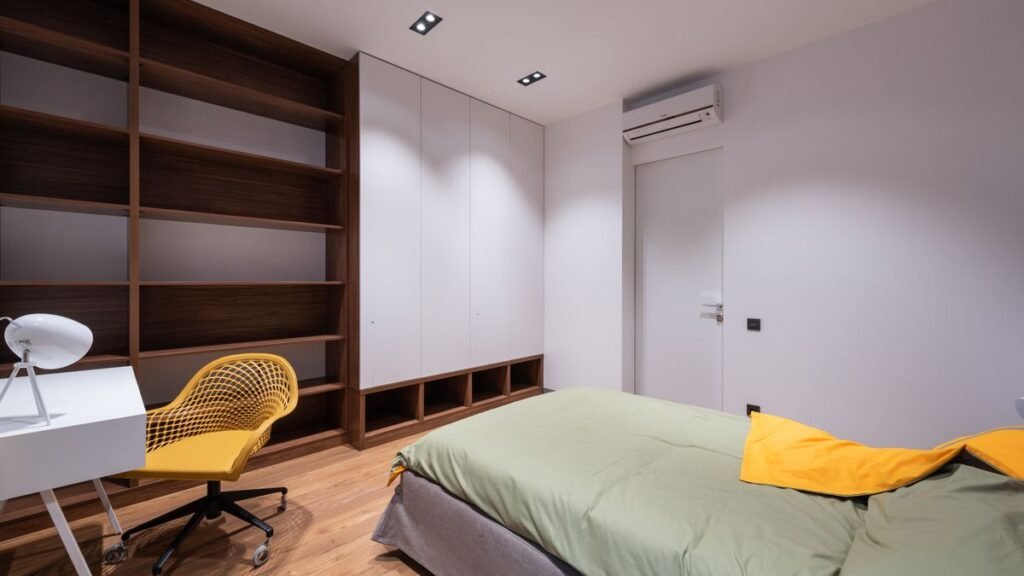
Most UK hotel furniture buyers have worked with either domestic manufacturers or local importers who add their own margin on top of overseas production costs. Factory-direct procurement eliminates that layer entirely. The buyer deals directly with the production facility, which means full visibility of materials, quality control processes, and lead times, and pricing that reflects actual manufacturing cost rather than distribution margin.
How YM Furniture delivers brand-standard output at scale
YM Furniture (Foshan Yauming Furniture and Construction Co., Ltd.) is a representative case study for this model. The company states 17 years of specialisation in hotel and high-end residential furniture, a 70,000 m² production facility in Foshan, and delivery to Marriott, Sheraton, and Pullman properties across more than 30 countries, request certificates and project references to verify these claims directly. The commercial proposition of factory-direct luxury hotel furniture suppliers at this scale is the elimination of importer margin on large-volume orders; for a 100-room project, that difference can be material enough to upgrade the FF&E specification throughout, fund additional rooms, or reallocate budget to public areas. Any precise percentage saving depends on specification matching and your existing supply chain, so request a like-for-like landed-cost comparison before drawing conclusions.
YM Furniture states that it holds ISO 9001, ISO 14001, and ISO 45001 certifications, request the certificate numbers and verify them with the issuing body. A 20-day model room customisation programme, backed by a 5,000 m² showroom with fully furnished mock-up rooms, gives buyers a tangible physical review before full production begins. That kind of pre-production review is a meaningful risk-reduction tool, comparable to what any serious domestic manufacturer should offer.
What factory-direct sourcing means for compliance and logistics
The practical questions UK buyers ask about factory-direct procurement are predictable: how does fire safety compliance work, and what does international logistics add to the timeline? On compliance, luxury hotel furniture suppliers operating at this level can supply to BS 7176 and BS 7177 specifications with third-party test documentation, provided the buyer specifies this requirement at RFP stage rather than assuming it. On logistics, ocean freight from Foshan to UK ports typically adds 30 to 45 days door-to-door, so the overall procurement schedule needs to account for that window from the outset.
The full landed cost calculation is: ex-works price, plus origin charges, ocean freight, UK customs duty (typically 0% to 5.7% for wooden furniture under the UK Global Tariff depending on commodity code), 20% import VAT, and inland delivery. Even with those additions, the cost advantage over domestic supply on large-volume orders can be substantial. A one-stop model covering design, production, quality control, logistics, and installation removes the coordination burden that typically makes international sourcing feel complex.
Lead times from luxury hotel room furniture manufacturers: building your procurement timeline
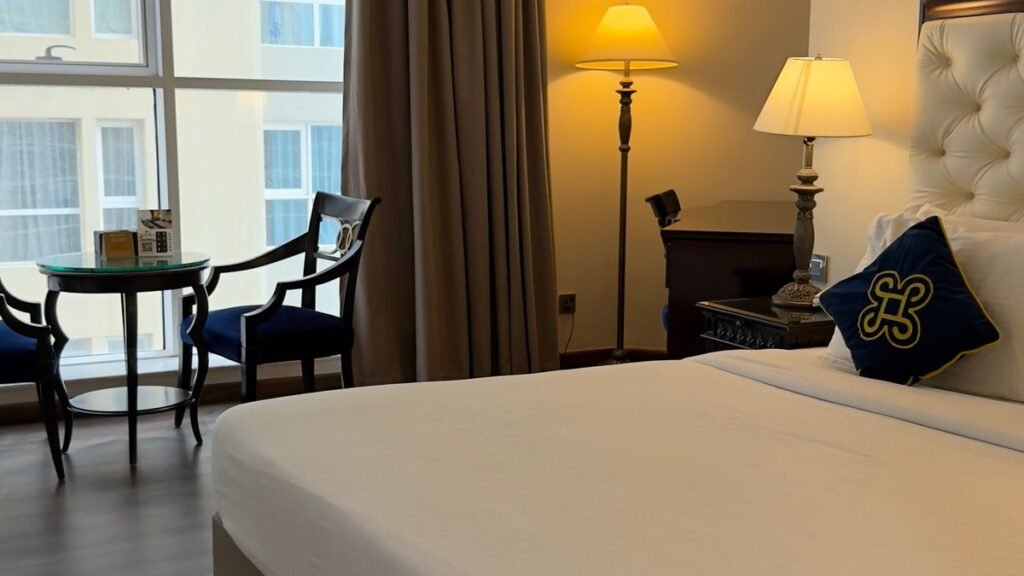
Lead time misjudgement is the most common cause of hotel opening delays related to furniture procurement. The figures below are planning estimates based on typical industry practice, not guarantees from any individual supplier.
Typical lead times from UK manufacturers
UK bespoke hotel furniture manufacturers generally quote 6 to 8 weeks from design approval for standard production runs. Complex or large-scale projects extend to 12 to 16 weeks. Phased hotel refurbishments or new builds may require rolling delivery over three to six months, which means purchase orders need to be issued considerably earlier in the programme than most project managers initially anticipate. Build in a contingency buffer of at least two weeks on every phase, and issue purchase orders no later than the point when your design drawings are at 80% completion, not 100%.
How factory-direct timelines compare
Factory-direct manufacturers operating at scale can, depending on production capacity and scheduling, achieve competitive production timelines for large orders, though it is important to factor ocean freight into the overall programme. The 30 to 45 days of door-to-door shipping to UK ports means the total delivery timeline is often longer than domestic supply when freight is included. YM Furniture’s stated 20-day model room capability demonstrates that rapid prototyping before full production is achievable. For the main production run, build freight time into the programme from the moment the factory-direct route is selected, not retrofitted once production is complete.
Red flags in lead time promises
Any supplier quoting under four weeks for a fully bespoke guestroom furniture package without an existing pre-approved prototype is either overpromising or describing a modified-standard product rather than true bespoke manufacture. Similarly, a domestic manufacturer quoting two-week lead times for a 200-room project is worth serious scrutiny: ask specifically about their current order book and workshop capacity allocation before accepting that figure.
Customisation depth: what genuine bespoke capability actually looks like
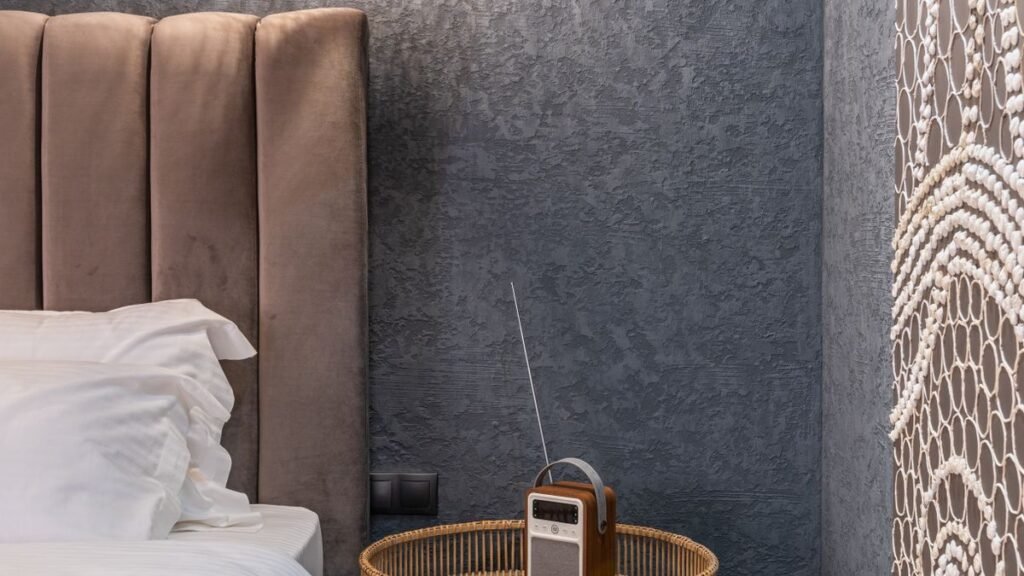
True bespoke capability means the manufacturer can work from your interior designer’s drawings, adapt dimensions to non-standard room layouts, produce custom finishes that match brand colour palettes, and maintain consistency across hundreds of units. It does not mean selecting from three wood stain options and two fabric weights.
Design input and specification control
Ask every prospective manufacturer how many custom finishes they run concurrently, whether they hold material samples in-house, and what their amendment process is once production has started. A manufacturer with genuine customisation depth will have a documented specification control process, a named design liaison, and a clear protocol for managing changes during production. One that cannot articulate this process clearly will cause problems the moment your interior designer requests a finish adjustment after samples have been approved.
Material options and finish quality
A credible luxury hotel furniture supplier should offer solid hardwood and premium veneer options, leather and performance-fabric upholstery, marble and stone surfaces for bedside and writing tables, and hardware in brass, nickel, or custom powder-coat. Manufacturers who can only offer a preset menu of options are not delivering genuine bespoke capability; they are delivering a semi-custom product. The distinction matters when your brand-standard specification calls for a specific finish that does not appear in anyone’s standard catalogue.
Model rooms and pre-production review
The model room is one of the most important risk-reduction tools in hotel furniture procurement, and it is non-negotiable on any project above 50 rooms. It allows the client, interior designer, and brand-standards team to review the physical product, test drawer action, examine finish quality under different lighting conditions, and confirm dimensions in context before a single production unit is cut. Ask every shortlisted manufacturer how they handle the model room stage, who bears the cost, and what the amendment process looks like after the review. Manufacturers who push back on model room requirements are telling you something important about their confidence in their own output.
Per-room cost benchmarks and what drives the price difference
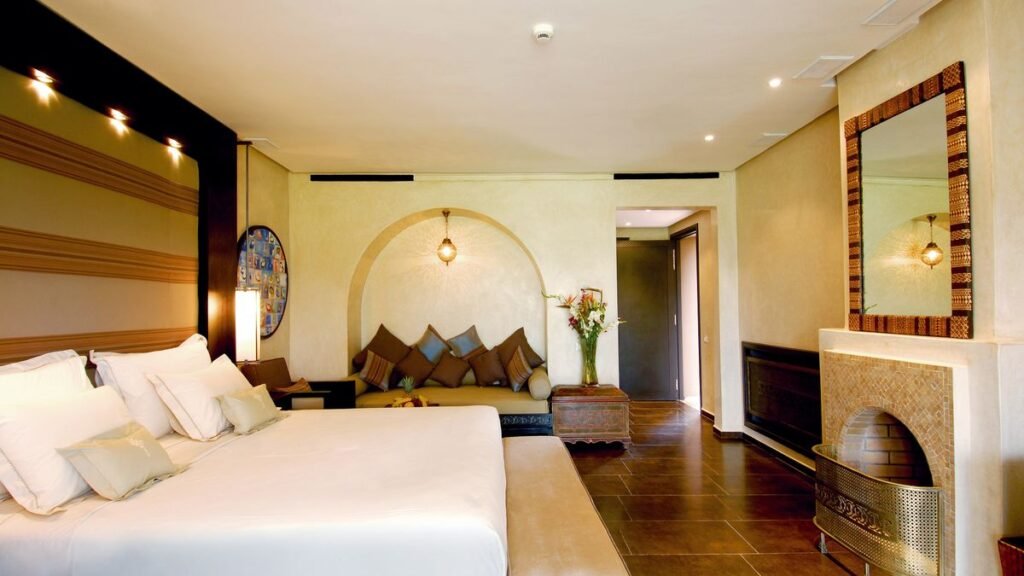
Cost per room is the number every developer wants before anything else, and it is also the number most susceptible to misleading comparison. The figures below are planning benchmarks; actual costs depend heavily on specification, room category, finish complexity, and volume.
What luxury hotel bedroom furniture costs from UK manufacturers
A realistic planning figure from UK bespoke hotel bedroom furniture manufacturers for a fully furnished luxury guestroom, bed, headboard, bedside tables, wardrobe, desk, and seating, sits in the range of £2,000 to £5,000 per room at procurement level. Bespoke specification with fitted joinery moves costs higher: a high-end fitted bedroom suite with custom wardrobes, bridging units, and vanity areas can reach £10,000 to £20,000 per room depending on the linear metreage of joinery involved. Bespoke specification typically adds 15% to 30% over a modified-standard alternative.
How factory-direct pricing changes the economics
Factory-direct procurement from a manufacturer operating at this scale can produce meaningful per-room savings compared to UK market rates on an equivalent specification. The full landed-cost calculation must include the ex-works price, ocean freight, UK import duty (typically 0% for wooden furniture under the UK Global Tariff, though verify the applicable commodity code), 20% import VAT, and on-site installation costs. Even accounting for all of those additions, the per-room saving on a large-volume order can be substantial, request a worked landed-cost comparison from any factory-direct candidate against your existing UK quotes on a matched specification. The key discipline is comparing like for like: matched specification, matched finish quality, matched warranty terms, not headline unit prices on different products.
Where buyers misjudge total cost of ownership
Upfront unit price is not the only variable that matters. Warranty terms, replacement part availability, and the manufacturer’s ability to supply matching pieces for future refurbishments all affect long-term cost significantly. A lower initial price with no long-term supply commitment can cost more over a 10-year asset lifecycle than a slightly higher price with a genuine ongoing supply relationship. Ask every shortlisted manufacturer to specify their warranty period, their replacement-part lead time, and how long they retain the specification records for a completed project.
Sustainability credentials: the questions to ask every supplier
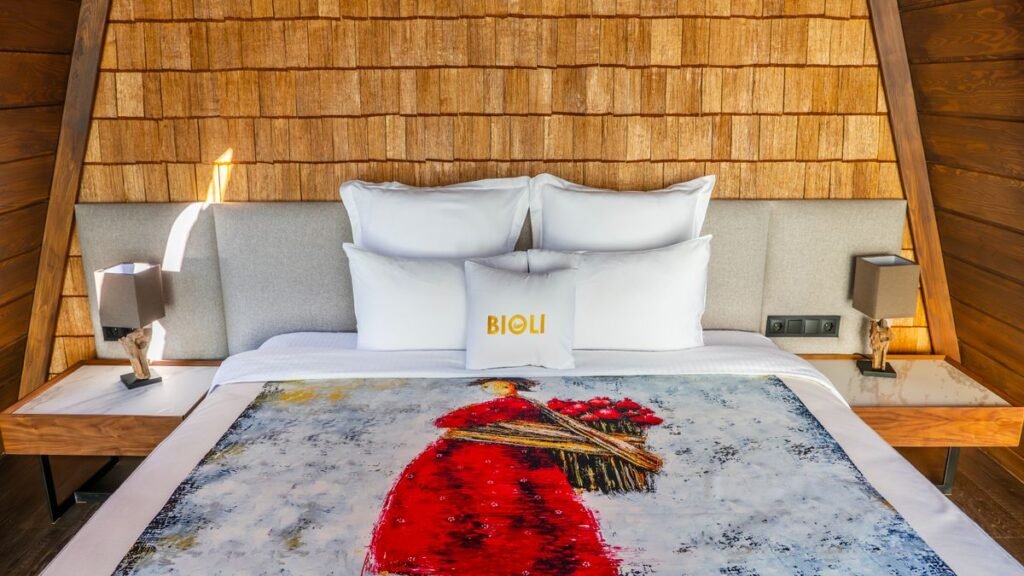
Sustainability is no longer a differentiator in hotel furniture procurement; it is a baseline expectation from major hotel brands, BREEAM assessors, and ESG-conscious investors. The questions below separate suppliers with genuine credentials from those with a green logo on their brochure.
Materials and timber sourcing
FSC and PEFC chain-of-custody certification for timber components is the starting point for any hotel group with meaningful ESG commitments. Request the certificate number and verify it against the relevant certification body’s database. For upholstery fabrics, OEKO-TEX Standard 100 certification confirms the material has been tested for harmful substances. Cradle to Cradle and GREENGUARD Gold are credible certifications for finished furniture marketed as low-emission, and both carry meaningful third-party verification rather than self-declaration.
Finish chemistry and VOC content
Water-based lacquers and low-VOC adhesives are standard practice among credible luxury manufacturers. Ask for the VOC content specification on all finishing materials, not a general sustainability statement. Manufacturers who hold ISO 14001 have a documented system for monitoring and reducing chemical emissions, which provides meaningfully more assurance than a marketing claim. If a supplier cannot provide a material safety data sheet for their finishing system, treat that as a significant concern.
Sustainability reporting for hotel brand compliance
Major hotel brands increasingly require suppliers to provide sustainability documentation as part of their approved vendor process. Ask manufacturers whether they can supply a product-level environmental data sheet or contribute to a project-level BREEAM submission. Marriott, for instance, prioritises FSC-certified wood and expects suppliers to be able to provide compliance evidence on request. This is a practical differentiator in the vendor approval process, not merely an ethical position: manufacturers who have invested in these systems save your procurement team significant time during brand-standard onboarding.
How to build your RFP and shortlist suppliers with confidence
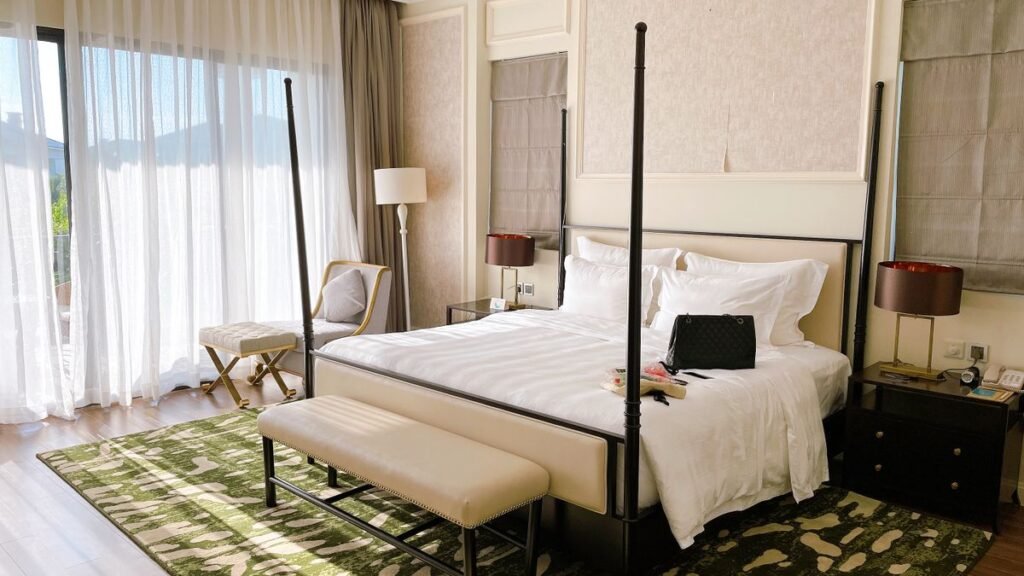
A well-structured RFP generates comparable responses. A poorly structured one generates marketing materials dressed up as proposals. The difference is in the specificity of what you ask for.
The essential questions every RFP must include
Every RFP for luxury hotel room furniture should require written responses on the following:
- Certifications held, including ISO 9001, ISO 14001, BS 7176 and BS 7177 third-party test documentation (specifying the relevant BS number for each product category), and FSC or PEFC chain-of-custody numbers
- Lead time from design approval to delivery for your specific project volume
- Minimum order quantity by product category
- Warranty terms and after-sales support, including replacement-part lead times and how long specification records are retained
- Reference projects in the same hotel category (4- or 5-star), with contact details
- Model room process, associated costs, and amendment procedure after review
- The name and direct contact of the project manager who will own your account
Suppliers who cannot answer these questions in writing within your RFP timeline are not operationally ready for a serious hospitality project.
How to evaluate responses and weight your criteria
Not all criteria carry equal weight in the evaluation process. Fire safety compliance and certification are pass/fail: any supplier who cannot demonstrate BS 7176 and BS 7177 compliance with third-party test documentation should be eliminated from consideration, subject to confirmation of your specific brand or project requirements. Lead time and minimum order quantity can be negotiated within a range. Cost benchmarks should be compared on a like-for-like specification, not on quoted unit prices for products with different constructions. Score responses across four categories: compliance and quality assurance, customisation capability, commercial terms, and reference project quality. Weight compliance and quality assurance at no less than 40% of the total.
Structuring the shortlist for the final decision
A practical shortlist for any luxury hotel room furniture project should contain no more than three suppliers, each evaluated against the same specification document. One should typically be a UK specialist for shorter-lead or high-complexity bespoke joinery items. One should be a factory-direct manufacturer for the main guestroom casegoods and upholstery package where volume justifies the procurement model. The final award decision should rest on a physical review of samples or a model room sign-off, not on brochures or digital renders. Any supplier who cannot provide a physical sample or model room review before contract award is asking you to take a risk that is entirely avoidable.
Making the decision with confidence
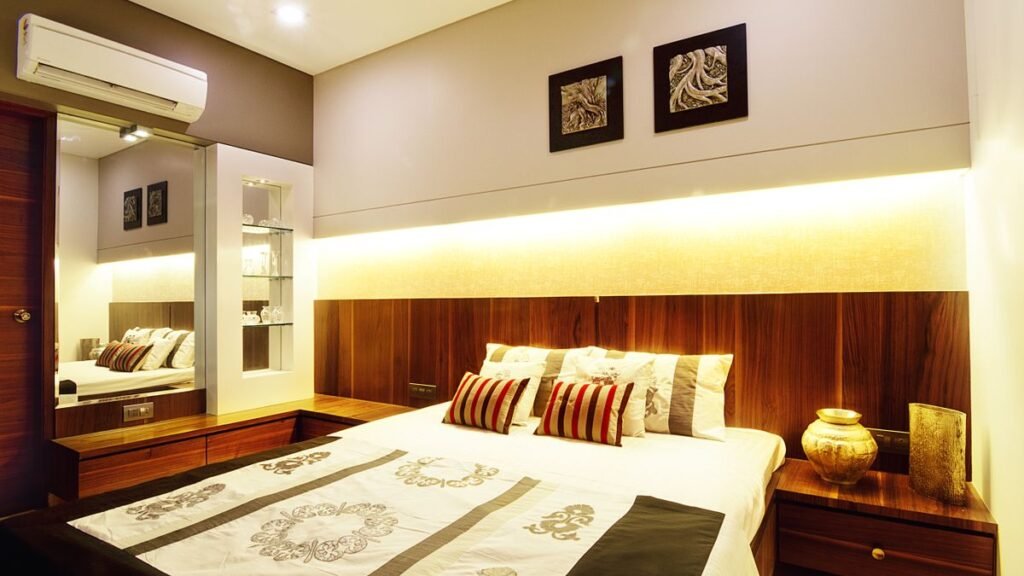
Four practical considerations determine the outcome of luxury hotel furniture procurement. Establish which quality and compliance benchmarks are non-negotiable for your project: BS 7176 and BS 7177 Crib 5 compliance is not optional, and ISO-certified quality management is a widely accepted assurance standard for large-scale orders, verify the specific requirements with your brand and project team. Match the supplier category to your project’s volume and customisation requirements: a boutique hotel with 40 rooms has different needs from a 250-room branded property, and the shortlisting criteria should reflect that distinction. Build your budget on a fully landed cost basis: per-room planning figures of £2,000 to £5,000 for UK hotel bedroom furniture manufacturers, with potential for meaningful reduction through factory-direct procurement on a matched specification. Finally, issue an RFP that demands comparable, written responses on compliance, lead time, customisation depth, and reference project quality.
For procurement managers sourcing at volume, a factory-direct manufacturer with the stated certifications, brand-standard track record, and customisation depth of YM Furniture represents a genuinely different commercial proposition. The 20-day model room programme means you see the physical output before committing to full production. The ISO certifications, once verified, mean the production system is auditable. The company states over 1,000 completed projects across more than 30 countries; request references to substantiate that track record for your own due diligence.
Requesting a sample pack or model room consultation before finalising your shortlist is standard practice for any serious procurement process. For factory-direct luxury hotel room furniture manufacturers at this specification level, that conversation will resolve capability questions that no brochure can answer, and establishes whether the specification and pricing work for your project’s specific requirements.