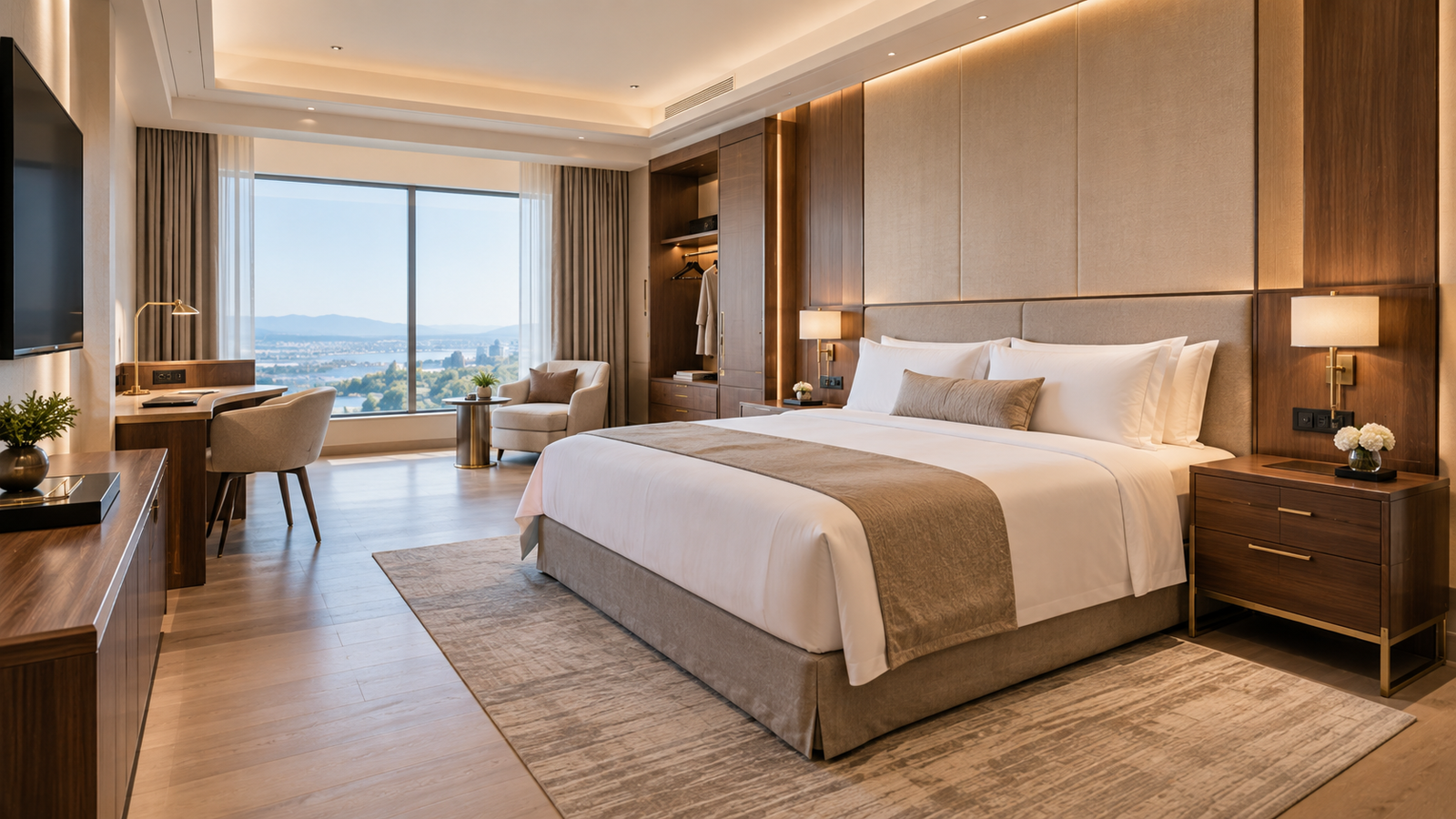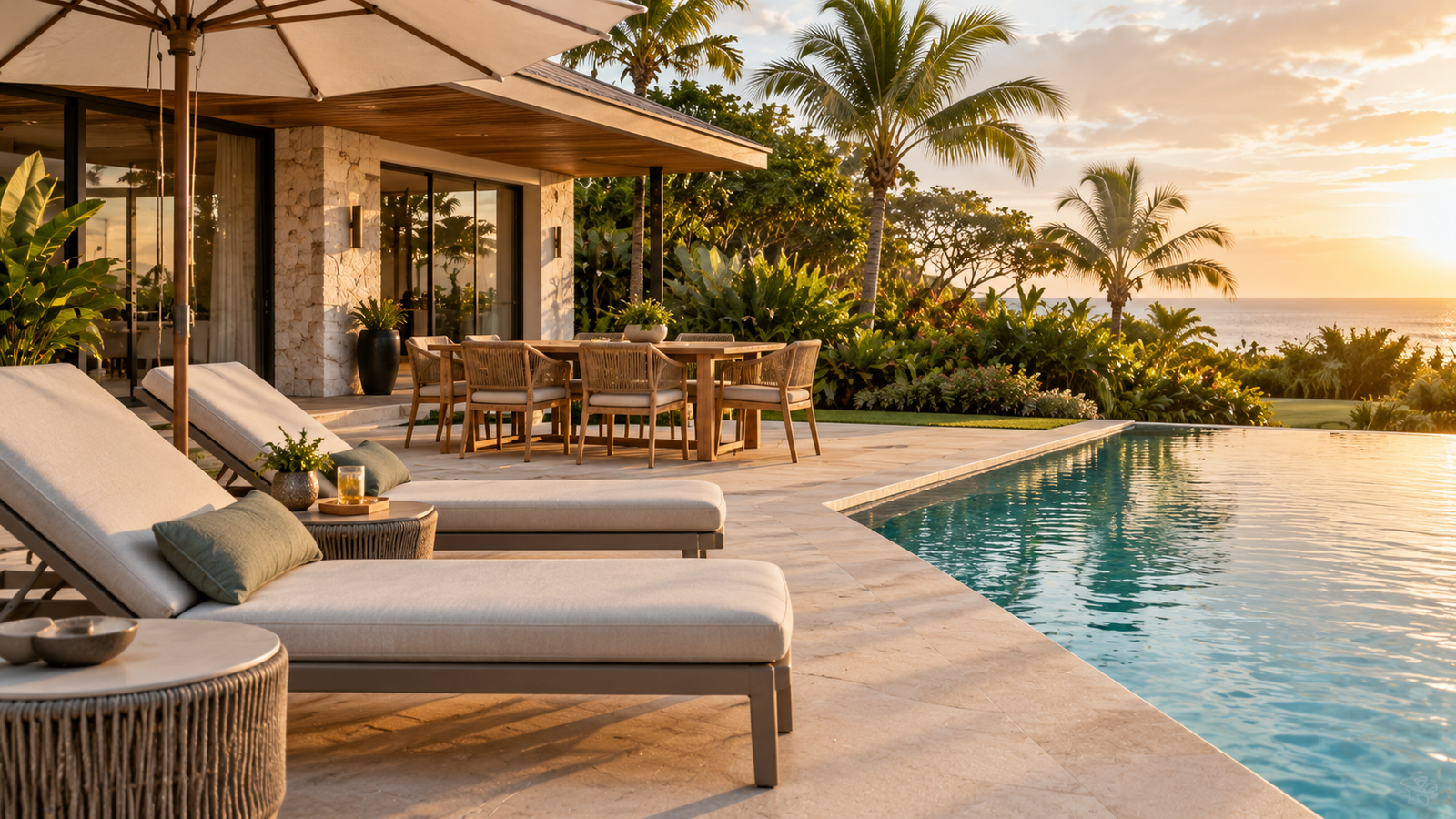
A resort or villa development does not furnish like a roadside hotel chain, and sourcing for one should not follow the same playbook either. Climate exposure, guest expectations, and the sheer design specificity of a villa project all change what actually matters when you are comparing resort furniture suppliers.
International developers building resorts and luxury villa projects face a wider, more fragmented supplier landscape than hotel chains do. Factory-direct manufacturers, trading companies, regional distributors, and boutique workshops all compete for the same project, often with very different capabilities hiding behind similar-looking websites.
This matters more than it might seem at the proposal stage. A supplier mismatch on a hotel chain order usually means a few awkward guestrooms. A supplier mismatch on a villa development can mean furniture that visibly degrades within a single rainy season, across every unit in the project, with no catalog substitute waiting in the wings because the pieces were never designed to be replaceable one at a time.
What Counts as a Resort or Villa Furniture Supplier?
A resort or villa furniture supplier is not simply a hotel furniture supplier with a nicer catalog. Resort and villa projects demand outdoor-grade materials, climate-specific engineering, and often a higher tolerance for bespoke, non-repeating design work across a smaller unit count than a typical hotel chain order.
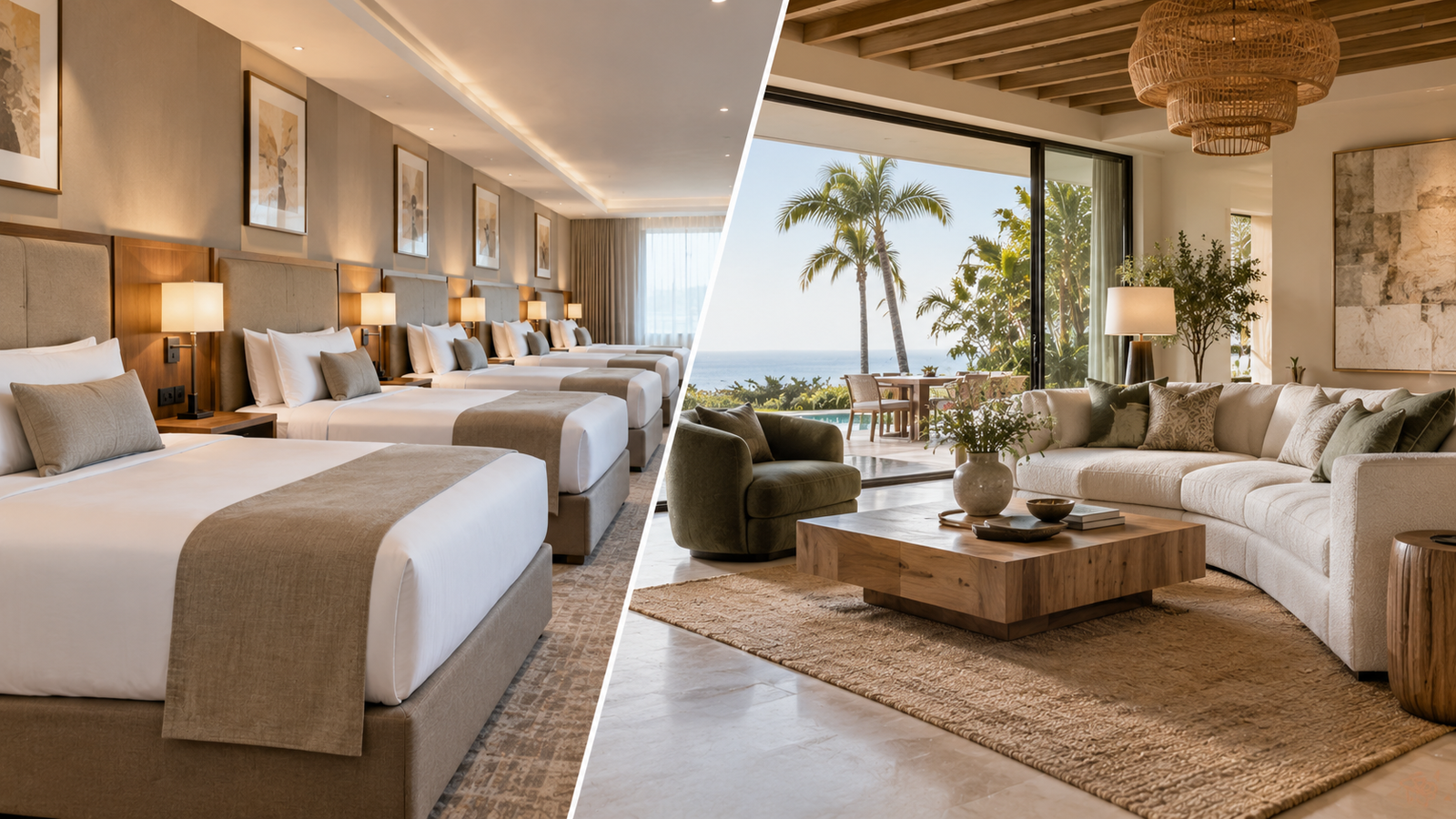
A supplier genuinely built for this market understands the difference between furnishing eighty identical hotel guestrooms and furnishing thirty villas that each need to feel distinct while still sharing a coherent design language and a repeatable production process behind the scenes.
Factory-Direct Manufacturer vs. Trading Company vs. Local Distributor
These three supplier types look similar from a website or a trade show booth, but they operate on fundamentally different economics, and that difference shows up directly in price, accountability, and how design changes get handled.
| Factor | Factory-Direct Manufacturer | Trading Company | Local Distributor |
|---|---|---|---|
| Pricing | Lowest, no middleman margin | Higher, margin layered on top | Highest, local overhead and import markup |
| Design flexibility | High, direct access to production | Limited, relayed through intermediary | Low, mostly catalog-based |
| Quality accountability | Direct and traceable | Harder to trace issues to source | Depends on their own supplier chain |
| MOQ flexibility | Can negotiate directly | Fixed by their supplier relationships | Often lower MOQ, higher unit cost |
| Lead time | Direct production scheduling | Added coordination delay | Fastest for in-stock items only |
| Best fit | Mid-to-large projects needing custom work | Smaller orders, less technical buyers | Urgent, small, or replacement orders |
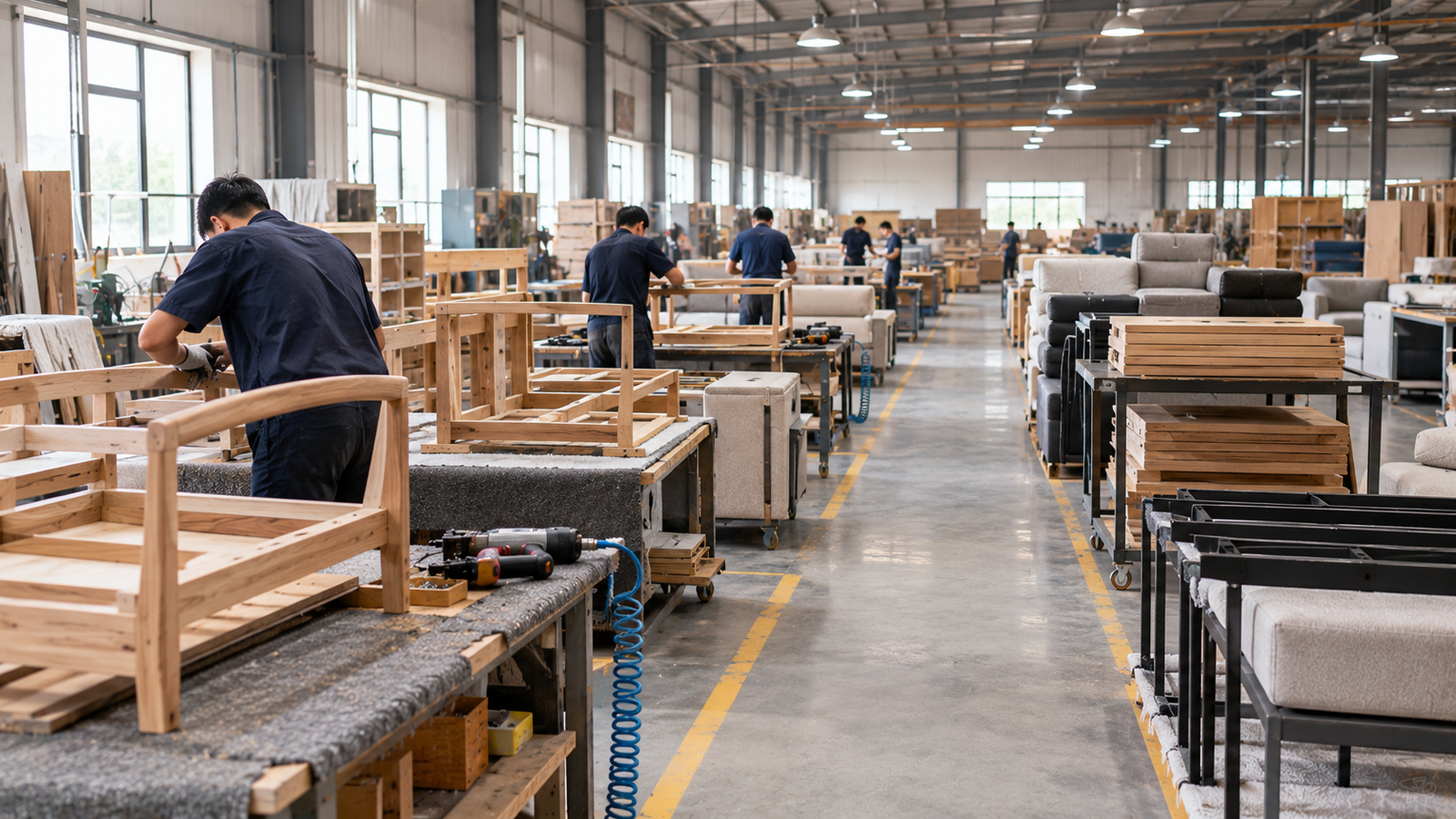
For a resort or villa project of any real scale, factory-direct sourcing is usually the right default, provided the manufacturer can actually demonstrate hospitality project experience and not just general furniture production. The same vetting logic used for private label manufacturing applies directly here: verifying who actually controls production matters more than the quote on the page.
Verifying factory status does not require a site visit, though one is ideal for a large project. A live, unscripted video call walking the actual production floor, cross-checked against the production capacity the supplier claims, catches most intermediaries presenting themselves as manufacturers. Business registration documents showing manufacturing as the registered activity, rather than trading or export services, are worth requesting as a second layer of confirmation.
Key Factors to Compare: Materials, Compliance, and Climate Suitability
Beyond supplier type, the material and compliance specifics are where resort and villa projects diverge most sharply from standard hotel sourcing.
Climate-Specific Material Engineering
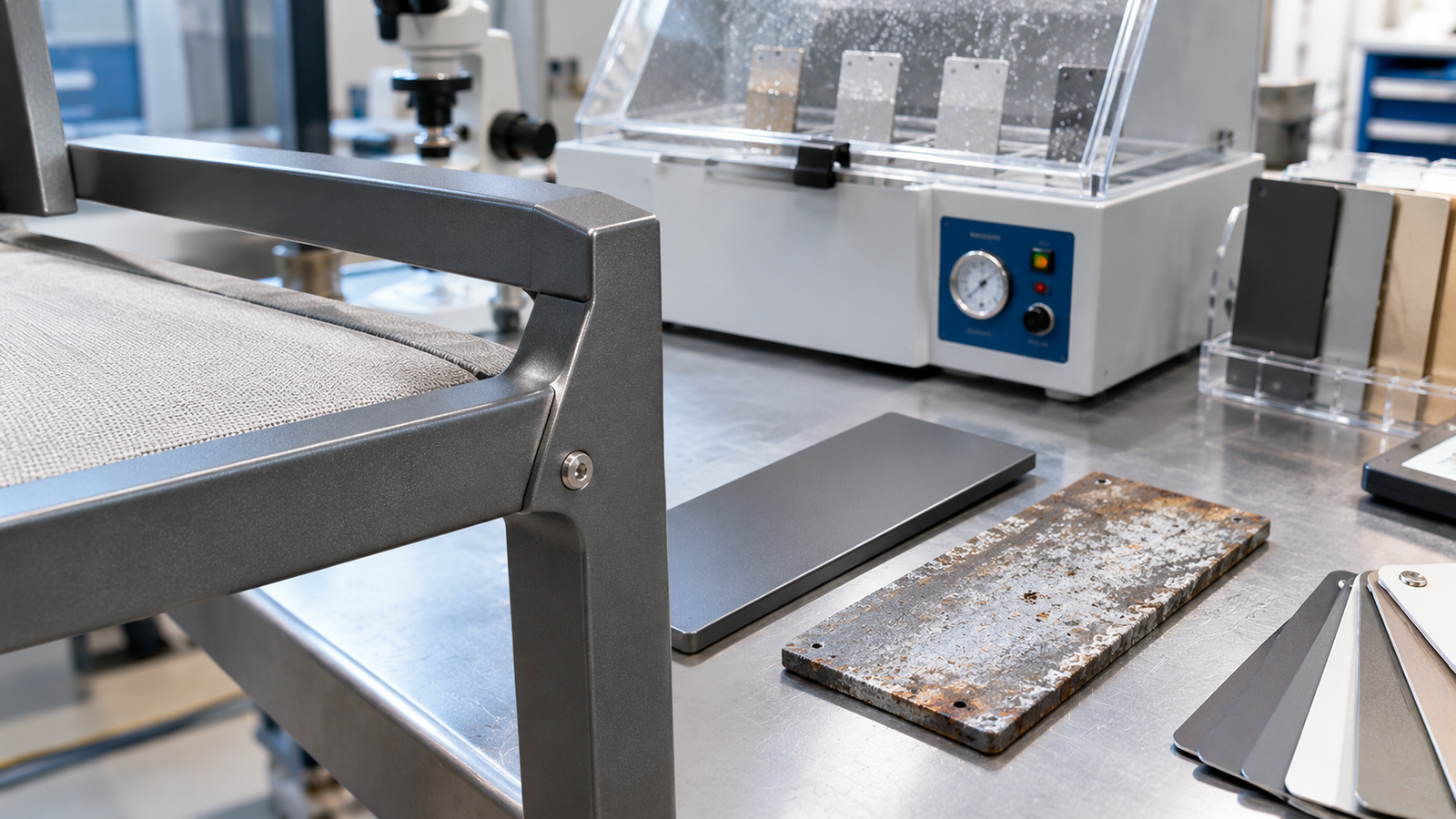
Coastal, tropical, and high-UV locations punish furniture that was not engineered for them. Powder-coated aluminum, marine-grade hardware, and UV-stabilized synthetic rattan hold up where standard indoor-rated materials fail within a season. A supplier worth comparing should be able to speak specifically to salt-air resistance, UV degradation testing, and moisture-related warranty terms, not just “durable” as a marketing word. Ask whether metal components and finishes have been through ASTM B117 salt spray testing, and for how many hours. Our outdoor furniture manufacturing guide covers material performance by category in more depth.
Compliance Documentation
International projects cross multiple regulatory jurisdictions. A supplier should be able to confirm BIFMA performance standards, relevant fire safety certifications for the destination market, and FSC chain-of-custody documentation for wood materials, and provide the actual paperwork on request, not just a logo on their website.
Design Flexibility for Non-Repeating Villa Layouts
Hotel chains order the same room forty times. Villa developments rarely do. A supplier comfortable producing forty identical headboards can still struggle with a brief asking for thirty distinct but coherent variations, each respecting a shared material and finish language while differing in dimension or layout. This is less about raw manufacturing capability and more about whether the design and engineering team behind the supplier is set up to manage that kind of variation without it becoming a production bottleneck or a quality-control nightmare.
MOQ, Lead Time, and Pricing: What to Expect by Supplier Type
Resort and villa orders rarely look like the bulk guestroom order of a single hotel. They are often smaller unit counts with higher per-piece customization, which changes the MOQ and pricing conversation from the start.
| Furniture Category | Typical MOQ | Lead Time |
|---|---|---|
| Outdoor lounge and dining sets | 10 to 50 sets | 15 to 45 days |
| Custom indoor casegoods | 50 to 300 units per SKU | 10 to 18 weeks |
| Custom upholstered seating | 20 to 100 units per SKU | 12 to 22 weeks |
| Fully bespoke signature pieces | As low as 1 to 10 units | 10 to 20 weeks |
Smaller villa-scale orders often carry a higher per-unit cost than a large hotel chain order would for the same item. This is a direct consequence of tooling and setup costs being spread across fewer units, not a sign of a supplier overcharging. For a deeper breakdown of how MOQ and customization level interact, see our guide to custom furniture MOQs from China.
Sampling, Model Rooms, and Quality Control Before Bulk Production
Sampling is the cheapest insurance a villa developer can buy, and it works best when the approval steps are agreed in writing before any deposit moves. A sensible sequence starts with material and finish swatches, moves to a pre-production sample of each hero piece, and for larger programs ends with a full model room assembled from production-grade components rather than showroom stand-ins.
Each step should end with a signed approval that records dimensions, finish codes, fabric references, and hardware specifications. That signed sample becomes the benchmark every later unit is judged against, which removes most of the arguments that otherwise surface when three hundred pieces arrive and someone remembers the sample differently.
Quality control should not wait for the finished container. Ask whether the supplier runs in-process checks, such as moisture content on timber before assembly and weld inspection on aluminum frames, as well as a final inspection before loading. Third-party inspection is common on large international orders, and a confident supplier will welcome it. Resistance to independent inspection is itself useful information.
Finally, decide how defects will be handled before any exist. A clear clause covering replacement of faulty pieces, who pays freight on the replacements, and the claim window after delivery saves a great deal of friction later.
Questions to Ask Before Signing with Any Supplier
A short, direct set of questions separates a genuine resort and villa-capable supplier from one that is simply willing to take the order.
Ask for specific project references, not just a general hospitality portfolio. Outdoor and climate-specific work is a distinct skill set from standard hotel interiors.
A supplier should cite actual UV, salt-spray, or moisture testing data, not just describe a material as “weather-resistant.”
Any hesitation here is one of the clearest warning signs in the entire vetting process.
Villa projects shift more than hotel chain orders do. The change-order process a supplier follows tells you how painful (or painless) revisions will be.
Confirm this directly rather than assuming a standard hotel MOQ applies to a bespoke villa piece.

Red Flags When Vetting a Supplier
A handful of warning signs show up repeatedly when a resort or villa project runs into real sourcing trouble.
A genuine manufacturer answers this immediately and specifically. Hesitation usually means you are talking to an intermediary presenting itself as a factory.
A real-time, unscripted factory walkthrough is a reasonable request. Only promotional footage on offer is a signal worth taking seriously.
Skipping straight to bulk production removes the one checkpoint that catches material and construction issues before they are repeated across every unit.
A supplier who cannot speak to UV or salt-air performance specifics likely has not actually built for coastal or tropical conditions before.
Inconsistent minimums often indicate pricing based on perceived budget rather than genuine production economics.
Why Sourcing from China Remains Competitive for Resort & Villa Projects
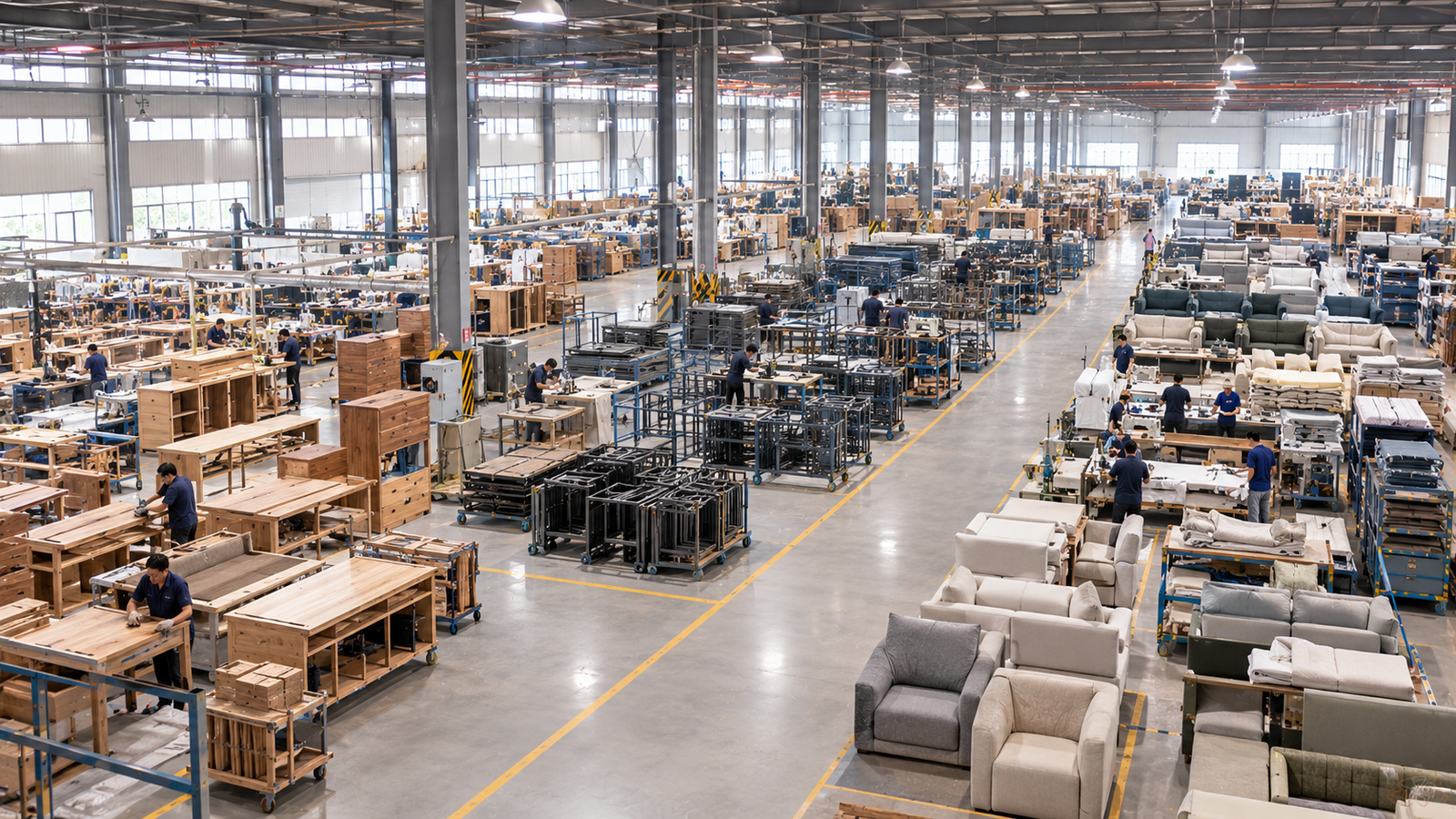
Despite rising costs in some categories, Chinese manufacturers still offer a combination of material access, skilled labor, and production scale that is difficult to match elsewhere for hospitality-grade custom furniture. Regions like Foshan have built decades of furniture-specific manufacturing infrastructure, meaning a single factory can often handle wood, metal, upholstery, and finishing processes under one roof rather than coordinating across multiple specialized subcontractors.
For international developers, this translates into shorter internal coordination chains and more consistent quality across large, multi-unit villa orders, provided the supplier is genuinely factory-direct rather than a trading company layering its own margin and risk on top.
Material access matters as much as labor cost here. A single region with decades of furniture-specific supply chain development means hardwood, aluminum extrusion, marine-grade hardware, and specialty synthetic weaves are all sourced locally rather than imported separately for each component, which keeps both cost and lead time more predictable across a mixed-material villa order.
Freight and Logistics Considerations for Villa Projects
Villa projects often ship to destinations with less developed port infrastructure than major hotel markets, island resorts and remote coastal developments in particular. This changes the logistics conversation in ways a standard hotel order rarely has to account for.
Container Planning for Mixed Outdoor and Indoor Orders
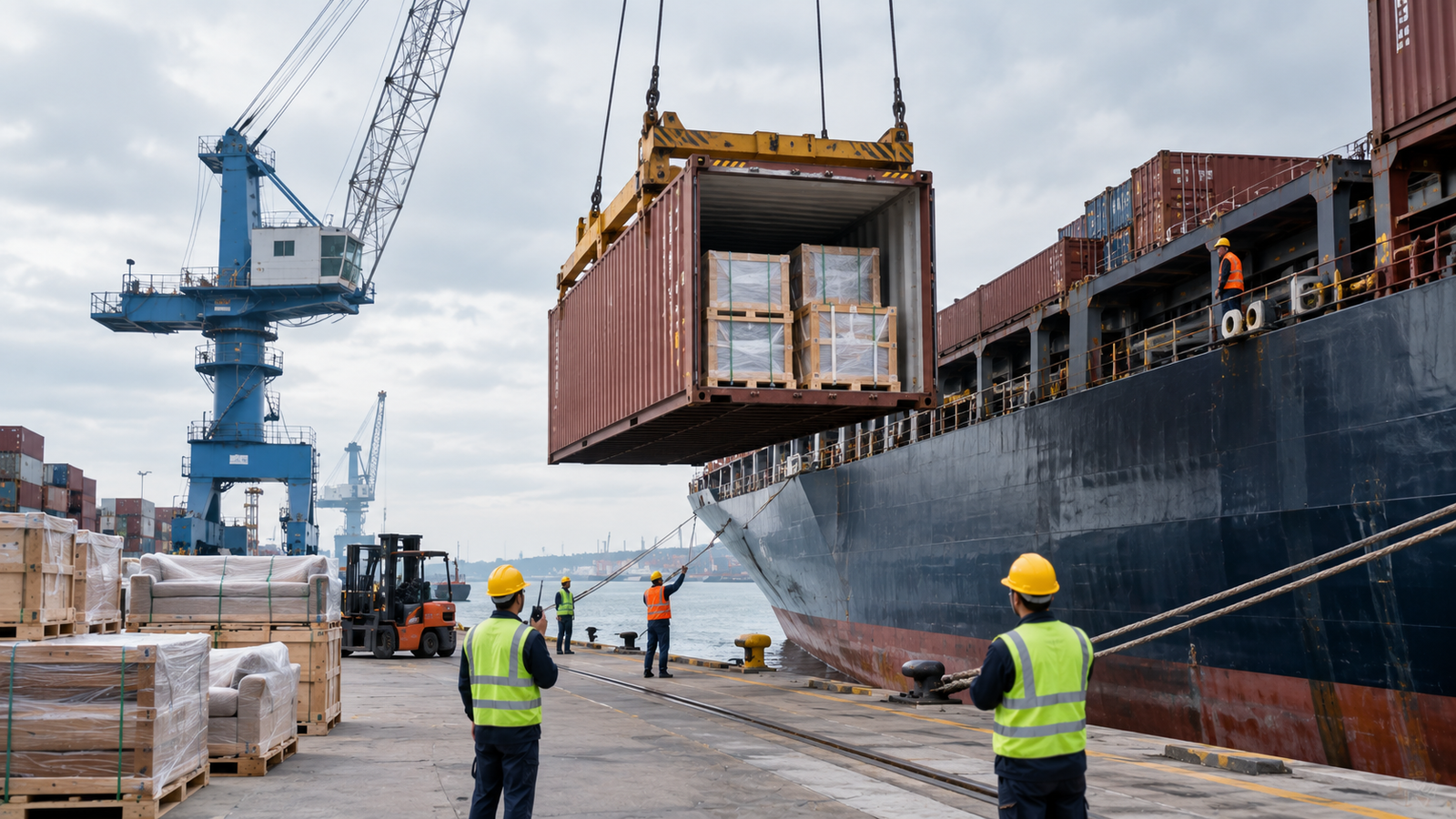
Outdoor furniture typically has a higher CBM-to-value ratio than indoor casegoods: bulky, lightweight pieces that eat container space without proportionally raising order value. A supplier experienced in villa projects will plan container loading around this reality rather than quoting freight as an afterthought once production is already finished.
Last-Mile Delivery to Remote Sites
Getting a container to a major city port is the easy part. Getting furniture from that port to a remote island villa site, sometimes via secondary barge or truck transfer, is where inexperienced suppliers underestimate both cost and timeline. Ask specifically how a supplier handles last-mile delivery for remote or island destinations, not just their standard port-to-port freight terms.
Payment Terms and Contract Protections for International Orders
Payment structure on an international furniture order is negotiable, and the right terms depend on how much trust already exists between the two parties. A common arrangement for custom production is a deposit to start production, with the balance due before shipment or against shipping documents, though exact percentages vary by supplier and order size. Treat any figure a supplier quotes as a starting point for discussion, not a fixed rule.
Letters of credit offer more protection on large orders, at the cost of bank fees and stricter document requirements. For first-time relationships, some developers split the program into phases so that the first container proves the supplier before the full order is committed.
Whatever the structure, get these items into the contract: full specifications by reference to the approved sample, a delivery window with consequences for delay, inspection rights, warranty terms covering moisture and UV exposure, and the governing law for disputes. Pricing should also state the Incoterm clearly, since FOB, CIF, and DDP shift different costs and risks onto the buyer. A developer who assumes freight is included when it is not tends to discover the difference at the worst possible moment.
None of this replaces advice from a trade lawyer or your bank, particularly on letters of credit and cross-border dispute terms. But a supplier that is comfortable discussing these points openly is usually one that has been through them many times.
How Regional Buyer Markets Compare
Developer priorities shift meaningfully by region, and understanding that context helps frame what to prioritize in supplier conversations.
Buyers here tend to prioritize documented compliance (CARB, TB 117-2013, ADA) and are generally comfortable with longer international lead times in exchange for cost savings on custom work.
FSC certification and sustainability documentation carry more weight here than in most other markets, often a genuine deal-breaker rather than a nice-to-have.
Extreme heat and UV exposure push material durability to the top of the priority list, alongside a strong preference for suppliers who can deliver full-room or full-villa packages rather than piecemeal orders.
Proximity to Chinese manufacturing often means shorter freight times, but buyers here are more likely to compare multiple regional suppliers directly against Chinese factory-direct pricing.
Freight distance and cost sensitivity both run higher here, which pushes many developers toward consolidating as much of a project as possible with a single supplier to avoid multiple separate shipments.
What a Full-Service Villa Furniture Partner Actually Provides
Some suppliers sell pieces. Others run a project. For a multi-unit villa development, the difference between the two shows up fast once production starts.
A full-service partner can take a mood board or rough concept from your design team and turn it into manufacturable technical drawings, rather than requiring finished specifications for every piece.
A villa project spans indoor casegoods, outdoor furniture, and upholstery at once. One supplier coordinating all three samples under one timeline saves significant back-and-forth.
One supplier from design through installation has nowhere to point the finger, unlike a split project where a warranty claim becomes a weeks-long argument.

When a quality issue surfaces after installation, the question of whose fault it is matters less than who fixes it, and how fast. A project split across several category vendors can turn a simple warranty claim into a long argument over which material or workmanship actually failed.
Checklist Before Choosing a Supplier
Vetting
- Confirm factory-direct status with a live video walkthrough
- Request specific resort or villa project references
- Verify compliance documentation (BIFMA, FSC, relevant fire safety standards)
Materials
- Confirm climate-specific testing for outdoor materials
- Request physical material samples before committing
- Clarify warranty terms for moisture and UV exposure
Commercial Terms
- Get real MOQ numbers for your specific customization level
- Confirm lead time in writing, including freight and customs
- Clarify the sample and model-room approval process before production
- Agree payment structure, Incoterm, and defect-handling terms in the contract
Frequently Asked Questions
What is the difference between a hotel furniture supplier and a resort or villa furniture supplier?
Resort and villa suppliers need to handle outdoor and climate-specific materials, smaller and more customized unit counts, and often a less repetitive design brief than a standard hotel chain order.
Where to buy resort and villa furniture wholesale?
Factory-direct manufacturers, particularly in established furniture manufacturing regions like Foshan, China, generally offer the most competitive wholesale pricing for custom resort and villa furniture, provided the factory status is verified directly.
How often do resorts and villas replace outdoor furniture?
Well-specified, climate-appropriate outdoor furniture typically lasts 5 to 8 years in coastal or tropical conditions. Furniture sourced without proper UV or salt-air testing often needs replacement within 2 to 3 years.
Is factory-direct sourcing from China reliable for villa projects?
Yes, provided the factory status is verified and the supplier has demonstrated experience with climate-specific materials and smaller, highly customized order volumes typical of villa projects.
What should be included in a resort furniture supplier comparison?
Supplier type (factory-direct vs. intermediary), material compliance documentation, climate-specific testing data, MOQ flexibility, and sample and model-room approval process.
Should a villa project use one supplier for everything or multiple category specialists?
A single full-service supplier is generally preferable for accountability and coordination, provided they can genuinely handle the full material range your project needs.
The Bottom Line
YM Furniture (Foshan Yauming Furniture & Construction Co., Ltd.) is a factory-direct manufacturer based in Shunde District, Foshan, supplying custom hospitality and villa furniture programs for international developers, from material sourcing through model room approval and full-project installation support. For a full breakdown of how custom hotel furniture programs are structured end to end, see our complete custom hotel furniture guide.
Last Updated: October 8, 2026