A dressing table with a full-length mirror is the most overlooked power piece in a luxury guestroom. It’s the last stop before a guest walks out the door, the place where final impressions form, confidence is checked, and the room either delivers on its promise or quietly disappoints. Most design briefs spend significant energy on the bed, the bath, and the view. The vanity station gets a footnote. That’s a mistake.
A full-length mirror dressing table does more than provide a grooming surface. It shapes how a guest feels in the room, signals the depth of thought behind the design, and increasingly ends up in the guest-generated photos that influence booking decisions. The right vanity setup is a brand asset. The wrong one is a silent complaint waiting to be written.
This guide covers the seven most impactful styles for luxury hotel guestrooms and villa suites, how to match each to different interior design themes, and what hospitality-grade specifications actually look like in practice. For procurement teams and developers working at scale, some of the most design-forward solutions in this category come from factory-direct manufacturers like YM Furniture (Foshan Yauming Furniture & Construction Co., Ltd.), who build vanity packages entirely to spec for hotel and villa projects. This is a spec-level buyer’s guide, not a retail wishlist.
Why dressing table selection defines the luxury guestroom experience
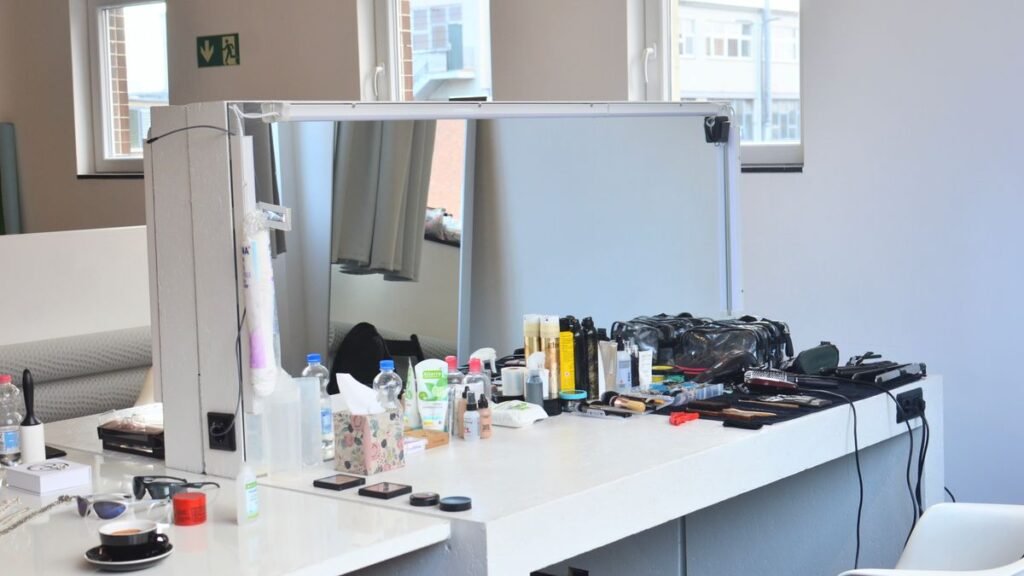
The detail that separates a 4-star stay from a 5-star one
High-touch details carry disproportionate weight in guest perception. A thoughtfully positioned full-size mirror dressing table signals that the property has considered the guest’s morning routine with real care, not just checked a box on the furniture schedule. That signal registers quickly, even when guests can’t articulate exactly why a room feels more refined than another.
Review culture has made this calculus more consequential. Guestrooms are photographed and shared at a rate designers from even ten years ago would find difficult to imagine. The vanity area, with its combination of mirror, surface, and lighting, appears in guest-generated content constantly. An aesthetically strong vanity station becomes organic marketing. A dated or poorly specified one shows up in negative review photos alongside the leaky faucet.
What guests actually use a vanity for (and why layout follows function)
The behaviors that happen at a dressing table are more varied than most furniture schedules account for. Makeup application, hair grooming, accessory organization, and impromptu laptop use all happen at the same surface, often on the same stay. Each of those behaviors has different requirements for lighting quality, surface area, storage proximity, and mirror positioning.
Makeup application demands high vertical illumination at face level with accurate color rendering. Laptop use needs surface depth and nearby power access. Hair grooming requires enough mirror height to see from crown to collar. Planning a vanity station without mapping these behaviors produces rooms that photograph well on the mood board and frustrate guests in practice. The design work starts with function, not with the catalog.
Getting the dimensions right for a dressing table with full-length mirror
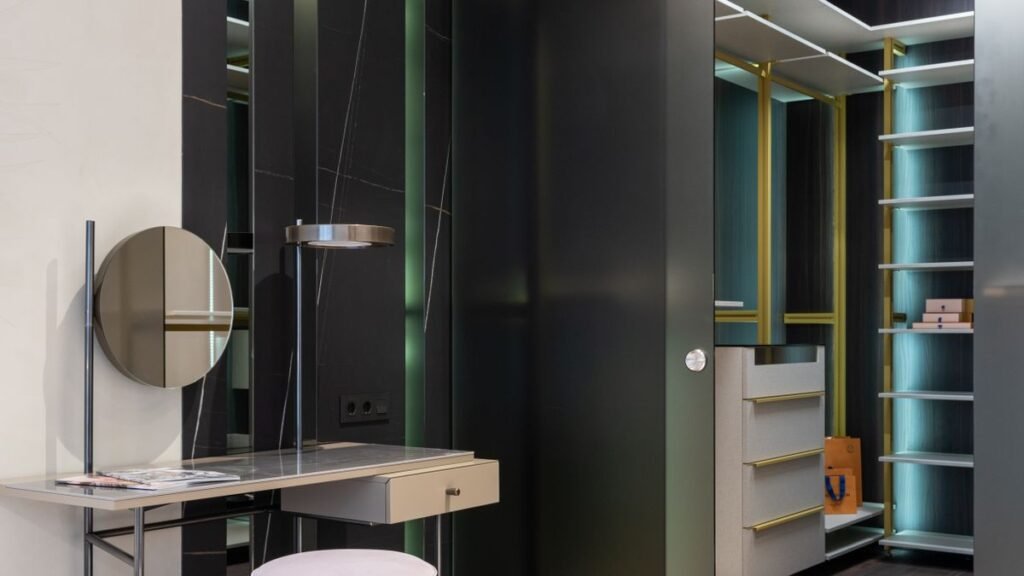
Footprint standards for hotel guestrooms vs. villa suites
Standard hotel guestroom dressing tables typically run 42 to 55 inches wide and 18 to 22 inches deep. That footprint is narrow enough to preserve room flow while still being wide enough to function as both a grooming station and a light workspace. At the 4-star tier, hospitality design practice generally points to a minimum of about 47 inches wide by 27 to 28 inches deep with a height of 29 to 30 inches. Five-star properties typically work within a width range of 39 to 47 inches, though wider bespoke configurations are common when the room footprint supports them.
Villa suites support larger footprints, typically 55 to 72 inches wide with deeper countertops that handle dual-use as a proper workspace. Mirror placement matters here in ways that directly affect the room’s perceived dimensions. A wall-mounted mirror keeps the footprint lean and makes the room read larger. A freestanding or leaning floor mirror adds visual mass and warmth but requires more clearance behind the chair. Integrated mirror frames that sit directly on the tabletop are the most compact option but limit mirror height.
Mirror height, viewing angle, and wall clearance
A true full-length vanity mirror for hospitality use should provide a clear reflection from at least eye level to mid-shin. In practical terms, that means a minimum mirror height of 55 to 65 inches. For mixed-height guest populations, 60 inches is the most reliable minimum. Mounting height matters as much as mirror height: the center of the mirror should sit at roughly 60 inches from the floor for the most universally useful viewing angle.
ADA accessibility considerations add another layer for US hotel projects. Accessible guestrooms require that the vanity surface be reachable from a seated position, which affects both counter height and knee clearance beneath the table. When a leaning or standing mirror is used in a commercial context, maintaining at least 18 inches of clearance from the mirror base to the nearest traffic path is a widely recommended best practice, with 24 inches preferred where the layout allows. These aren’t details to sort out after the furniture is ordered.
At a Glance: Dressing Table Dimensions by Setting
| Setting | Width | Depth | Mirror Height |
|---|---|---|---|
| Standard hotel guestroom | 42 to 55 in | 18 to 22 in | 55 to 65 in |
| 4-star tier | 47 in minimum | 27 to 28 in | 55 to 65 in |
| 5-star tier | 39 to 47 in | Varies, bespoke | 60 in recommended |
| Villa suite | 55 to 72 in | Deeper, dual-use | 60 to 65 in |
Materials that perform in high-traffic commercial settings
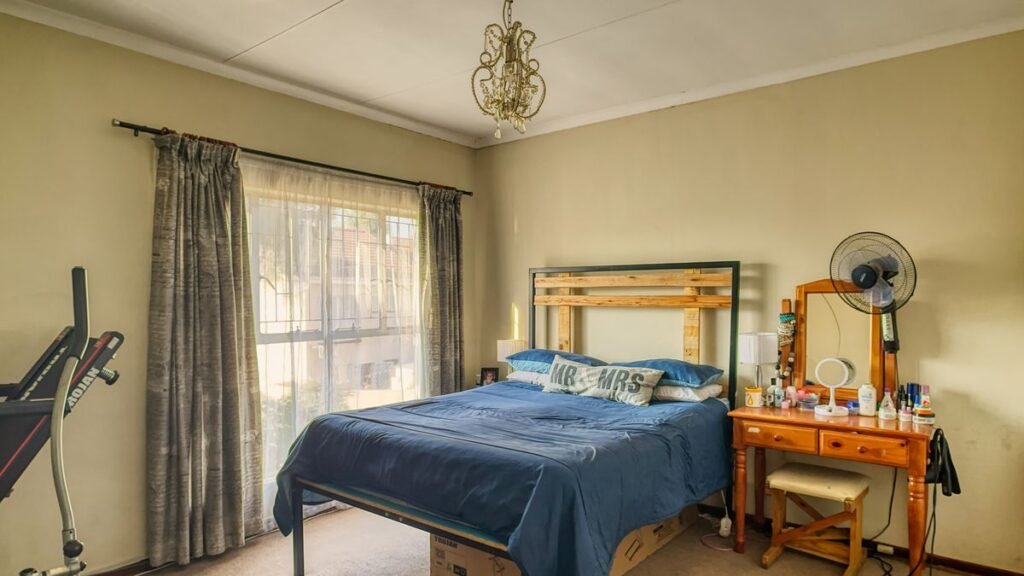
Tabletop options: solid wood, lacquered MDF, and stone surfaces
Solid hardwood tops offer premium aesthetics and strong long-term durability, but they add weight to the furniture package and come at a higher cost per unit. Lacquered MDF is the practical workhorse of hospitality furniture: consistent finish quality, wide color range, cost-efficient at scale, and straightforward to repair in the field. The trade-off is edge durability under repeated impact, which is why edge banding specification matters in a commercial brief.
Marble and quartz tops bring a statement quality that resonates strongly in luxury and lifestyle hotel concepts. They’re heat-resistant and easy to clean, both meaningful advantages in a grooming environment. The downsides are weight (which affects shipping costs and floor loading calculations) and fragility under point impact. A lacquered MDF base with a natural stone or quartz top is one of the most cost-effective premium combinations for hotel projects, delivering a luxury material story at a manageable cost and weight.
Mirror backing, coating quality, and frame finish durability
Not all mirrors perform equally in commercial use. Standard silver-backed mirrors are vulnerable to moisture-related deterioration, particularly in guestrooms near bathrooms or in humid coastal climates. Copper-free or eco-silver coatings resist this degradation significantly better and should be the minimum specification for any hospitality vanity mirror. The longevity difference across a 400-room property adds up quickly.
Frame material determines both aesthetics and durability under daily contact. Solid wood frames are premium, heavy, and refinishable. Metal frames (brushed steel, brass, black powder coat) are durable and work well in contemporary and transitional concepts. Wrapped MDF frames offer the widest finish flexibility at the lowest cost, but require careful specification of the wrapping material for edge durability. Finish consistency across an entire guestroom furniture package is essential for FF&E specification work, and it’s one of the strongest arguments for sourcing the full vanity set from a single manufacturer rather than mixing vendors.
Lighting integration: what separates a good vanity from a great one
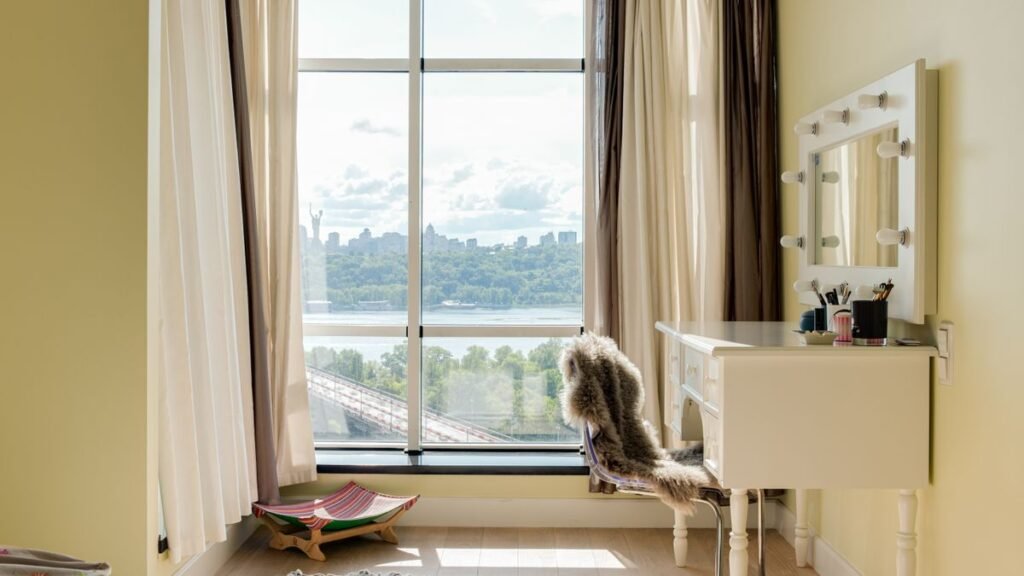
Integrated vanity lighting specs that actually matter for grooming
Hospitality lighting standards point to 400 to 600 lux at the mirror plane as the target for vanity and grooming areas. That translates to roughly 1,500 to 3,000 lumens depending on fixture geometry and room surface reflectances. Color temperature for integrated vanity lighting should sit between 3,000K and 3,500K, warm enough to be flattering without distorting color accuracy. CRI 90 is the minimum for hospitality use; CRI 95 or higher is the right specification for luxury properties where makeup accuracy is a real guest need.
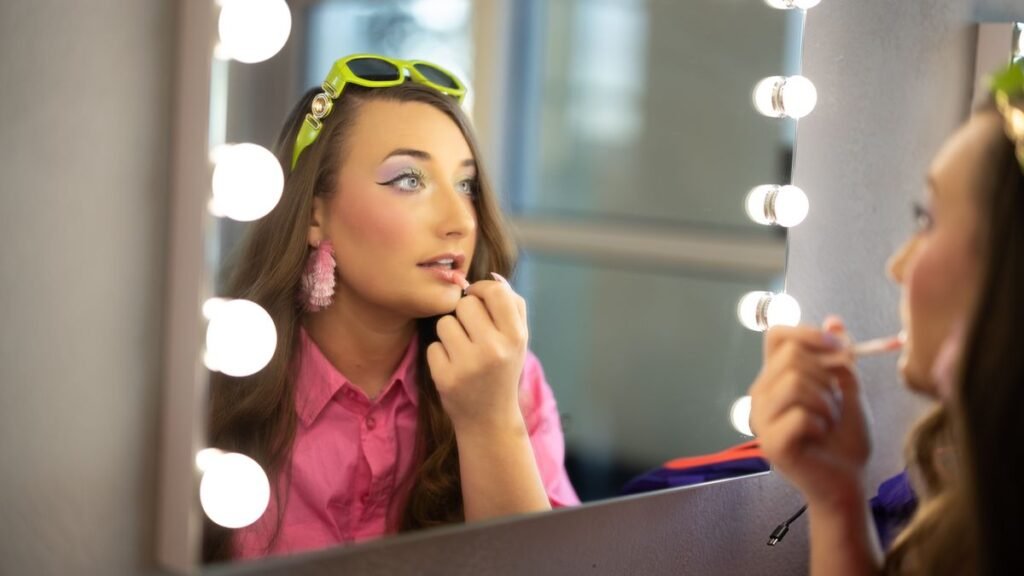
Front-lit or perimeter-lit mirrors (Hollywood style) remain the gold standard for makeup application accuracy. The reason is physics: lighting from both sides of the mirror face eliminates facial shadows that overhead-only lighting creates. Backlit mirrors produce a beautiful ambient effect but are better suited to decorative applications than functional grooming. Side-lit configurations work well in boutique and residential-luxury concepts where the lighting is a design feature as much as a functional one.
Power outlets, USB ports, and color temperature controls
Modern guests expect at least one standard US power outlet and one USB-A or USB-C charging port within comfortable reach of the vanity surface. Where those ports live affects both the furniture specification and the electrical rough-in schedule, so this decision needs to happen before production, not during installation. Options include ports built into the tabletop fascia (clean look, easy guest access), recessed into the mirror frame, or located in the adjacent wall finish.
Adjustable color temperature, a warm/cool toggle on the mirror lighting, is a meaningful upgrade at the 5-star tier. It lets guests shift between a warmer evening light and a cooler daylight-accurate tone for makeup application. To specify this in a custom furniture brief, include the CCT range (typically 3,000K to 5,000K), the dimming range, and whether control is via a physical switch, touch panel, or room automation integration. These details need to be settled in the design brief, because they drive the electrical assembly specification for the manufacturer.
The 7 best dressing table with full-length mirror styles for luxury rooms
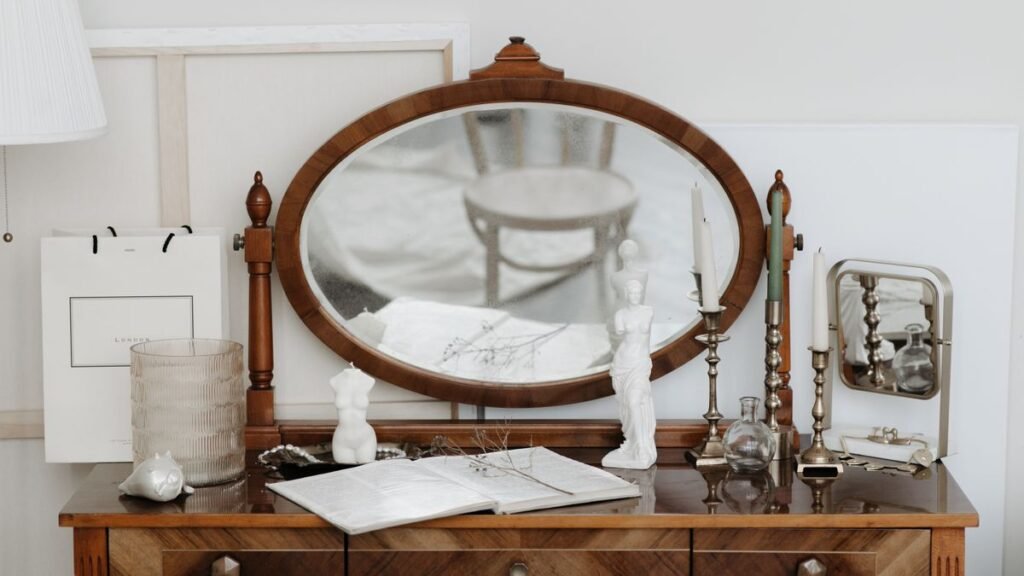
1. Contemporary minimalist: the standing mirror vanity
Clean lines, neutral finishes, and a frameless or thin-profile full-length mirror paired with a slim floating table define this category. It works best in modern urban hotel concepts and boutique properties with a Scandinavian or Japanese-influenced design language, where the furniture is meant to recede into the architecture rather than announce itself. The visual simplicity reads as considered restraint, not budget economy. Material palette centers on matte lacquered MDF in white, greige, or charcoal, with brushed metal legs in black or warm silver. The mirror is typically wall-leaning or wall-mounted, keeping the footprint lean and the sightlines unobstructed.
2. Hollywood glam: the integrated lighted mirror vanity
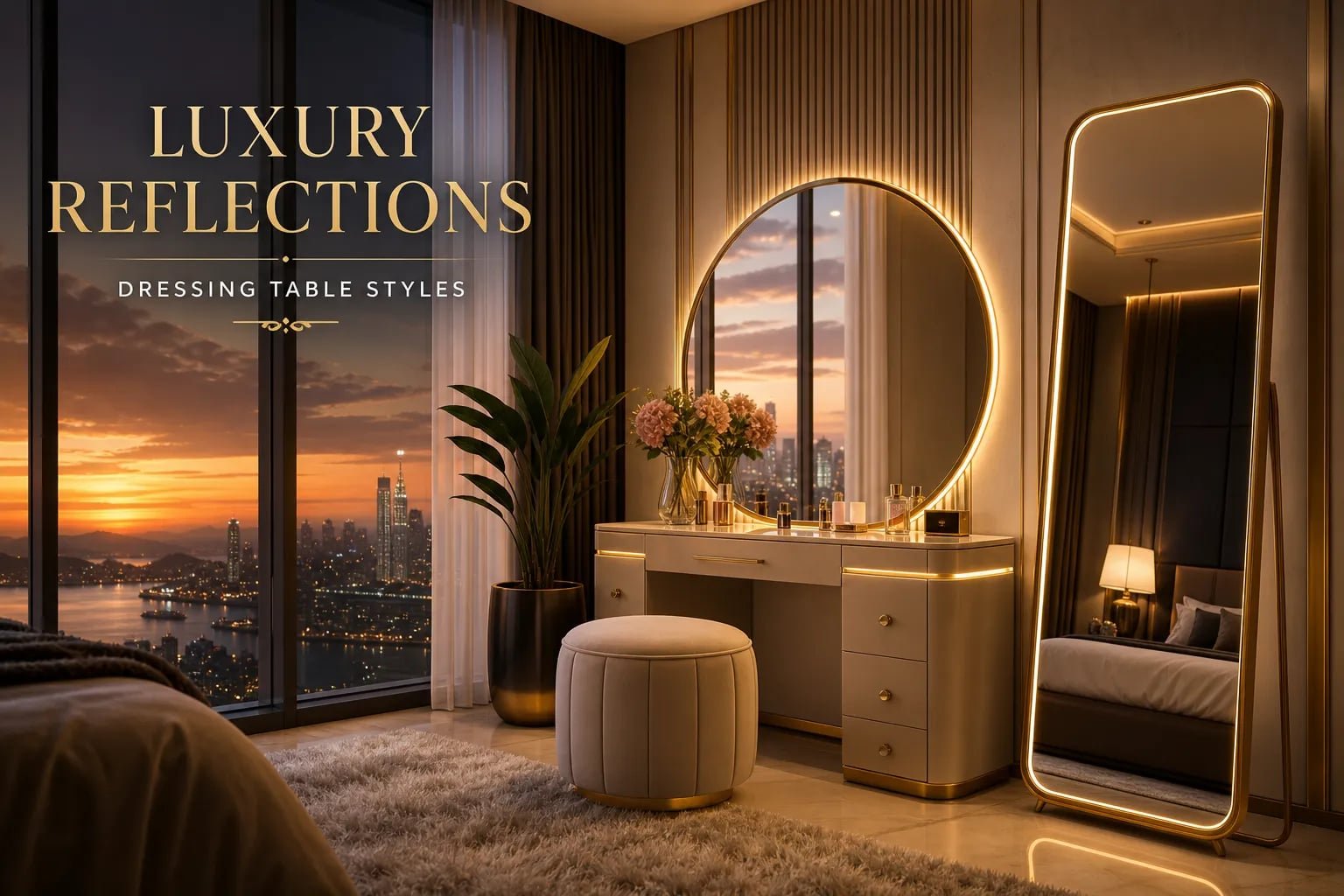
High-drama aesthetics with a perimeter-lit round or rectangular mirror, a wide countertop, and generous drawer storage define the Hollywood glam vanity. The dressing ritual is part of the experience here, not just a functional stop, and that suits lifestyle hotels, upscale resort properties, and luxury apartment suites where theatrical quality is a selling point. The standard material palette runs to gloss lacquer finishes, brass or gold hardware, and crystal or acrylic accent details. Counter width should be generous (55 inches is a reasonable designer target) to support the visual scale of the mirror frame without the composition feeling cramped. Integrated lighting specifications at this tier should hit CRI 95 minimum.
3. Art Deco mirrored dressing table
Strong geometric mirror framing, bold symmetry, and reflective surface treatments define the Art Deco vanity. This style works in heritage boutique hotels and new builds referencing 1920s and 1930s luxury aesthetics, where the furniture needs to carry strong period character without feeling like a costume. The material palette is specific: ebonized wood or dark lacquer for the base, aged brass hardware, and smoked or antiqued mirror surfaces on secondary frame panels. A paired velvet-upholstered bench in a jewel tone, deep green, burgundy, or midnight blue, anchors the composition and adds a tactile luxury layer that photographs well and reads immediately as considered.
4. Nordic/Scandinavian full-size mirror dressing table
Light wood tones in ash, oak, or beech, unadorned surfaces, and functional simplicity are the hallmarks of the Nordic vanity. This style is popular in lifestyle hotels, extended-stay properties, and Airbnb-style luxury villa rentals where the design brief emphasizes calm and natural material warmth over high-drama luxury. Finishes stay in the natural wood veneer or white and greige lacquer range, with matte black metal hardware providing the only visual contrast. The mirror is typically tall and simply framed, or frameless entirely. A low-profile bench or stool in natural linen or leather completes the pairing cleanly, and the overall composition works effectively alongside the biophilic design elements, natural stone accents, indoor plants, linen textiles, that define a significant share of 2026 luxury hotel briefs.
5. Classic traditional: ornate carved frame vanity
Rich wood carving, an upholstered bench, and a large mirror with a detailed frame profile define the classical vanity. This is the standard specification for 5-star classical properties, grand resort hotels, and luxury villa projects with European-influenced interior design. The furniture needs to feel genuinely crafted rather than decoratively stamped, because guests at this tier will notice the difference. Solid mahogany or walnut is the preferred base material, with hand-carved frame details on the mirror surround and drawer fronts; hardware in antique brass or oil-rubbed bronze is the correct finish choice. Bench upholstery in silk, damask, or high-grade leather completes the set. This style requires a manufacturer with genuine wood carving capability, which narrows the sourcing field considerably.
6. Coastal and resort-inspired vanity table
A relaxed, textural aesthetic with rattan, light wood, or whitewashed finishes paired with a simple full-length mirror captures the coastal resort vanity. This style is ideal for beachfront resort properties, Caribbean and Gulf Coast villa developments, and properties built around indoor-outdoor design integration. Materials include rattan woven panels, whitewashed or cerused oak, and linen upholstery in natural or sand tones; lacquer finishes stay in the matte white or sand range. Mirror frames are simple, often in whitewashed wood or natural rattan wrapping. The design should feel native to the landscape rather than imported from an entirely different aesthetic context.
7. Bespoke custom vanity table with floor mirror
The most commercially strategic option for multi-room hotel projects is a fully custom vanity table and mirror combination built to exact brand specifications, finish schedules, and room dimensions. This isn’t a catalog selection; it’s an engineered solution that fits the property’s aesthetic and FF&E schedule precisely. At scale, that precision pays off in finish consistency, installation efficiency, and guest experience quality across every room in the property. This is where factory-direct custom manufacturers deliver the most value. YM Furniture (Foshan Yauming Furniture & Construction Co., Ltd.) specializes in exactly this type of bespoke commission, producing hospitality-grade vanity sets to precise client specifications for 5-star hotel and luxury villa projects across more than 30 countries. Their 20-day model room prototyping capability means design teams can review a physical reference before committing to a full production run.
Matching vanity style to your interior design theme
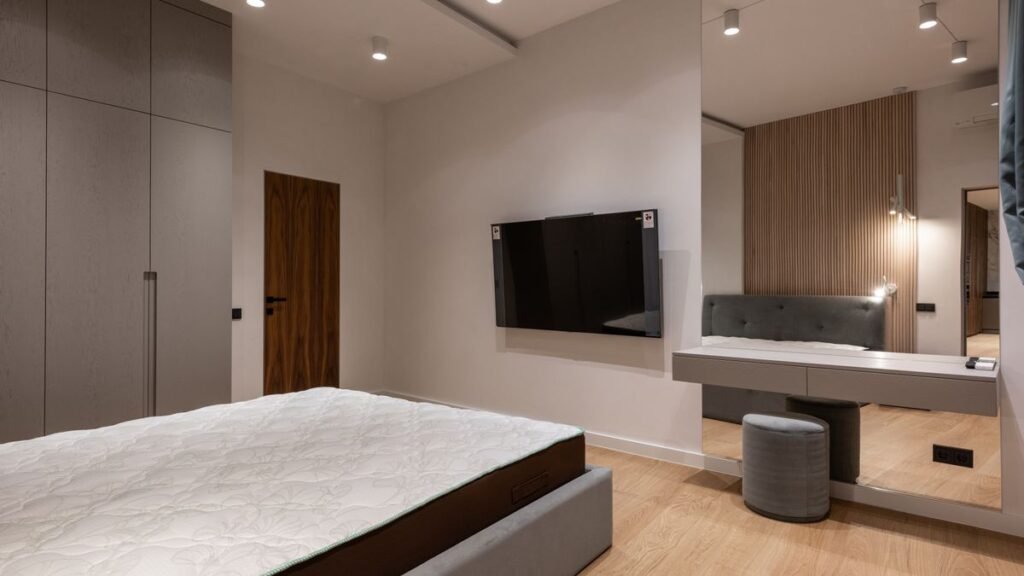
Modern and contemporary hotel concepts
In a modern hotel interior, the vanity should read as a considered architectural element rather than a standalone furniture piece. That means the dressing table’s finish, hardware, and mirror profile need to coordinate tightly with the room’s headboard, casegoods, and wall treatment finish schedule. A brushed brass hardware pull on the vanity and a different metal finish on the bed frame reads as an inconsistency that sophisticated guests notice even when they can’t name it.
Finish schedules are the tool that makes visual cohesion across a multi-room hotel rollout achievable. They document every material, color, and hardware specification so that production can be matched consistently across hundreds of units. When you’re producing 200 identical vanity sets, a single manufacturer with a documented finish schedule eliminates the variation that multiple retail sources will inevitably introduce. For most hotel projects at this scale, custom manufacturing is the most reliable path to genuine finish consistency.
Boutique, heritage, and traditional property aesthetics
Traditional and boutique properties have more design latitude but face a harder specification challenge: the furniture must feel authentic rather than decoratively themed. A carved frame vanity that looks genuinely crafted reads differently than one with applied molding that mimics carving. Guests who choose boutique and heritage properties are often specifically drawn to authenticity, and they’re well-positioned to recognize its absence.
Striking the right balance between period-inspired detailing and modern functional requirements (integrated lighting, power outlets, ergonomic height) requires a manufacturer who understands both sides of that tension. A well-briefed custom manufacturer can produce pieces that honor a historical design reference while embedding current hospitality durability standards and guest-use functionality. The design brief needs to specify both the aesthetic intent and the functional requirements explicitly, rather than treating them as separate tracks.
Storage layout and practical room setup considerations
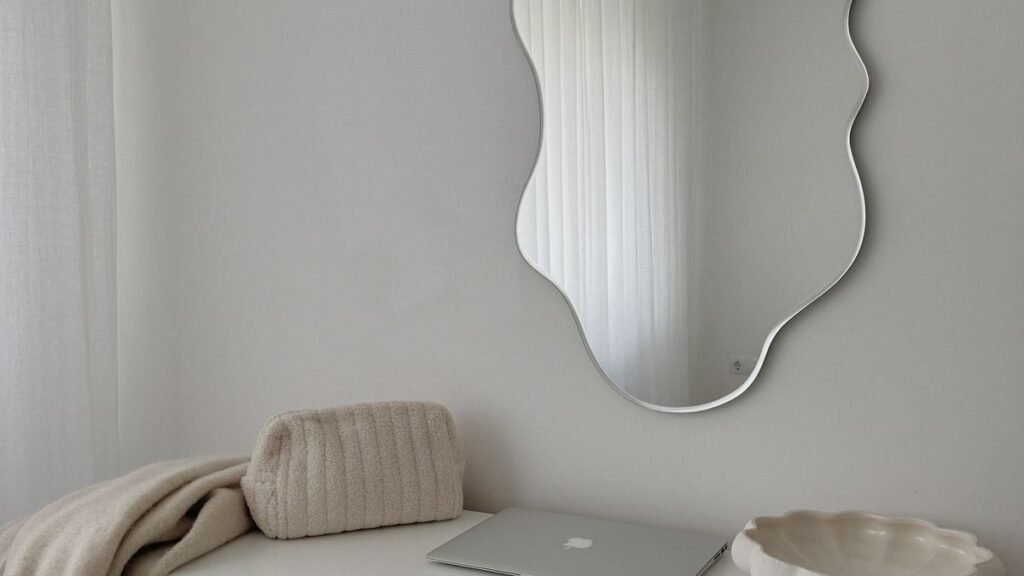
Drawer configuration and countertop workspace
Hospitality vanity tables need enough clear countertop space for grooming products, a laptop in dual-use layouts, and personal accessories without feeling cluttered. The practical minimum for usable clear surface is about 18 by 36 inches, measured clear of any mirror base or drawer hardware. Below the surface, two to three shallow drawers outperform one large cabinet for guest usability. Shallow drawers keep small items accessible and visible; a deep cabinet becomes a catch-all that guests rarely use efficiently.
Tabletop height in hospitality vanity furniture typically runs 28 to 30 inches, slightly lower than a standard desk. That lower height works better for seated makeup application and feels more comfortable for a wider range of guest body types. Drawer pulls and soft-close hardware are small specifications with outsized quality perception impact. A soft-close drawer on a $150 retail vanity feels considered. A slamming drawer on a $600 custom piece undercuts the entire investment.
Placement strategy, traffic flow, and mirror positioning
Where a vanity sits in the guestroom affects natural light utilization, the guest’s sense of privacy, and the room’s traffic flow in ways that floor plan reviews sometimes miss. The optimal placement positions natural light from the side of the guest’s face, not behind them or directly in front of them. A window directly behind the mirror creates a silhouette effect that makes the mirror essentially unusable in daylight. Light from the side, even at low intensity, reads dramatically better at the mirror.
Positioning the dressing table with its full-length mirror directly opposite a window creates glare on the mirror surface, particularly in south- and west-facing rooms during afternoon hours. Angling the mirror slightly, even five to ten degrees off perpendicular to the window wall, reduces glare substantially while maintaining sightlines. In narrow room layouts where a freestanding floor mirror creates a traffic flow conflict, wall-mounting the mirror and using the dressing table surface below it recovers the needed clearance without sacrificing the full-length view.
How to order bespoke vanity and mirror combinations at scale
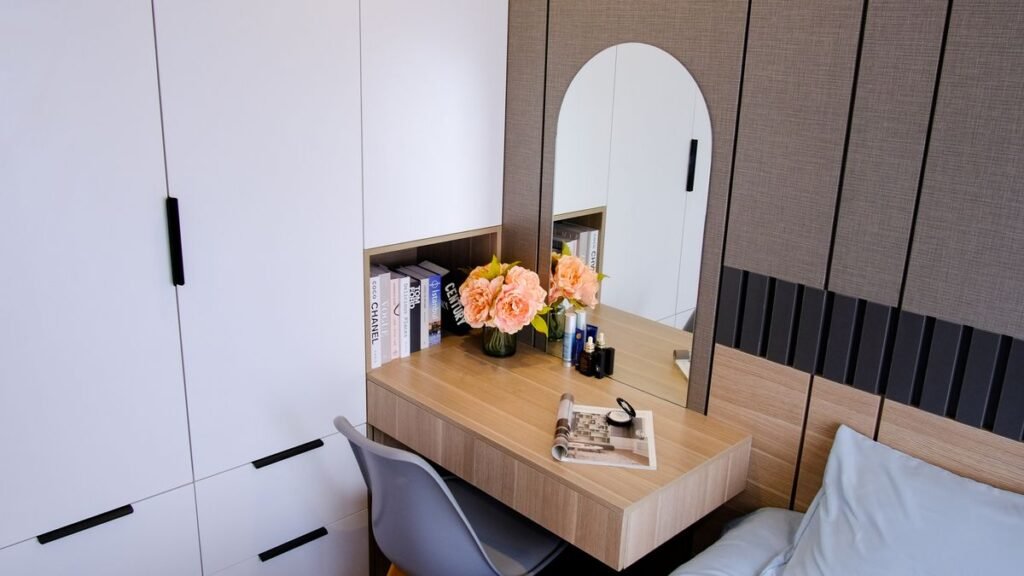
Why hospitality projects outgrow off-the-shelf retail options
When a hotel developer is furnishing 80, 120, or 400 guestrooms, retail and e-commerce vanity options become logistically and financially unworkable. Batch consistency across dozens of rooms, predictable lead times tied to a hotel opening schedule, and finish matching across a full FF&E package are problems that a consumer retail supply chain simply isn’t built to solve. These are commercial manufacturing problems that require a commercial manufacturing partner.
The common failure modes when procurement teams try to source hospitality vanities through consumer retail channels are familiar to anyone who has managed a hotel opening: inconsistent finishes between production batches, transit packaging designed for single-unit retail rather than palletized container loads, no ability to prototype before committing to a full run, and no project management support when something goes wrong two weeks before opening day. Custom dimensions are either unavailable or treated as a premium exception rather than a standard service. These aren’t theoretical risks, they’re recurring problems on projects that started with cost-saving intentions.
Factory-direct custom manufacturing as the smarter sourcing path
Factory-direct custom manufacturing is the default approach for hospitality-scale vanity projects for a simple reason: it addresses all of the requirements simultaneously. A capable factory-direct partner takes the design brief from the interior designer, produces material samples and finish boards for design team approval, builds a model room prototype for client sign-off, and then executes a full production run with documented QC at each stage.
YM Furniture (Foshan Yauming Furniture & Construction Co., Ltd.) is a concrete example of how this works in practice. Operating from a 70,000 square meter facility in Foshan, China, with 17 years of experience producing custom dressing tables, vanity mirrors, and complete FF&E packages for 5-star hotel and luxury villa projects in 30-plus countries, they manage the full project scope from design consultation through installation. Their 20-day model room prototyping capability gives US design teams a physical reference point before production commits. Triple ISO certification (ISO 9001, ISO 14001, ISO 45001) provides the documented quality framework that procurement teams and hotel brand standards require. Factory-direct pricing from YM Furniture delivers substantial savings versus US local market sourcing, a meaningful budget consideration on a 200-room guestroom rollout where the cost differential compounds across every unit in the package.
Key questions to ask before finalizing your dressing table order
Certifications, compliance, and US flammability standards
US hotel furniture procurement requires more than aesthetic approval. For vanity furniture specifically, the compliance requirements that apply most directly are CARB Phase 2 (now implemented federally through EPA TSCA Title VI) for formaldehyde emissions in any composite wood components, California TB 117-2013 for any upholstered bench component, and UL or ETL listing for any integrated lighting, power outlet, or USB charging port built into the furniture. These are not optional documentation items; they are requirements for legal importation and commercial use in US hotel properties.
The critical mistake procurement teams make is requesting compliance documentation after production is complete. At that point, a non-compliant component means either stopping the shipment or accepting a risk that the property’s insurance and brand standards don’t cover. Compliance requirements belong in the initial purchase specification, not in the pre-shipment checklist. A reputable factory-direct manufacturer should be able to provide CARB/TSCA documentation, test reports for upholstered components, and electrical component certifications as part of the standard project process.
Lead times, model room prototyping, and project management
Realistic lead time planning for custom factory-direct vanity orders follows a predictable structure: approximately 45 to 60 days from design sign-off to production completion, plus 25 to 40 days ocean freight to a US port, plus receiving, inspection, and installation time on site. For a hotel with a firm opening date, that math needs to start being done at the FF&E specification stage, not at the point when the interior designer has signed off on finishes. The timeline is workable; it just requires discipline at the front end.
A model room prototype review before full production commit is not a luxury; it’s risk management. It eliminates the class of surprises that are expensive to fix at scale: a finish that reads differently in actual room light than it did on the finish board, a drawer height that conflicts with the chair spec, a mirror mounting height that doesn’t work with the room’s ceiling and wall treatment. A competent factory-direct partner’s project management process should include a dedicated project contact, production milestone updates with photos, pre-shipment QC documentation, and palletization specifications matched to the installation site’s receiving and elevator capacity. Ask for this process in writing before the order is placed.
Frequently Asked Questions
What is the standard size for a dressing table with a full-length mirror?
Standard hotel guestroom dressing tables typically run 42 to 55 inches wide and 18 to 22 inches deep, with a mirror height of 55 to 65 inches. Villa suites support larger footprints, typically 55 to 72 inches wide.
What certifications should a hotel dressing table comply with in the US?
CARB Phase 2 (implemented federally through EPA TSCA Title VI) for formaldehyde emissions, California TB 117-2013 for upholstered components, and UL or ETL listing for any integrated lighting or charging ports.
How long does it take to order custom dressing tables for a hotel project?
Approximately 45 to 60 days from design sign-off to production completion, plus 25 to 40 days ocean freight to a US port, plus receiving and installation time on site.
Should the vanity mirror be wall-mounted or freestanding?
Wall-mounted mirrors keep the footprint lean and make the room read larger. Freestanding or leaning floor mirrors add visual warmth but require more clearance behind the chair, generally at least 18 to 24 inches.
Why is a model room prototype important before full production?
It eliminates expensive surprises at scale, like a finish reading differently in actual room light, a drawer height conflicting with the chair spec, or a mirror mounting height that doesn’t suit the room’s ceiling and wall treatment.
The specification decision that matters most
Choosing the right dressing table with a full-length mirror for a luxury room is a specification decision, not a shopping decision. The style, dimensions, materials, and lighting integration all need to serve the guest experience and survive the demands of commercial use. Getting that right requires treating the vanity station with the same rigor applied to the bed and the bath.
For single-room or small-scale projects, off-the-shelf options in the styles covered throughout this guide can work well, particularly the Nordic and contemporary minimalist categories where retail quality is strongest. For hotel developers and villa projects furnishing multiple rooms, custom manufacturing delivers far better results on finish consistency, cost efficiency, and design fidelity. YM Furniture is built specifically for that scale of commission, and the factory-direct model makes the economics of bespoke vanity sets viable even on projects with aggressive FF&E budgets. Reach out to their team directly to discuss your project’s design brief, room count, and timeline.
The properties that invest in the right vanity setup aren’t just furnishing a room. They’re engineering a moment their guests will remember, the quiet confidence a guest carries when they walk out the door feeling like the room was designed specifically for them.