Many buyers spend weeks comparing TV specs, refresh rates, and panel types, then give the cabinet underneath it barely a second thought. The result: a media console that’s too narrow for the screen, too shallow for the AV equipment, or completely at odds with the room’s design. The right TV cabinet for your living room doesn’t just hold the TV; it anchors the entire space. The wrong one sits there as a daily reminder of a decision made too quickly.
This guide covers everything you need to make a confident choice: how to size a TV cabinet for your living room to match your screen and your space, which styles are defining living rooms in 2026, how materials actually differ in durability and finish quality, what storage and cable management features to prioritize, and vetted product recommendations across budget, mid-range, and premium tiers. For buyers who need something beyond what retail offers, specific dimensions, custom finishes, or exact design briefs, the custom manufacturing route gets a full section of its own. Work through this guide in order, and you’ll know exactly what to buy before you ever open a product listing.
How to size a TV cabinet for your living room
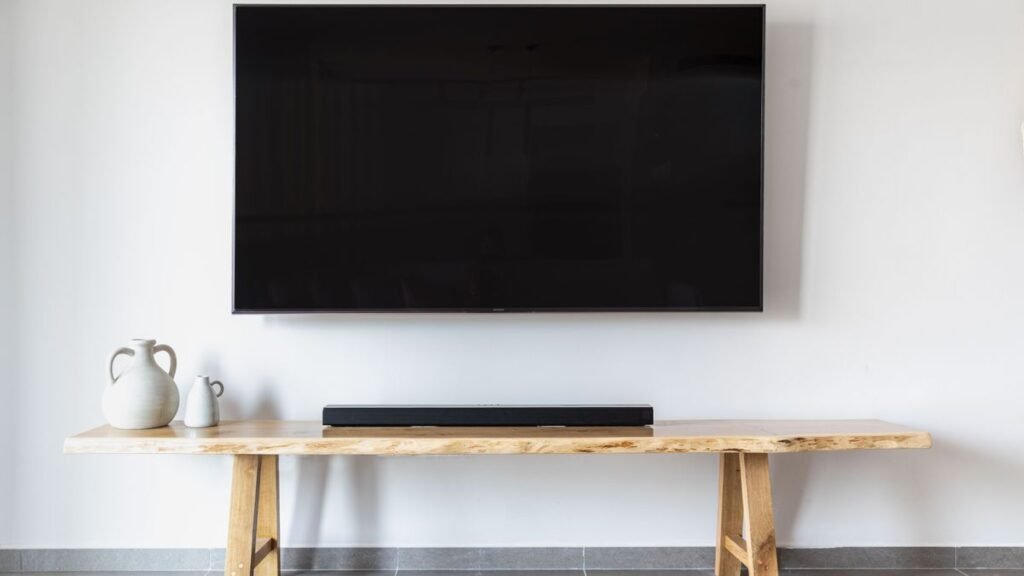
Sizing is where most buyers go wrong first. They measure the TV screen, find a cabinet about the same width, and call it done. That approach ignores the room’s proportions, the TV’s actual body width (which is always smaller than the diagonal screen size), and the visual weight the media console needs to carry on the wall.
The width rule: matching cabinet width to your TV size
The practical formula is simple: take the TV’s actual body width (not the diagonal screen measurement) and add 4 to 8 inches total, roughly 2 to 4 inches per side, to arrive at the recommended cabinet width range for a balanced visual footprint. Here’s how that plays out across common TV sizes:
- 43″ TV (approx. 38″ wide): cabinet width of 42 to 46 inches
- 50″ TV (approx. 44 to 45″ wide): cabinet width of 48 to 53 inches
- 55″ TV (approx. 48 to 49″ wide): cabinet width of 52 to 57 inches
- 65″ TV (approx. 56 to 57″ wide): cabinet width of 60 to 65 inches
- 75″ TV (approx. 66 to 67″ wide): cabinet width of 70 to 75 inches
Always look up your specific model’s actual body width before shopping. Manufacturers list it in the spec sheet, and it matters because two TVs with the same diagonal size can have noticeably different physical footprints depending on bezel design.
Height, depth, and viewing angle
For comfortable seated viewing, AV and home theater guidance commonly recommends that the center of the TV screen sit roughly at eye level when you’re on the sofa, typically somewhere in the range of 40 to 48 inches from the floor, depending on seat height and personal preference. The cabinet height, combined with the TV’s own height, should put the screen center in that zone rather than above it, which causes neck strain over time.
For shelf depth, plan on a minimum of 18 inches to provide stable support for the TV’s base and enough room for AV gear on the shelves below. If you’re housing a full-size AV receiver, look for 18 to 24 inches of usable interior depth, receivers in particular benefit from the extra clearance for both airflow and cable routing.
Scaling the cabinet to the room
The media console shouldn’t just fit the TV, it needs to fit the wall. A 48-inch entertainment unit on a 14-foot wall reads as an afterthought. As a common design heuristic, the TV unit should be no shorter than two-thirds of the sofa’s length for the proportions to feel intentional. Also factor in viewing distance. For a 55-inch TV, plan for around 6.5 feet of clearance from sofa to screen; for a 65-inch, aim for roughly 8 feet; and for a 75-inch, around 9.5 feet works well for most 4K sets. If the room is deep enough for a 75-inch TV at proper viewing distance, the living room media furniture needs the width and visual weight to match.
At a Glance: TV Cabinet Width by TV Size
| TV Size | Recommended Cabinet Width |
|---|---|
| 43-inch TV | 42 to 46 in |
| 50-inch TV | 48 to 53 in |
| 55-inch TV | 52 to 57 in |
| 65-inch TV | 60 to 65 in |
| 75-inch TV | 70 to 75 in |
TV cabinet styles for living rooms in 2026
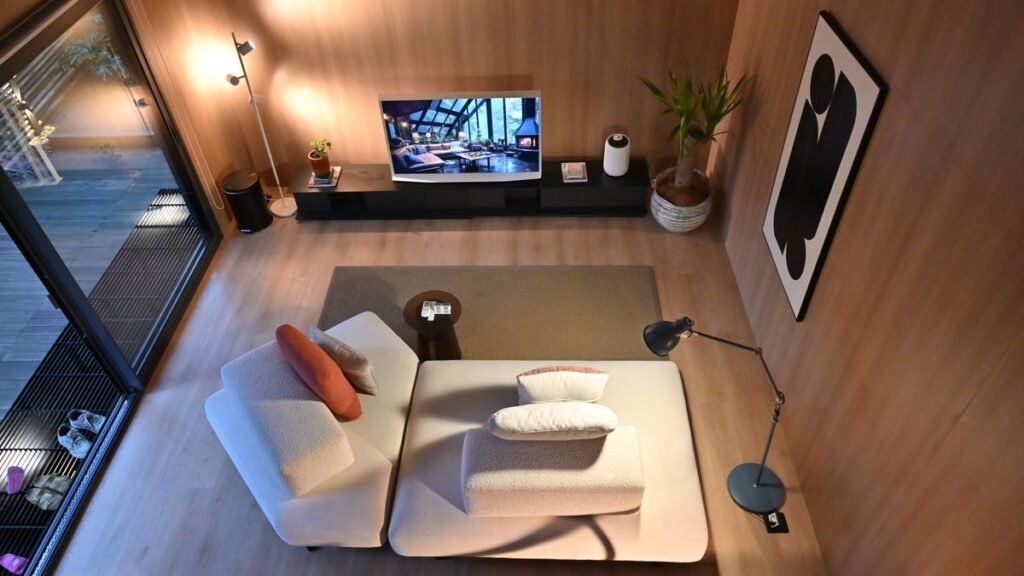
Style isn’t just aesthetic preference. The TV cabinet’s style determines its material palette, proportions, storage approach, and how much it integrates into the room versus standing apart from it. The four dominant directions in 2026 each work best in specific room contexts.
Floating consoles and media walls
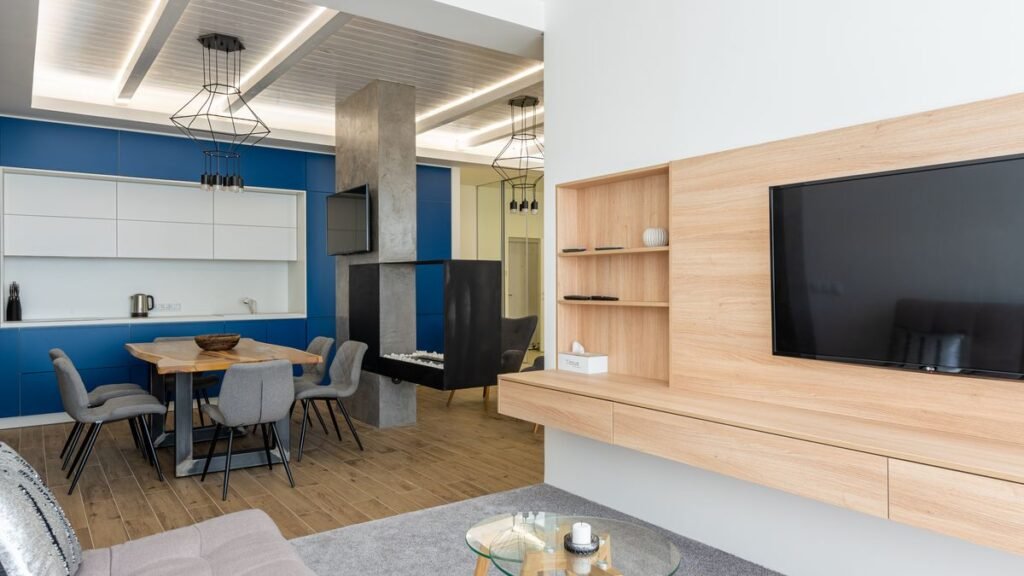
The wall-mounted, low-profile floating TV cabinet is the strongest trend in living room media furniture right now. It creates a clean, architectural look by eliminating the visual clutter of legs and floor-level storage, making rooms feel larger and more intentional. In 2026, this style commonly appears with fluted fronts, warm oak and walnut tones, subtle LED strip lighting behind the panel, and rounded edges that soften what was previously a sharp, cold look, details well supported by current interior design trend coverage. Pair a floating media cabinet with a curved sofa, a textured wool rug, and a slim gallery shelf arrangement on either side of the wall mount, and the result feels designed rather than assembled.
Mid-century and modern farmhouse looks
The mid-century TV cabinet, low horizontal profile, tapered legs, simple wood fronts, remains a strong choice for living rooms that prioritize warmth and visual lightness. In 2026, it’s often mixed with organic modern shapes: a round coffee table, an arched floor lamp, a camel or olive sofa. The combination hits a classic-but-current note that works across a wide range of room sizes. The modern farmhouse media console has also evolved; it’s lighter in color, less bulky, and more texture-forward than earlier versions of the style. Pair it with a linen slipcovered sofa, woven baskets, and black metal accents on a slatted feature wall, and it reads as updated rather than dated.
Industrial and integrated entertainment center styles
The wood-and-metal industrial TV stand is still relevant in 2026, but it works best when softened. A leather or boucle sofa, layered warm lighting, and a reclaimed-wood coffee table prevent the look from tipping into cold utility. The integrated entertainment center, essentially a built-in wall unit that surrounds the TV with shelving, storage, and display space, suits larger rooms where storage demands are high and a custom-built look is the goal. It requires more planning and a larger footprint than a standalone console, but it pays off in rooms where it reads as architecture rather than furniture.
Material options decoded: wood, lacquer, and marble compared
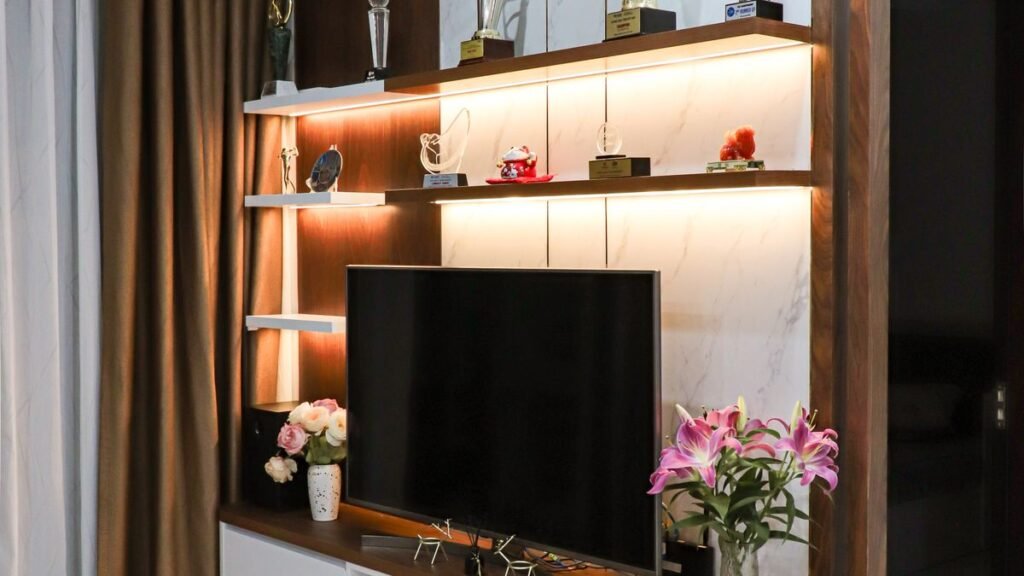
Material choice determines durability, finish quality, and how the piece ages. This is also where price differences between products at the same size are often explained: two 65-inch TV consoles can be priced $400 apart simply because of what they’re made from and how the surface is finished.
Solid wood and engineered wood: the durability tier
Solid wood, oak, walnut, ash, and maple, is the highest-durability choice for a TV cabinet for your living room. It can be sanded and refinished, handles weight well, and ages with character rather than deteriorating. The trade-off is cost: solid wood pieces sit firmly in the premium tier. Engineered wood and high-quality plywood offer strong structural performance and excellent dimensional stability at a lower price point, making them the best value-for-durability choice across most budget ranges. Plywood is widely recommended over MDF for load-bearing components in TV cabinets, because it holds screws better and handles the cumulative weight of AV equipment more reliably over time.
MDF and high-gloss lacquer finishes
MDF is the material behind the smooth, crisp fronts common in contemporary and modern living rooms. When you see a sleek, flat-fronted TV unit with a high-gloss or matte lacquer finish, the surface panels are almost certainly MDF rather than solid wood. MDF machines cleanly, takes paint and lacquer extremely well, and produces flawless results on flat surfaces. The trade-off: it’s not ideal for load-bearing applications. A well-constructed media console typically uses MDF for door and drawer fronts combined with plywood for the structural carcass, getting the best performance out of both materials.
Marble and stone tops: premium surface options
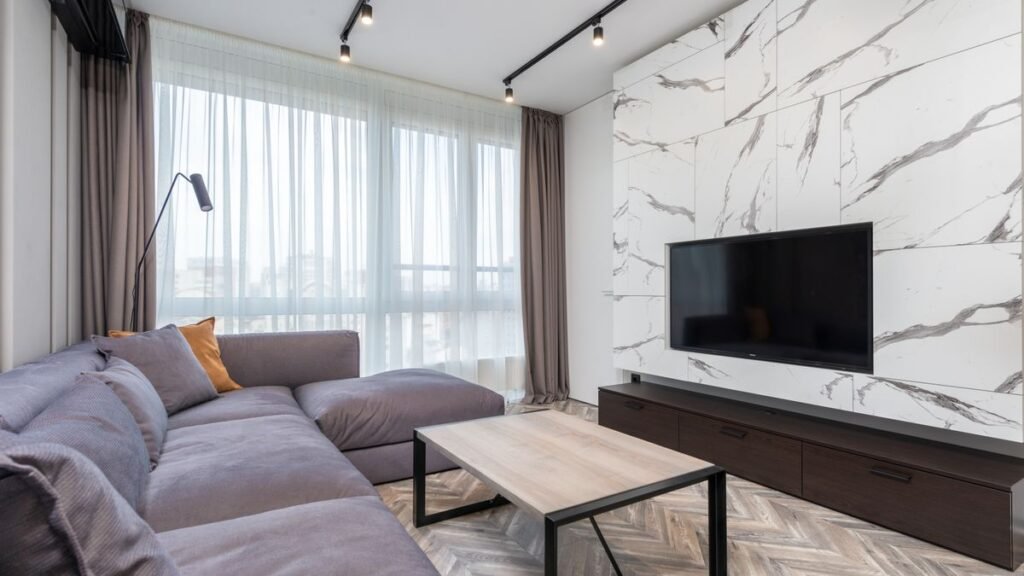
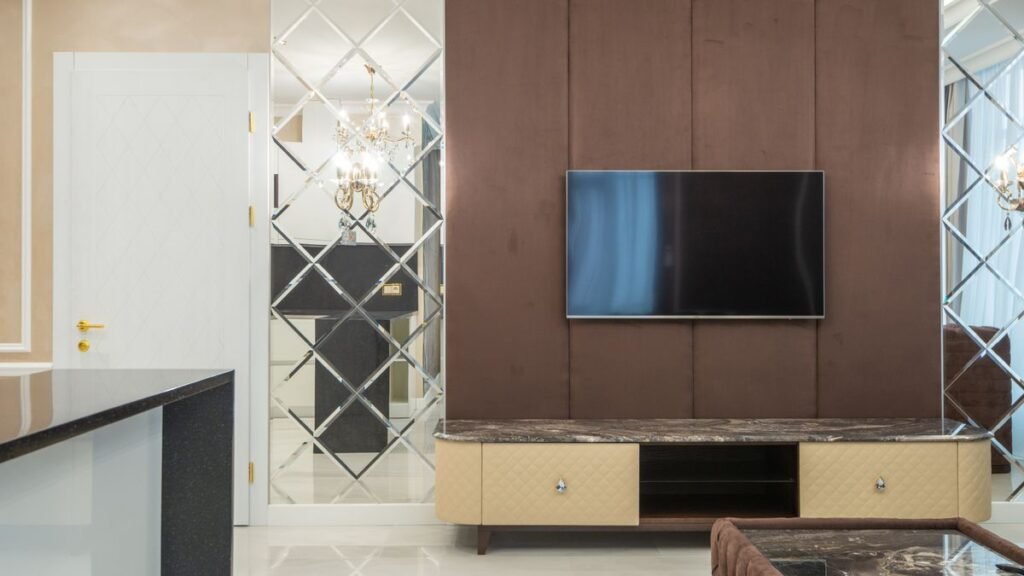
Marble-top TV cabinets appear in high-end living rooms on credenza-style consoles where the surface serves both functional and aesthetic purposes. The marble adds visual weight, a sense of permanence, and a luxury finish that no laminate convincingly replicates. Standard retail rarely stocks marble-top entertainment furniture; it’s more commonly a custom-order item. That makes it one of the clearest examples of where custom manufacturing, covered later in this guide, delivers access to finishes and material combinations that simply aren’t available off the shelf.
Storage configurations and what each one actually solves
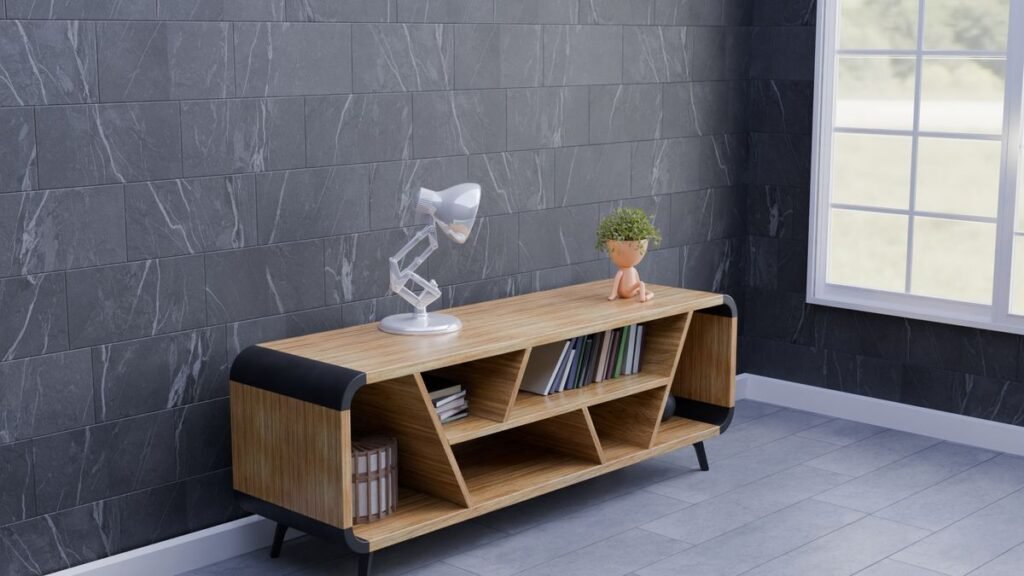
Storage needs vary significantly based on how the living room is used and how much AV equipment needs to live inside the cabinet. Buying a beautiful media console that doesn’t solve your actual storage problem is one of the more common and expensive mistakes in this category.
Open shelving vs. closed cabinet doors
Open shelving is the right choice for remote-controlled AV gear, gaming consoles, and streaming boxes that rely on infrared signals. Closed solid doors can block IR signals and make remote control unreliable, though that’s solvable with glass-front doors, IR-compatible door panels, or an IR repeater system. Closed doors keep the look clean and conceal clutter, but buyers need to confirm the doors are either IR-compatible (some include IR repeater ports) or have glass fronts that allow signal pass-through. The hybrid configuration is often the most practical solution: an open center bay for the TV receiver and active components, with closed side cabinets for storage. This handles both the functional and aesthetic requirements without compromise.
Drawers, adjustable shelves, and display space
Adjustable shelves are worth prioritizing if you want the cabinet to remain functional as devices change over time. A fixed-shelf unit bought for today’s cable box may not accommodate next year’s game console at the same depth or height. Drawers outperform open shelves for cables, remotes, and gaming accessories because they contain the clutter rather than display it. Display shelf space, whether on top of the unit or behind glass-front doors, adds visual function to the console, giving it a role in the room’s decor rather than reducing it to pure utility.
Cable management and ventilation features most buyers overlook

A TV cabinet that looks perfect in the showroom can become a cable disaster within two hours of setup. The two functional features most buyers only notice after unboxing, cable routing and heat management, are worth checking before purchase, not after.
Rear cutouts, grommets, and internal routing channels
Look for rear cable cutouts or grommets at every shelf level, not just at the bottom of the cabinet. A unit with a single bottom cutout forces cables to run vertically along the interior wall, creating a tangle that’s nearly impossible to manage cleanly. Internal cable tie-down points, routing channels, and removable back panels make a meaningful difference: you can route HDMI, power, and speaker cables separately, access them later without disassembling the cabinet, and keep the interior looking intentional rather than improvised. This feature is worth checking in product specs even when it’s not photographed prominently in listings.
Ventilation clearance and weight capacity
Heat-generating AV equipment, particularly receivers, which can run hot, needs passive airflow to operate reliably. Open-back sections, slatted door panels, and vent slots in shelves are the signs of a cabinet designed with this in mind. Solid-door enclosed cabinets that house a receiver without ventilation can shorten equipment life. On weight capacity, the rule is straightforward: the cabinet’s rated load should be at least 50% above the combined weight of your TV and all equipment housed inside it. Many product listings include this spec; if a listing omits it, ask the seller directly before committing.
What your budget actually gets you at each price tier
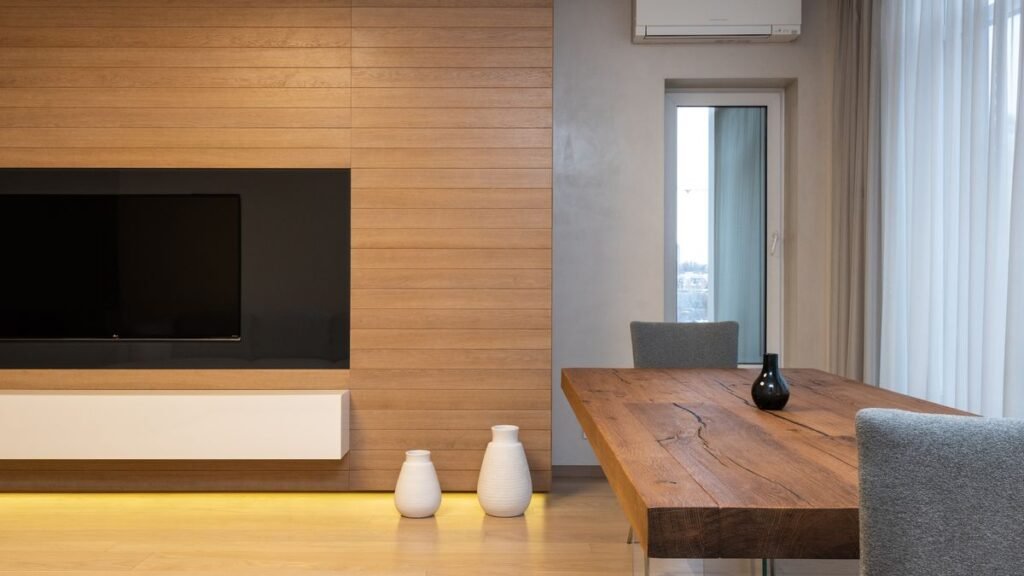
Pricing for TV furniture is less predictable than most buyers expect. Brand markup, retail channel, and material specification all create significant variation at the same price point. Here’s what the tiers actually deliver.
Budget tier: under $300
At this range, the construction is typically MDF or particle board with basic cable management and limited finish options. That trade-off is perfectly acceptable for a secondary room or a short-term setup. The strongest value at this tier is the IKEA BESTÅ system, starting around $169 for a TV bench and scaling up modularly. Its real advantage is flexibility: you can configure it to fit non-standard wall widths and swap components as your needs change. The HOMCOM Media Cabinet with Glass Doors is a solid option for smaller rooms where closed storage and clean aesthetics are the priority at a budget price point.
Mid-range: $300 to $800
This is where construction quality makes a noticeable jump. Engineered wood and veneer finishes replace particle board, cable management hardware improves, and style options expand considerably. The OKD 70-inch TV Stand is a well-regarded pick in this tier, a 300-pound weight capacity, generous internal storage, and reliable cable management make it a highly functional choice for large-screen setups, and it has earned editor recognition in several 2026 roundups for that reason. The VASAGLE Farmhouse TV Stand earns its place as a strong farmhouse-style option at this price, with a durable build that justifies the spend for rooms where that aesthetic is intentional rather than incidental.
Premium: $800 and above
At the premium tier, buyers pay for solid wood or real veneer, hand-applied finishes, better hardware, and design-led proportions that read correctly in larger rooms. The CB2 Alpena Dark Acacia Wood Credenza is a strong statement piece in this group, it works as furniture first, TV stand second, which is exactly what a design-driven living room needs. Arhaus’s Caden Media Console brings rustic-modern warmth at upper-tier craftsmanship levels. The West Elm Mid-Century Wood Media Unit is a clean authentic mid-century option in retail, while the Joybird Owen Media Console serves buyers where visual impact is the primary criterion. For buyers at this budget, custom manufacturing deserves serious consideration, and the next section explains why.
The best TV cabinets for living rooms in 2026
The picks below are selected by use case, not just price. Each represents a strong option in its category based on construction quality, design, and real-world function, not just spec-sheet numbers.
Best budget picks
The IKEA BESTÅ TV Bench remains the top budget recommendation for one reason: it’s the only sub-$300 option that actually adapts to your room rather than forcing your room to adapt to it. Configurations start around $169 and scale as needed, making it the right call for small to mid-size living rooms where flexibility matters. The HOMCOM Media Cabinet with Glass Doors earns its spot for buyers who want closed storage and a clean front elevation at a price that doesn’t require justification. Glass doors solve the IR remote problem without giving up the tidy aesthetic.
Best mid-range TV consoles
The OKD 70-inch TV Stand is a practical best choice for anyone with a 65-inch or larger TV who wants a functional, well-built console without premium pricing. The 300-pound rated capacity handles the TV plus a full AV setup with margin to spare, and the internal configuration is genuinely practical. The VASAGLE Farmhouse TV Stand is the right pick if farmhouse style is the design direction: the build quality at its price point is above average, and the aesthetic holds up in rooms where the rest of the furniture commits to the same direction.
Best premium media consoles
The CB2 Alpena Dark Acacia Wood Credenza is a strong premium pick for living rooms where the TV cabinet needs to function as a design anchor, not just a TV base. The Arhaus Caden Media Console brings authentic craftsmanship and material quality to a rustic-modern brief. The West Elm Mid-Century Wood Media Unit is a well-resolved mid-century option in retail without going custom, and the Joybird Owen Media Console rewards buyers who are prioritizing how the room photographs and feels over storage maximization. All four sit at price points where the custom manufacturing option, covered below, becomes a genuine alternative worth evaluating carefully.
When a custom TV cabinet beats anything you’ll find on a shelf
Standard retail handles most situations well. But not all living rooms fit standard situations, and not all briefs can be solved by choosing between what happens to be in stock.
The case for going custom
Consider the scenarios where retail falls short: a living room that’s 16 feet wide where a standard 72-inch console looks undersized against the wall; an interior designer’s brief specifying a marble-top credenza with matte lacquer doors and a fluted oak base; a villa developer who needs 40 identical media consoles across multiple units, each matching a specific finish schedule. In all three situations, off-the-shelf furniture doesn’t solve the problem, it just gets close enough to be frustrating. Custom manufacturing exists precisely for these cases.
How factory-direct manufacturing changes the math
Factory-direct producers manufacture custom TV cabinets to exact client dimensions and finish specifications, marble surfaces, high-gloss lacquer, solid wood, fluted details, integrated LED, or any combination, without the retail markup layer that adds cost to bespoke work through local studios. For bulk orders or projects with highly specific finish requirements, factory-direct can deliver meaningful cost advantages, though fully custom production at smaller quantities may be comparable to or higher than premium retail pricing, so it’s worth running the numbers for your specific scope.
YM Furniture (Foshan Yauming Furniture & Construction Co., Ltd.) operates at this level as standard practice. The company has delivered custom hospitality and villa furniture to specification across 1,000+ projects in more than 30 countries, with finishes and dimensions driven entirely by the client’s brief rather than a catalog selection. The 70,000-square-meter production facility and full model-room prototyping capability mean you can see a physical sample before full production commits, a level of pre-production verification that no retail return policy comes close to matching. For developers furnishing multiple villa units, interior designers executing a specific design concept, or buyers whose room simply doesn’t fit what retail stocks, YM Furniture is worth contacting directly to discuss dimensions, finishes, and project scope.
Frequently Asked Questions
How wide should a TV cabinet be for a 65-inch TV?
Aim for a cabinet width of 60 to 65 inches, based on the TV’s actual body width plus 4 to 8 inches total for a balanced visual footprint.
How far should the sofa be from a 55-inch TV?
Plan for around 6.5 feet of viewing distance for a 55-inch TV, roughly 8 feet for a 65-inch, and about 9.5 feet for a 75-inch set.
How deep should a TV cabinet be?
Plan on a minimum of 18 inches for stable TV support. If housing a full-size AV receiver, look for 18 to 24 inches of usable interior depth for airflow and cable routing.
What height should the TV screen center sit at for comfortable viewing?
Roughly 40 to 48 inches from the floor for seated viewing, depending on seat height and personal preference.
Should a TV cabinet be sized to the TV or the room?
Both. The cabinet width should follow the TV’s body width plus clearance, but the unit’s overall footprint should also scale to the wall and sofa, generally no shorter than two-thirds of the sofa’s length.
TV cabinet checklist: what to confirm before you place your order

Most buying mistakes in this category happen in the final ten minutes, when a decision gets rushed. These are the questions that catch the expensive oversights.
Measure twice: the numbers to confirm before buying
Three measurements matter before committing to any TV cabinet for your living room. First, the wall width where the cabinet will sit, confirm the piece fits with clearance on both sides, accounting for any wall outlets, switches, or architectural features nearby. Second, the distance between the proposed cabinet position and the nearest seating, checked against the recommended viewing distances for your TV size. Third, door swing clearance: if the unit has hinged cabinet doors, confirm there’s enough open floor space in front of the cabinet for them to open fully without hitting a sofa leg or a coffee table. Also verify your TV’s actual body width against the cabinet’s recommended width range, use the physical width from the spec sheet, not the diagonal screen size.
Questions to ask before committing
For retail purchases, confirm the return policy before ordering a large piece, check delivery lead times against your move-in or project timeline, and verify assembly requirements, some “easy assembly” descriptions understate the actual time and tool requirements considerably. For custom orders, confirm material specifications in writing and request a physical sample or finish board before production begins. Clarify lead times, freight terms, and the delivery process to your address or project site. For large-scale orders, ask specifically about quality control checkpoints during production and whether inspection photos are available before the shipment leaves the factory. These questions separate a smooth project from an expensive problem discovered after delivery.
Final checklist: choosing the right TV cabinet for your living room

The perfect TV cabinet for your living room isn’t the most expensive one or the most on-trend one. It’s the one that fits the space correctly, works honestly with the room’s style, handles your actual storage needs, and protects the equipment inside it from heat and cable chaos. Those criteria don’t require a massive budget, they require a clear decision process applied before you start shopping.
The framework is straightforward: size first, style second, material third, features fourth. Work through those four in order and the product selection becomes much simpler. Buyers with specific dimension requirements, non-standard wall configurations, or finish specifications that retail doesn’t stock should take the custom manufacturing route seriously. Factory-direct production, particularly from experienced hospitality and villa furniture manufacturers with a track record across large-scale projects, can deliver bespoke results at competitive cost, especially for bulk orders or highly specified briefs where retail simply has no answer.
Take your measurements, set your budget, and use this guide as a reference when comparing options. The right floating media cabinet or entertainment center changes how the whole room feels, and that’s worth getting right the first time.