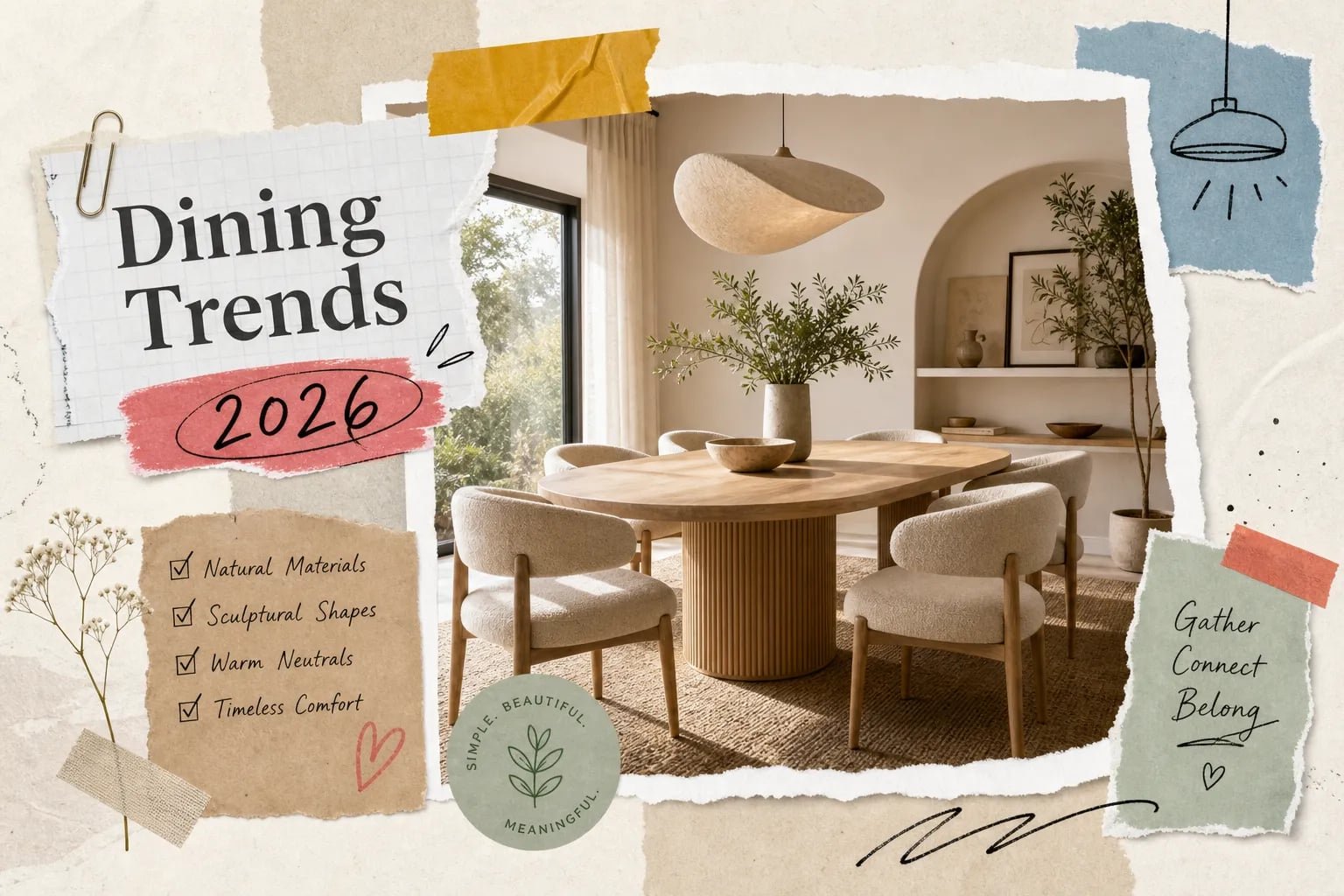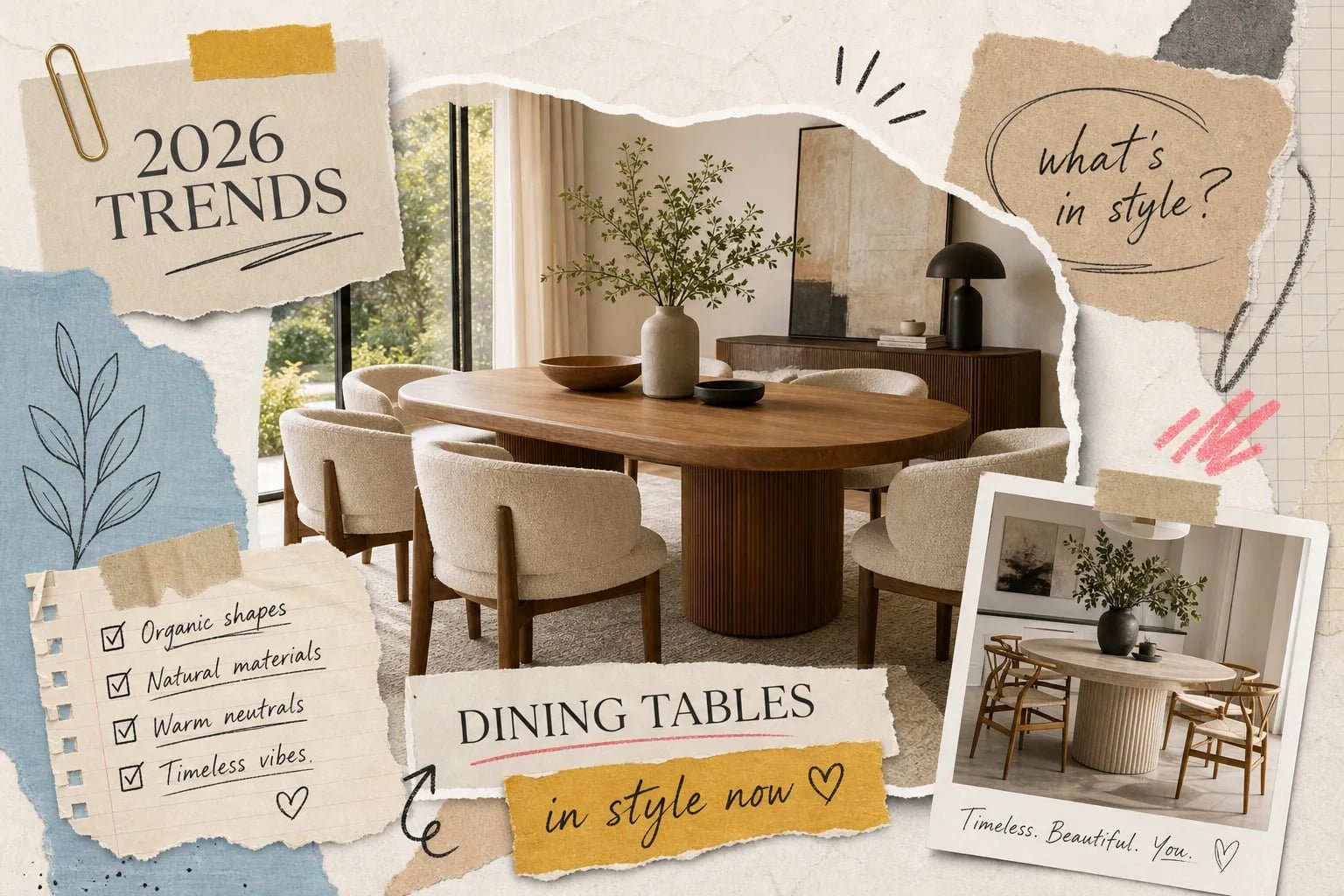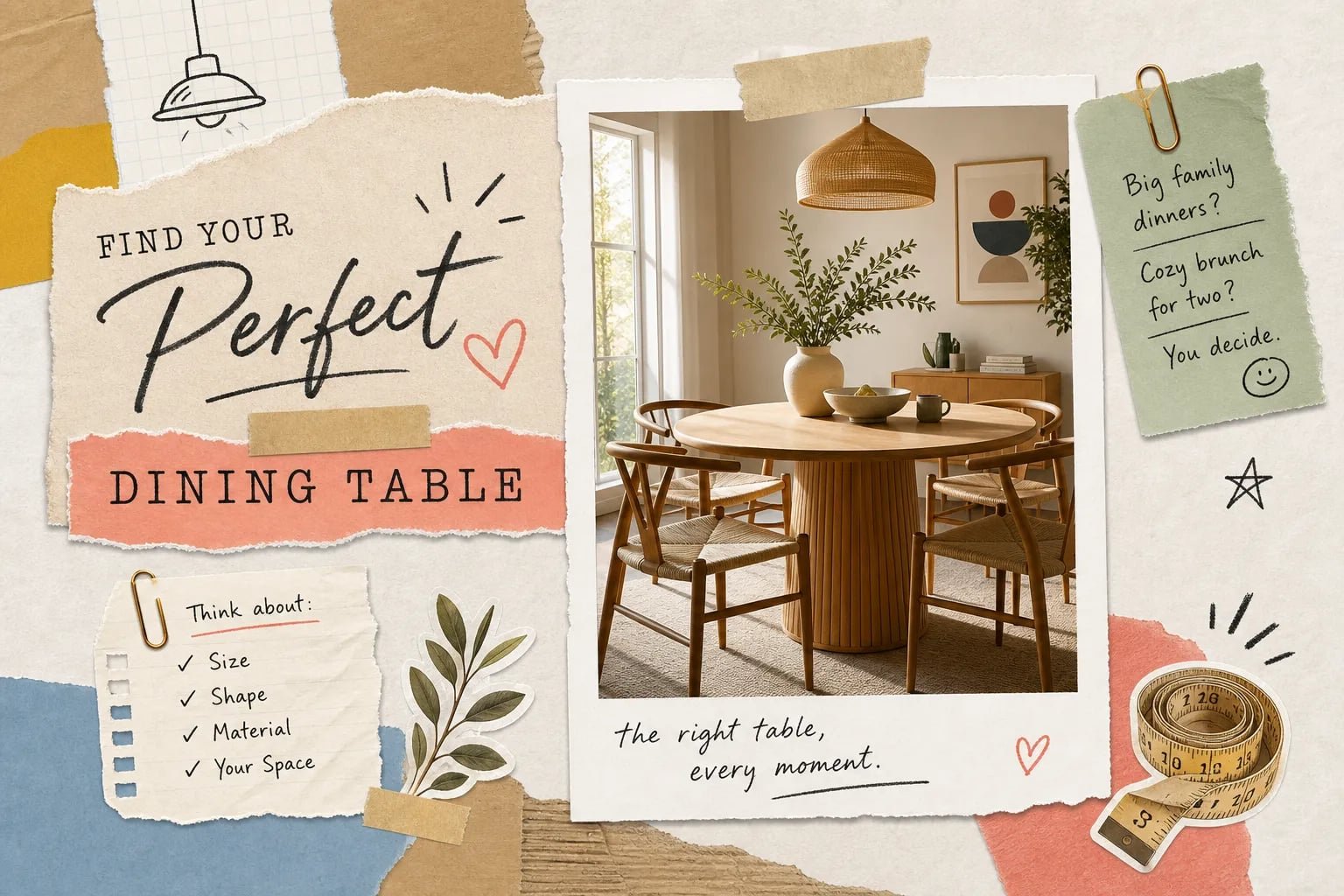
Walk into any furniture showroom or scroll through a retailer’s website and the number of options hits you immediately. Dozens of dining room tables, all photographed in perfect light, styled with matching chairs, and described with language designed to make every single one sound like the obvious choice. The problem is not a lack of options. The problem is that most people choose on looks first and discover the practical issues only after the table is in the room: too large to pull out a chair comfortably, a surface that stains within the first week, or a shape that fights the proportions of the space instead of complementing them.
The good news is that this is an entirely avoidable situation. There is a clear sequence to follow, and experienced interior designers and developers who specify dining furniture across entire villa and apartment projects use exactly the same framework whether they are choosing one table or fifty. This guide works through every step: measuring the room correctly, choosing the right shape for the geometry, understanding standard sizing by seating capacity, comparing the four main materials honestly, deciding whether an extendable table makes sense, matching style to the wider interior, and navigating the UK market at every budget. By the end, you will have everything you need to make the decision with confidence.
Measure your room before you fall in love with a table
Most buying mistakes happen before anyone opens a catalogue. The table looks perfect online; it arrives, and suddenly there is no room to pull out a chair without catching the wall. Starting with accurate room measurements removes that risk entirely and gives every subsequent decision a firm foundation.
The 36-inch clearance rule
The standard guidance is to leave at least 36 inches (approximately 91 cm) between the edge of the table and any wall or fixed obstruction. On main circulation paths, 42 to 48 inches is considerably easier for guests to pass behind seated diners. This is not a design preference; it is a functional minimum that allows seated diners to stand up and people to walk behind them without everyone shuffling sideways.
How to calculate your maximum table footprint
The maths is straightforward. Measure wall to wall, identify fixed obstructions such as radiators, doors, and built-in units, then subtract the clearance allowance on each relevant side. A practical planning shortcut many designers use is to subtract 72 inches (about 183 cm) from both the room length and width to estimate the maximum table dimensions. This gives a working boundary rather than a finished decision, but it tells you immediately whether a table you are considering falls within a realistic range for the space.
Marking out the space before buying
Before ordering anything, tape the proposed table outline on the floor and place chairs around it at the distances you would actually use them. Walk around the taped outline, sit down, stand up, and pass behind the chairs. This single step reveals problems that measurements on paper miss, particularly in rooms with unusual proportions, bay windows, or doors that open into the dining area. Spending a day with the tape on the floor before committing to a purchase is one of the most useful habits you can develop when furnishing a home.
Dining room tables: which shape fits your space?
Once the room dimensions are clear, shape selection becomes logical rather than purely aesthetic. Each shape suits specific room geometries and traffic patterns, and choosing the wrong one creates friction every time the family sits down.
Round tables: the best option for square and compact rooms
A round dining table has no corners to navigate around, which makes traffic flow noticeably smoother in tighter spaces. It also creates an inherently conversational seating arrangement where everyone faces each other naturally. Round tables work particularly well in square dining rooms or in open-plan kitchens where the table sits in an island-style position with circulation on all sides. Standard round tables for four people typically have a diameter of around 100 to 110 cm; for six, 120 to 130 cm is the practical range. Beyond 130 cm, conversation across the middle of the table becomes difficult.
Rectangular and oval tables for longer dining rooms
Rectangular dining tables are the most common choice in the UK because most dining rooms are longer than they are wide, and a rectangle uses that footprint efficiently. An oval table offers the same space efficiency as a rectangle but softens the profile, reduces corner-snagging in tighter passages, and seats a similar number of people. For a room where you want the capacity of a rectangular table without the harder edges, an oval is a useful middle ground rather than simply an aesthetic choice.
Square tables for intimate, compact spaces
A square table works well for two to four people in a compact square room. It seats people equally on all sides, feels visually balanced, and avoids the dead zone at the ends of a long rectangle where two people sit far from the rest of the group. The limitation is that it can feel bulky in a narrow room and is rarely the right choice for six or more guests, where a rectangular or oval table will use the space far more efficiently.
Dining room tables: sizes and seating capacity
Knowing standard dining table sizes by seating capacity removes the guesswork when you are cross-referencing a room’s available footprint with your household’s actual needs. The figures below are practical UK benchmarks, not absolute minimums.
Standard rectangular table sizes
The table below gives comfortable everyday seating sizes for rectangular tables. Width matters as much as length: a table that is too narrow leaves no room for serving dishes and makes elbow space feel tight, even when the length is correct.
| Seats | Typical rectangular table size |
|---|---|
| 2 people | 70, 90 × 70, 90 cm |
| 4 people | 120, 140 × 80, 90 cm |
| 6 people | 150, 180 × 85, 95 cm |
| 8 people | 200, 220 × 90, 100 cm |
Round table diameters by seating capacity
Round table sizing follows a similar logic. For everyday use, these diameters give comfortable elbow room and enough space for serving dishes in the centre. Anything above 150 cm diameter is unusual for a domestic dining room and tends to work better in hospitality or commercial settings.
- 2 people: 60, 80 cm diameter
- 4 people: 100, 110 cm diameter
- 6 people: 120, 130 cm diameter
- 8 people: 140, 150 cm diameter
The 60 cm per person rule and standard table height
A simple rule to carry into any showroom is to allow approximately 60 cm of table edge per seated person. This gives enough elbow room for comfortable everyday dining without feeling cramped. Standard dining table height in the UK is 74 to 76 cm, and this matters more than most people realise: a mismatch of even a few centimetres between table height and chair seat height makes daily dining noticeably uncomfortable, so always confirm chair dimensions before buying separately.
The four main dining table materials compared
Material choice determines how a table looks on day one, how it feels to eat at daily, and what condition it will be in after five or ten years of family life. Each of the four main material types has a different durability profile and different maintenance requirements.
Solid oak and hardwood: the durable everyday choice
Solid oak is dense, hard-wearing, and resistant to dents. Scratches tend to blend into the grain rather than standing out the way they do on painted or lacquered surfaces, which is a meaningful practical advantage in a household with children. Oak tables can also be sanded and re-oiled if the surface becomes tired over time, giving them a longevity that other materials cannot match. The trade-off is weight, cost, and some sensitivity to humidity changes. For care, wipe spills immediately with a damp cloth, keep the table away from direct heat sources and prolonged sunlight, and renew oiled or waxed finishes once or twice a year depending on use.
Marble: the most luxurious option, with conditions
Marble dining tables read as statement pieces and carry a weight and presence that no other material quite replicates. The surface is heat-resistant and structurally very durable, but marble is porous and vulnerable to staining and etching from acidic foods, wine, coffee, and citrus. A marble table in a household with young children demands real commitment to daily care. Sealing before first use is essential; for surfaces in regular use, resealing typically every 6 to 12 months is recommended, use the water test to judge when it is due. If water beads on the surface, the seal is intact; if it soaks in or darkens the stone, reseal promptly. For homeowners who want the look without the maintenance, engineered stone offers a more forgiving alternative. Marble remains the preferred specification for high-end villa and hospitality interiors, where dining tables are often produced to exact dimensions and finishes for large-scale projects.
Glass-top tables: light-looking but fingerprint-prone
A glass-top dining table makes a room feel larger and brighter because light passes through rather than being absorbed. The surface is easy to wipe clean and does not absorb stains. The practical downside is relentless fingerprints, visible dust, and the noise of cutlery and crockery on glass, which surprises many buyers in the first week of ownership. Impact resistance is the main structural concern: tempered safety glass is standard and the correct specification to look for, but it still chips at edges. Glass tops work best in smaller dining rooms, contemporary interiors, or households without young children who treat the table as an activity surface.
Veneer and engineered-core alternatives
Veneer tables use a thin layer of real wood over an engineered core such as MDF or plywood. They can be attractive and are often lighter and more affordable than solid wood, making them a practical starting point for renters or first homes. The limitation is repairability: if the surface chips, peels, or wears through, the damage is difficult to reverse at home. A quality veneer over a stable core can hold up well with careful treatment, but it does not offer the long-term resilience of solid hardwood. For care, use gentle cleaning products, avoid abrasives, and protect the surface from excess moisture, particularly at edges and joints where water can penetrate.
Extendable dining tables: do you actually need one?
An extendable dining table solves a specific problem: a household that needs a compact table for everyday meals but occasional capacity for guests, gatherings, or holidays. For that scenario, an extendable table is a practical solution rather than a compromise. The question is which extension mechanism suits your actual habits.
How the different extension mechanisms work
There are four main types, and each works best in a different situation:
- Butterfly leaf: stored inside the table and unfolds from the centre. Convenient for one person and no separate storage required.
- Slide-out panels: sections slide from beneath the tabletop and extend the length smoothly. Well suited to regular use.
- Removable leaves: separate sections inserted into the table to increase length. Better for larger jumps in capacity but requires storage space for the leaf when not in use.
- Drop-leaf: hinged sections fold down when not needed. Very compact when closed; most useful in tight spaces such as a small kitchen-diner.
Which mechanism works best for everyday family life
For most families, a butterfly-leaf or smooth slide-out mechanism is the most practical choice. Both are designed for frequent extension and contraction without storing a separate component, which means they actually get used rather than staying locked in place for years, though always test for stability when fully extended, as cheaper mechanisms can feel noticeably wobbly at full length. Removable-leaf tables suit households that rarely extend but need significant extra capacity when they do, such as large family gatherings a few times a year.
Matching your table to your interior style
A table that suits the room dimensions and seats the right number of people still needs to feel visually coherent with the rest of the space. Style matching comes last in the decision sequence, once the functional criteria are met, because almost every aesthetic is achievable across multiple materials and finishes.
Contemporary and Scandi-inspired dining rooms
Light oak, pale wood tones, white marble, and glass tops work naturally in contemporary interiors. Clean lines and minimal ornamentation are the key features to look for, and legs matter as much as the tabletop: tapered timber legs, slender metal frames, and hairpin bases all reinforce a modern feel without overcomplicating the design. An extendable table in light oak is one of the most versatile choices for this style because it reads as deliberate rather than a fallback.
Traditional and farmhouse dining rooms
Darker oak tones, chunky timber frames, turned or trestle legs, and warm finishes define traditional dining rooms. Solid hardwood is the expected material here, and the heavier the construction, the more authentic it tends to look. A large rectangular dining table in natural or medium-toned oak anchors a traditional dining room without competing with period features in the space. For a farmhouse look, a simple plank-top style with sturdy legs and a slightly distressed or hand-oiled finish reads as both practical and characterful.
Luxury and statement dining rooms
Marble tabletops, dark hardwoods such as walnut, and sculptural bases define high-end dining rooms. The table is typically the centrepiece of the room rather than a functional background element, which means material quality and manufacturing precision become clearly visible. A well-finished marble table with clean edges, consistent veining, and a precisely made base reads completely differently from a mass-market version, and the difference is obvious the moment you see both in person. At this level of specification, decisions about the dining table often happen before interior design is finalised, as the table sets the tonal reference for everything else in the room.
Where to buy dining room tables in the UK at every budget
Understanding the price landscape before shopping saves time and avoids the frustration of falling in love with a table that sits several hundred pounds above the actual budget. UK dining room tables span a wide range from under £100 to well over £4,000, and the tier you shop in largely determines the materials and construction quality available.
Budget options: under £300
IKEA, Dunelm, Argos, Habitat, and Next all offer dining tables from around £99 to £300. At this price point, most tables are veneer, MDF, or simple solid pine, and they are practical starting points for renters, first homes, or dining rooms that see light use. Construction quality varies considerably between specific models, so reading verified reviews for individual products matters more in this tier than anywhere else. A £150 table from one brand can outperform a £250 table from another; price alone is not a reliable quality guide here.
Mid-range options: £300 to £1,000
John Lewis, Oak Furnitureland, Swoon, and Next’s branded ranges all sit comfortably in this tier. Mid-range tables typically offer real wood options, better joinery, and longer-lasting finishes than budget alternatives. A solid oak dining table for a family of four is achievable for £400 to £700 in this segment, and this is the tier where most homeowners find the best balance between cost, material quality, and design choice. Visiting a physical showroom rather than buying solely online is worth the effort at this price point, as photographs rarely convey how substantial or light a table feels in person.
Premium and bespoke: £1,000 and above
OKA, Loaf, Barker and Stonehouse, Nkuku, Castlery, Atkin and Thyme, and Furniture Village cater to this segment. Premium tables feature solid hardwoods, book-matched marble tops, hand-finished surfaces, and well-engineered bases that perform over decades rather than years. Prices range from around £1,000 for a quality solid oak table to over £4,000 for designer marble pieces. At this level, the difference between marble grades and wood finishes is significant and rarely visible in photographs, so seeing pieces in person before committing is always advisable.
A note for developers and designers sourcing at scale
Interior designers and property developers furnishing multiple villas, apartments, or hospitality suites operate under entirely different constraints than a homeowner buying one table. Volume requirements, exact specification matching, and per-unit cost all point in a different direction from UK retail. Sourcing directly from a certified factory manufacturer reduces per-unit cost substantially. YM Furniture (Foshan Yauming Furniture & Construction Co., Ltd.) is one manufacturer worth a direct conversation: they produce fully custom marble and hardwood dining tables to exact dimensions, finishes, and brand standards for large-scale villa and hospitality projects, with a one-stop service covering design consultation, production, quality control, logistics, and installation. It is worth establishing what is achievable for your project scope and timeline before committing to a procurement route.
How to care for your dining table so it lasts
Many well-made dining room tables can last 15 to 20 years depending on the material and how well they are maintained. The maintenance requirements differ significantly by material, and understanding what is involved before you buy avoids unpleasant surprises six months after the table arrives.
Caring for solid wood and oak tables
Wipe spills immediately with a damp cloth and dry the surface promptly rather than letting moisture sit. Use placemats and coasters consistently to protect from heat and moisture. Oiled oak finishes benefit from periodic re-oiling once or twice a year depending on how heavily the table is used; lacquered wood surfaces are more resistant day to day but cannot be refinished in the same way if the finish eventually wears. Keep solid wood tables away from direct sunlight and radiators: consistent heat and dry air causes wood to move, and over time this can lead to surface cracking or joint movement, particularly in older constructions.
Marble and glass maintenance
Marble needs sealing before first use. For surfaces in regular dining use, resealing every 6 to 12 months is typically recommended, use the water test to check performance: if water beads up, the seal is intact; if it soaks in or darkens the stone, resealing is due. Clean with a pH-neutral stone cleaner and never use vinegar, lemon juice, or any acid-based product, as these etch the surface permanently. Wipe spills, particularly red wine, coffee, and olive oil, immediately. Glass tables are the easiest to clean day to day, but the frequency required to keep them fingerprint-free surprises many buyers. A microfibre cloth and glass cleaner are all that is needed, but this may be required every day in a busy household. Avoid dragging anything across a glass surface, particularly near the edges where chips are most likely to occur.
The decision is simpler than it looks
Choosing the right dining room table follows a clear sequence once you have the framework in place. Start by measuring the room and establishing the maximum footprint. Pick a shape that suits the room geometry. Confirm the size against your seating requirements. Decide on a material that fits both your aesthetic preference and your actual lifestyle. Set a budget that reflects how long you want the table to last. Add an extendable mechanism if your household size or entertaining habits call for flexibility. Then, and only then, refine the style choices, because almost every look is achievable across multiple materials and finishes once the practical decisions are settled.
Whether you are buying a compact round table for a first flat, a solid oak family table for daily use, or sourcing dining room tables across a luxury development, the framework is the same. Get the fundamentals right and what seemed like an overwhelming choice becomes a straightforward one. For larger projects requiring factory-direct custom dining tables for villas, apartments, or hospitality properties, YM Furniture (Foshan Yauming Furniture & Construction Co., Ltd.) offers the kind of specification flexibility and scale that UK retail simply cannot match, worth exploring if you are working at volume.