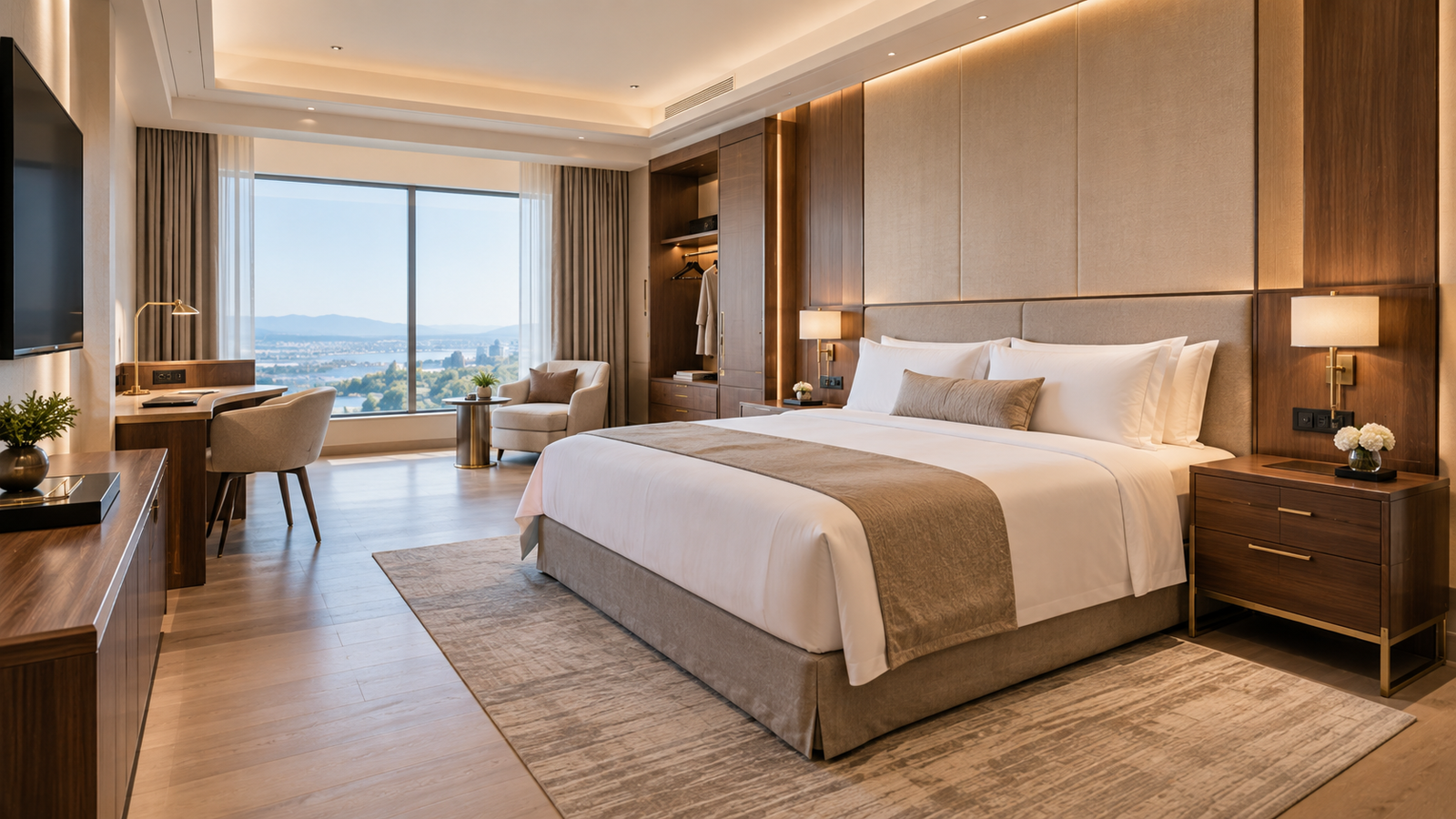
Custom hotel furniture is more than a design choice. It shapes how a guest feels the moment they set a bag down, how a room functions during a chaotic turnover between guests, and how a brand reads across forty identical rooms that somehow all need to feel intentional. A guest may forget the wall color a week later. They will remember whether the desk had anywhere to actually put a laptop.
For hotel owners, developers, interior designers, and FF&E teams, furniture is also a straightforward business decision. It affects brand image, room function, maintenance cost, delivery timelines, and how long a room stays looking new before it needs replacing.
This guide walks through what custom hotel furniture actually is, why hotels choose it over standard catalog pieces, what it costs, how the production process really works, which materials hold up, what compliance actually requires, and how to vet a manufacturer before signing anything.
What Is Custom Hotel Furniture?
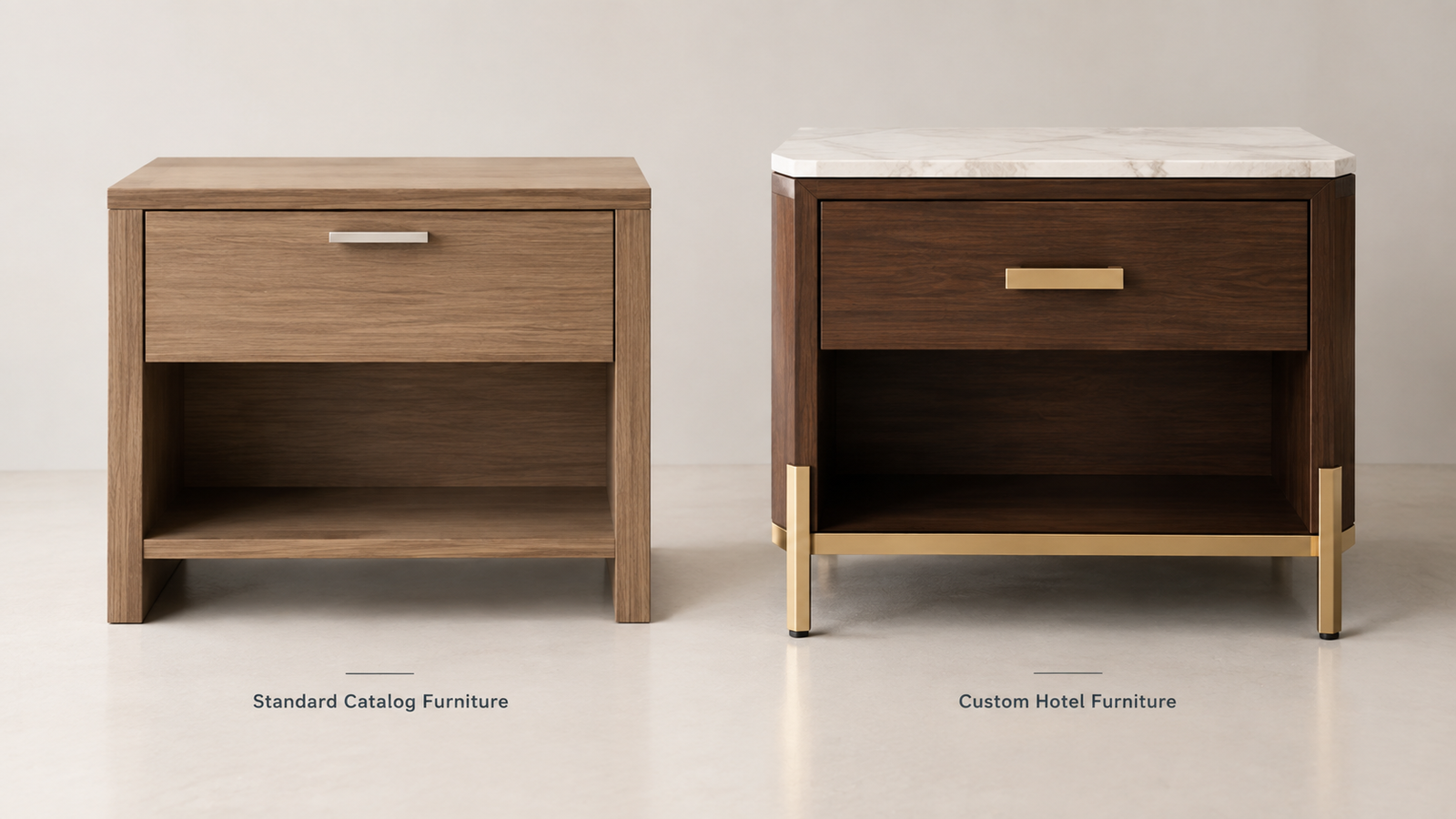
Custom hotel furniture is furniture designed and manufactured specifically for one hotel project, built around that property’s brand, room layout, guest profile, and daily operating needs, rather than pulled from a fixed catalog. Size, material, finish, structure, and hardware can all be adjusted to fit the actual space instead of forcing the space to fit a standard product.
This distinction matters more in hospitality than almost anywhere else. A chair that photographs beautifully in a catalog can still be the wrong depth for a compact guest room, the wrong height for a banquette booth, or the wrong finish for a high-humidity poolside terrace. Custom furniture solves for the actual room, not a generic one.
Custom Furniture May Include
- Headboards
- Nightstands
- Wardrobes
- TV units
- Desks
- Vanities
- Minibar cabinets
- Wall panels
- Luggage benches
- Custom millwork
Broader FF&E May Also Include
- Loose seating
- Lighting
- Curtains and window treatments
- Artwork and mirrors
- TVs and safes
- Operating equipment
- Kitchen or laundry equipment
- Other room accessories
- Public-area FF&E
- Meeting-room FF&E
Custom Hotel Furniture vs. Standard Hotel Furniture
Standard furniture can work fine for a simple, budget-driven project. It is usually faster to source and cheaper upfront. But for any hotel that needs a distinct brand identity, tight space planning, or project-specific dimensions, standard furniture starts to feel like a compromise the moment guests notice the same headboard in three different hotel chains.
| Factor | Custom Hotel Furniture | Standard Hotel Furniture |
|---|---|---|
| Design | Project-specific, matched to the hotel concept | Generic, pulled from a fixed catalog |
| Size | Made to fit the actual room and layout | Fixed sizes, limited flexibility |
| Materials | Flexible, based on budget and durability needs | Limited to what’s in stock |
| Finish | Matched to brand and interior standards | Pre-set finish options |
| Brand Identity | Strong and consistent across the property | Generic, less distinctive |
| Lead Time | Longer, due to design and sampling | Shorter, ready to ship |
| Long-Term Fit | High, planned around the actual project | Medium, depends on layout match |

Why Hotels Choose Custom Furniture
Hotels do not choose custom furniture purely because it looks better in photos. They choose it because it solves specific, recurring project problems that standard furniture cannot.
Furniture communicates what kind of hotel a guest has walked into before a single staff member says a word. Custom pieces let a brand concept become something a guest can actually sit on and touch.
Guest rooms have to work hard, especially in dense urban builds. Custom-dimensioned furniture can fit compact rooms, awkward corners, and irregular layouts without wasting a single square foot.
Guests notice comfort fast, and they notice friction faster. Custom furniture is built around how the room is actually used, not how it looks in a rendering.
Hotel furniture takes a beating: daily housekeeping, luggage impact, spills, and constant guest turnover. Commercial-grade specifications use heavier joinery and more resilient finishes.
Cheap furniture becomes expensive later. Durable custom furniture, sized and built for the actual traffic level of the space, reduces that ongoing cost even when the upfront price is higher.
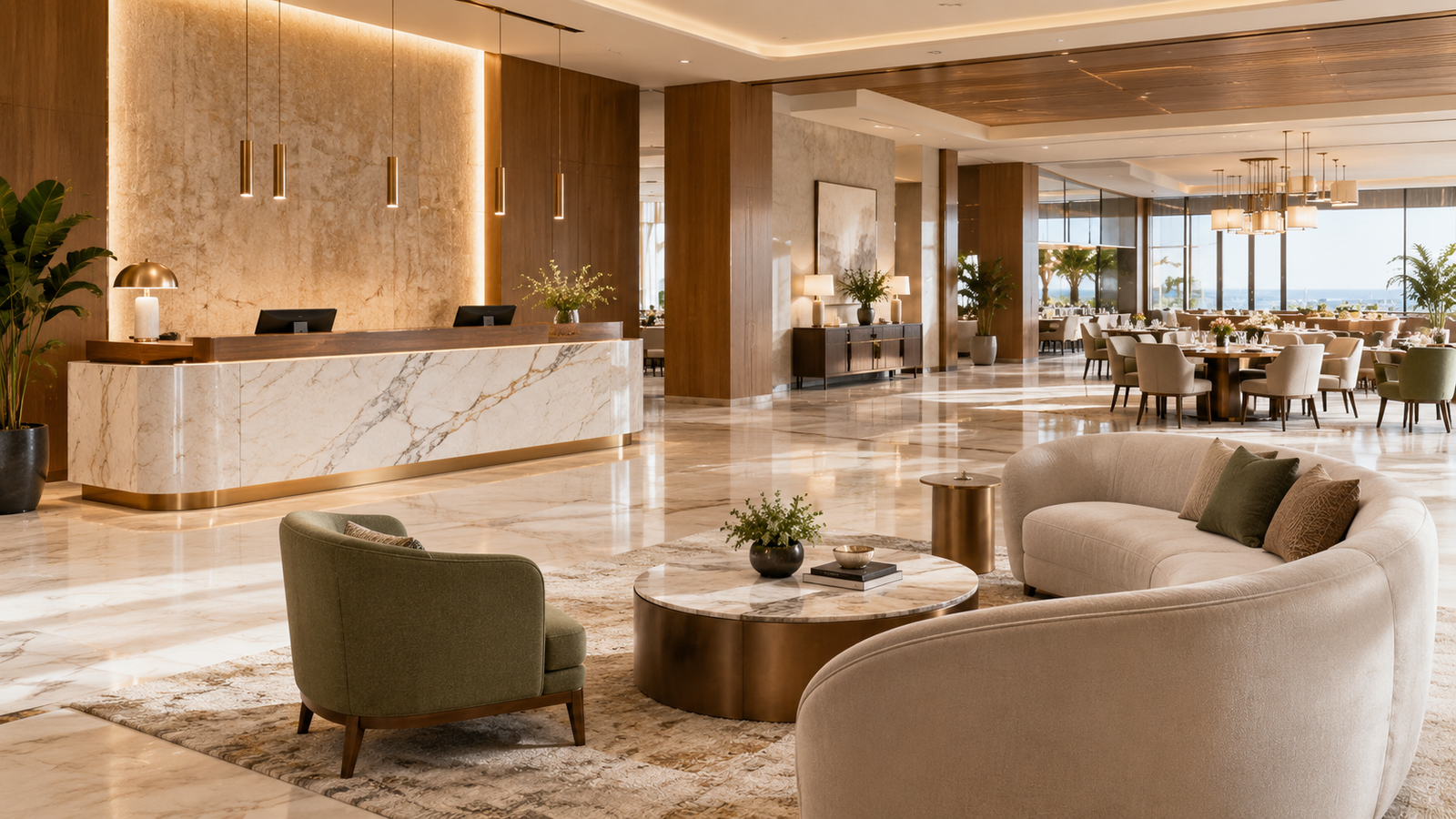
Types of Custom Hotel Furniture by Area
A hotel is not one room repeated. It’s a full guest journey, and each stop on that journey needs furniture built for its own function, traffic level, and maintenance demands.
Guest Room Furniture
Guest room furniture is the core of most hotel furniture programs, and it’s what guests spend the most time actually using.
- Bed frames and bases
- Headboard wall systems
- Nightstands
- Wardrobes
- Desks and workstations
- TV cabinets
- Minibar units
- Luggage racks
- Bathroom vanities
Hotel casegoods in particular, wardrobes, desks, nightstands, and TV units, need to fit the room’s exact layout and survive years of daily use without the joints loosening or the finish showing wear.
Lobby and Public Area Furniture
The lobby sets the first impression, and it has to look composed while absorbing constant foot traffic, luggage, and waiting guests.
- Reception desks
- Lobby sofas and lounge chairs
- Coffee and side tables
- Waiting area seating
- Corridor and lounge furniture
- Business center and meeting room furniture
Restaurant and Bar Furniture
Dining spaces need furniture that feels inviting for a two-hour dinner and holds up under constant cleaning between seatings.
- Dining tables
- Restaurant chairs
- Bar stools
- Banquette seating
- Buffet counters and host stations
Outdoor Furniture
Outdoor and poolside areas need weather-resistant materials specifically, since sun, humidity, and salt air will find and exploit any material weakness fast.
- Pool loungers
- Outdoor sofas and daybeds
- Patio dining sets
- Cabana furniture
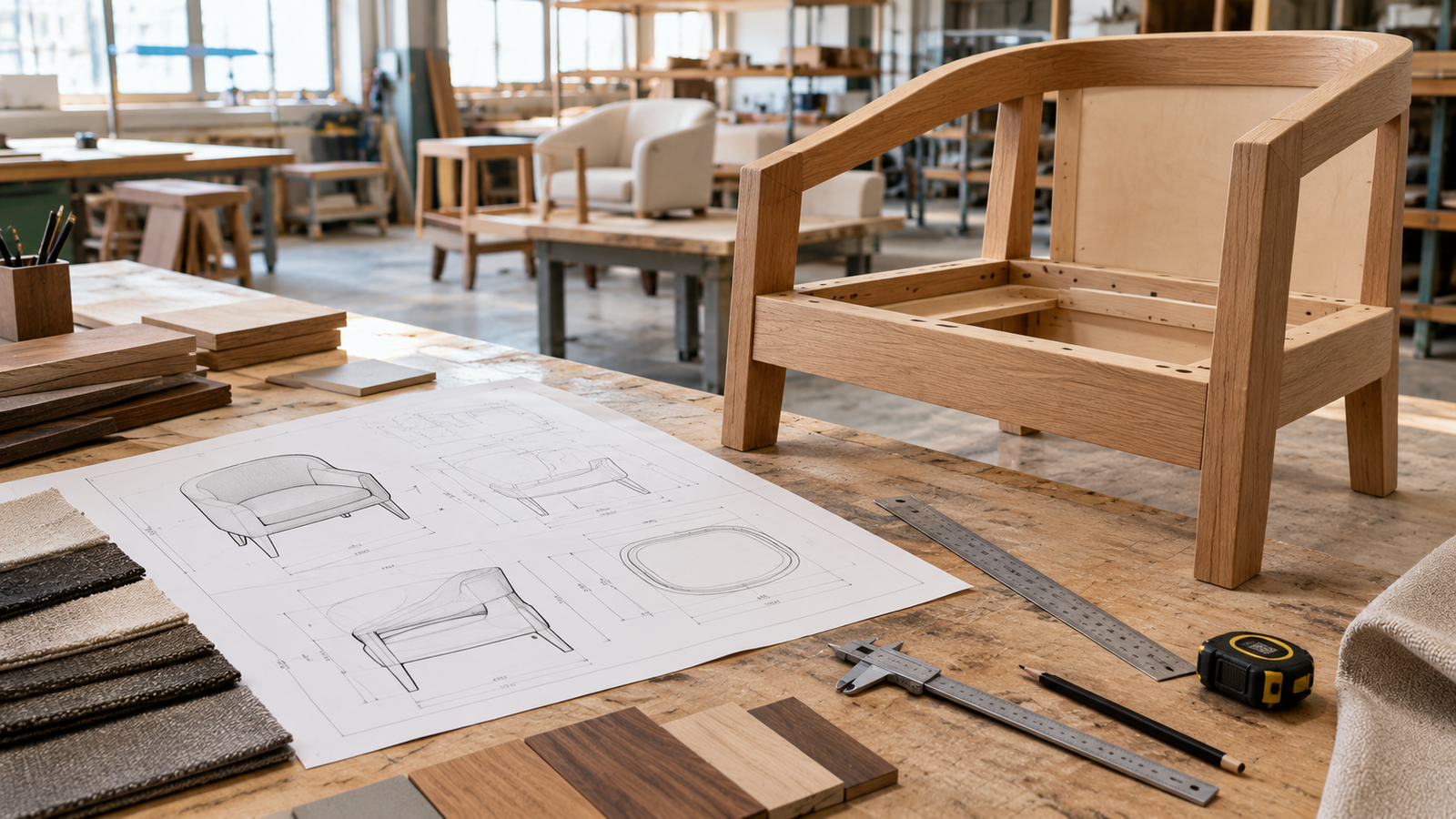
The Custom Hotel Furniture Project Workflow
Custom furniture doesn’t go from idea to installed room in one step. A properly run project moves through ten distinct stages, each with its own checkpoint.
Gather brand direction, room count, and budget. Output: a clear project brief.
Confirm what furniture fits and functions in each space. Output: an approved layout plan.
Develop initial design concepts from the brief. Output: a confirmed design direction.
Select and review materials against durability and budget. Output: approved material references.
Produce detailed technical drawings. Output: buildable shop drawings.
Produce samples to judge real materials. Output: approved samples and prototypes.
Build and review a full model room. Output: final adjustments locked in.
Begin full production at the confirmed volume. Output: scheduled mass production.
Confirm the order matches the approved sample. Output: a documented inspection report.
Package, ship, and install on-site. Output: a completed, guest-ready installation.
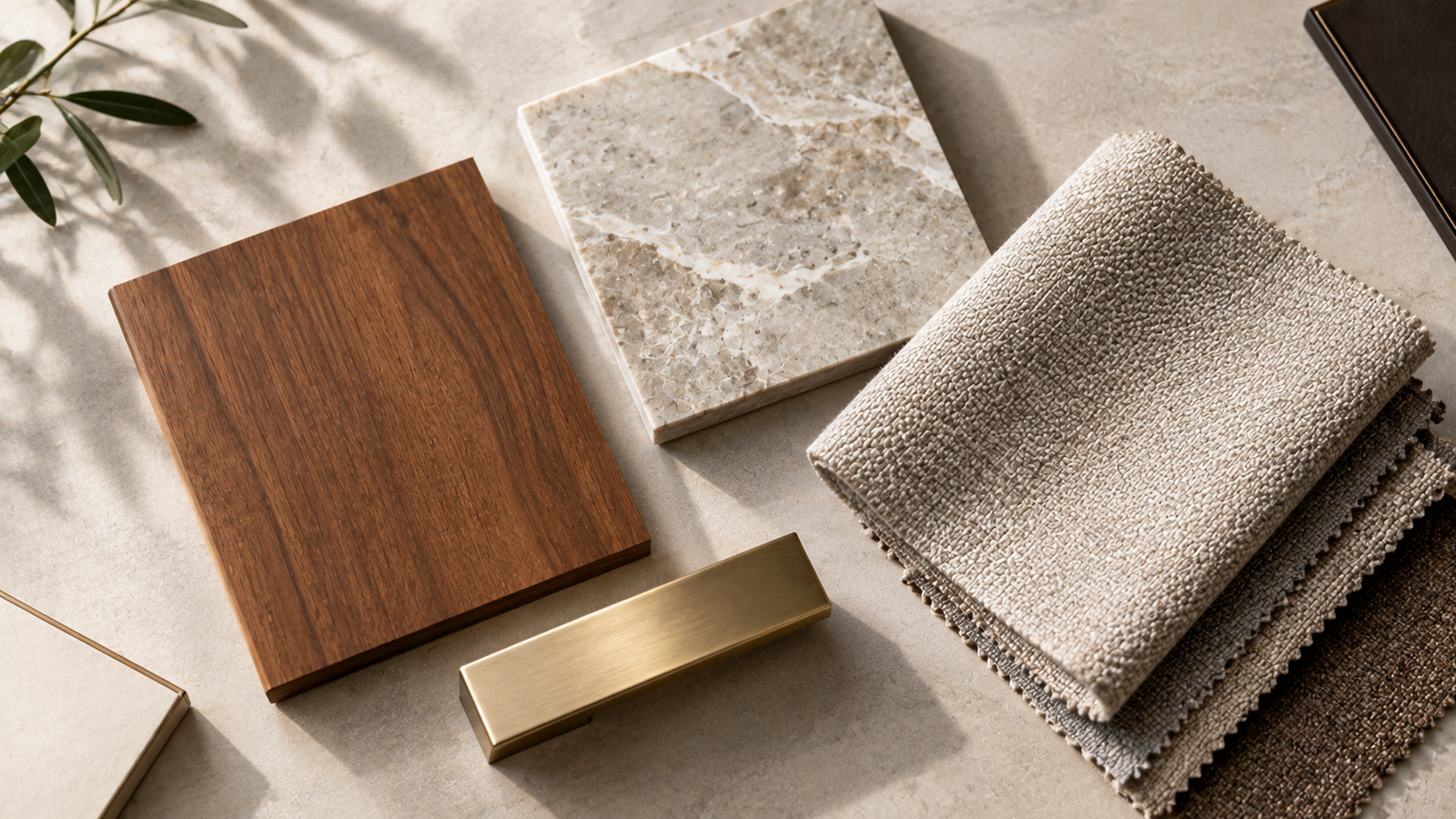
Best Materials for Custom Hotel Furniture
There is no single “best” material for hotel furniture. There is only the best material for the specific job, budget, and traffic level of the space it’s going into.
| Material | Best For | Advantages | Considerations |
|---|---|---|---|
| Solid Wood | Headboards, casegoods, dining tables | Durable, premium feel, repairable | Higher cost, weight |
| Wood Veneer | Wardrobes, TV cabinets | Cost-effective, consistent grain | Less repairable than solid wood |
| Plywood / Engineered Panels | Structural casegood cores | Stable, resists warping | Needs a quality face material |
| HPL / Laminate | High-traffic surfaces, desks | Highly durable, easy to clean | Limited repair options if damaged |
| Metal | Bases, outdoor frames, hardware | Strong, long lifespan | Can be heavy, needs rust protection outdoors |
| Stone / Solid Surface | Vanities, table tops | Premium look, heat and stain resistant | Heavier, higher cost |
| Fabric / Performance Textiles | Upholstered seating | Wide design range | Needs commercial-grade rating for durability |
| Leather | Lounge seating, headboards | Premium feel, ages well | Higher cost, needs proper care |
| Outdoor-Grade Materials | Poolside, patio furniture | Weather and UV resistant | Higher cost than indoor equivalents |
Custom Hotel Furniture Cost: What Affects the Price?
There is no honest single number for what custom hotel furniture costs. Anyone who quotes a flat per-room price before understanding the project is guessing. What actually determines cost are four specific factors.
| Hotel Tier | Typical FF&E Budget per Room |
|---|---|
| Limited-Service | $12,000 to $18,000 |
| Select-Service | $16,000 to $22,000 |
| Extended-Stay (Upscale) | $22,000 to $30,000 |
| Full-Service | $30,000 to $45,000 |
| Luxury | $60,000 to $150,000+ |
Hotel Category
A 3-star limited-service property and a 5-star luxury resort have entirely different material and construction expectations, and that difference shows up directly in price.
Material Selection
Solid wood, natural stone, and genuine leather all cost meaningfully more than engineered panels, laminate, and performance fabric. Neither tier is wrong, they simply fit different budgets and positioning.
Customization Level
A fully bespoke design with new tooling costs more than an ODM adaptation of an existing design. Minimum order quantities also affect per-unit pricing, smaller custom runs carry a higher per-piece cost since tooling and setup expenses are spread across fewer units.
Shipping and Installation
Freight mode, distance, and whether furniture is delivered flat-packed or fully assembled all affect landed cost, sometimes significantly.
Custom Hotel Furniture Lead Time
Lead time varies by furniture category more than almost any other factor. Stock casegoods can move in 4 to 8 weeks. Custom wood casegoods typically run 10 to 18 weeks. Custom upholstered seating, which involves fabric sourcing and cushion construction, usually takes 12 to 22 weeks. Metal furniture generally falls between 8 and 16 weeks, and decorative lighting between 8 and 14 weeks. Ocean freight and customs clearance add another 4 to 8 weeks on top of ex-factory production time.
The most common cause of delays isn’t production itself, it’s late decisions. A material change requested after shop drawings are approved, or a finish swapped after samples are already in progress, resets the clock on that item specifically.
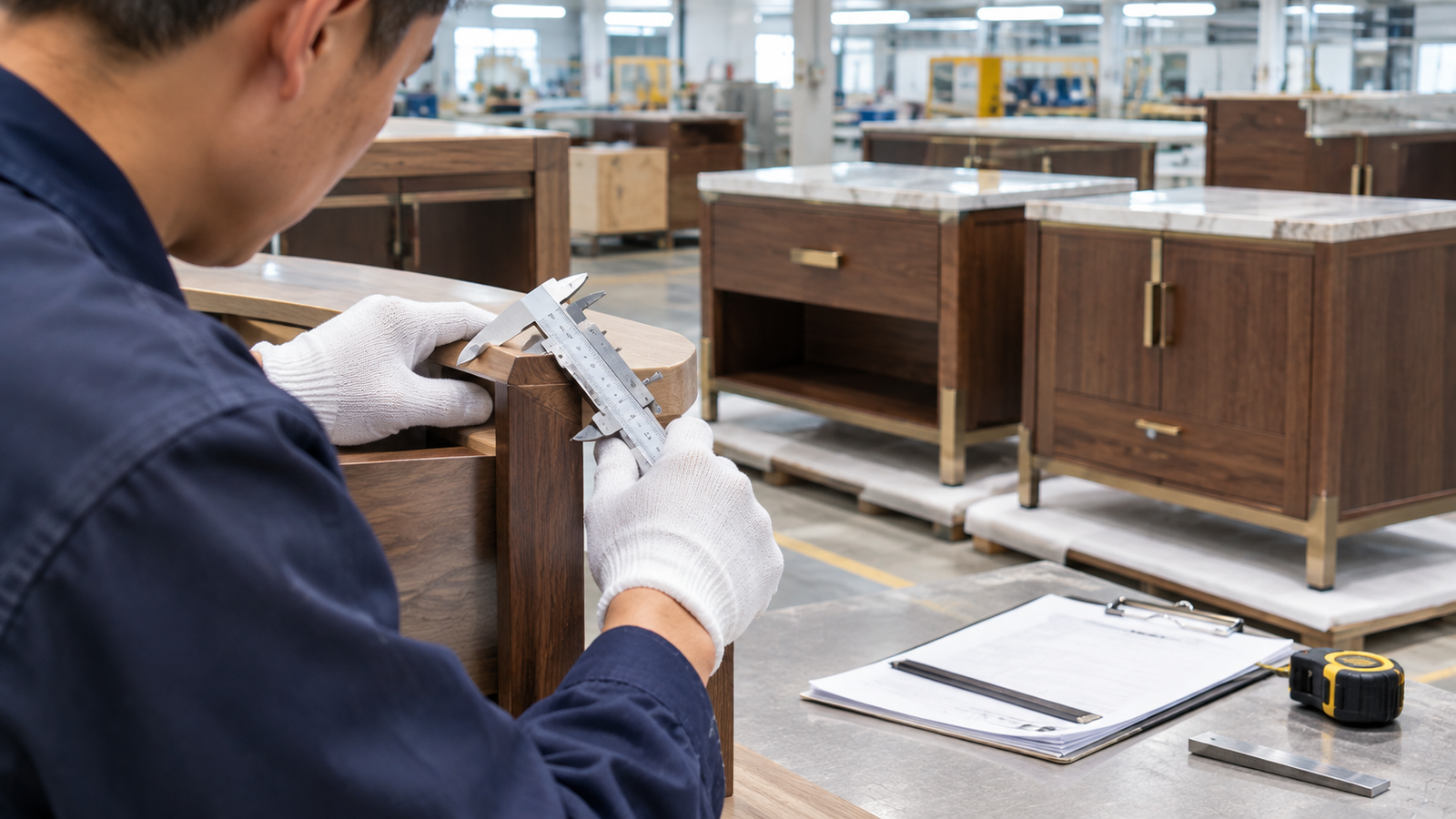
Certifications and Compliance to Consider
Compliance isn’t optional paperwork, it protects guests and protects the hotel from liability. A handful of standards come up repeatedly in hotel furniture projects.
Furniture Performance
Commercial furniture should meet BIFMA performance standards, covering structural durability and safety testing for commercial-use furniture.
Fire Safety
Upholstered furniture sold in the US commonly needs to meet California TB 117-2013 flammability requirements, which many hotel brands treat as a baseline regardless of project location.
Formaldehyde and Composite Wood
Composite wood products should comply with EPA TSCA Title VI formaldehyde emission limits, particularly relevant for casegoods using engineered panels.
Accessibility
Public-area and ADA-designated guest room furniture needs to account for the 2010 ADA Standards for Accessible Design, covering clearances and reach ranges.
Sustainability
FSC chain-of-custody certification verifies that wood materials come from responsibly managed sources, increasingly requested by hotel brands with sustainability commitments.

How to Choose a Custom Hotel Furniture Manufacturer
Do They Have Real Hotel Project Experience?
Hospitality furniture has different durability and compliance requirements than residential or office furniture. Ask for examples of completed hotel projects, not just product photos.
Can They Support Design and Engineering?
A manufacturer that can only execute finished drawings is different from one that can help solve a design or space-planning problem. Know which one you’re actually hiring.
Can They Produce Samples and a Model Room?
A manufacturer unwilling to produce a sample, or one that pushes to skip straight to bulk production, is a real warning sign, not a time-saving shortcut.
Do They Have a Documented QC Process?
Ask specifically how in-line and pre-shipment inspections work, and whether third-party inspection is welcomed or resisted.
Can They Handle Logistics End to End?
Confirm whether the manufacturer manages freight and customs directly or leaves that entirely to the buyer, since that materially changes project complexity.
Do They Offer After-Sales Support?
Furniture will eventually need replacement parts or repairs. A manufacturer with no after-sales process leaves the hotel on its own when something breaks two years in.
Common Mistakes to Avoid
Committing to bulk production without a physical model room review is the single most common cause of expensive, hard-to-fix mistakes discovered too late.
A material that looks right in a rendering can feel completely different in person, and can perform very differently under real hotel traffic.
Treating custom furniture lead times like stock furniture lead times is one of the most common causes of delayed hotel openings.
A finish or material change requested after shop drawings are approved resets the clock and often the cost for that item.
Fire safety and accessibility requirements are far cheaper to build in from the start than to retrofit after furniture has already shipped.
The cheapest quote often reflects thinner materials, weaker joinery, or a shortcut around proper sampling, costs that show up later as early replacements.
Custom Hotel Furniture Trends
FSC-certified wood and low-VOC finishes are shifting from a nice-to-have to a standard expectation among hotel brands.
Natural materials, organic forms, and earthy palettes continue to move from residential design into hospitality furniture programs.
Furniture that recovers usable floor space, like desks that double as luggage surfaces, is increasingly standard in space-constrained urban properties.
Built-in charging, cable management, and lighting controls are moving from a luxury add-on to a baseline guest expectation.
Hotels are increasingly using furniture materials and craftsmanship details to reflect local culture and place, rather than a generic international style.
Custom Hotel Furniture Checklist
Before Design
- Confirm brand standards and design direction
- Finalize room count and furniture scope
- Set a realistic budget range per room
Before Production
- Approve shop drawings
- Approve physical samples
- Sign off on the model room
Before Shipment
- Confirm pre-shipment inspection results
- Verify packaging meets freight requirements
- Confirm all compliance documentation is on file
Before Installation
- Confirm delivery schedule against the project timeline
- Assign an installation team or on-site contact
- Prepare a punch list process for final adjustments
Frequently Asked Questions
How much does custom hotel furniture cost?
There is no single number. Cost depends on hotel category, material selection, customization level, and shipping method, with pricing varying significantly between a limited-service property and a luxury resort.
How long does custom hotel furniture take to produce?
Stock casegoods typically take 4 to 8 weeks. Custom wood casegoods run 10 to 18 weeks, and custom upholstered seating usually takes 12 to 22 weeks, plus 4 to 8 weeks for ocean freight and customs.
What is the difference between custom and semi-custom hotel furniture?
Custom furniture is designed from scratch for one project. Semi-custom furniture adapts an existing design with selected changes to material, finish, or dimensions, offering a faster, lower-cost middle ground.
Do hotel furniture manufacturers handle compliance certification?
A reputable manufacturer should be able to confirm compliance with BIFMA, fire safety, formaldehyde, and accessibility standards relevant to the destination market, and provide documentation on request.
Why is a model room important before bulk production?
It’s the only checkpoint that catches coordination problems, like a nightstand blocking an outlet or a finish reading differently under actual room lighting, before the issue is repeated across every unit in the order.
The Bottom Line
Custom hotel furniture is a bigger commitment than ordering from a catalog, but it solves problems standard furniture cannot: brand consistency, exact space fit, and durability built for real hotel traffic. The projects that go smoothly are the ones that lock in design decisions early, insist on a model room before bulk production, and choose a manufacturer based on real hospitality experience rather than the lowest quote.
YM Furniture (Foshan Yauming Furniture & Construction Co., Ltd.) is a factory-direct manufacturer based in Shunde District, Foshan, specializing in custom hospitality and villa furniture programs, from model room development through full-project installation support.