In theory, buying a TV cabinet need only take twenty minutes. In practice, many buyers spend an evening scrolling through hundreds of listings, each one labelled “modern”, “sleek”, or “perfect for any room”, and still wake up the next morning with no clear idea of what to buy. The problem is not the choice; it is the absence of a decision framework. Without knowing your TV’s actual width, your room’s available depth, and how much hidden storage you need, every cabinet looks equally plausible and equally risky.
The right media unit does considerably more than hold a screen. It anchors the whole living room, conceals the tangle of cables and devices behind it, and either ages well over a decade or sags and chips within two years depending on what it is made from. Getting this decision right saves money, avoids wasted time, and spares you the frustration of replacing a unit you never quite liked in the first place.
This guide gives you the framework to buy confidently. Whether you are furnishing a modern living room, a serviced apartment, or a luxury residential development, you will find specific guidance on dimensions, materials, styles, cable management, and where to buy across every price bracket in the UK.
How to choose a TV cabinet: the decision framework that actually works
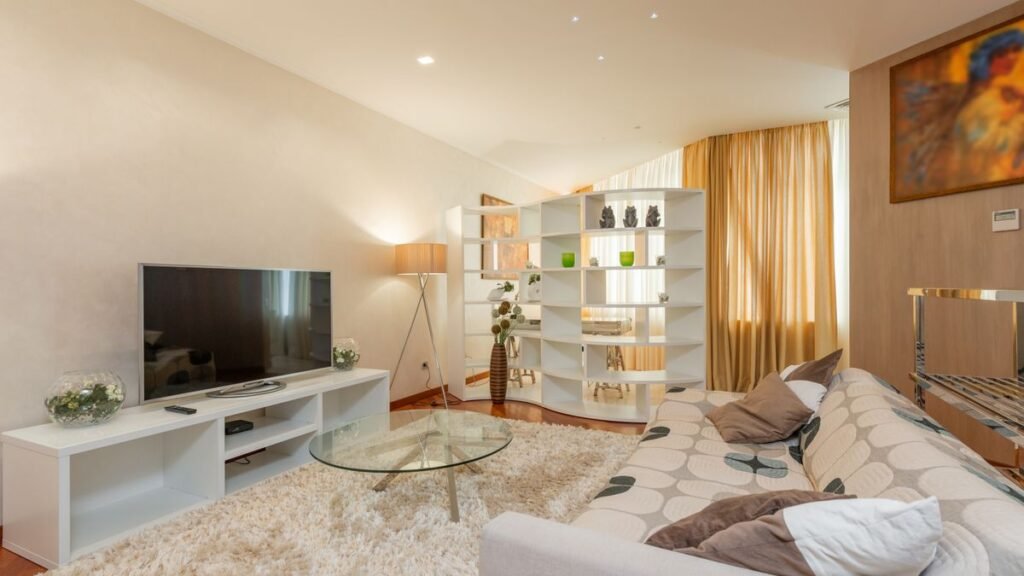
Many buyers start with aesthetics and work backwards. They find a cabinet they like the look of, then try to make the size fit and wonder why something feels slightly off. A better approach locks in three things before you browse anything: the actual measured width of your television, the available floor or wall space in your room, and how much concealed storage you need for devices. Get those three answers wrong and even the most expensive entertainment unit will look and function badly.
The storage question is one most buyers underestimate. Think about what actually sits alongside your TV: a soundbar, a streaming stick, a games console, a Blu-ray player, a router, and possibly an AV receiver. Each device needs physical space, adequate ventilation, and a route for its cables. A unit with no cable management and poorly ventilated shelves will look cluttered quickly and could cause hardware overheating during extended use. Decide upfront whether you need open shelving, closed cupboards, or a mix of both, and whether drawers are useful for remote controls and accessories.
The second structural decision is whether you want a freestanding unit, a floating wall-mounted console, or a built-in media wall. This choice determines your price range, your installation requirements, and your long-term flexibility before you look at a single product listing. Each option has a clear use case, and confusing them leads to the most common and most expensive TV cabinet mistakes.
Built-in vs. freestanding TV units: which is right for your space?
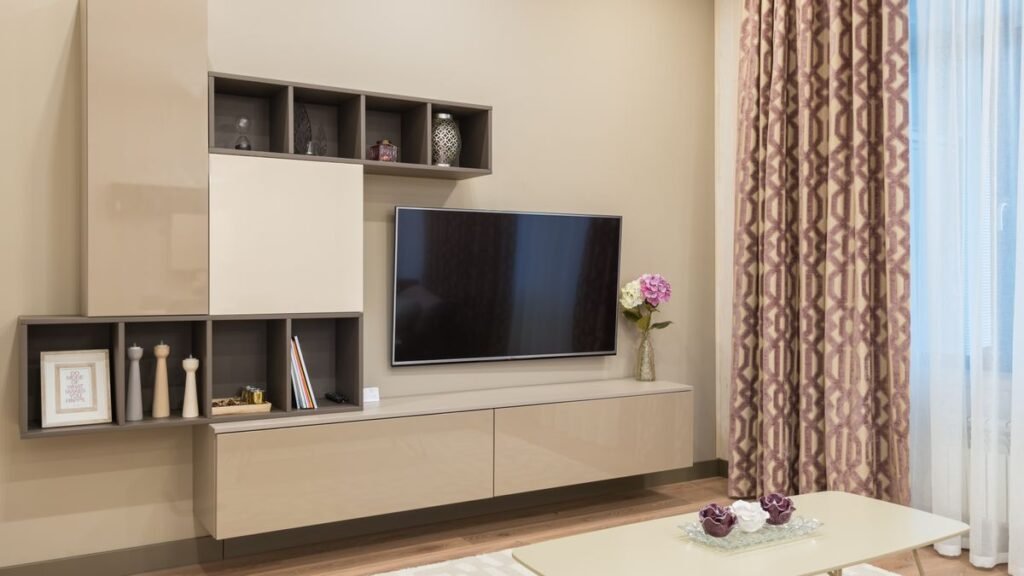
Freestanding units
Freestanding units are the most practical choice for most households. They cost less to buy and involve no installation whatsoever. Place them in position and they work immediately. The market range is enormous, running from a £109 high-gloss MDF unit to a £760 solid oak Laura Ashley console from John Lewis, and every budget and aesthetic is covered without requiring a drill, a builder, or a leasehold permission request. They also move with you when you do, which matters more than most buyers acknowledge at the point of purchase.
Floating wall-mounted units
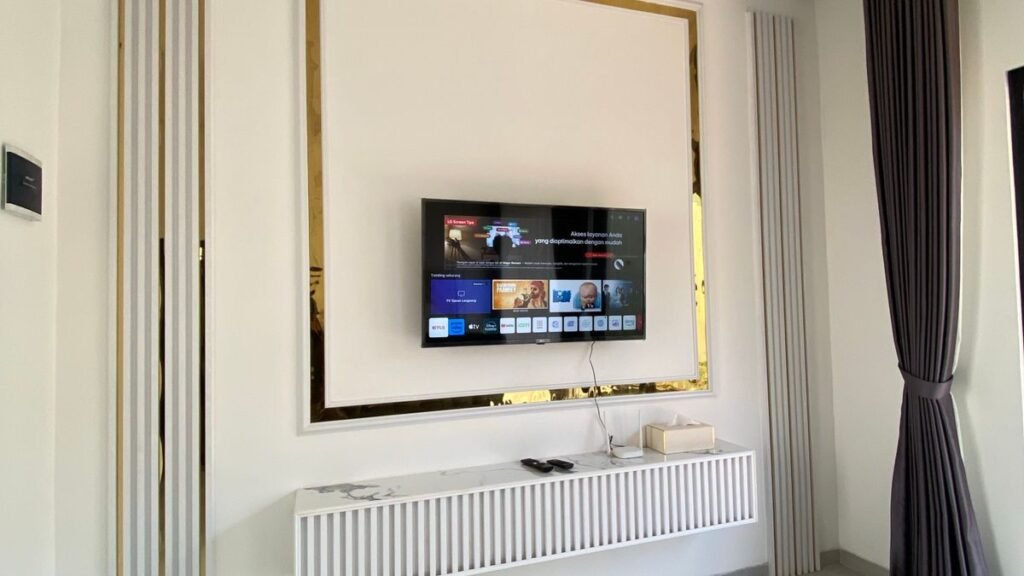
A floating wall-mounted TV wall unit is worth considering when floor space is limited. Lifting the cabinet off the floor creates a visual impression of more space, simplifies cleaning underneath, and gives a room a contemporary edge that freestanding units rarely match. The trade-off is practical: you need to locate wall studs or use appropriate fixings for your wall type, and the unit must be rated to carry the combined weight of your TV and all the equipment stored on it. A floating console works best when the wall behind it can serve as a clean backdrop, rather than a feature fireplace or an alcove.
Custom-built media walls
A custom-built media wall is the most expensive route, but it delivers something no off-the-shelf unit can replicate: dimensions perfectly matched to your room, integrated lighting, concealed wiring within the wall structure itself, and a bespoke finish that looks as if it was always there. This option is increasingly standard in high-end new builds and whole-room renovations, and it requires either a skilled joiner or a specialist furniture manufacturer. It is not a reversible decision, so the planning stage deserves as much attention as the build itself.
Getting the sizing right: TV cabinet dimensions explained
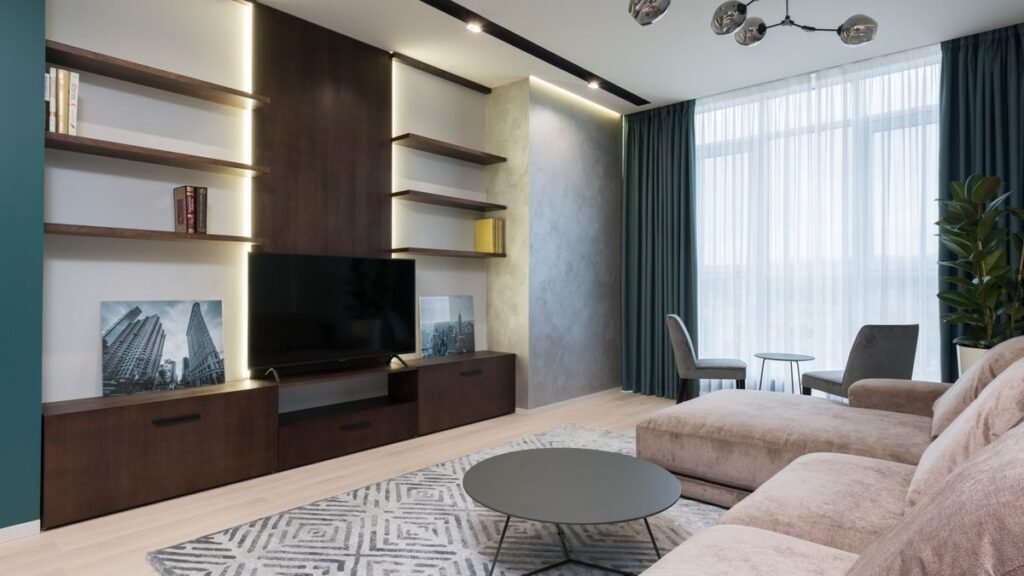
Width
The most common sizing mistake is buying a cabinet that is too narrow for the television it supports. The cabinet should be at least 10 to 30 cm wider in total than the TV’s actual measured width, not its diagonal screen size. A 55-inch television is typically 122 to 127 cm wide, which means you need a cabinet of at least 152 to 158 cm to achieve balanced proportions. Buying to the screen’s diagonal measurement almost always results in a unit that looks disproportionately narrow and slightly unstable.
| TV Size | Actual TV Width | Recommended Cabinet Width | Recommended Height | Recommended Depth |
|---|---|---|---|---|
| 32″ | 71, 76 cm | 86, 91 cm | 56, 66 cm | 36, 41 cm |
| 43″ | 89, 97 cm | 109, 117 cm | 61, 71 cm | 36, 41 cm |
| 50″ | 112, 117 cm | 137, 142 cm | 66, 76 cm | 38, 46 cm |
| 55″ | 122, 127 cm | 152, 158 cm | 71, 81 cm | 38, 46 cm |
| 65″ | 145, 150 cm | 175, 180 cm | 76, 86 cm | 41, 51 cm |
Height and viewing angle
Height is the dimension most buying guides ignore entirely. The ideal viewing height is calculated by taking your seated eye level, which typically falls between 95 and 110 cm depending on sofa height, and subtracting half the TV screen’s height. This gives you the height at which the centre of the screen should sit, and from there you work backwards to determine the cabinet height. The table above shows that a cabinet for a 55-inch TV should fall in the range of 71 to 81 cm, which positions the screen centre at a comfortable angle without straining the neck during extended viewing. In wider or open-plan rooms, the calculation shifts slightly depending on seating distance and sofa height, so always measure from your actual seating position rather than assuming a standard figure.
Always measure your specific television’s actual width and height before purchasing, as dimensions vary between manufacturers even at the same screen size.
Material finishes: durability, maintenance, and real cost
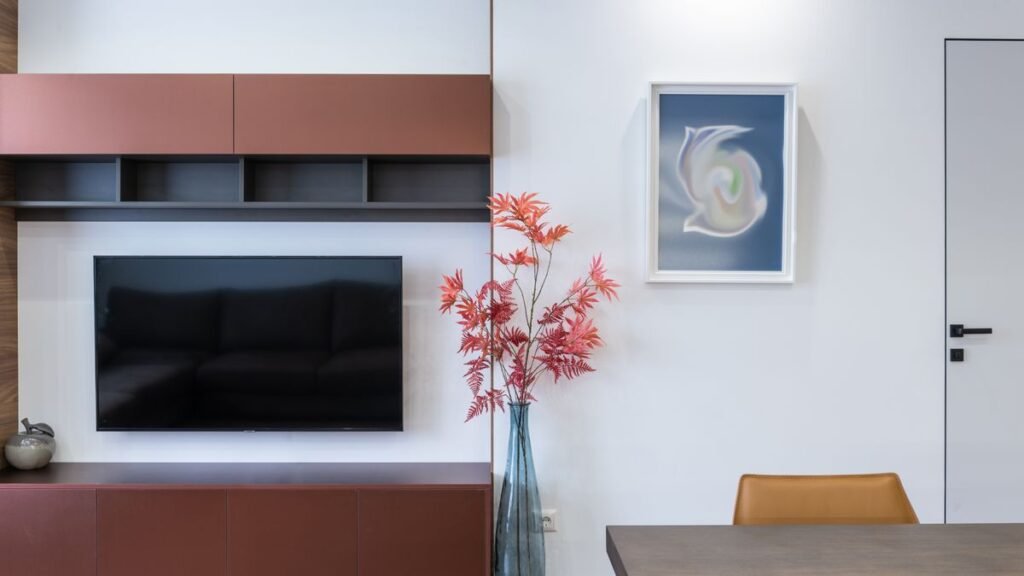
Solid oak is the benchmark everything else is measured against. It resists sagging under the weight of heavy AV equipment, can be refinished if scratched, and lasts decades when properly maintained. The cost reflects this: expect to pay from £400 upwards for a genuine solid oak unit, with well-crafted models exceeding £700. The maintenance requirement is moderate. Occasional oiling or waxing keeps the finish in good condition, and direct sunlight should be avoided to prevent fading and uneven colouring over time.
A quality oak veneer over a plywood core offers most of the visual appeal of solid wood at a meaningfully lower price, and this is where the best value-for-money TV units tend to live, typically priced between £200 and £500. When the core is plywood rather than cheap particleboard, the structural performance is close to solid timber. The surface is easier to clean than raw wood and more resistant to minor knocks. If you want a unit that looks premium and performs well over five-plus years without paying solid oak prices, a good veneer-on-plywood construction is the right choice.
MDF is the budget material, and it is honest about what it is: affordable, smooth-surfaced, and prone to sagging over time under heavy loads. A high-gloss laminate finish on an MDF core creates a surface that is easy to clean and scratch-resistant on top, but the structure beneath remains the weak point. For a secondary bedroom, a short-term purchase, or a rental property, MDF is perfectly adequate. For a primary living room unit expected to last ten or more years, the investment in veneer or solid wood is almost always worth making. For a timber example from a hospitality-grade supplier, consider the Wood Surface TV Cabinet as an illustration of engineered wood finishes used in long-life units.
TV cabinet styles leading in 2026
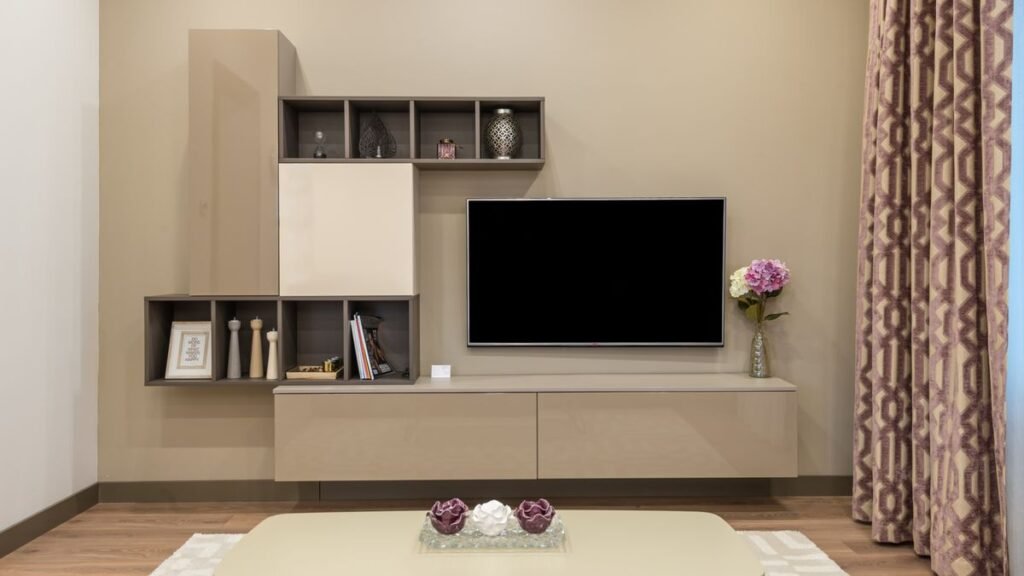
The two most prevalent consumer choices in 2026 are floating wall-mounted units and lowline consoles, typically 35 to 45 cm tall. Both prioritise a clean, uncluttered look, keep the television as the visual centrepiece, and pair well with minimal or Scandi-influenced interiors. Fluted door fronts are a defining detail this year: vertical grooves catch light and add texture without introducing pattern or colour complexity, and their visual impact across interior photography has contributed to their strong presence across social media and interiors coverage.
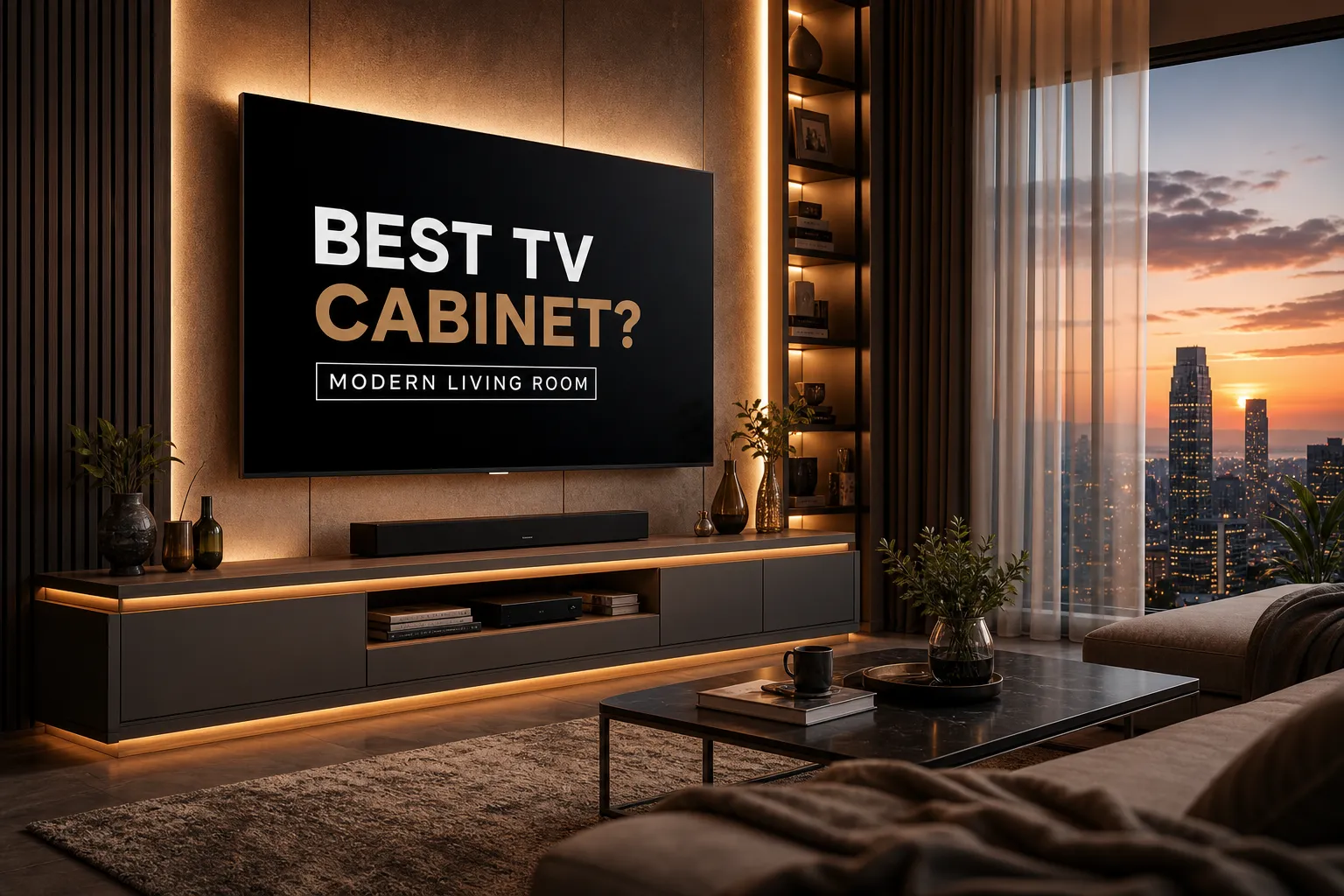
For open-plan layouts or rooms with an awkward corner placement, L-shaped corner TV stands with swivel bases solve the sightline problem without compromising the room’s flow. At the larger end of the budget, full TV wall unit configurations with integrated shelving, closed storage, and LED backlighting are increasingly standard in new-build living rooms. These feel architectural rather than like furniture, and they work particularly well in rooms with high ceilings where a low console would leave too much empty wall. When specified correctly, this living room TV furniture approach makes technology disappear into the design rather than dominate it.
Mid-century modern units, in walnut or teak finishes with tapered legs and brass handles, remain popular and age well without looking dated. The emerging Japandi aesthetic, combining Japanese minimalism with Scandinavian warmth, is influencing TV cupboard and console design toward muted natural finishes, clean lines, and hidden hardware. Both are strong choices if you want a living room TV unit that still looks considered in five years. Industrial-style metal-and-wood units are popular in urban apartments but trend faster and can start to look tired more quickly, particularly as the finish weathers unevenly.
Cable management: the detail most buyers overlook
What to look for in the unit itself
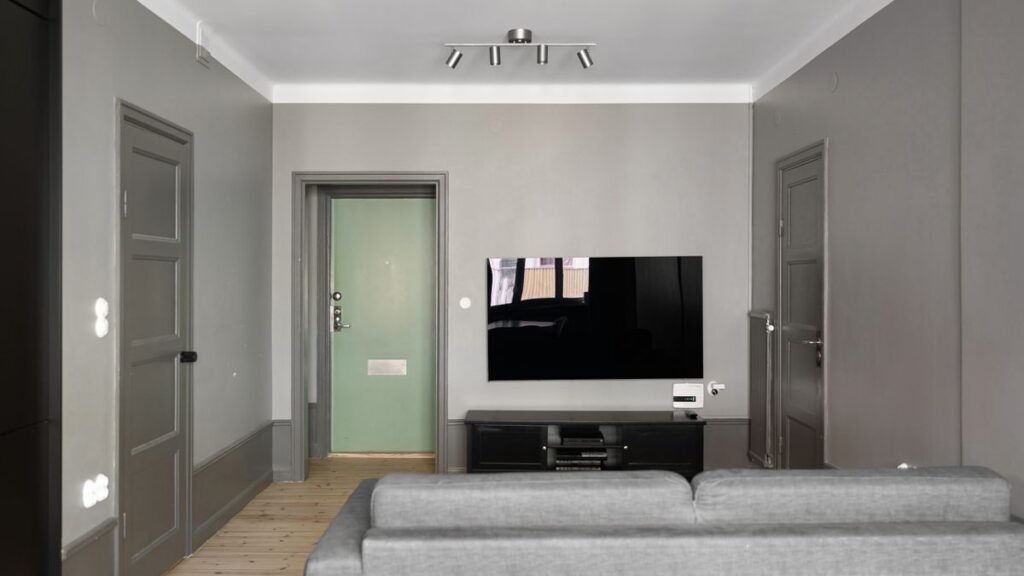
No matter how carefully you choose a TV cabinet, poor cable management will undermine its appearance within days. The back panel of the unit is the critical element. Look for pre-cut cable ports with rubber grommets, a rear channel that runs cables from the TV down into the body of the unit, and enough ventilation to prevent heat build-up from stacked devices. Units without these features require aftermarket solutions: cable sleeves, adhesive clips, or surface-mounted trunking. These solutions are functional but they never look as clean as a unit designed with cable management built in from the start.
Ventilation requirements
Ventilation requirements are more demanding than many buyers anticipate. A PlayStation 5 or Xbox Series X generates significant heat, and placing either console inside a closed cabinet without ventilation is a reliable route to hardware failure. Sony recommends a minimum of 10 cm of clearance from walls for the PS5 specifically, and that figure applies inside a cabinet too. Any unit housing a games console, streaming box, or AV receiver needs either open shelving for that component, mesh-backed doors, or a drilled rear panel with adequate clearance and active airflow for extended gaming sessions. Some 2026 TV cabinet designs now include dedicated ventilated bays as a standard feature; this specification is worth seeking out if you run multiple devices simultaneously.
Wall-mounted setups
If your television and cabinet are both wall-mounted, the cable run between them becomes the most visible weak point in the whole setup. The cleanest solution is to route cables inside the wall using a cable concealment kit, or a surface-mounted channel fixed to the wall and painted to match the wall colour. For rented properties where drilling is restricted, a slim raceway in the same colour as the wall is the next best option. Plan the cable route before installation rather than after: retrofitting cable management is considerably more difficult and more expensive than incorporating it during the initial setup.
How hotel rooms and luxury residences specify TV cabinetry
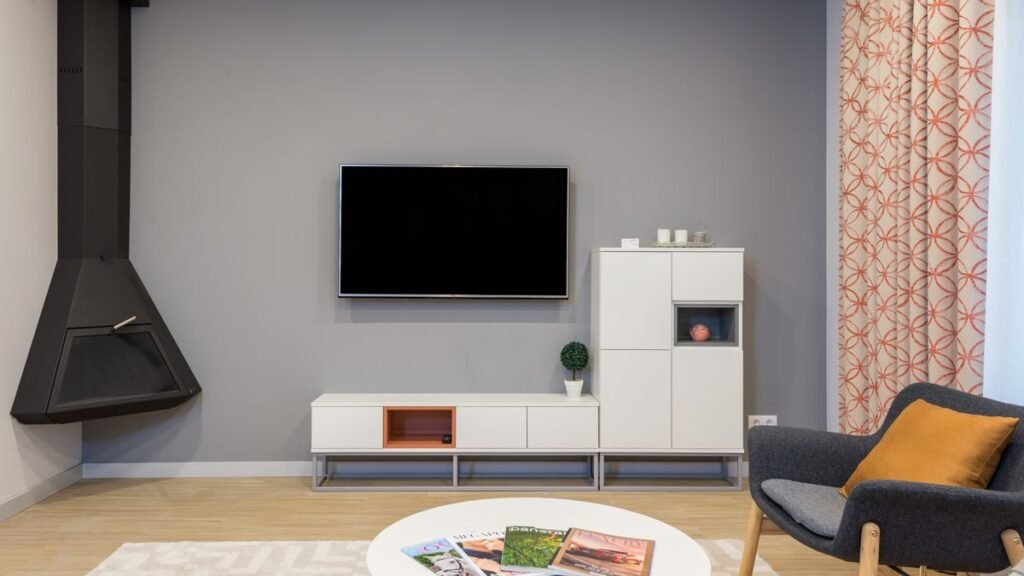
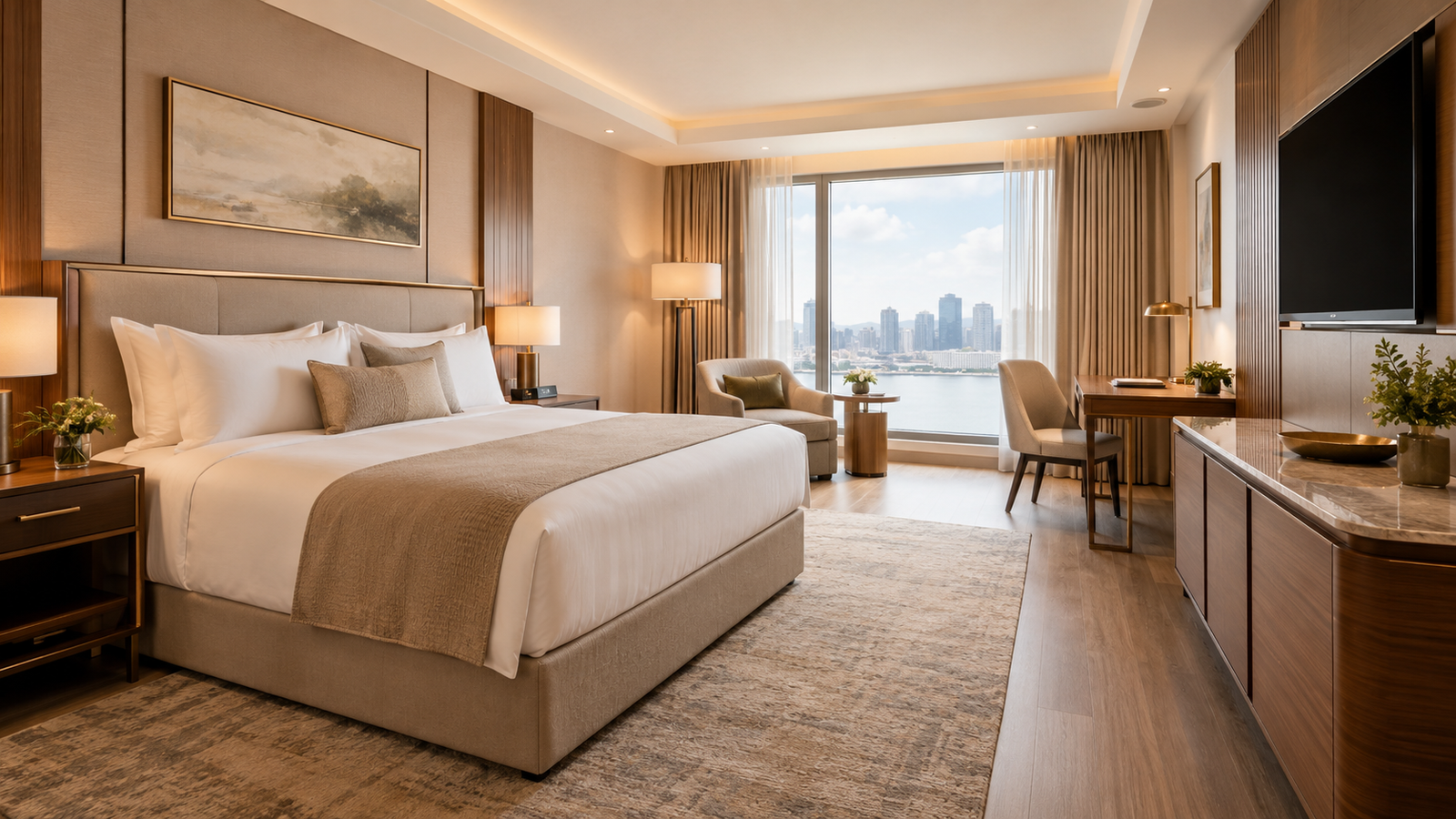
In a hotel guestroom, the media console is not an isolated piece of furniture. It is a component within a coordinated scheme that includes the bed frame, side tables, writing desk, and wardrobe, and off-the-shelf retail units rarely match in finish, height, or proportion to the bespoke bedroom furniture surrounding them. The storage requirements also differ significantly from a domestic living room: a guestroom TV unit needs to conceal the television’s power supply and signal cables from the wall, accommodate a safe in many configurations, provide minibar space in full-service properties, and meet fire-rating and durability standards that consumer furniture is not tested against.
Specialist hospitality furniture manufacturers approach TV cabinet design as a component within a complete FF&E package rather than a standalone product. TV cabinets from such suppliers are engineered with pre-specified cable exit points, custom internal dimensions matched to the property’s technology specification, and surface finishes that align precisely with the wider room palette. Critically, the TV cabinet ships as part of a full-room set, meaning every piece shares the same veneer batch, hardware finish, and lacquer colour for complete consistency across a hotel’s hundreds of guestrooms, a level of coordination that no retail sourcing approach can replicate.
High-end apartment and villa developers are increasingly adopting this same whole-room approach for residential projects. Rather than selecting individual pieces from multiple retailers, premium residential schemes are commissioning complete furniture packages from a single manufacturer to ensure finish consistency and bespoke proportioning for each room type. The result is what well-appointed hotel rooms already demonstrate: a living space where technology integrates invisibly into the design rather than dominating it, and where the TV unit reads as part of the architecture rather than as a piece of shop-bought furniture placed in front of a wall.
Where to buy a TV cabinet in the UK: retailers compared
For sub-£200 purchases, Argos and Habitat offer the most accessible entry points. Habitat’s Nomad range starts around £106 and the finishes are noticeably better than own-brand equivalents at the same price point. Wayfair’s advantage is range combined with delivery speed: with same or next-day delivery on many units and customer ratings averaging 4.7 out of 5 on top-selling lines, it is a strong option for buyers who need something quickly and want a broad choice of styles and sizes without visiting a showroom.
John Lewis is a consistent mid-to-premium retailer for TV cabinets in the UK, stocking brands including AVF, Swoon, and Laura Ashley with units priced from £270 to £760. The ten-year guarantee on selected Swoon units and the solid construction of the Laura Ashley Garrat range at £760 are both well-supported at their respective price points. Oak Furniture Land is worth considering if you want solid hardwood at a fair price and are not in a hurry. Delivery times are longer, but the durability is significantly better than flat-pack alternatives, and the pricing is more competitive than John Lewis for equivalent solid wood construction.
| Retailer | Price Range | Delivery | Assembly | Returns |
|---|---|---|---|---|
| Wayfair | £80, £500+ | Free, often next-day | DIY | 30 days |
| John Lewis | £270, £760+ | Standard/paid | DIY | 30 days |
| Habitat | £106, £295 | UK-wide (fee applies) | DIY | 30 days |
| JYSK | £80, £300 | Click & Collect/standard | DIY | Unlimited |
| Oak Furniture Land | £300, £700+ | Standard (longer lead) | DIY | Standard |
JYSK’s unlimited returns policy stands out as the most consumer-friendly option in this group, particularly for a larger piece of furniture where size or finish may not match expectations until it is physically in the room. No major UK retailer currently includes professional assembly as standard, so budget for that separately if the unit is large or if a wall-mounted installation is involved. It is a cost worth planning for upfront rather than discovering on delivery day.
Making the final decision with confidence
Choosing the right TV cabinet comes down to four decisions made in the right order: size first, then style, then material, then retailer. Get the dimensions wrong and nothing else matters; get the material wrong and you will be replacing the unit sooner than planned. The 2026 market offers strong options across every price bracket, from a £109 high-gloss unit to a £760 solid oak console, and the retailer landscape is competitive enough that delivery speed and returns flexibility are rarely a barrier to finding something that works.
If you are furnishing a hotel, a luxury residence, or a large-scale development where dozens or hundreds of rooms need to match in finish and proportion, the considerations shift entirely. Consistency of veneer, custom dimensioning for the room’s technology specification, and integration with the wider furniture scheme become the priority, and that is where specialist manufacturers with genuine hospitality experience step in. YM Furniture’s factory-direct model, with its 70,000 square metre production facility and proven delivery to globally recognised hotel brands, exists precisely for that scale of project, where retail sourcing cannot deliver the coordination or the unit cost economics that a large FF&E package requires.
For everyone else, the framework in this guide is enough to buy once and get it right. Measure your TV, calculate your cabinet dimensions from the table above, choose a material that matches your budget and expected lifespan, and select a retailer whose returns policy gives you confidence if the finish looks different in your room than it did on screen. That is the complete decision, and none of it needs to take more than an afternoon. If you prefer to browse hospitality-grade examples and category selections online, take a look at some curated TV cabinet furniture from specialist manufacturers.