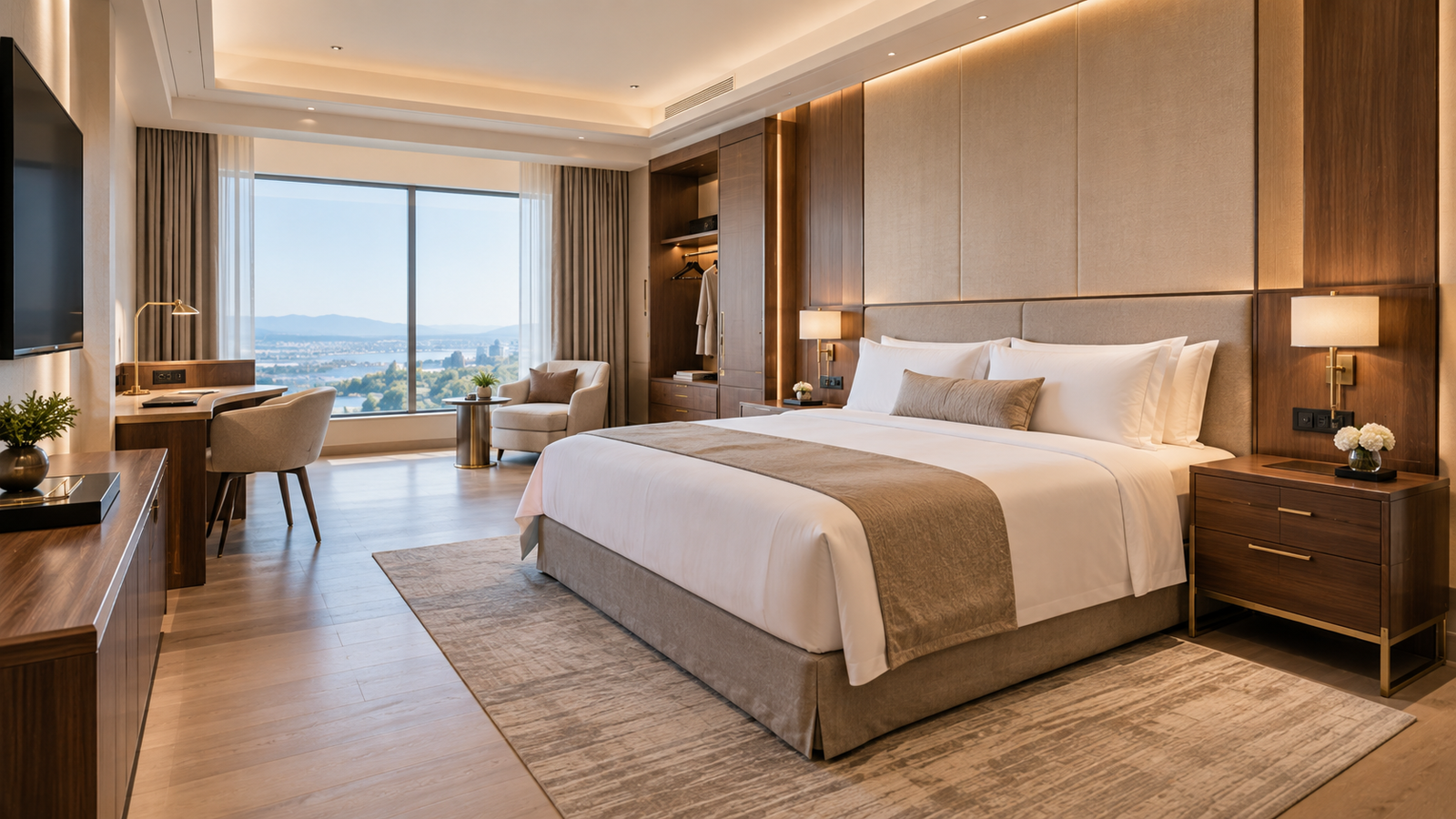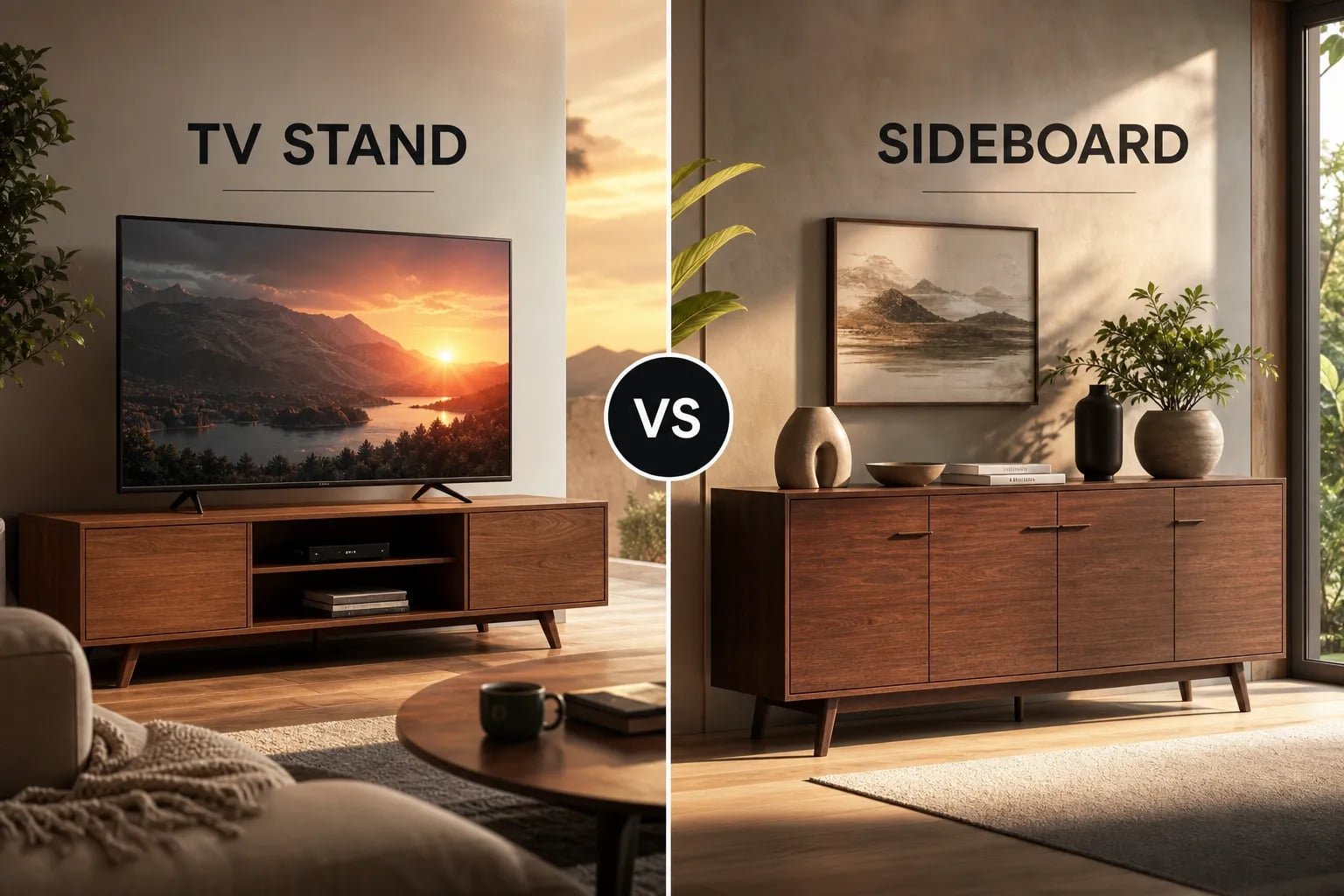
If you are asking how do I order custom furniture in bulk for a luxury villa development, the short answer is: with a structured procurement process and a factory-direct supplier who can handle your volume. Commissioning bespoke furniture for a single luxury villa is a manageable exercise. You brief a designer, approve a sample, and coordinate one delivery. Scale that process across 20, 30, or 50 units, and you are running a small manufacturing programme with all the complexity that entails. A missed prototype sign-off, a vague contract clause, or a supplier who cannot handle the volume at the quality level you need will derail your entire fit-out schedule and eat into your development margin.
The good news is that the process is learnable and repeatable. Hotel developers have been executing large-scale bespoke furniture programmes for decades, and the same methodology applies directly to luxury residential schemes. Factory-direct manufacturers in Foshan, China, for example, regularly deliver complete villa furniture packages to buyers across Europe, the Middle East, and beyond, with savings often in the range of 30 to 60% versus domestic UK contract furniture suppliers, and apply the same quality standards used by hotel brands such as Marriott and Sheraton.
This guide walks through the complete procurement process in sequence, from writing your initial furniture brief through to getting pieces safely on site. Follow it, and you will avoid the most common and costly mistakes that villa developers make when scaling a furniture programme for the first time.
1. Build your furniture brief before approaching any supplier
The single biggest mistake developers make is contacting suppliers before they know exactly what they need. Suppliers can only quote accurately when you give them something precise to work from. A vague brief produces vague pricing that will shift later, and the shift is never in your favour.
A furniture brief is not a mood board. It is a working document: an item-by-item schedule listing every piece in the programme with its dimensions, material requirements, finish specifications, weight-bearing standards, and aesthetic references. Every line item that lacks a specification is a gap that a supplier will fill with assumptions, and those assumptions cost money to correct later in the process.
Mapping furniture requirements room by room
The most practical way to build a complete brief is to work through each room type in a single villa unit and list every piece of furniture it requires. Do this for living areas, bedrooms, dining rooms, outdoor terraces, and any utility or staff spaces. Once you have a complete per-unit schedule, multiply each item by the number of villa units in the development to calculate total SKU quantities across the programme. This aggregated number is what drives your pricing tier negotiations with suppliers, so getting it right at the brief stage matters.
For a development of 30 two-bedroom villas, a typical furniture programme might include several hundred individual pieces across 40 or 50 distinct SKUs. At that scale, your per-SKU quantities will often clear the factory breakeven threshold without any negotiation, which unlocks significantly better pricing from the outset.
Setting a realistic budget with contingency
Set a per-unit furniture budget based on your target specification level, then apply a contingency allowance, a commonly used working figure for bespoke programmes is 10 to 15%, though the right amount depends on your project’s specific risk profile. Split the budget across categories so you know where the value sits and where you can absorb overruns if material costs shift during production. Factory-direct sourcing from a credible manufacturer changes the budget envelope significantly: the savings versus sourcing from UK contract furniture suppliers can often be in the 30 to 60% range, which is enough to allow a higher specification level within the same overall budget.
2. How to order custom furniture in bulk for a luxury villa development: finding and vetting suppliers
Not every supplier who claims to offer bespoke bulk production actually has the factory infrastructure to deliver it. The vetting stage is where you separate credible manufacturers from trading companies and brokers who will outsource your order without telling you, adding a margin and losing visibility into the factory floor in the process.
Factory-direct vs. trading companies: why the distinction matters
A factory-direct manufacturer controls production quality, lead times, and pricing directly. A trading company adds a margin and loses control of the production process. For a luxury villa programme, losing visibility into production is a serious risk: you have no reliable way to monitor quality, track progress, or resolve issues quickly when a middleman sits between you and the factory. Factory-direct suppliers who offer integrated project management give you a single point of accountability from design consultation through to on-site installation, which matters when you are coordinating deliveries across multiple villa units alongside a live construction programme.
Credentials and track record to verify before requesting a quote
The minimum credentials to require are ISO 9001 for quality management and ISO 14001 for environmental standards, along with relevant product certification appropriate for your destination market, such as CQC (China Quality Certification Centre) for products tested under Chinese certification frameworks, or equivalent third-party testing to the relevant UK or EU standards. Beyond certifications, look for verifiable completed projects in the hospitality or luxury residential sector. References from developers or procurement managers who have executed furniture procurement for developers at scale carry more weight than generic testimonials on a supplier’s website.
As a concrete benchmark: YM Furniture (Foshan Yauming Furniture & Construction Co., Ltd.) holds ISO 9001, ISO 14001, and ISO 45001 certification, has delivered over 1,000 projects for clients including Marriott, Sheraton, and Pullman, and offers a fully integrated service from design consultation through to on-site installation. Use that as a standard when shortlisting potential manufacturing partners.
Factory audit checklist before committing to production
Before committing to a production order, request factory photos and floor area, ask for capacity figures and current order load, and confirm the supplier’s capability for export documentation to your destination country. Request a sample shipment before full order commitment. A supplier who is confident in their quality will welcome this; one who stalls or deflects is giving you useful information about the risks ahead.
3. MOQs, pricing tiers, and how to negotiate bulk rates
Minimum order quantities are not arbitrary numbers. They reflect real economics around tooling, setup costs, material sourcing, and production scheduling. Understanding the logic behind them gives you a stronger negotiating position and helps you structure your order in a way that works for both sides.
Typical MOQ ranges by furniture category
For upholstered contract pieces, the common breakeven is 20 to 50 units per SKU. Simpler customisation, such as a colour or fabric change on an existing frame, typically sits at 50 to 100 units. Complex bespoke work requiring new tooling, custom joinery, or one-off finishing often pushes to 100 to 200 units or higher, and some manufacturers quote by programme scope rather than unit count for high-value projects.
A villa development with 30 or more identical units naturally aggregates quantities per SKU. If your programme specifies the same bed frame across all master bedrooms, your total quantity for that SKU might be 30 to 60 units, which typically clears the factory breakeven without any negotiation. The brief-building exercise described in section one is what makes this calculation possible.
How pricing tiers shift as order volume grows
The first meaningful price break typically kicks in at 10 or more units, where pricing runs approximately 15 to 25% lower than small-run rates. At 100 units, you are typically looking at around a 20% reduction from the baseline. At 200 units or more, that reduction can reach approximately 28%. For a luxury villa developer whose aggregated programme reaches these volumes, the per-unit cost difference is significant when multiplied across the full furniture package.
Negotiating MOQs when your volume falls short
If a specific SKU does not reach the factory’s stated minimum, there are practical tactics available. Bundling multiple SKUs with one supplier increases the overall programme value, which gives the factory a commercial reason to be flexible on individual minimums. Offering a longer lead time in exchange for a lower MOQ works because the factory can slot your order alongside another customer’s similar production run. You can also offer a phased commitment: a smaller initial batch with a written agreement for a second tranche once the first run passes QC. Some factory-direct manufacturers will negotiate on programme size for first-time buyers when the project has clear potential for repeat orders.
4. Material selection, finishes, and customisation depth
The materials you specify have a direct impact on cost, lead time, durability, and whether the finished piece holds up to the climate and usage patterns of a luxury villa environment. Getting this right at the brief stage avoids expensive revisions during production.
Matching materials to villa-grade durability requirements
Villa furniture needs to perform differently from hotel furniture in some respects. Daily turnover is lower, but owner and guest expectations for visual quality and longevity are high, and the environment may include high humidity, direct sunlight, or salt air depending on location. For casegoods, solid wood or high-grade engineered wood with moisture-resistant construction is generally appropriate. For upholstered pieces, performance fabric or genuine leather both work well at this level. Marble and stone accents, metal frame options, and lacquer or veneer finishes each carry different cost and maintenance implications that your brief should address explicitly.
How customisation depth affects pricing and lead time
Standard catalogue customisation, such as a colour, fabric, or minor dimension change, sits at the lower end of both cost and lead time. Full bespoke specification requiring new tooling, custom joinery, or hand-applied finishes pushes lead times into the upper range and increases the minimum quantity at which a factory will accept the order. A practical rule: specify as much as you can from the manufacturer’s existing material library and tooling before adding bespoke elements. Every custom element you add is a setup cost the factory needs to recover, and that is reflected in the price or the MOQ.
Getting finish boards and material samples signed off early
Finish approval is a contractual checkpoint, not an informal conversation. Request sample boards, wood stain cuttings, upholstery strike-offs, and hardware samples before production commences, and obtain written sign-off from all relevant stakeholders before the factory proceeds. Any finish approved verbally or via a photograph on screen is a dispute waiting to happen when the production pieces arrive on site.
5. Sample approval and prototype sign-off
Bulk production will only be as consistent as the sample it references. The golden sample is the legal and practical benchmark for everything that follows, and the contract should reflect that.
What a golden sample is and why it is non-negotiable
The golden sample is the approved physical piece that sets the visual, dimensional, functional, and packaging standard for all bulk output. The contract should state in writing that production must match it unless a written revision is issued by the developer. Without this clause, disputes about colour variation, finish inconsistency, or dimensional drift are almost impossible to resolve, because there is no agreed reference point. This single contractual provision prevents more disputes than any other in a bespoke bulk furniture programme.
How the prototype sign-off process works in practice
The sequence is straightforward: the factory produces a first-article prototype, it is reviewed against the specification document and approved finish boards, and written sign-off is issued before mass production begins. For villa developments where a model unit is constructed for sales purposes, that model unit often serves as a living proof-of-concept for the full furniture package. Treat the model room review as a formal gate: bring scaled plans, approved material references, and all relevant stakeholders to the session, and capture every comment in a single master snag list with clear ownership and resolution dates.
What to look for during a showroom or model room review
At prototype stage, check dimensional accuracy against the floor plan, finish consistency across surfaces and joints, structural integrity under load, hardware function, and packaging suitability for the delivery journey. Test circulation and clearances: does the bedside table allow a comfortable reach from the bed? Does the dining chair pull out fully without hitting the wall? Manufacturers with a dedicated showroom and fully furnished room sets, such as YM Furniture’s 5,000 square metre showroom facility, give developers the opportunity to evaluate furniture in context before committing to bulk production. That level of direct access is worth seeking out when shortlisting interior fit-out furniture suppliers.
6. Quality control and contract protections to insist on
Specifying QC requirements verbally achieves nothing. Every stage of the quality process needs to be written into the contract before production starts. A supplier who agrees to quality standards only in conversation has made no commitment that you can enforce.
Stage-gated QC clauses for bespoke bulk production
The contract should contain four distinct QC checkpoints:
- Approved sample or golden sample clause defining the production standard.
- Prototype or first-article sign-off clause requiring written approval before mass production begins.
- In-process factory inspection rights, specifying inspection points, sampling plan, and acceptance criteria.
- Pre-shipment quality assurance inspection using an agreed AQL sampling method, with shipment conditional on passing the check.
The contract should also reserve the developer’s right to pause or reject production if any checkpoint is not met, and require corrective action at the supplier’s cost.
Payment structures that protect both sides
The standard payment structure for bespoke bulk furniture is a deposit of 30 to 50% on order confirmation or before production begins, milestone payments tied to prototype sign-off and production completion, and a final balance before shipment. Paying the full balance before the pre-shipment inspection removes your main point of leverage over the supplier and should be avoided. The final payment is the mechanism that guarantees the supplier takes your pre-shipment QC requirements seriously.
Warranty and liability provisions for property developers
Require a workmanship and materials warranty specifying the defect notification period and a repair-or-replace remedy clause. Warranty exclusions for misuse or improper installation are standard and reasonable. A liability cap linked to the contract value is also typical. Note that indirect losses, such as delays to villa sales or additional site costs, are almost universally excluded by the supplier. Manage that risk through your own programme schedule and the buffer time built into your construction timeline, not through contract provisions that a supplier is unlikely to accept.
7. Planning lead times and aligning with your build programme
A bulk bespoke furniture order for a luxury villa development cannot be rushed into procurement at the last minute. The lead time from design to delivery sits between 14 and 18 weeks for most programmes, and significantly longer for complex finishes or international shipping. Developers who understand this plan accordingly; those who do not end up paying premium freight rates for air shipments that eat directly into project margin.
A realistic lead time breakdown for 20 to 200 units per SKU
The design and drawing stage typically takes one to four weeks. Finish board and material sample approval requires one to three weeks, particularly where specialist woods or complex finishes are involved. Bulk production, including finishing and curing time, extends to four to eight weeks under normal conditions and up to 14 weeks for complex hand-finished pieces with multiple coats and extended curing requirements. International freight and inland delivery adds one to two weeks for domestic routes, or longer for international logistics. Use 14 to 18 weeks as your baseline planning figure, and budget 20 weeks or more where high-end finishing or sea freight from China to the UK is involved.
How to align furniture delivery with your construction programme
Furniture should arrive on site after plastering, flooring, painting, and kitchen and bathroom installation are complete, but with enough lead time before handover for installation, snagging, and dressing. Share a construction programme milestone schedule with your furniture supplier at the order stage so lead times can be reverse-engineered from the target handover date. A supplier who receives your handover date and works backwards to confirm a production start date is operating with the right discipline; one who gives you a lead time without reference to your programme is not.
What causes delays and how to build in protection
The most common delay triggers are late finish approval, material sourcing issues for non-standard finishes, extended production curing times, port congestion, and customs clearance holds. None of these are unusual events; all can be planned around with adequate buffer. Build a minimum two to three week buffer into the programme between planned furniture delivery and villa handover. This is a commonly applied rule of thumb for complex international procurement programmes, treat it as realistic padding for the accumulated small delays that occur on every project, not as contingency for supplier mistakes.
8. Freight, packaging, and import costs for UK villa projects
Getting bespoke furniture safely from factory to site is the final and most underestimated part of the procurement process. Freight costs, import taxes, and packaging standards all need to be planned and budgeted from the outset, not treated as a line item to fill in later.
Estimating freight and logistics costs for a full villa furniture package
International freight for a villa furniture package typically runs from approximately £600 to £6,500 or more, depending on volume and whether the shipment moves as less-than-container-load (LCL) or a full container load (FCL). For a programme of 50 to 200 pieces shipped from Foshan to the UK, the practical breakpoint is around 10 to 15 cubic metres: below that threshold, LCL is usually the more economical option, but above it, a 20ft or 40ft FCL container almost always delivers a lower per-unit freight cost.
Container rates on this route fluctuate with season and carrier. As a planning reference, a 20ft FCL has typically run in the range of $1,700 to $2,800, and a 40ft FCL in the range of $1,700 to $3,600 (rates quoted in USD, as is standard for international container freight, confirm current rates with your freight forwarder before finalising your budget). Additional costs to include are customs clearance fees of £50 to £150 per consignment, port handling of £75 to £200, and inland delivery from port to site of £100 to £300 or more.
UK import VAT, duty, and customs clearance: what to budget
UK import VAT is 20%, applied to the total customs value, which includes the cost of goods plus freight and insurance to the UK border. For furniture imported from China, duty rates under the UK Global Tariff vary by HS/TARIC classification. Many common furniture categories, including upholstered seating classified under HS 9401 and wooden furniture under HS 9403, currently attract 0% customs duty under the UK Global Tariff. However, the exact commodity code matters: different materials or design features can move a product into a different tariff line with a different rate, which could be anywhere from 0% to 5.6% or higher depending on the classification. Always confirm the correct tariff code for each furniture category with a licensed customs broker before finalising your landed-cost budget, and do not assume 0% duty applies without checking.
Packing standards that protect bespoke pieces in transit
High-value villa furniture requires export-grade packing: double-walled cartons for smaller items with foam edge protection and corner guards, and custom wooden crates with internal bracing and vibration protection for large or fragile bespoke pieces. Sea freight requires additional moisture protection, including plastic barrier film and desiccants inside the packaging. All timber used in crates and pallets entering the UK must be ISPM-15 stamped; non-compliant timber is a customs hold risk that will delay your entire delivery.
Instruct your supplier to label each piece clearly with its unit number, room, orientation, fragility, and unpacking instructions. More importantly, specify that the supplier packs by room set rather than by furniture category. Receiving a delivery packed by category means your installation team has to sort and redistribute pieces across the development before work can begin, adding days to the on-site programme. Packing by room set means each room’s contents arrive together and can be moved directly to the correct unit on delivery day.
Your procurement timeline at a glance
The eight-stage process covered in this guide gives you a repeatable framework for ordering custom furniture in bulk for a luxury villa development, regardless of scale. The stages break down as follows: write the brief; vet and shortlist suppliers; negotiate MOQs and pricing; select and approve materials; sign off on prototypes; lock down QC and payment terms in the contract; schedule production against the build programme; and plan freight and site delivery. Each stage is a contractual milestone, not an informal conversation, and the discipline of treating it that way is what separates a smooth programme from a costly one.
The developers who execute this process without significant disruption are the ones who start 18 to 22 weeks before their target handover date. They treat every approval stage as a decision point with consequences for the downstream schedule, and they choose suppliers with the infrastructure to deliver consistently at scale. Factory-direct sourcing from a manufacturer with full project management capability, ISO-certified quality systems, and a proven track record of delivering to globally recognised hospitality brands represents the strongest combination of cost efficiency and operational reliability available in this market. The savings versus domestic UK contract furniture suppliers are often substantial enough to fund a higher specification level within the same overall budget.
If you are still asking how do I order custom furniture in bulk for a luxury villa development, the clearest starting point is a detailed brief and a factory-direct supplier with the credentials and capacity to match your programme. YM Furniture (Foshan Yauming Furniture & Construction Co., Ltd.) offers design consultation, a fully furnished showroom for prototype review, and end-to-end project management from brief through to installation. With 17 years of experience delivering bespoke furniture programmes to developers across more than 30 countries, they are a logical starting point for any serious procurement conversation.