Search for a king size metal bed frame with headboard and footboard and you’ll immediately run into a listing problem: “headboard included” means something different on almost every product page. One frame ships with a factory-welded Victorian scrollwork panel. Another ships with a pair of mounting brackets and expects you to buy the headboard separately. A third lists a headboard in the product photos but buries “headboard not included” in the fourth bullet of the description. That inconsistency wastes time and, when you order wrong, wastes money on return shipping.
This guide cuts through the noise. It covers what separates a frame worth buying from one that wobbles within six months: the steel gauge (structural integrity), weight capacity and center support (safety), finish quality, and headboard compatibility details, whether you get a complete bed or a frustrating parts-matching exercise. Price tiers are mapped clearly so you know what you’re actually buying at each budget level in 2026.
One useful benchmark runs through this guide: the same specs that matter in a single residential bedroom become mission-critical when a manufacturer like YM Furniture (Foshan Yauming Furniture & Construction Co., Ltd.) is producing custom metal bed frames for a 300-room hotel rollout. Understanding what hospitality-grade procurement demands gives any buyer a sharper eye for retail quality claims. Here’s exactly what you need to know, section by section.
Why king size metal bed frames with headboard and footboard are the smart long-term buy
The structural case for steel over wood in a king-size application
A standard king mattress spans 76 inches wide, a significant unsupported distance that wood frame construction handles poorly over time. Solid wood and MDF rails flex under load and experience seasonal expansion and contraction that gradually loosens joint connections. Steel doesn’t warp with humidity changes, and properly welded metal joints don’t develop the creaking looseness that wood-screw connections do after a few years of nightly compression cycles. A well-specified metal frame bought at the right price point will typically outlast most same-range wood alternatives.
How a matched headboard and footboard changes the equation
A bed with matching headboard and footboard reads as a finished room anchor rather than a mattress sitting in a frame. Beyond aesthetics, the footboard serves a practical purpose: pillows stay on the bed and fitted sheets tend to stay anchored more reliably. The headboard eliminates wall scuffing and gives occupants something to lean against. More importantly, matched factory sets are structurally engineered as a unit. The rail height, bolt patterns, and load distribution are designed to work together. Mismatched aftermarket headboards bolted onto an incompatible frame frequently don’t align at the correct height and can stress connection points the frame wasn’t designed to handle.
What makes 2026 a good time to buy in this category
Some factory-direct manufacturers are now reaching US buyers without the traditional multi-tier distributor markup, and that supply chain compression has pushed quality into lower price bands. Frame construction that previously required a $350+ spend now shows up reliably in the $150, $250 tier. The mid-range has become genuinely competitive, which means buyers who do their research get substantially more frame for their money than they did a few years ago.
King size metal bed frame with headboard and footboard: gauge and durability

Understanding steel gauge numbers (and why lower is stronger)
The gauge scale runs counterintuitively: lower numbers mean thicker steel. Fourteen-gauge steel measures approximately 1.9mm thick; 16-gauge runs about 1.52mm; 18-gauge drops to roughly 1.21mm. Many budget king frames use 18-gauge tube steel because it’s cheaper to produce. Heavy-duty frames spec at 14-gauge or 16-gauge, and that thickness difference has real consequences: a 14-gauge frame resists deflection under load far better, maintains weld integrity over years of use, and doesn’t develop the side-to-side rack, the frame rocking motion that causes squeaking, that thinner steel eventually produces.
Tube diameter and weld quality: what to look for in product listings
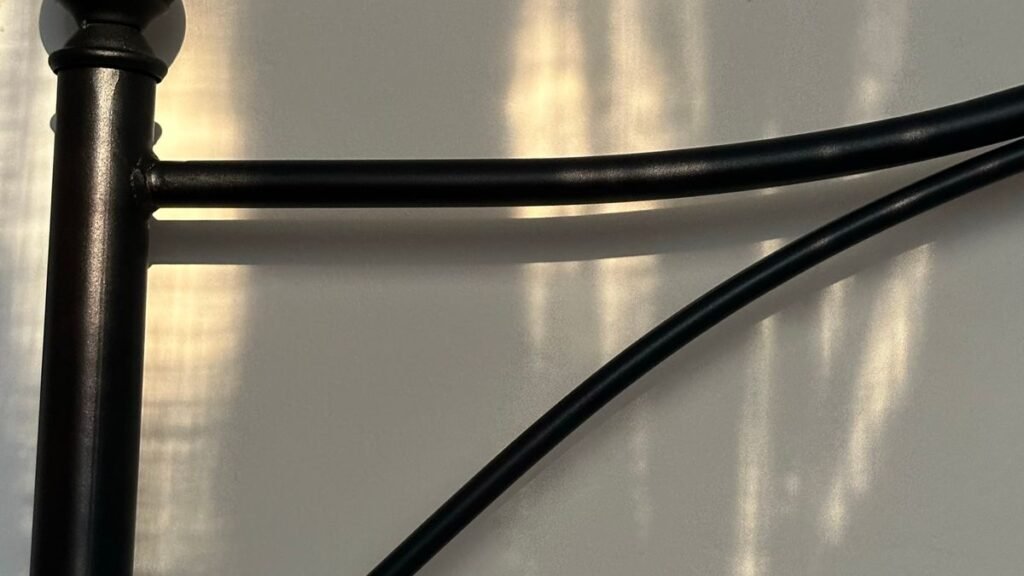
Gauge alone doesn’t tell the complete story. A thick-gauge tube welded with spot welds at high-stress corners will still fail early because spot welds concentrate stress at small contact points rather than distributing it along the full joint. MIG-welded corners and gusseted joints are what you want. In product photos, MIG welds show a consistent bead along the full seam; spot welds look like small dimple connections at intervals. If a product listing omits weld type entirely, treat the weld quality as unknown and ask the seller or look for spec sheets. Listings that include weld method are preferable and signal a manufacturer confident enough in their process to disclose it.
How gauge requirements scale for hotel guestroom use
A hotel guestroom bed frame absorbs far more cumulative stress than a residential frame. It’s occupied by different guests at varying weights almost every night, moved during room deep cleans, and expected to perform identically in year five as in month one. Hospitality-grade metal frames spec at 14-gauge or heavier as a baseline, with continuous welds at all rail-to-leg connections rather than intermittent spot welds. This is the standard that purpose-built FF&E manufacturers engineer to from the first design iteration, not an upgrade applied later.
Weight capacity and center support: what the specs actually tell you

Decoding weight capacity claims (700 lbs vs. 3,500 lbs)
Current king metal frames list weight capacities across a wide range: lighter-duty models list 700, 1,500 lbs, while heavy-duty designs go to 3,000, 3,500 lbs. The critical point most buyers miss: listed capacity includes the mattress, all bedding, and every person on the bed simultaneously. A king mattress alone runs 100, 150 lbs. Add two adult occupants averaging 200 lbs each and you’re already at 500+ lbs before accounting for any dynamic load from movement. A realistic floor for a king frame used by two adults is at least 1,000 lbs of rated capacity; 1,500 lbs gives a comfortable safety buffer.
The center support rule for king-size frames
The 76-inch king span creates a mid-rail sag risk that doesn’t exist at twin or full size. The minimum standard for a king frame is at least two center support legs that make full floor contact under a center rail or beam. Strong designs use three center legs or a full-length center beam with multiple floor contacts. Nine-leg frame designs address this comprehensively by distributing load across the full platform rather than relying on perimeter rails alone. This matters beyond comfort: a sagging frame that allows mattress center deflection voids most foam and hybrid mattress warranties, and the replacement cost of a premium mattress far exceeds any savings from buying a cheaper frame.
What these numbers mean when you’re buying for multiple rooms
For hotel buyers sourcing at scale, weight capacity documentation becomes a procurement requirement with legal and insurance implications, not just a spec sheet bullet point. Frames that can’t provide load-test documentation create liability exposure in a commercial guestroom setting. This is one of the clearest points where retail sourcing breaks down for hotel projects: consumer-grade listings rarely include the test documentation that commercial procurement requires.
Headboard and footboard compatibility: “included” doesn’t always mean what you think
Factory-integrated designs vs. bracket-mount systems
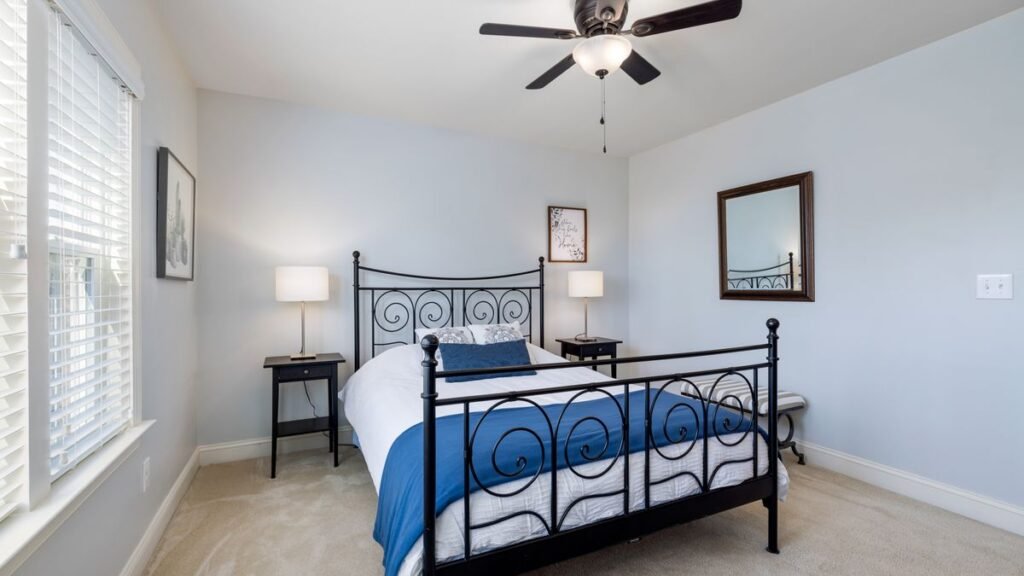
There are two distinct product types in this category, and retail listings frequently blur the line between them. The first type has the headboard and footboard welded or bolted directly to the side rails at the factory: you receive a complete unit, and all structural connections are pre-engineered. The second type is a bare rail frame that ships with headboard brackets, expecting you to purchase a headboard and footboard separately and bolt them on. To identify which type you’re buying, look for explicit language like “headboard included” with a product photo showing the full assembly, versus “headboard bracket compatible” or “headboard not included” in the product description. If the product image shows a headboard but the spec section doesn’t confirm it’s included, contact the seller before ordering, listings sometimes display headboards in photos while excluding them from what actually ships.
Upholstery compatibility and mounting hardware types
Not all metal frames accept padded or upholstered headboards. Frames designed for metal panel headboards use a different bracket geometry than those engineered for upholstered panel attachment. The physical connection for bolt-on headboards relies on standard 3-inch-spacing headboard brackets on the frame side, aligned with pre-drilled holes on the headboard back or headboard legs. What should come in the box: bolts, washers, lock washers, an Allen key or wrench, and bracket extension inserts for height adjustment. What’s often missing: the extension inserts (needed when the frame rail height doesn’t align with the headboard’s mounting points) and longer bolts for thick upholstered panels. Check the included hardware list before assuming the connection will work out of the box.
Headboard height and its effect on the room’s proportions
Current products show footboards ranging from 19 inches to 30 inches in height, and headboards from 40 inches to 54 inches. These dimensions interact with ceiling height and total mattress stack height. A platform frame running 14 inches off the floor combined with a 12-inch mattress gives a sleeping surface at 26 inches. A 40-inch headboard above that surface reads differently in a room with 8-foot ceilings than in a room with 10-foot ceilings. For hotel guestrooms, headboard height is a brand-standard specification tied to the room’s overall design narrative. Custom fabrication is the only reliable way to hit an exact dimension rather than choosing among whatever heights a retail assortment happens to offer.
Finish durability and style: powder coat, wrought iron, and what survives daily use
Powder coat vs. electroplated finishes: which one holds up
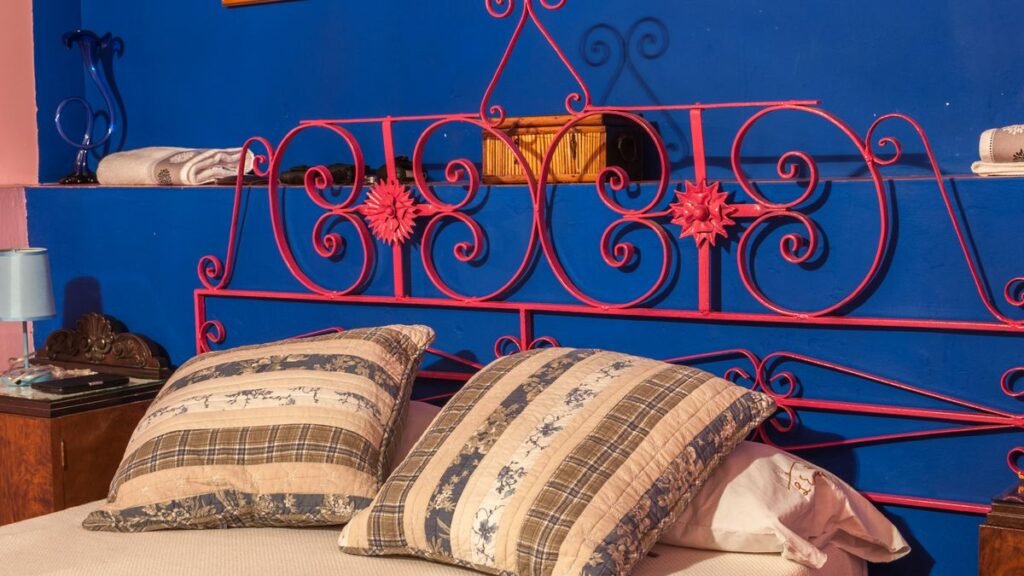
Powder coat is an electrostatically applied dry powder cured under heat, creating a thick, impact-resistant shell that bonds chemically to the metal surface. Quality powder coat applied to a properly prepped metal frame holds up well for many years under normal indoor conditions, coating manufacturers and industry standards such as AAMA 2603 set performance benchmarks for exterior applications, and properly specified interior-grade coatings routinely exceed those targets. Electroplating deposits a thinner metallic layer that scratches more easily and shows wear faster, particularly at stress points like corner joints and rail connections where metal-on-metal contact occurs during assembly. For a king metal bed frame with headboard and footboard that gets assembled, moved, and loaded repeatedly, matte black powder coat is the most forgiving finish for daily residential use. Chrome and gold electroplate look sharp on the showroom floor but can show wear at joint areas relatively quickly under regular use.
Victorian/wrought iron styles vs. minimalist modern: picking your frame aesthetic
Two dominant design languages define this category. Victorian and scrollwork designs add visual weight and strong vertical elements that work well in traditional, farmhouse, and maximalist interiors. Flat-bar minimalist frames suit contemporary, mid-century modern, and Scandinavian aesthetics where the bed should recede visually rather than dominate. Finish color amplifies both directions: matte black powder coat strengthens both styles, bronze grounds traditional designs, and brushed gold bridges the gap for transitional interiors. Pick the aesthetic deliberately and make sure the headboard height and profile are consistent with the room’s other furniture proportions.
Finish longevity in high-humidity environments
For hotel guestrooms, basement bedrooms, and coastal residences, finish durability under humidity exposure is a real specification concern. Powder coat longevity depends on two variables: coating thickness (measured in mils, with commercial-grade applications typically running 2, 4 mils) and surface preparation quality before coating. A frame that skips proper surface prep, cleaning, phosphate treatment, and primer adhesion, will develop coating adhesion failures regardless of how thick the topcoat is. Rust starts at the point of adhesion failure and spreads laterally under the intact coating. When evaluating a manufacturer, ask specifically about their pre-treatment process: cleaning method, whether a phosphate or zinc-phosphate conversion coat is applied, and primer type, not just the finish type.
Choosing a king size metal bed frame with headboard and footboard for your space

Standard king mattress dimensions vs. actual frame footprint
The US standard king mattress measures 76 inches wide by 80 inches long. A king metal bed frame with headboard and footboard typically runs 78, 82 inches wide and 82, 86 inches long at the outer footprint, adding roughly 1, 5 inches in each dimension beyond the mattress. Add headboard projection from the wall (typically 2, 4 inches depending on panel depth) and footboard depth into the room when calculating clearance. A 12 x 12-foot room is a practical minimum for comfortable king bed placement, with 13 x 13 feet or larger giving adequate circulation on three sides of the bed.
Under-bed clearance: storage height vs. platform profile
Budget platform frames typically sit 12, 14 inches off the floor, mid-range and heavy-duty frames range from 14, 18 inches, and traditional rail frames that use a box spring add significant height to the total mattress stack. Clearance height affects three practical considerations: under-bed storage accessibility, cleaning ease, and the visual weight of the bed in the room. A bed that sits lower feels more grounded and modern; a bed with 18 inches of clearance offers meaningful storage capacity and is easier to access for users with mobility considerations. Factor your actual use case rather than defaulting to whatever height a specific frame happens to provide.
Platform frames vs. traditional rail frames: matching to your mattress setup
Metal platform frames with steel slats support the mattress directly and eliminate the need for a box spring. This is the right configuration for foam, latex, and most hybrid mattresses, which require a solid or closely slatted surface for proper support. Traditional angle-iron rail frames with no built-in slats require a box spring or foundation to bridge the open rail span and support the mattress. Slat spacing matters for mattress warranty compliance: no more than 3 inches of gap between slats for foam mattresses. Check your mattress manufacturer’s specific support requirements before buying any king size metal bed frame and verify that the slat spacing meets that standard.
Price tiers in 2026: budget, mid-range, and premium options compared
Budget tier ($70, $140): what you get and where it cuts corners
At the $70, $140 price point, expect 18-gauge steel, electroplated or thin powder-coat finishes, and factory-integrated headboard designs with limited style selection. These frames perform their basic function, but they’re built to a price. Frequently reported failure points, based on consumer review patterns, include center support legs that flex laterally rather than providing rigid vertical support, finish chips at joint areas, and headboard connections that develop a rattle as the bolt holes elongate over time. For a guest bedroom that sees light use, the budget tier works. For a primary bedroom or any commercial application, the limitations surface quickly.
Mid-range sweet spot ($140, $250): the best overall value in 2026
The $150, $200 zone is where construction quality meaningfully separates from budget builds. At this price tier, prioritize king size metal bed frames that document weight capacity over 1,000 lbs, use powder-coat finish rather than electroplate, and include headboard brackets with standard 3-inch spacing that accept bolt-on attachments. Heavier tube steel and better welds come standard at this level, along with center-support systems designed to actually contact the floor under load. This is the tier where most residential buyers should start and end their search. The improvement in long-term performance relative to the budget tier is substantial; the jump to the premium tier is mostly about design differentiation rather than structural gains.
Premium options ($250, $400+): when the upgrade is worth it
Frames in the $250, $400+ range deliver 14-gauge construction, superior finish quality, and design details that make the frame a statement piece rather than background furniture. For a primary bedroom where the bed is the visual focal point, this tier makes sense. For hotel buyers, however, this entire retail price spectrum remains far below what custom factory-direct fabrication delivers at scale. A 200-room hotel buying premium retail frames at $350 each spends $70,000 on frames alone, without brand customization, guaranteed consistency across production lots, or commercial-grade weight documentation.
When retail options fall short: how hotel buyers source metal bed frames differently

Why off-the-shelf frames don’t work for multi-room hotel projects
A retail king metal bed frame is engineered for a single residential bedroom with one buyer, one delivery, and one set of assembly instructions. When a hotel developer needs 200 identical frames for a new property, off-the-shelf sourcing immediately creates operational problems. Finish lots vary between production runs, so frames from two separate orders may not match under the same lighting conditions. Headboard designs are fixed at whatever the manufacturer offers rather than specified to meet brand standards. Weight capacity documentation rarely meets the commercial insurance requirements that hotel operators must satisfy. Lead times are built around single-unit e-commerce fulfillment, not coordinated container shipments timed to a construction schedule.
Factory-direct custom fabrication: what hotels actually order
YM Furniture (Foshan Yauming Furniture & Construction Co., Ltd.), a Foshan-based factory-direct supplier with 17 years of hospitality FF&E experience, represents the sourcing model that hotel developers and procurement teams use at scale. Custom metal bed frames are fabricated to exact brand specifications. That means specific frame gauge, headboard height, footboard profile, and finish schedule, including custom color matching, with upholstery compatibility built in from the first prototype rather than retrofitted afterward. YM Furniture’s 20-day model room program allows a hotel developer to approve a physical sample before full production begins on a guestroom rollout. With factory-direct pricing, US hotel buyers source consistently at 40, 70% below comparable US retail costs, even after accounting for ocean freight from Foshan to US ports, which typically runs 25, 40 days.
What this sourcing model means for quality and certification
Commercial procurement requires documentation that retail sourcing simply doesn’t provide. The certifications that matter for hotel projects include ISO 9001 for quality management system compliance, flammability test documentation (California TB 117 for upholstered headboard components, NFPA 260 for additional commercial environments), and load-test reports that satisfy insurance and brand standard audits. YM Furniture holds ISO 9001, ISO 14001, and ISO 45001 certifications and has completed 1,000+ hospitality projects, including Marriott and Sheraton properties, providing the documented track record that procurement teams require before placing large orders. If you’re planning a hotel or multi-property residential development, contact YM Furniture directly to discuss your frame specifications and request a model room quote.
Assembly, installation, and pre-use checks: the last step most buyers skip
What to inspect the moment you open the box
Before a single bolt goes in, lay all components out flat and cross-check against the parts list. Inspect weld points at every rail-to-leg connection: look for visible cracks, incomplete welds, or bead discontinuity. Check finish integrity at all joint areas and corners, because bare metal exposed by a shipping chip starts rusting from day one. Examine center support legs for any bending along the shaft. A cracked weld or bent center leg on delivery is a warranty claim, and it should be documented and reported before assembly begins rather than worked around during installation.
Common assembly mistakes that cause long-term problems
The most preventable failure is skipping the center support leg entirely, usually because it seems optional and adds an assembly step. This is the most common cause of mid-frame sag and mattress warranty voiding. A second recurring error is overtightening slat bolts to the point of distorting the rail tube, which permanently deforms the connection point and creates a stress concentration that fails later. The third is tightening all joints before squaring the frame, locking in a parallelogram shape that causes the headboard to lean and the slats to sit unevenly. The correct sequence: attach headboard and footboard to side rails, hand-tighten all connections, square the frame by measuring corner-to-corner diagonals until they match, then torque all fasteners to spec.
Post-assembly stability checks before loading the mattress
Once assembled, apply downward pressure at all four corners and at the center rail. Listen for any metal-on-metal contact that indicates a loose joint or a bolt that seated against the tube wall rather than into the nut. Verify that every center support leg makes full contact with the floor rather than sitting slightly elevated due to rail flex. A frame that passes this test consistently is ready for the mattress. For hotel installations at scale, a standardized post-assembly checklist run by the installation team ensures every guestroom frame is correctly set before linen setup begins, eliminating callbacks from guests experiencing noise or movement that traces back to an assembly step rushed during room turnover.
Choosing the right king size metal bed frame: putting it all together

The buying decision comes down to four variables in order of priority: gauge determines how long the frame remains structurally sound; weight capacity and center support determine safety; headboard and footboard compatibility determines design flexibility; and finish quality determines how long the frame looks the way it did on delivery day. Price tier is a useful starting filter, but the spec sheet is the real decision-maker. A $200 king size metal bed frame with headboard and footboard that documents 14-gauge construction, 1,500 lbs capacity, and a MIG-welded center beam delivers more value than a $300 frame that omits all of those details.
For residential buyers, the mid-range $150, $250 zone delivers the best balance of construction quality and cost in 2026. Spend time on the specification details rather than the product photography, and verify headboard compatibility before ordering. For hotel developers and procurement teams, retail options are useful for understanding the product category and setting baseline quality expectations, but they aren’t the actual sourcing solution for multi-room projects.
The right king size metal bed frame with headboard and footboard is the structural and visual foundation of a bedroom, worth buying once if you buy it right. Use the spec benchmarks in this guide as your filter, and you’ll narrow the market to a short list of frames that will actually deliver on what they promise. If you’re sourcing for a hotel project or large-scale residential development and need custom fabrication with full certification documentation, reach out to YM Furniture to discuss specifications and pricing for your project.