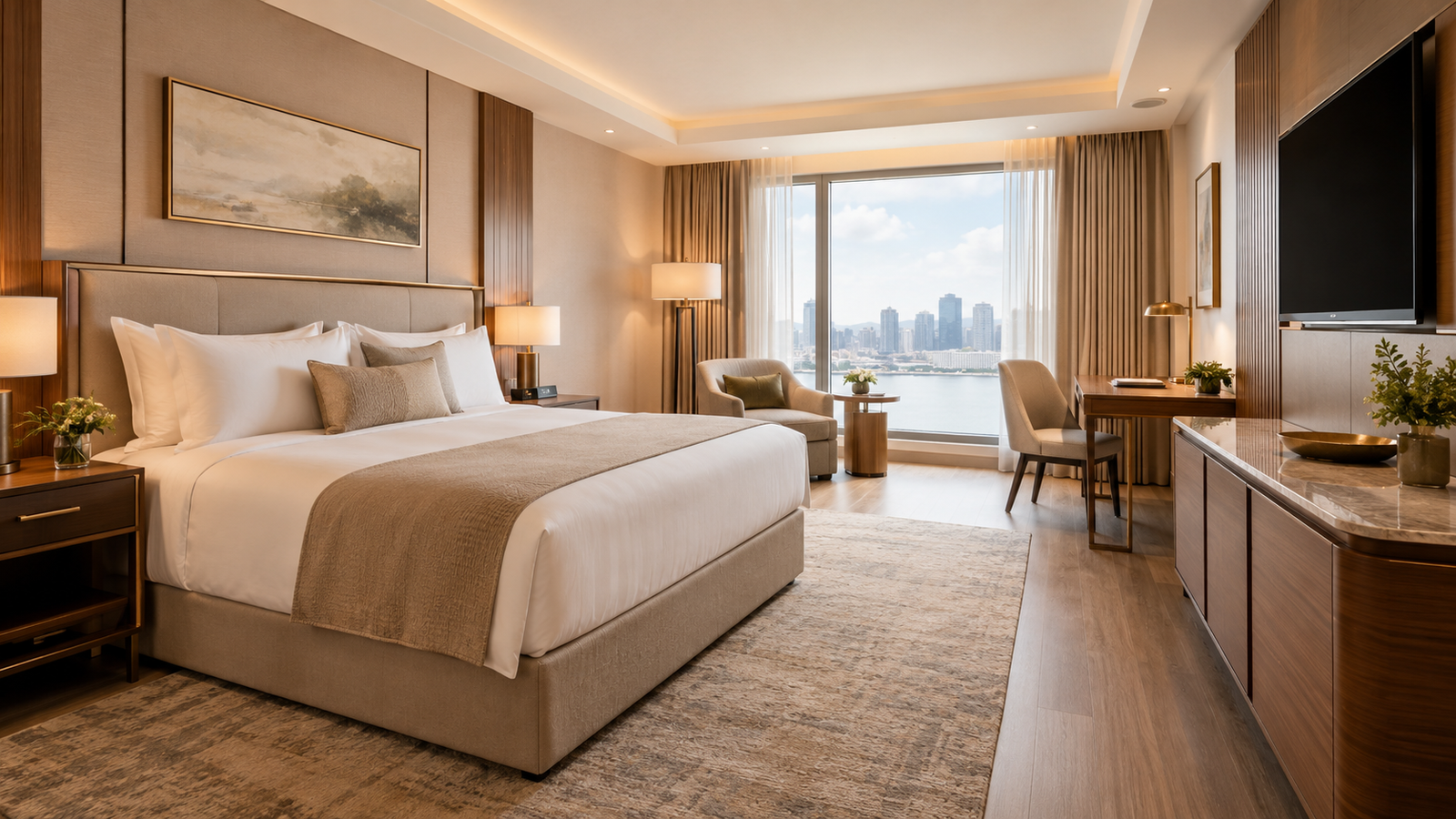
Every villa development lives or dies on the details you can touch. A floor plan sells the dream, but the furniture is what a buyer or guest actually sits on, sleeps in, and remembers. Luxury villa furniture in 2026 has moved away from anything that reads as generic five-star hotel filler, and developers building across multiple markets are noticing the shift fast.
This shift matters more for international developments than for a single-site project. When you are furnishing forty villas across three countries, one wrong trend call gets repeated forty times, and one wrong material choice gets shipped forty times. Getting the direction right at the start saves real money and real headaches later.
Below is a practical look at what is actually driving furniture decisions on luxury villa projects right now, where the industry is headed, and how developers and designers can source and budget for it without guessing.
What “Luxury Villa Furniture” Actually Means in 2026
Luxury no longer means gold trim and oversized everything. Craftsmanship is the word doing the heavy lifting this year. Buyers who can afford a villa in Marbella, Phuket, or Dubai have usually already lived through the maximalist decade, and they are tired of it.
What they want instead is furniture that feels considered. A dining chair with a visible joinery detail. A sofa frame built from a single species of wood rather than a mixed composite. Pieces that look like someone made a decision about them, not pieces pulled from a catalog of a thousand near-identical options.
Elegance in this context is quiet. It shows up in proportion and finish rather than ornamentation. A four-poster bed frame with clean lines and a hand-rubbed oil finish now outsells the heavily carved version three to one among the trade buyers supplying Mediterranean and Gulf villa markets, according to several furniture manufacturers who spoke about seasonal ordering shifts.
Natural materials are doing a lot of the work here too. Solid oak, walnut, rattan, linen, and stone are replacing lacquered finishes and synthetic veneers across nearly every villa furniture category, from bedroom sets down to occasional tables. This is not a fringe preference anymore. It is close to the default expectation on any project marketed as genuinely luxury rather than merely expensive.
Top Furniture Trends Shaping International Villa Projects
A handful of trends are showing up across villa developments regardless of region, which makes them a safe bet for multi-market projects.
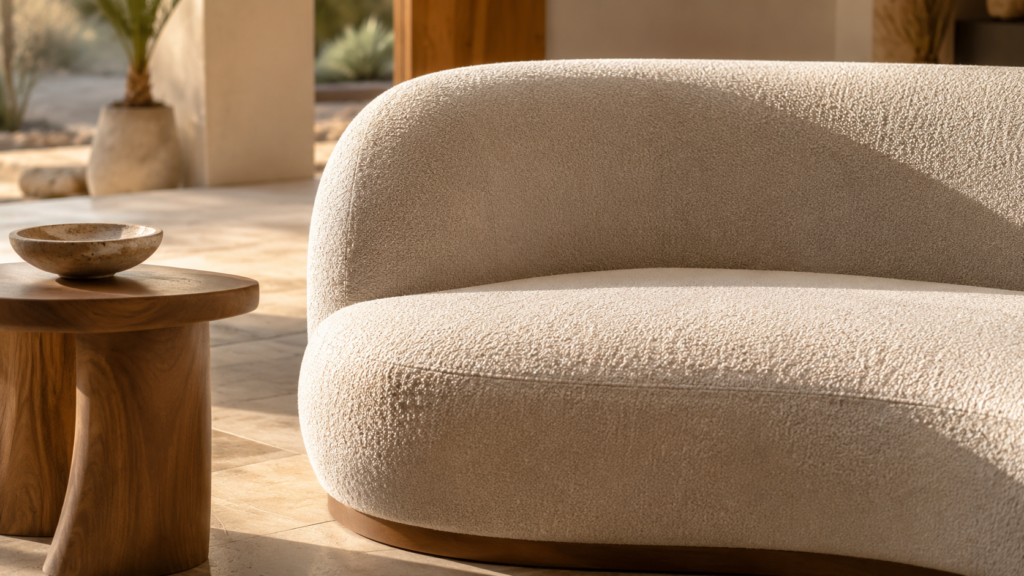
Sculptural forms are replacing straight lines. Sofas, headboards, and even side tables are leaning into soft curves and rounded silhouettes instead of the boxy, hard-edged look that dominated the last several years. A curved sectional or a bed with a gently rounded headboard photographs better in listings and feels more inviting in person, which matters for both sales and guest experience.
Organic forms are showing up in smaller pieces too. Side tables shaped like river stones, stools with irregular sculptural bases, and lighting fixtures that mimic natural growth patterns are appearing in showrooms from Lisbon to Bali.
Minimalism is back, but a warmer version of it. This is not the cold, stripped-down minimalism of a decade ago. It pairs a reduced number of pieces with rich texture, so a room might have only three or four furniture items but each one carries visible grain, weave, or hand-finished detail.
Texture is doing the work color used to do. Bouclé, raw linen, hand-woven rattan, and slubbed wool are showing up on everything from headboards to dining chairs. A room built around texture rather than pattern tends to age better and photograph more consistently across different lighting conditions, which is a real practical advantage for rental villas.
Biophilic design is influencing furniture choice, not just landscaping. Furniture that references natural forms and uses raw or lightly treated materials helps a villa interior feel connected to its exterior setting, especially important for tropical and coastal developments where the outdoor space is half the sale.
Bespoke vs. Ready-Made: Which Fits Your Development
This is the decision that affects budget and timeline more than any other single choice on a villa furnishing project. Here is how the two paths actually compare.
| Factor | Bespoke / Custom Furniture Design | Ready-Made Luxury Lines |
|---|---|---|
| Lead time | 12–20 weeks typical, longer for complex pieces | 4–8 weeks typical |
| Cost per unit | 30–60% higher, but scales down with repeat orders | Lower upfront, less negotiation room at scale |
| Exclusivity | Fully unique to the development’s brand | Shared with other buyers of the same line |
| Consistency across units | High, if the same furniture designers handle every order | High, since it is factory-standardized |
| Best fit | Flagship villas, show units, ultra-luxury single sites | Multi-unit developments needing 20+ matching sets fast |
Most international developments end up using a hybrid approach: bespoke pieces for show villas and flagship units where the furniture design itself is part of the marketing story, and a curated ready-made line for the bulk of the remaining inventory. Working with furniture designers who can adapt one core design across both bespoke and production-ready versions keeps the aesthetic consistent without blowing the timeline.
Regional Style Influences to Watch
International developments rarely use one single style across every market, and trying to force one look everywhere usually backfires with local buyers.
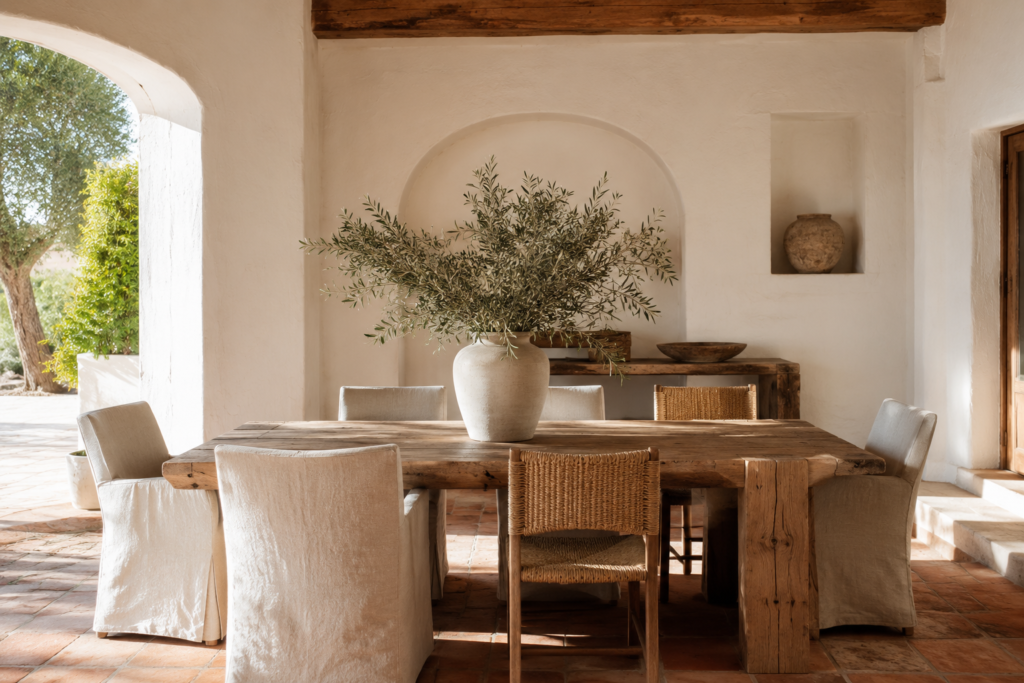
Mediterranean villa projects are leaning into a warm, sun-bleached color palette: chalky whites, sand, terracotta, and olive green, paired with reclaimed wood dining tables and linen upholstery. The look borrows heavily from old Provençal and Andalusian farmhouses but strips out anything overly rustic.
Middle Eastern resort-style developments are blending traditional craftsmanship, like carved wood screens and brass inlay, with much simpler modern furniture silhouettes, so the decor reads as heritage-aware rather than themed.
Southeast Asian luxury developments continue to favor rattan, teak, and other natural materials, but 2026 has brought in more sculptural, gallery-style pieces rather than the purely traditional woven furniture of the past.
Caribbean and coastal Latin American projects are pulling in vintage and antique-inspired pieces, mixed intentionally with newer furniture to avoid a showroom-fresh look that can feel impersonal in a vacation setting.
Materials and Sustainability in Villa Furniture
Sustainability has moved from a marketing checkbox to an actual buyer expectation on luxury projects, and villa furniture sourcing has followed.
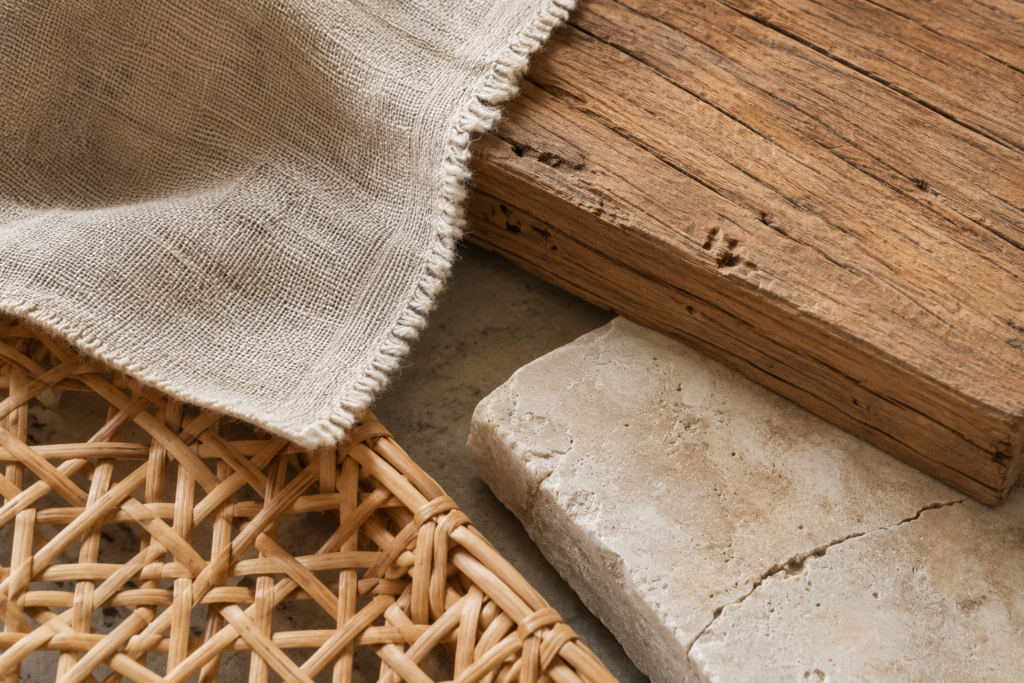
Reclaimed wood is now a headline material rather than a niche one. Dining tables, headboards, and structural furniture pieces built from reclaimed teak or oak carry a story that resonates with buyers who already have everything, and that story sells almost as well as the material itself looks.
Natural materials generally, stone, rattan, linen, wool, and responsibly sourced hardwoods, are outperforming synthetic alternatives even where the synthetic version is more durable or cheaper. Developers report that buyers ask about material sourcing directly during walkthroughs far more than they did even two or three years ago.
Natural light plays into this too. Furniture finishes are shifting toward matte and raw textures that read well in the strong, direct natural light common to villa settings, since high-gloss lacquer finishes tend to look harsh and can visually date a room faster.
Industry bodies like the American Society of Interior Designers have also been tracking sustainability as a top-line priority in residential and hospitality projects for several years running, which lines up with what developers are seeing directly from villa buyers on the ground.
Sourcing and Furnishing Furniture for International Developments
Furnishing an international villa portfolio is a logistics problem as much as a design one. A few practical points make the difference between a smooth rollout and a stalled one.
Vet any villa furniture supplier on production capacity before signing, not just on their showroom pieces. A supplier who can produce one gorgeous sample bed frame is not automatically able to deliver forty of them on the same timeline with consistent quality.
Factor customs and import timelines into every furniture trends decision before committing to a look. A stunning imported stone dining table means little if it sits in a customs warehouse for eight weeks past your opening date. Building a buffer of at least four to six weeks beyond the supplier’s quoted lead time is standard practice among developers managing multi-country rollouts.
Standardize hardware and fittings across suppliers where possible. Multi-supplier furnishing projects run into more delays from mismatched screws, brackets, and mounting systems than from the actual furniture pieces themselves.
For wood-based furniture, checking FSC chain-of-custody certification on a supplier’s reclaimed and hardwood pieces has become a fast, reliable way to confirm sourcing claims instead of taking a sales sheet at face value. It also gives sales and marketing teams something concrete to point to when buyers ask about material origin during walkthroughs.
Common Mistakes International Developers Make With Villa Furniture
A few recurring mistakes show up across multi-country villa projects, and most of them are avoidable with earlier planning.
Locking the design before confirming supplier capacity. A furniture design that looks perfect on paper falls apart if the chosen manufacturer cannot actually produce it at the required volume within the project timeline. Confirming capacity before finalizing any bespoke furniture design saves a painful mid-project pivot.
Treating every region the same. A design language that tests well in one market does not automatically translate. A minimalist, natural-material palette that feels fresh in a Mediterranean villa can read as unfinished or under-furnished to buyers in markets that expect more visible luxury signaling. Local buyer research before finalizing a region-wide furniture brief prevents this mismatch.
Underestimating humidity and climate effects on natural materials. Reclaimed wood, rattan, and untreated linen behave very differently in a dry Mediterranean climate than in a humid tropical one. Furniture specifications need climate-specific finishing and sealing requirements built in from the start, not adjusted after the first units start showing wear.
Skipping a maintenance plan for natural-material furniture. Buyers drawn to raw, natural finishes are not always aware of the extra care those finishes require. Developments that provide a simple maintenance guide alongside handover documents see meaningfully fewer complaints in the first year of ownership.
Over-customizing show villas without a scalable version. A flagship villa built entirely from one-off bespoke pieces looks stunning but leaves no clear, repeatable path for the remaining units. Building the show villa around a design that can flex into a production-ready version from the start avoids a costly redesign later.
Budgeting for Luxury Bedroom Furniture Sets at Scale
Pricing a single stunning show villa is one exercise. Pricing luxury bedroom furniture sets across twenty, fifty, or a hundred units is a different one entirely, and it is where most first-time international developers get their numbers wrong.
Per-unit cost drops meaningfully once you commit to a repeat order with one furniture design partner, but only if the design is finalized before the first unit is built. Mid-project design changes on a luxury home furnishing contract are one of the most common budget overruns on multi-villa developments.
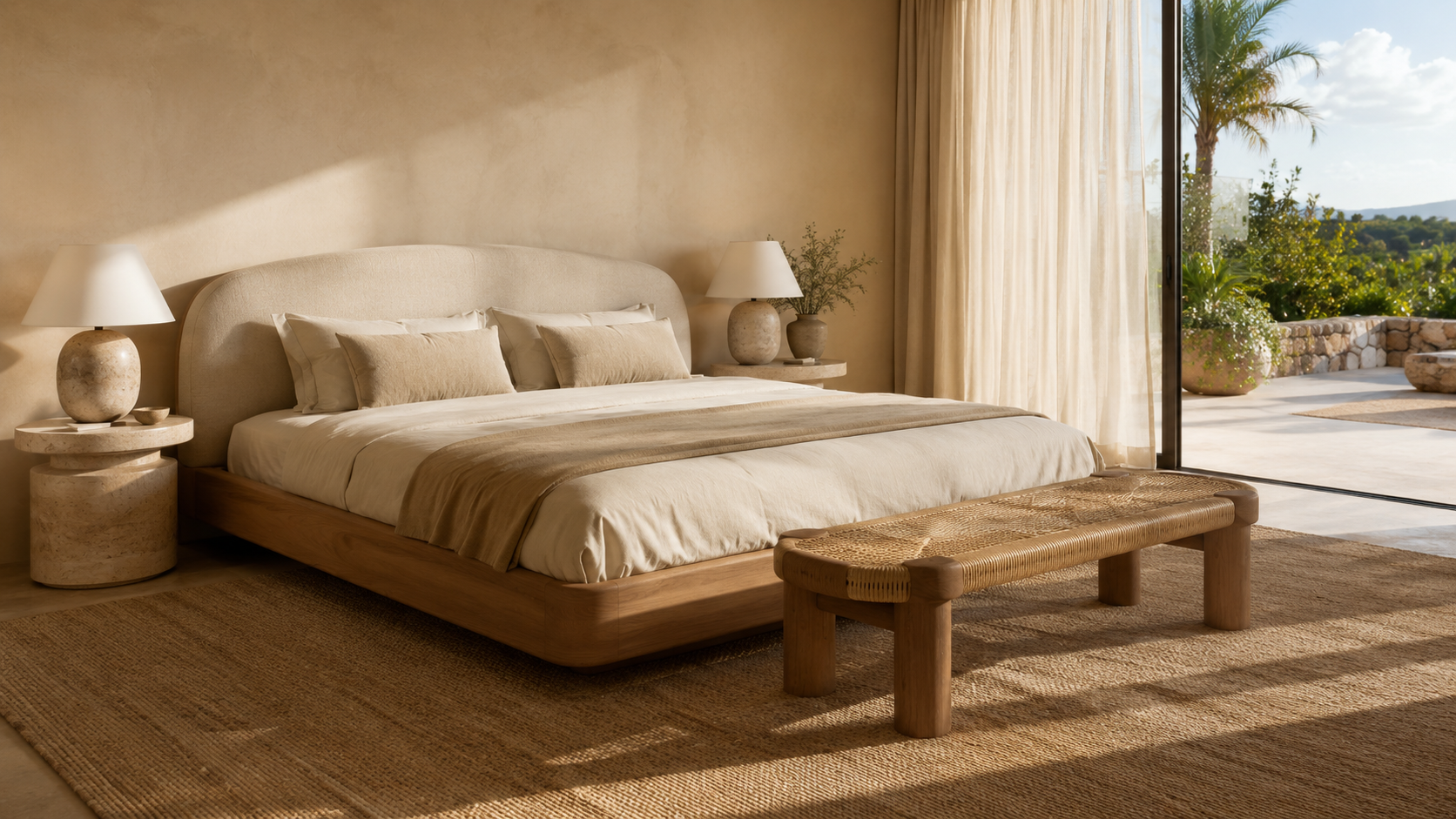
A reasonable starting benchmark for a luxury master bedroom set, bed frame, two nightstands, a dresser, and a bench, in solid natural materials with a mid-tier bespoke finish, runs noticeably higher than an equivalent big-box luxury interiors line, but the gap narrows fast at volume. Getting firm, unit-based quotes early, rather than working off a single showroom sample price, avoids unpleasant surprises at the fortieth villa.
How These Trends Show Up in Real Villa Interiors
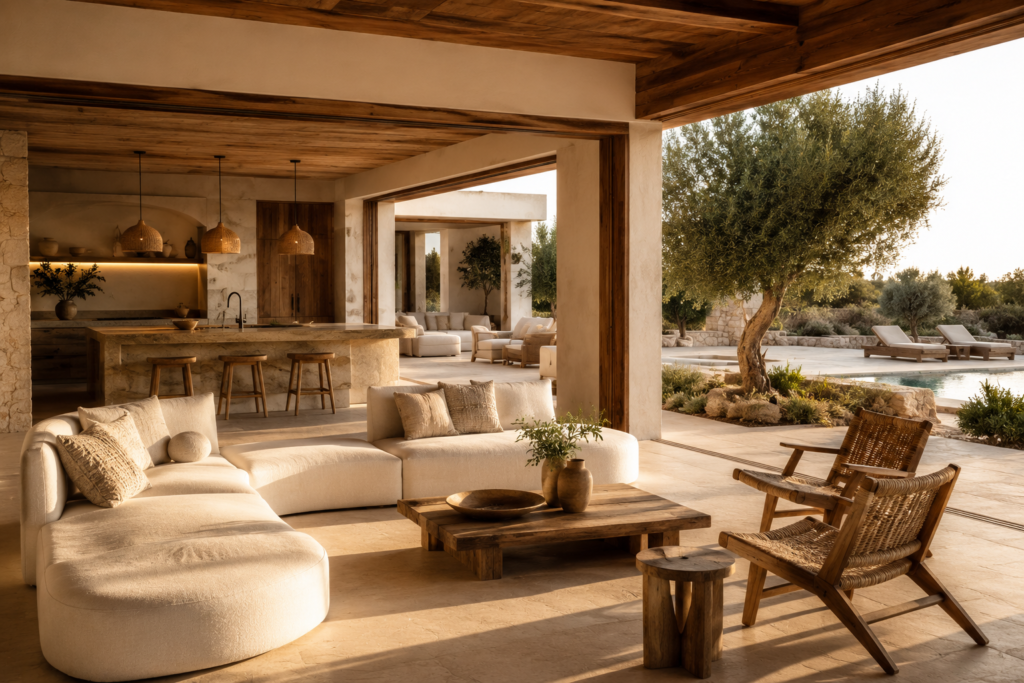
In practice, these trends rarely appear in isolation. A single well-furnished villa living space usually pulls several of them together at once.
Living rooms in 2026 villa projects tend to center on one sculptural anchor piece, often a curved sofa or an oversized organic-shaped coffee table, with everything else in the room kept deliberately simple so that piece stays the focal point.
Dining tables built from reclaimed or solid wood, often oversized and slightly imperfect in grain, have become the signature piece in many show villas, paired with a mix of upholstered and woven chairs rather than a matching set.
Kitchen islands are increasingly finished in natural stone with a visible, unpolished edge instead of the seamless engineered-quartz look that dominated the previous decade.
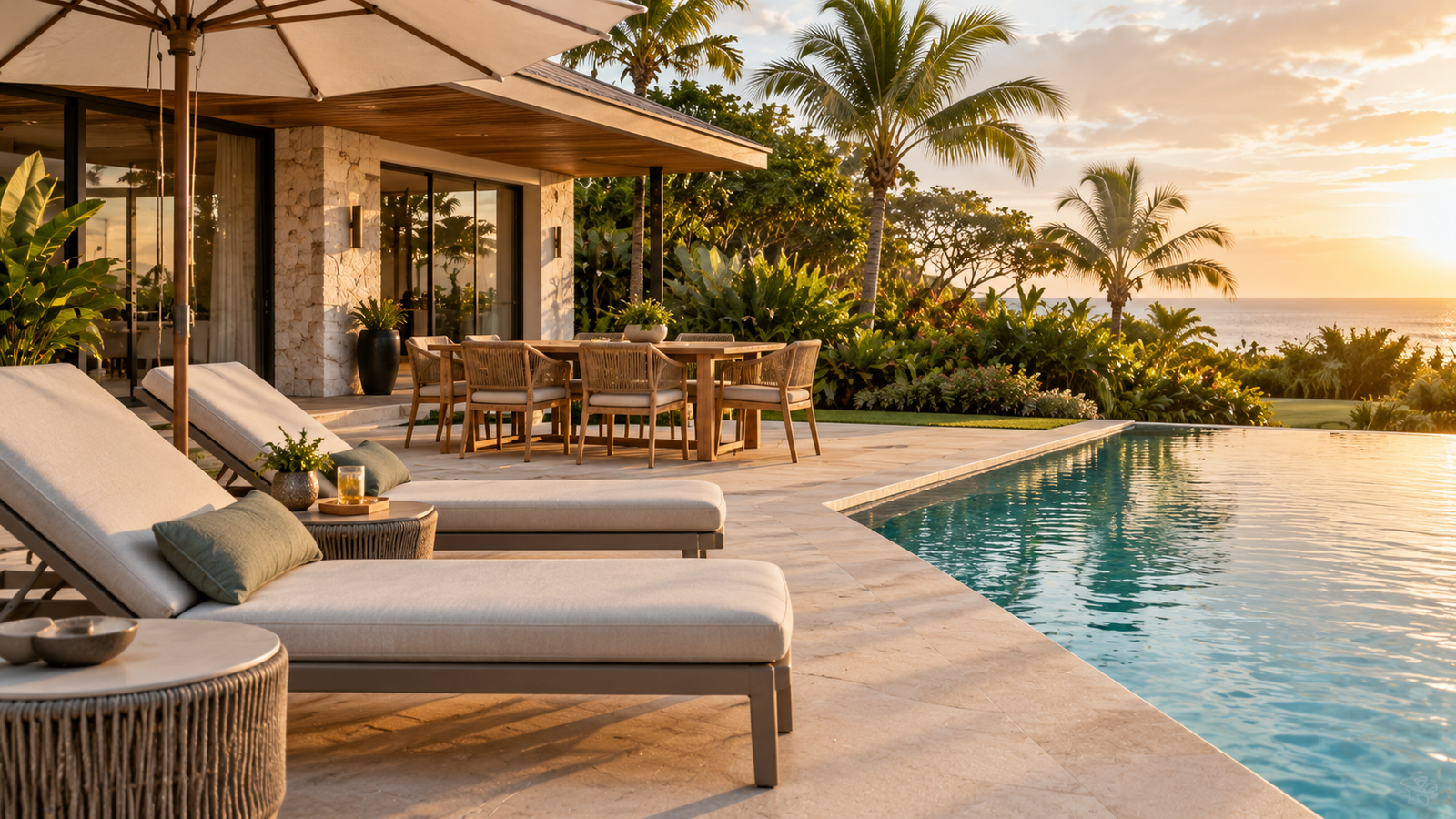
Outdoor living spaces, arguably the real selling point of most villa developments, are borrowing the same sculptural, natural-material language as the interior furniture, so the transition between inside and outside feels continuous rather than like two separate design projects.
Frequently Asked Questions
What is the typical lead time for bespoke luxury villa furniture on an international project? Most bespoke orders run 12 to 20 weeks depending on complexity, and international shipping and customs clearance typically add another 4 to 8 weeks on top of that.
How do developers keep furniture style consistent across villas in different countries? By locking a core design language, materials, color palette, and 2 to 3 signature pieces, with a single lead furniture designer or manufacturer, then allowing only minor regional adjustments rather than redesigning per market.
Is bespoke furniture worth it for a multi-unit villa development? Usually only for flagship or show units. The rest of the portfolio typically does better on cost and timeline with a curated ready-made line built from the same design brief.
What furniture materials hold up best in tropical or coastal villa climates? Solid hardwoods with proper sealing, natural rattan, and treated stone perform best. Untreated reclaimed wood and raw linen need more maintenance planning in high-humidity environments.
Do buyers actually care about sustainable materials in luxury furniture, or is it just marketing? Developers consistently report that buyers ask about material sourcing directly during walkthroughs, particularly around reclaimed wood and natural materials, so it has become a genuine purchase factor rather than pure marketing language.
Where Villa Furniture Trends Go From Here
The direction for luxury villa furniture past 2026 looks less like a passing decor trend and more like a lasting shift in what buyers consider timeless design. Sculptural, natural-material, craftsmanship-forward furniture is proving durable across very different regional markets, from Mediterranean coastlines to Southeast Asian resorts, which suggests staying power rather than a short design cycle.
For developers planning the next phase of an international villa portfolio, the practical move is to lock in a furniture design direction early, vet suppliers on real production capacity rather than showroom polish, and budget for the true landed cost of natural materials and custom work before the first villa breaks ground. Get that foundation right, and the furniture becomes the thing buyers remember long after the floor plan has faded into the background.
Related reading: Sourcing Sustainable Materials for Luxury Developments, How to Vet an International Furniture Supplier, Designing Show Villas That Sell Faster, Budgeting Multi-Unit Interior Fit-Outs, Biophilic Design for Resort and Villa Developments