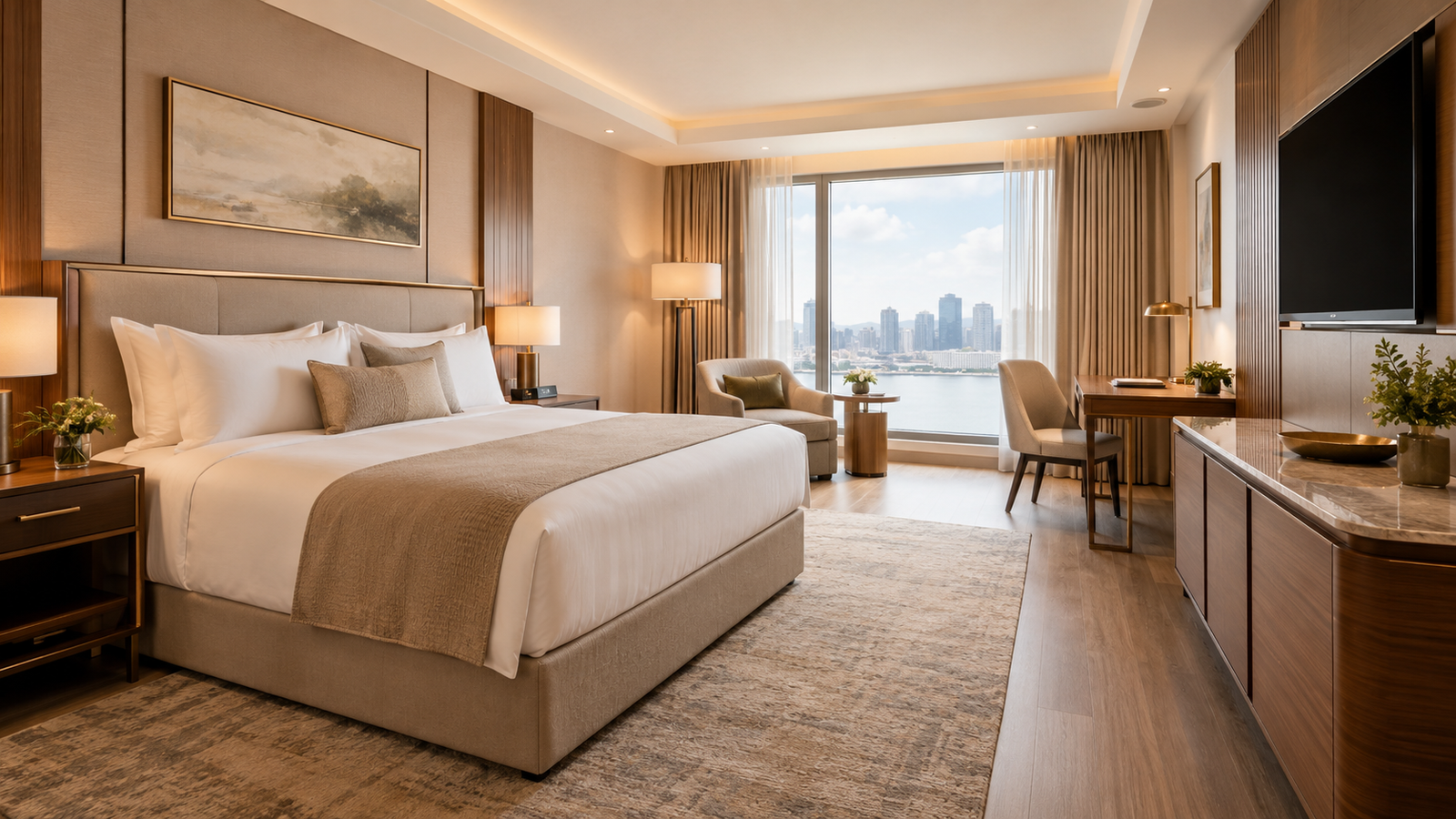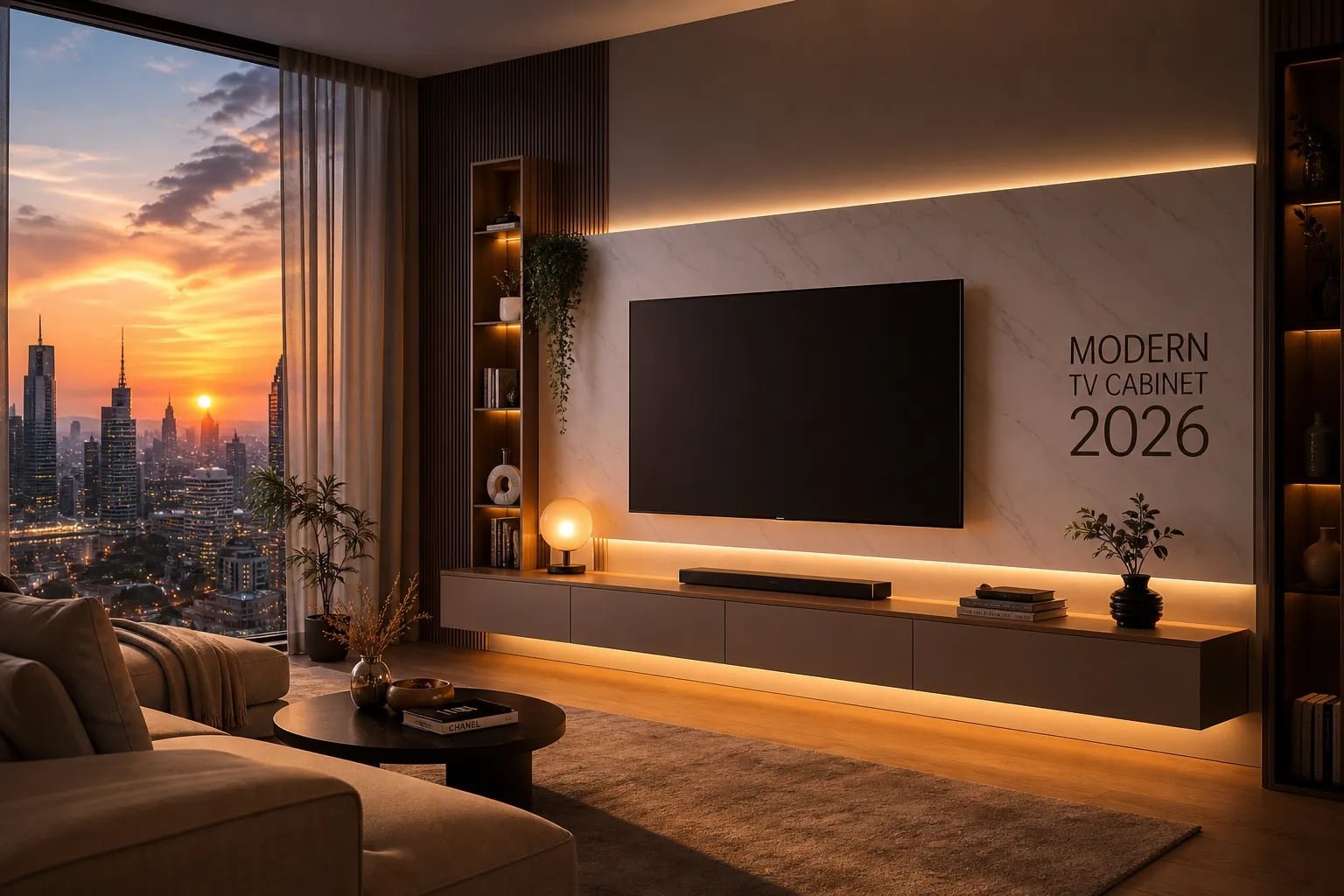
In 2026, modern TV cabinet design has shifted from an afterthought to one of the most deliberate decisions in any premium interior, whether that’s a living room, hotel suite, or luxury villa. The media wall now sits right up there with the sofa and the lighting plan in terms of design intent. Interior designers are increasingly drawing from five-star hospitality playbooks: floating consoles with integrated LED channels, fluted walnut panels that read as sculptural elements, and ultra-clean matte lacquer units that disappear into the wall until you need them. The gap between a well-specified contemporary TV unit and a generic flat-pack has never been wider.
This shift isn’t accidental. Hospitality designers have spent years solving the problem of how to make a television, fundamentally an ugly black rectangle, feel intentional in a premium room. The solutions they’ve developed are now migrating into residential interiors at pace. Manufacturers like YM Furniture (Foshan Yauming Furniture & Construction Co., Ltd.) in Foshan, China, have been producing these exact designs for five-star hotel clients for years, and that hospitality-grade DNA is now directly accessible to residential developers and procurement teams sourcing at project scale.
This guide covers everything you need to make a confident decision: the five dominant styles defining the category right now, how floating units actually work in practice, which materials hold up under real-world conditions, how to size a cabinet correctly for any screen, and when custom manufacturing makes more sense than anything you’ll find at retail. Whether you’re specifying a single room or furnishing an entire hotel, you’ll find what you need here.
What’s actually changed in TV cabinet design heading into 2026
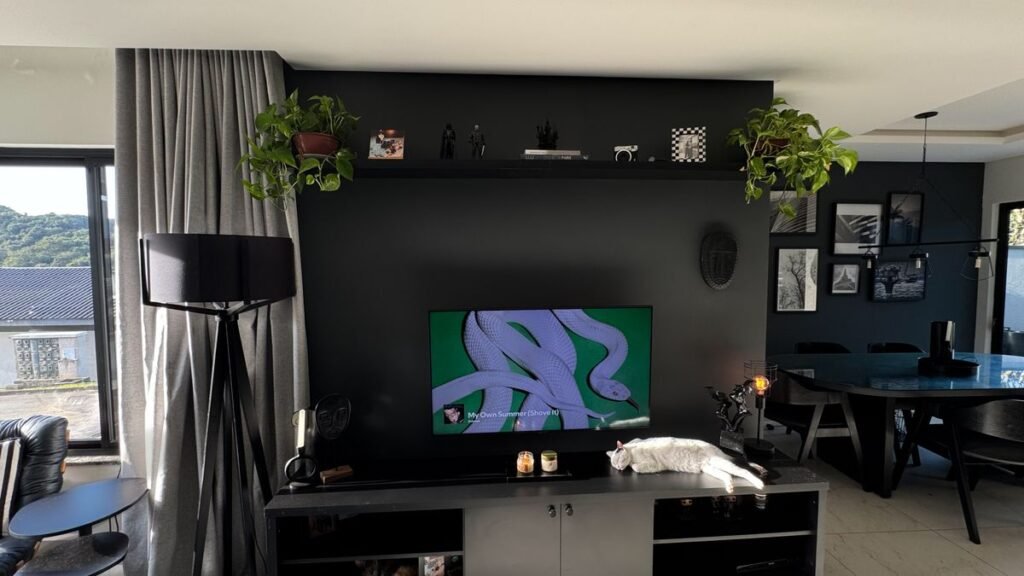
The standalone TV stand, four legs, two shelves, a cable hole in the back, isn’t gone, but it’s been pushed firmly into the budget and rental category. In any project where design quality matters, it’s been replaced by something more considered. The shift has been building for several years, but 2026 feels like the point where it has become the expectation rather than the exception.
The end of the standalone TV stand in luxury interiors
The integrated media wall has replaced the freestanding TV unit as the default choice for premium residential and hospitality projects. Rather than a piece of furniture sitting in front of a wall, the cabinet, shelving, and storage are now conceived as part of the wall itself. This creates a cleaner visual field, eliminates the awkward space behind a standalone unit, and allows cable management to be hidden completely. Interior designers working on high-end apartments and hotel suites now routinely specify furniture-grade TV cabinets with precision joinery, bespoke dimensions, and finish schedules that match the room’s broader material palette, none of which retail options can deliver.
How hospitality design is setting the residential benchmark
Five-star hotel suites have always been laboratories for interior design ideas that eventually reach residential markets. The floating media console now appearing in luxury Manhattan apartments was widely used in boutique hotel design earlier this decade. The fluted wood panels framing TV walls in new residential buildings were refined in resort suites before they went mainstream. Hospitality-grade specifications, concealed cable routing, durable lacquer finishes rated for continuous use, precise millwork tolerances, are now the baseline that serious residential buyers expect. For premium projects, that means specifying cabinet substrates rated for continuous use, concealed cable routing, and finishes matched to the broader FF&E package.
The 5 dominant styles defining modern TV cabinet design right now
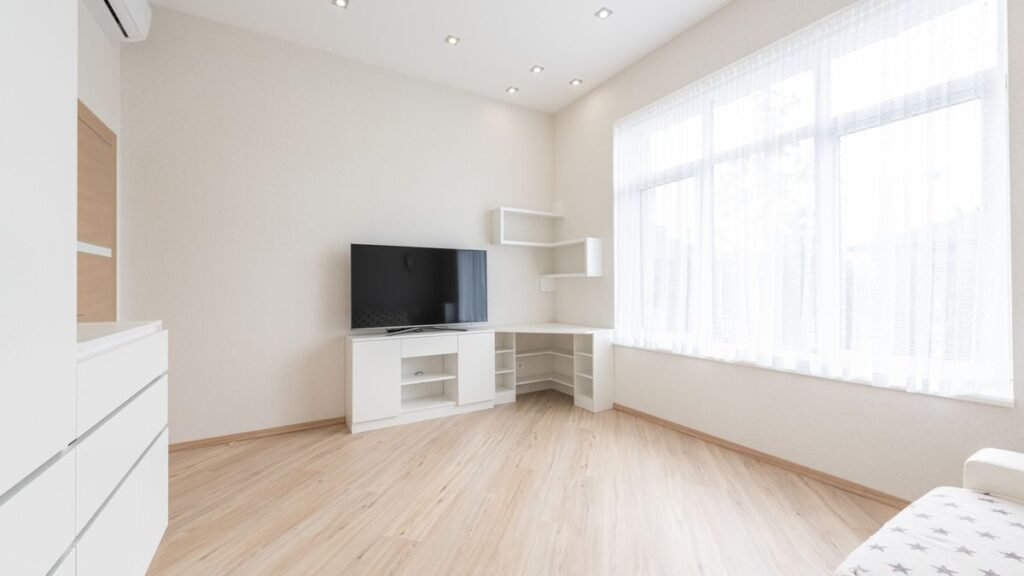
Not every style suits every room or project type. Understanding the design logic behind each one helps you make the right call for your specific brief and avoid specifying a piece that looks disconnected from the rest of the space.
1. Floating wall-mounted units
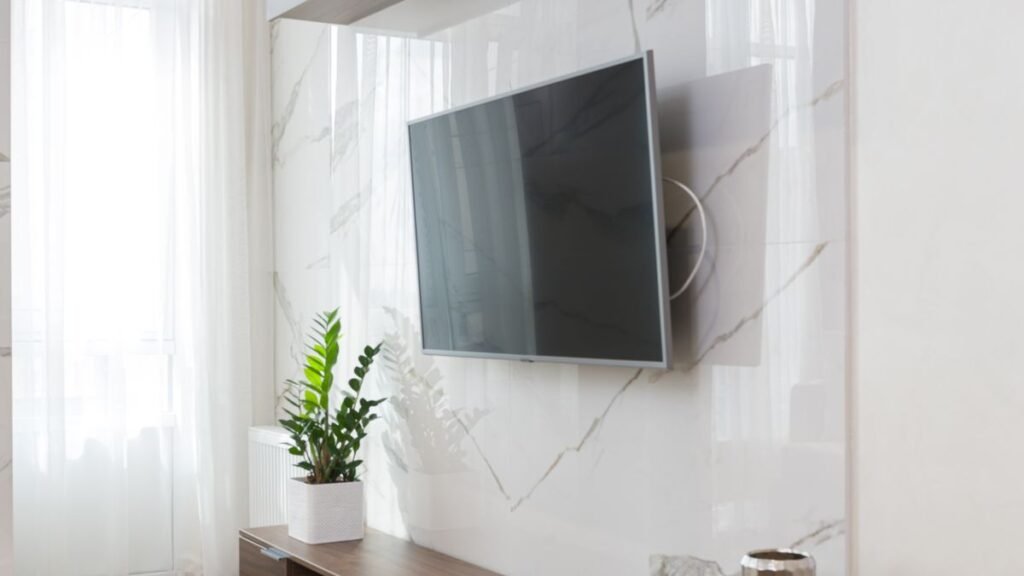
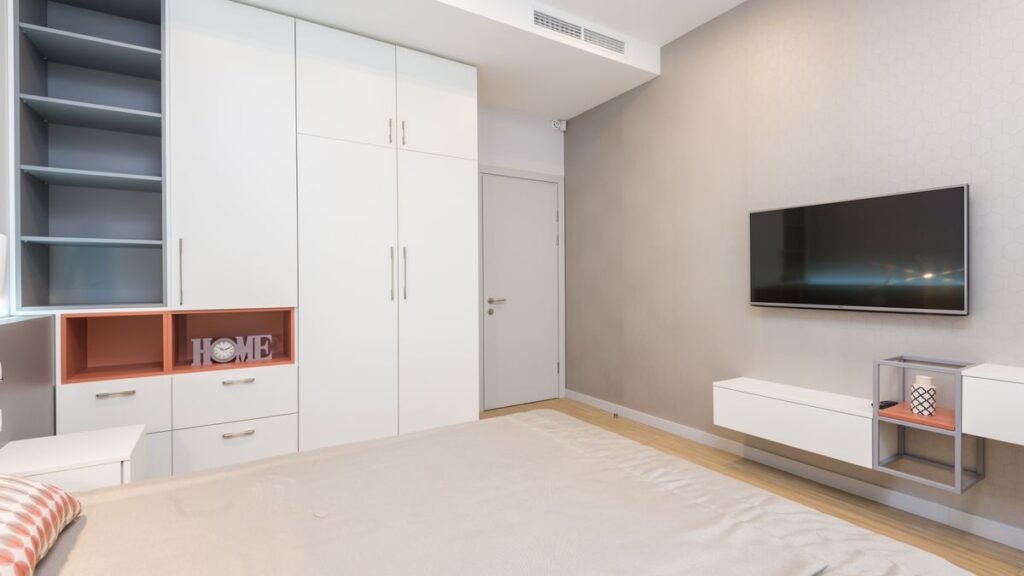
Wall-mounted TV cabinets remain the most widely specified contemporary TV stand option in 2026, and for good reason. By eliminating floor contact, they create a visual lightness that makes rooms feel less heavy and more spacious, a meaningful difference in compact hotel guestrooms and city apartments where every square foot counts. The clean sightline from floor to wall, unbroken by cabinet legs, is a small detail that registers subconsciously as premium. In hotel design specifically, floating units also simplify housekeeping: floors can be vacuumed without moving anything.
2. Fluted and textured panel fronts
Vertical groove fronts, ribbed MDF, and slatted wood panels are the clearest signature of 2026 modern TV wall unit design. They solve a specific problem: how to add visual depth and tactile interest to a large surface without adding visual clutter. A flat cabinet door reads as a blank panel; a fluted door front reads as a considered material choice. Warm walnut and oak are the most common species used, but fluted finishes are also being applied to painted MDF for a more graphic effect. Based on current adoption across hospitality and residential projects, this direction shows every sign of remaining dominant for the foreseeable future.
3. Minimalist high-gloss and matte finishes
Clean-line, handleless cabinetry in high-gloss white, soft matte gray, or two-tone lacquer remains a core direction for contemporary residential and boutique hotel design. The appeal is consistent: these units recede visually, putting focus on the screen and the room rather than the furniture itself. Matte finishes have been gaining ground on high-gloss options, particularly in hospitality settings, for a practical reason, they show fewer fingerprints and photograph better in property marketing images.
4. Mid-century modern revival with warm wood tones
Tapered legs, warm walnut and oak veneers, and simple geometric forms are having a genuine moment. This isn’t nostalgia for its own sake; the warmth and material authenticity of a well-made wood-veneer console provides contrast against increasingly minimalist room schemes. In a living room with white walls, concrete floors, and metal accents, a warm-toned mid-century media console delivers exactly the visual grounding the space needs. The key is execution: the details have to be precise for this style to read as contemporary rather than dated.
5. Modular and configurable media wall systems
Modular TV wall units that combine open display zones, closed storage, integrated cable management, and optional lighting are increasingly popular because they solve multiple problems simultaneously. A single configurable system can adapt to different room widths, accommodate varying AV component requirements, and be specified with different finishes across different parts of the same installation. For developers furnishing multiple units in a building, modular systems also offer a meaningful advantage: one design language, specified once, applied across varied floor plans.
Floating TV cabinets: the design details that make them work
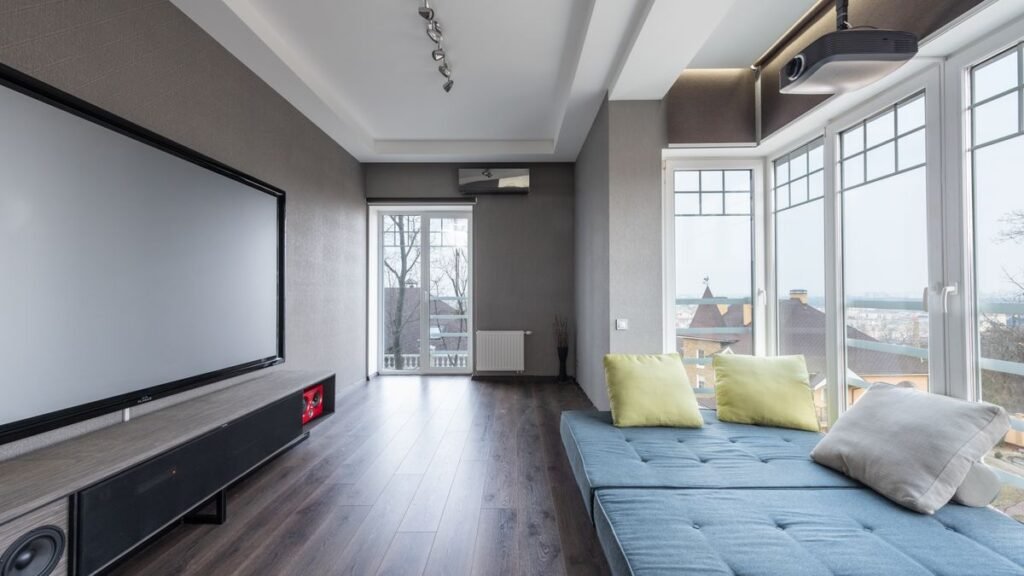
Floating units look effortless in design renders. The practical reality of specifying and installing them requires more planning than a freestanding alternative, but the result consistently justifies the effort for any project where visual quality matters.
Why floating units dominate hotel guestroom design
In hospitality settings, the floating TV cabinet earns its place on multiple grounds. The spatial advantage is the most obvious: a room with no visible furniture legs reads as cleaner and more spacious, which directly affects guest perception of room quality. The maintenance advantage is equally significant, housekeeping staff can clean the floor in one uninterrupted pass without moving or working around a piece of furniture. Then there’s the premium signal: a wall-mounted console with integrated LED lighting is immediately legible to guests as a deliberate design choice, not a furniture store purchase.
Integrated LED lighting as a design and functional layer
LED strip lighting transforms a floating TV cabinet from a functional object into a feature element. The most effective applications run a warm-white LED channel behind the cabinet (creating a halo effect against the wall), under the base (casting a floating shadow line on the floor), or within open shelving compartments (illuminating display objects). Warm white at 2700, 3000K is the residential and boutique hotel standard. Color-adjustable LED systems are increasingly specified in hospitality projects where the lighting needs to serve both relaxed evening use and brighter morning modes. One important note: the LED channel should be routed into the cabinet design during manufacturing, adding it as an afterthought rarely achieves the clean result.
Wall reinforcement and installation requirements
The wall type matters enormously for floating TV cabinet installations. Concrete walls are the straightforward case: masonry anchors or expansion bolts drilled directly into the structural wall carry the load reliably, and the process is well understood by any experienced installer. Drywall installations require more planning. For heavy cabinets, best practice is a 3/4-inch plywood backer board secured to studs behind the finished drywall, with the cabinet bracket then mounted to the plywood. Heavy-duty toggle anchors can handle moderate loads in drywall without stud access, but for anything heavier than a mid-weight floating console, backer boards are the professional standard. Factor this into project timelines: wall reinforcement typically needs to be completed during the construction phase, not after finish work is done.
Materials and finishes: how to spec a modern TV cabinet design that holds up
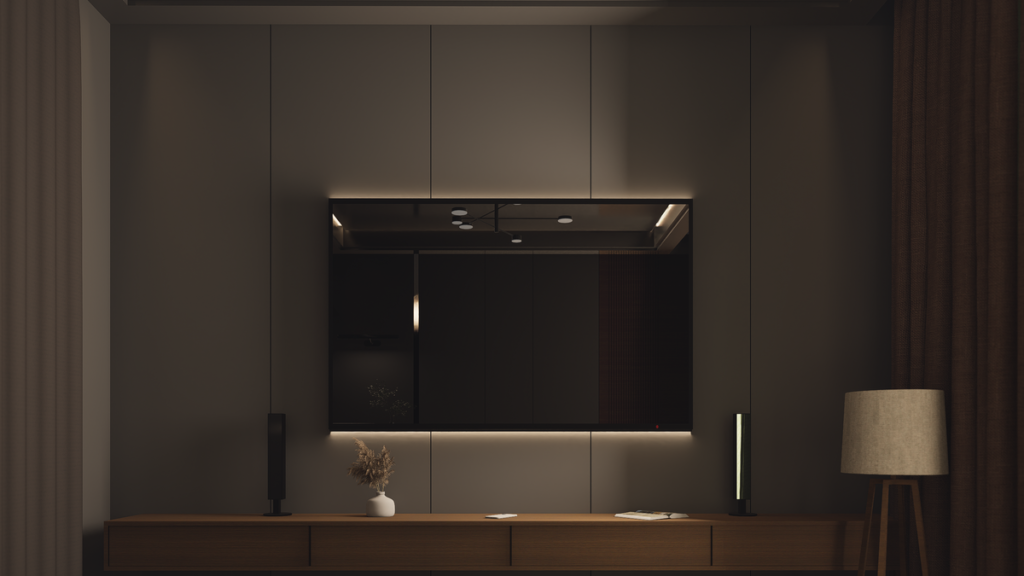
Every material looks good in a product photograph taken in a controlled studio. The question is how it performs after three years of daily use in a hotel guestroom or a family living room. Material selection is where the difference between a well-specified cabinet and a disappointing one gets decided.
MDF, veneer, and lacquer: the workhorses of modern cabinetry
MDF (medium-density fiberboard) is the substrate of choice for painted, high-gloss, and veneered TV cabinets in both hospitality and residential projects, and for good reason. Its surface is consistent, knot-free, and smooth, qualities that make it ideal for high-quality paint and lacquer finishes. It’s also dimensionally stable under normal interior conditions, which matters when you’re specifying tight-tolerance joinery. The trade-offs are real and worth knowing: MDF edges are vulnerable to moisture and impact, and screws don’t hold in MDF as securely as in solid wood. Proper edge banding and sealing address most of these concerns, and when executed well, an MDF cabinet with a high-quality lacquer or veneer finish is indistinguishable from solid wood at normal viewing distances.
Solid wood and premium veneer for statement pieces
Solid wood and real-wood veneer earn their premium price in specific contexts. For a luxury villa living room where the TV console is a genuine design feature, the authenticity of solid walnut or oak reads differently than a veneer over MDF; it has depth, grain variation, and a tactile quality that experienced buyers recognize. In boutique hotel settings where material authenticity is part of the brand story, solid wood or premium veneer makes a clear statement. The practical consideration is cost and lead time: solid wood components take longer to dry, machine, and finish, and the material cost is higher. For large-scale hotel rollouts, a high-quality veneer over MDF often delivers the visual result at a more viable budget.
High-gloss, matte, and textured finishes compared
Finish choice affects not just appearance but maintenance and perceived quality over time. High-gloss lacquer looks exceptional in photographs and delivers a sharp, contemporary aesthetic, but it shows fingerprints, micro-scratches, and dust more readily than matte alternatives, a real maintenance consideration in hospitality settings. Matte and soft-touch finishes have become the preferred direction for hotel TV cabinets precisely because they photograph cleanly, resist visible fingerprinting, and age more gracefully in high-contact environments. Textured finishes, including the fluted fronts discussed earlier, offer a third direction: they read as premium, hide surface imperfections, and add a material richness that flat finishes can’t match.
Getting TV cabinet dimensions right for every screen size
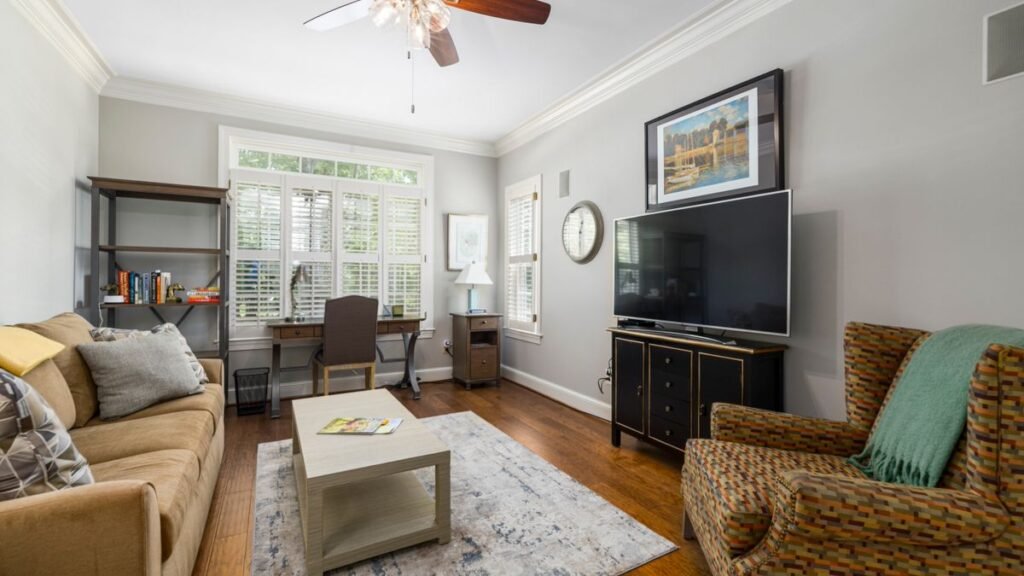
Proportion errors are the most common mistake in TV cabinet specification, and they’re almost always a result of sizing the cabinet to the screen rather than to the room. The cabinet width, depth, and clearances all need to work together, and the numbers shift depending on the TV size.
Sizing modern TV cabinet design for your screen: width, depth, and height guidelines
A consistent rule across design guides is to make the cabinet wider than the TV by approximately four to eight inches on each side. In practice, that produces these working guidelines by screen size:
- 43-inch TV (approx. 38-inch screen width): Cabinet width of 50 to 60 inches for balanced proportions; 8 to 10 inches depth for a clean setup
- 55-inch TV (approx. 48-inch screen width): Cabinet width of 60 to 72 inches; 8 to 12 inches depth depending on component storage needs
- 65-inch TV (approx. 57-inch screen width): Cabinet width of 70 to 84 inches; 8 to 12 inches depth
- 75-inch TV (approx. 66-inch screen width): Cabinet width of 80 to 96 inches; 8 to 12 inches depth
If the TV sits on feet rather than a wall mount, measure the stand depth carefully, the cabinet shelf needs enough depth to accommodate the feet plus the bend radius of cables at the back. For enclosed cabinet configurations where components are stored inside, depth requirements increase, and the airflow considerations in the next section become critical.
Clearance and ventilation: what gets overlooked in the spec
Electronics generate heat, and cabinets trap it. Standard clearance requirements are two to three inches on each side of the TV, and two to four inches at the rear and top for ventilation. These numbers apply to open-shelf configurations; enclosed cabinet designs need more generous airflow because heat has fewer paths to escape. In hospitality settings, ventilation deserves extra attention because hotel room televisions run for extended hours daily, sometimes continuously. A cabinet that performs acceptably in a residential living room where the TV runs four hours an evening can develop heat problems in a hotel guestroom where the TV runs fourteen hours a day. Specify ventilation openings or rear cutouts in the brief and confirm them at the factory stage before production begins.
At a Glance: TV Cabinet Width and Depth by Screen Size
| TV Size | Cabinet Width | Depth |
|---|---|---|
| 43-inch TV | 50 to 60 in | 8 to 10 in |
| 55-inch TV | 60 to 72 in | 8 to 12 in |
| 65-inch TV | 70 to 84 in | 8 to 12 in |
| 75-inch TV | 80 to 96 in | 8 to 12 in |
Floating vs. freestanding vs. built-in: choosing the right configuration for your project
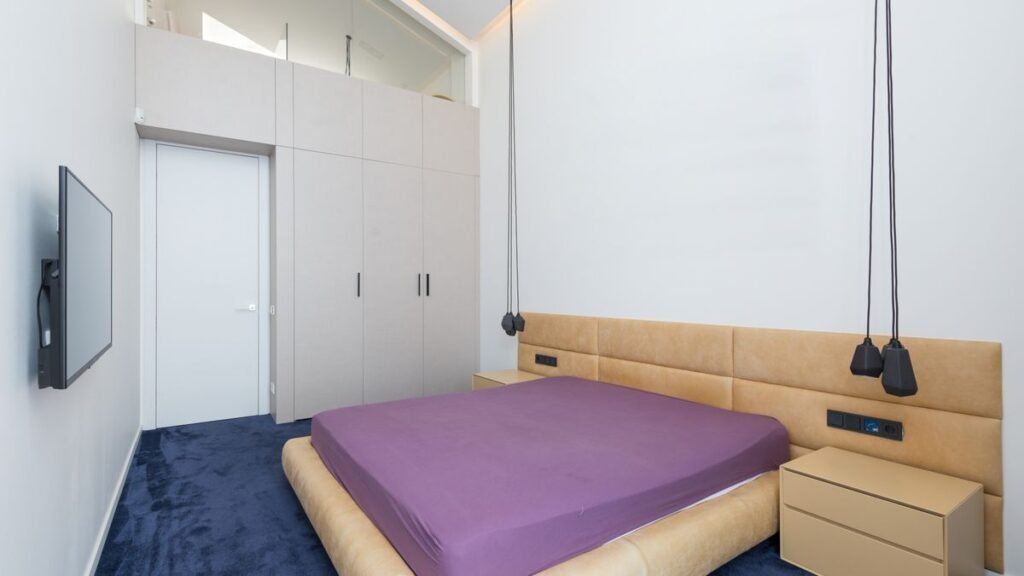
The three main configuration types each have a clear use case. The decision comes down to project constraints, installation timeline, and how central the TV wall is to the overall design intent.
When floating wall-mounted units are the right call
Floating units win in compact hotel suites, high-end city apartments, and any project where visual lightness and floor space are priorities. They’re also the right call when the design brief calls for an integrated LED feature, the floating format creates natural opportunities for under-cabinet and halo lighting that freestanding units can’t replicate as cleanly. The trade-off is installation complexity and the wall-preparation requirement discussed earlier. On projects with experienced installation teams and adequate construction timelines, this is rarely a problem. On fast-track fit-outs with limited wall-prep opportunity, it’s worth factoring in.
When freestanding consoles still make sense
Freestanding modern media consoles remain the right choice for rental properties, projects with tight installation timelines, and rooms where wall construction doesn’t support mounting. They’re also the practical answer for clients who want flexibility, moving a freestanding console is straightforward, while relocating a wall-mounted unit leaves visible holes and requires wall repair. In secondary guestrooms or apartment units where the TV setup is functional rather than a design centerpiece, a well-chosen freestanding contemporary TV stand at a lower installation cost is often the smarter allocation of the FF&E budget.
Built-in media walls: the highest-investment, highest-impact option
A full built-in entertainment center or media wall is justified when the TV wall is a genuine design feature of the space: flagship hotel suites, luxury villa living rooms, high-end residential builds where the room is defined by its finishes. Built-in units offer the highest storage capacity, the most bespoke dimensional fit, and the strongest integration with the surrounding architecture. They also carry the highest cost and the longest installation timeline, and they’re permanent. Reconfiguration later is essentially a renovation. For projects where the brief supports it, the result is unmatched. For projects where flexibility or budget constraints apply, floating or freestanding configurations are the more appropriate path.
Custom TV cabinet manufacturing for hospitality and upscale residential projects
Retail and catalog options have a clear ceiling: standard dimensions, limited finish options, materials specified for residential price points rather than hospitality durability, and no capacity to match finishes across a broader FF&E package. For any serious hospitality or luxury residential project, custom manufacturing isn’t a luxury, it’s a requirement.
Why off-the-shelf retail fails upscale projects
The problems compound quickly. Standard retail widths don’t align with non-standard room dimensions, which means either awkward gaps or forcing the room layout to accommodate the furniture rather than the other way around. Finish options at retail are limited to what moves in volume: a half-dozen lacquer colors, a few wood tones. If your project has a proprietary brand color or a custom veneer match, retail can’t help. Material specifications at retail are set to hit price points for residential consumers who replace furniture every five to seven years, not for hotel environments where the same piece needs to perform for fifteen years under daily use. And for large-scale rollouts across multiple rooms or properties, retail channels simply don’t have the capacity, consistency, or project management infrastructure that the job requires.
What bespoke TV cabinet manufacturing actually delivers
Custom production starts with exact dimensions, the cabinet is built to the millimeter for the room it’s going into, not adapted from a standard size. From there, the value compounds: proprietary finish schedules matched to brand standards, choice of substrate and veneer by performance requirement, and hardware consistency across an entire FF&E package.
Integrated LED channel routing is built into the cabinet structure during manufacturing rather than added afterward, a detail that separates professional hospitality work from retail workarounds. The model room or mock-up process, standard practice in professional hospitality manufacturing, lets you approve a physical sample of the cabinet in the actual finish and configuration before production scales up. This eliminates the guesswork and ensures what arrives on-site matches what was specified.
How YM Furniture produces custom TV cabinets to exact specification
YM Furniture (Foshan Yauming Furniture & Construction Co., Ltd.) is a factory-direct manufacturer based in Foshan, China, with over 17 years of experience producing TV cabinets and complete FF&E packages for four-star and five-star hotel properties across multiple countries. Their large-scale Foshan production facility operates with over 100 precision machines and a dedicated international design team capable of matching brand standards for luxury hospitality clients. Custom TV cabinets are available in high-gloss lacquer, matte lacquer, wood veneer, fluted panel fronts, and mixed-material configurations, with finish schedules coordinated across the full FF&E package when required.
Their model room customization process, typically completed within a defined review window before full production begins, is particularly valuable for US hotel developers working against opening deadlines. A physical mock-up can be reviewed and approved before committing the full order, giving procurement teams and designers a tangible checkpoint. Factory-direct pricing from a manufacturer of this scale delivers meaningful savings compared to sourcing through US local market channels at equivalent specification, a difference that becomes increasingly significant at project scale, such as a 200-room hotel rollout.
US buyers should factor in ocean freight lead times, typically 25 to 40 days from Foshan to US ports, and model Section 301 tariffs on Chinese furniture imports into the total landed cost calculation. For any upholstered components, request TB 117-2013 compliance documentation (in line with 16 CFR Part 1640 requirements) from the manufacturer before placing the order. YM Furniture’s project management staff can provide guidance across all of these logistics. Contact their team directly to discuss specifications or request a factory-direct quote.
Price tiers and when to buy ready-made vs. custom-order
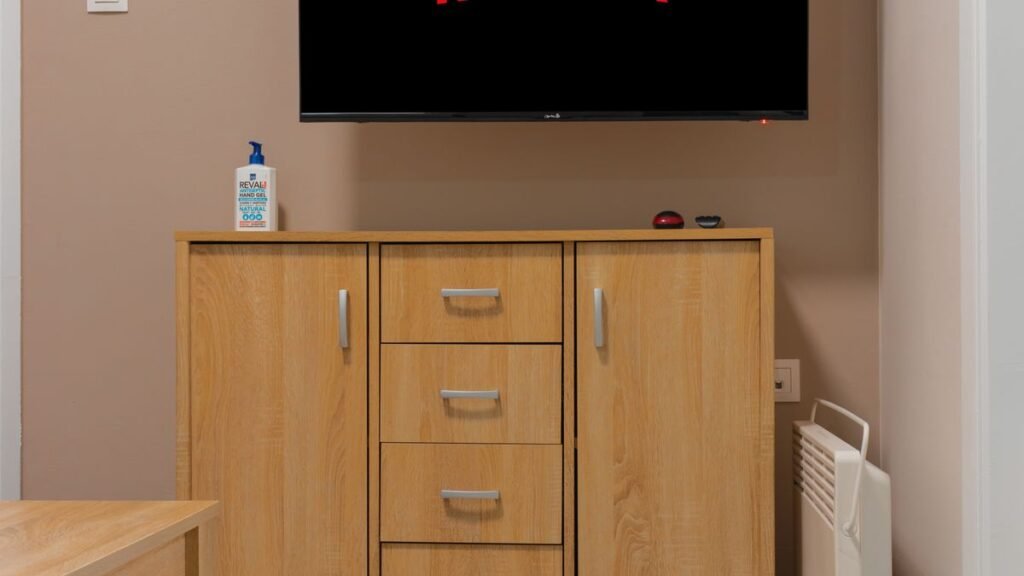
The right sourcing decision depends on the project type, the specification requirements, and the order quantity. Here’s how the economics break down in practice.
What ready-made modern TV cabinets cost at each tier
In the US retail market, the price landscape for ready-made contemporary TV stands and media consoles runs roughly as follows. Budget options in the $100, $300 range are typically MDF or particleboard construction with basic cable management and limited finish options, suitable for rental properties or secondary spaces where design impact isn’t the priority. Mid-range options from $300, $800 offer better materials, engineered wood substrates, more storage configuration, and a wider finish selection, making them a reasonable choice for owner-occupied residential projects with moderate specification requirements. Premium ready-made options above $800 begin to include solid wood construction, LED lighting integration, and higher-quality hardware, but they still can’t deliver custom dimensions, proprietary finishes, or the material specifications that hospitality-grade projects demand. At every price point, the ceiling on ready-made options is the same: you get what’s on the shelf, not what the room needs.
The factory-direct custom case: cost and value at project scale
Factory-direct sourcing from a manufacturer like YM Furniture changes the economics for project-scale orders. The ability to define exact dimensions, finishes, and materials, combined with the cost efficiencies of direct manufacturing at volume, makes custom production the logical choice for any order beyond a handful of units. US buyers planning this route need to account for ocean freight lead times, typically 25 to 40 days from Foshan to US ports, and factor these into hotel opening schedules. Section 301 tariffs on Chinese furniture imports apply and should be modeled into the total landed cost calculation. For any upholstered components, request TB 117-2013 compliance documentation (consistent with 16 CFR Part 1640) from the manufacturer before the order is placed. These are manageable logistics for any experienced procurement team, and YM Furniture’s project management staff can provide guidance across all of them.
Frequently Asked Questions
How wide should a TV cabinet be for a 65-inch TV?
A cabinet width of 70 to 84 inches works well for a 65-inch TV, following the general rule of sizing the cabinet 4 to 8 inches wider than the screen on each side.
How much clearance does a TV cabinet need for ventilation?
Standard clearance is two to three inches on each side of the TV and two to four inches at the rear and top. Enclosed cabinet designs need more generous airflow since heat has fewer paths to escape.
Is a floating TV cabinet or a freestanding cabinet better?
Floating cabinets make a room read larger and simplify cleaning, but require solid wall anchoring, especially for heavier units. Freestanding cabinets are easier to install and reposition, which suits rental properties or spaces where wall construction is uncertain.
How long does it take to order custom TV cabinets for a hospitality project?
Factor in ocean freight lead times, typically 25 to 40 days from Foshan to US ports, in addition to production time and model room sign-off before finalizing a project schedule.
What material holds up best for high-use commercial TV cabinets?
Engineered wood with a durable laminate or veneer finish generally performs best in high-traffic commercial settings, balancing cost, durability, and consistent finish quality across large production runs.
Specifying the right modern TV cabinet for your next project: a practical checklist
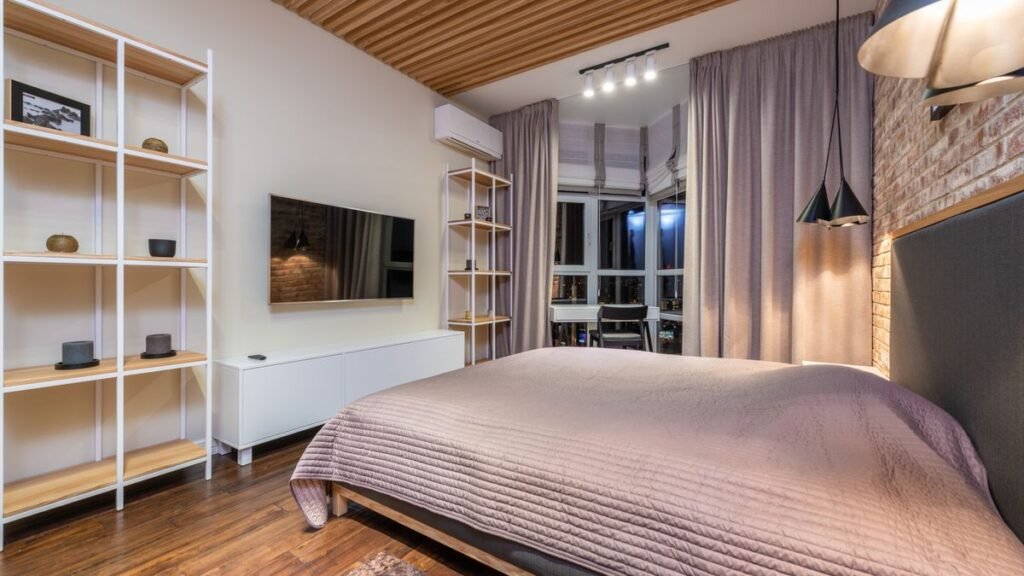
By now you have what you need to make a confident specification decision. The style directions that matter in 2026 are floating wall-mounted units, fluted and textured panel fronts, minimalist matte and high-gloss lacquer finishes, warm mid-century wood tones, and modular media wall systems. The right choice depends on the room type, the client profile, and the design brief, but the framework for choosing is clear.
On the technical side, size the cabinet to the room first and the TV second. Use the four-to-eight-inch wider-than-TV rule as a starting point, confirm depth against component storage requirements, and build ventilation clearances into the specification before the order is placed. On materials, MDF with high-quality lacquer or veneer is the workhorse solution for most projects; solid wood and premium veneer are justified where material authenticity is a selling point. On installation type, floating units deliver the strongest visual result where wall construction supports it; freestanding consoles are the practical answer where timeline or wall type is a constraint; built-in media walls are the right choice when the TV wall is a design centerpiece.
For any hospitality or luxury residential project where standard retail options don’t meet the specification brief, the factory-direct custom manufacturing route is the only path that delivers the right result at the right price. For modern TV cabinet design that meets hospitality standards, contact YM Furniture to discuss your project requirements or request a specification review. They produce custom TV cabinets for clients across a wide range of international markets, with deep experience on luxury hotel projects and factory-direct pricing that makes high-specification furniture viable at scale. Reaching their team directly is the most efficient way to confirm that what gets manufactured is exactly what you need.