Hotel furniture supply is one of the most underestimated variables in a new hotel development budget. Developers spend months analyzing construction costs, financing structures, and brand flag negotiations, then get blindsided when FF&E lead times stretch into their opening window, quality gaps surface after samples are approved, or installation runs three weeks behind because nobody coordinated with the general contractor. The furniture rarely feels like the risky part of the project, until it suddenly is.
The harder truth is that dozens of suppliers in the Canadian and global market will happily take your RFQ, but the ones who can actually manage a full hotel project from design brief to move-in are a much shorter list. A well-run hotel furniture supply chain looks like this: factory-direct production with design consultation, custom manufacturing, logistics coordination, and on-site installation all managed through a single project team. That’s the benchmark worth understanding before you issue a single quote request. YM Furniture (Foshan Yauming Furniture & Construction Co., Ltd.) is one factory-direct manufacturer built around this model, and it’s a useful reference point throughout this guide.
This guide covers everything Canadian hotel developers, procurement managers, interior designers, and FF&E specifiers need to move confidently through the procurement process: how the supply chain is structured, what separates reliable hospitality furniture suppliers from risky ones, how custom production and model rooms work, which certifications are non-negotiable, realistic cost benchmarks, international logistics, installation coordination, and how to write an RFQ that gets you comparable, useful responses.
Hotel furniture supply: How the chain is actually structured
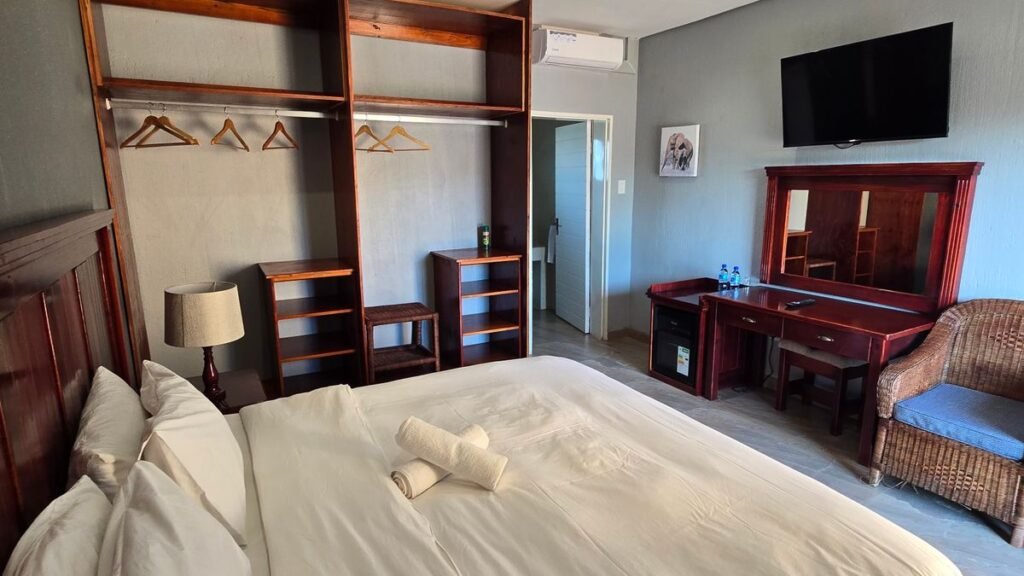
Most developers think of furniture procurement as a single event. You pick a supplier, you order the furniture, it shows up. In practice, hotel FF&E supply is a sequential five-stage process, and decisions made early in the chain have compounding effects on what happens at the end.
The five stages of a hotel FF&E supply chain
The chain runs like this: concept and specification, manufacturer or supplier selection, custom production and sampling, logistics and freight, and on-site installation. Each stage has its own timeline, dependencies, and risk points. A six-week delay in stage two, slow sample approval or a supplier who takes three weeks to answer an RFQ, for example, doesn’t just cost you six weeks. It compresses your production window, pushes your freight booking, and can turn a manageable installation schedule into a scramble against your opening date.
The specification stage is where most teams underinvest. Vague design briefs produce vague supplier quotes, which then require multiple revision rounds before production can begin. A detailed spec from the start, materials, finishes, dimensions, certifications, and performance requirements, is what allows a capable manufacturer to price accurately and commit to a realistic timeline.
Why factory-direct sourcing changes the math
There are three main ways to source hotel furniture: through a local distributor, through a trading company, or directly from a manufacturer. Each distributor or trading company layer adds margin and can extend lead times, because neither one owns the production capacity. Factory-direct suppliers, particularly those concentrated in Foshan, China, the global hub for hospitality furniture manufacturing, eliminate intermediaries and give procurement teams direct access to production scheduling, quality control, and custom design capability.
YM Furniture operates on this factory-direct model, working with hotel developers from the initial design phase through installation without a trading company or distributor in between. That structure means faster communication, cleaner accountability, and pricing that reflects actual manufacturing costs rather than a margin stack. When evaluating any factory-direct manufacturer, look for evidence of owned production facilities, direct quality control, and in-house design capacity, these are the indicators that factory-direct claims are genuine.
Where most supply chain delays actually happen
Commonly observed failure points in hotel FF&E projects cluster around three areas. Late sample approval is the most frequent: a developer takes four weeks to review and approve a prototype, which pushes the production start and collapses the buffer before freight. Poorly specified freight terms come second, misaligned expectations about who handles customs clearance, drayage, or port fees cause hold-ups at the destination. Third is inadequate installation coordination with the general contractor, where furniture arrives at a site that isn’t ready to receive it, leading to staging damage or rescheduling costs. All three are preventable with proper planning.
What separates a reliable hotel furniture supplier from a risky one
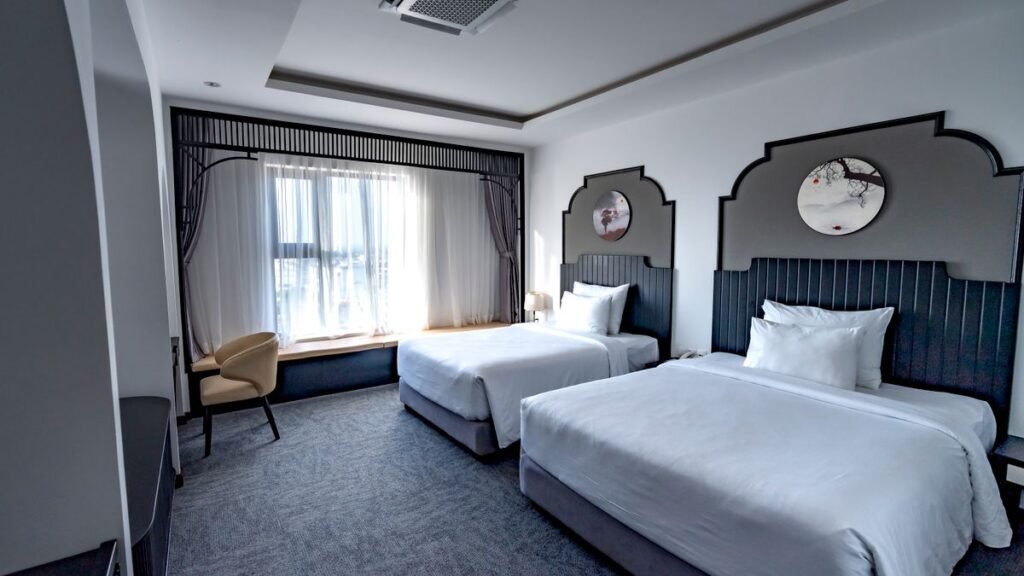
Vetting suppliers before you issue an RFQ saves far more time than evaluating them after you’ve received quotes. The goal is to disqualify weak suppliers early, before revision cycles, sample costs, and negotiating time get spent on manufacturers who can’t deliver. Here’s what early disqualification looks like in practice: a supplier who can’t produce owned manufacturing certifications, factory audit access, or third-party test reports gets removed from consideration before a quote is even requested.
Manufacturer vs. trading company: why it matters
Many suppliers marketing themselves as hotel furniture manufacturers are actually trading companies sourcing from third-party factories. The distinction matters for quality control, lead time accuracy, customization capability, and accountability when problems arise. A trading company can’t give you direct access to production scheduling because they don’t own the production. When you need to change a finish specification mid-run or escalate a defect issue, you’re working through an intermediary rather than talking directly to the people making the furniture.
How to tell the difference: look for owned manufacturing certifications (ISO 9001 issued to the manufacturer, not a trading entity), evidence of factory ownership such as facility details and equipment lists, the ability to conduct factory audits or virtual tours, and whether they can provide third-party quality audit reports. A real manufacturer will have all of these. A trading company will have a catalog and a website.
Project references and brand-standard experience
A supplier’s completed project list tells you more than their product catalog. Ask for documented references from hotels at a comparable tier to your project, ideally with recognizable brand names. References from major international franchise properties aren’t just name-dropping, they indicate a supplier who has navigated brand-standard compliance requirements, documentation demands, and timeline accountability from a major franchise organization. That’s a very different operational environment from producing furniture for an independent boutique hotel.
For a Canadian developer going through brand approval for an FF&E package, a supplier with a substantial portfolio of documented hospitality references provides material due-diligence support. Ask for contactable references and verify them directly. YM Furniture cites an extensive hospitality project portfolio; as with any supplier, request documentation and project-level references you can follow up on independently.
Red flags during the RFQ and sampling stage
Watch for these warning signs: no written production schedule provided with the quote, inability to produce third-party test certifications for flammability and durability standards, vague lead time commitments without a production calendar to back them up, unwillingness to produce a sample room before full production begins, and limited English-language project communication. These aren’t minor issues. A supplier who can’t communicate clearly during the RFQ stage is showing you exactly how they’ll perform when you have a punch-list item during installation.
Custom production and the model room advantage
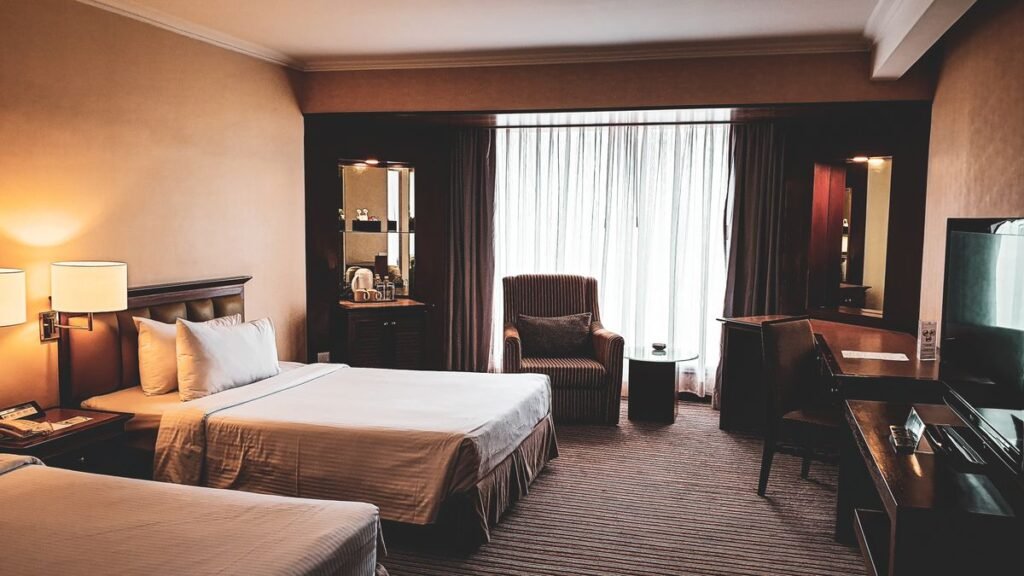
Custom hotel furniture isn’t just standard furniture in different colors. It’s a design-to-production process that requires clear technical specifications, material sourcing, prototype approval, and production scheduling, all before a single production unit ships.
How custom hotel furniture orders are engineered
The process typically runs as follows: on-site or remote measurement and room documentation, design brief development (often working from an interior designer’s concept boards or CAD drawings), technical drawing and material selection, prototype or sample production, and client approval before full production begins. A capable factory-direct manufacturer handles design optimization in-house, translating design intent into production-ready specifications without requiring the developer or designer to manage that translation themselves.
For procurement managers, this means you can bring design intent to the table without a separate technical specification consultant bridging the gap between creative and production. When evaluating hotel furniture supply partners, ask specifically whether design engineering is handled in-house or subcontracted, the answer directly affects your revision cycle speed and accountability.
The model room step and what it protects
A model room, sometimes called a mock-up suite, is the single most effective risk-reduction step in a hotel FF&E project. It allows developers, interior designers, and brand representatives to physically evaluate the furniture before committing to full production across potentially hundreds of rooms. Changes to finishes, dimensions, or materials cost a fraction of what they cost after full production. Skipping the model room to save time is one of the most reliably expensive decisions a developer can make.
For reference, YM Furniture targets model room delivery within approximately 20 days of design approval, a useful benchmark when evaluating what an aggressive timeline actually looks like in this space. Many procurement teams lack an internal reference point for model-room speed. Industry prototype cycles commonly run two to four weeks from drawing approval, depending on complexity, so understanding where a given supplier falls in that range is a legitimate evaluation question. Twenty days from design approval to a fully furnished mock-up is at the faster end of that range. That matters especially for developers working against a tight pre-opening schedule where brand review needs to happen quickly.
Lead times to plan for by production type
Standard catalog items typically run 8, 12 weeks from order to shipment. Light customization, modified dimensions, alternate finishes, runs 10, 16 weeks. Fully bespoke production with custom materials, specialty hardware, and bespoke finishes runs 14, 20 weeks. Add ocean freight from Foshan to a Canadian port (approximately 20, 30 days to Vancouver, 35, 45 days to Montreal), then customs clearance and last-mile delivery, and your total end-to-end planning window for a fully custom FF&E package is 4, 6 months. Back-calculate from your opening date, not your order date.
Contract-grade certifications Canadian hotels need to require
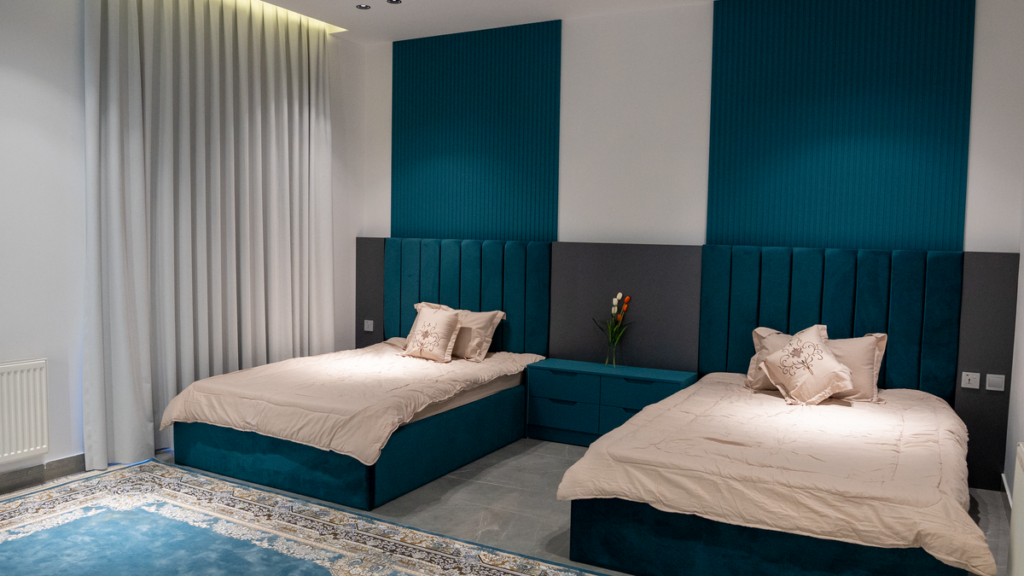
Marketing claims about quality mean nothing without documentation. Procurement managers should require third-party test reports for every certification listed below, not self-certified statements from the supplier’s own quality team.
Quality management and manufacturing certifications
ISO 9001 is the baseline expectation for any serious hotel furniture manufacturer. It confirms consistent production controls and a documented quality management system, not a single impressive shipment. ISO 14001 (environmental management) and ISO 45001 (occupational health and safety) are increasingly required by hotel brands pursuing ESG compliance documentation for investor reporting and brand standard approval. When evaluating FF&E suppliers, request certificate numbers and issuing body details for any ISO certifications claimed, and verify them against the issuing registry. YM Furniture maintains ISO certifications; confirm current certificate details directly with their team as part of your standard due-diligence process.
Fire, flammability, and durability standards for Canadian properties
For upholstered furniture, Canadian hotels should require TB 117-2013 and CAL 117 compliance as a baseline, with CAL 133 required for higher-risk custom pieces used in common areas or meeting spaces. For structural durability, specify ANSI/BIFMA test reports by product category: X5.1 for task and desk seating, X5.4 for lounge and lobby seating, X5.5 for desks and tables, and X5.9 for casegoods and storage units. These are the standards that Canadian commercial furniture specifications, including government and institutional procurement, routinely reference.
For upholstery fabric performance, specify minimum double-rub counts clearly in your RFQ: 30,000+ double rubs for guest room applications, and 100,000+ double rubs for lobby seating, restaurant banquettes, and other high-traffic public areas. Require the test report, not just a fabric spec sheet that lists a number without a testing standard attached.
Sustainability credentials worth specifying
GREENGUARD certification covers low chemical emissions and is directly relevant to indoor air quality in guest rooms, where guests spend extended time in enclosed spaces. FSC certification confirms responsible wood sourcing, which is increasingly required by brand standards and institutional lenders with ESG mandates. For hotels pursuing LEED certification, ask suppliers for LEED contribution documentation that quantifies how their materials contribute to specific credit categories. Suppliers who can’t provide any of these are effectively disqualified from a growing segment of the Canadian hotel development market.
Per-room cost benchmarks and what actually affects pricing

Budget development for hotel FF&E requires real numbers, not ranges so wide they’re useless. The figures below reflect current market benchmarks for Canadian hotel projects; treat them as planning anchors, not fixed costs, since customization complexity and material selection can shift numbers materially in either direction.
Typical FF&E costs by hotel tier in Canada
Economy and limited-service properties typically fall in the CAD $4,500, $8,000 per room range for guestroom FF&E. Midscale and standard select-service guestrooms run CAD $8,000, $15,000 per room. Upscale properties typically start at CAD $15,000 per room and can run significantly higher for luxury finishes, bespoke casegoods, and custom upholstered headboards. Actual numbers depend heavily on customization complexity, material selection, and supplier tier.
Component-level unit cost estimates
For room-by-room budget builds, here are the key line items at contract volume:
- Casegoods set per room: CAD $2,500, $7,000
- Upholstered headboard: CAD $400, $1,200
- Nightstand (per unit): CAD $250, $700
- Desk: CAD $350, $900
- Desk chair: CAD $150, $450
- Lounge chair: CAD $400, $1,200
- Lighting package: CAD $400, $1,000
- Window treatments: CAD $500, $1,500
These ranges allow procurement managers to identify where customization upgrades have the most visible guest-experience impact and where standard-specification items can hold the budget line without compromising the room’s overall standard.
How factory-direct sourcing affects the final number
Factory-direct sourcing from a manufacturer like YM Furniture eliminates two to three layers of intermediary markup, the margin a domestic Canadian distributor or showroom adds between the factory and the buyer. The resulting landed cost difference on large-volume hotel projects can be material, though the actual gap depends on the supplier tier, product complexity, and volume. Canadian developers still need to factor in ocean freight costs, Canadian import duties (0% MFN for most wood furniture categories, 9.5% MFN for upholstered seating with wooden frames under heading 9401.61), customs brokerage fees, and installation costs. Build all of those into your landed cost model before comparing factory-direct quotes against domestic sourcing options at equivalent quality and specification.
Hotel furniture supply logistics: Getting furniture from factory to property
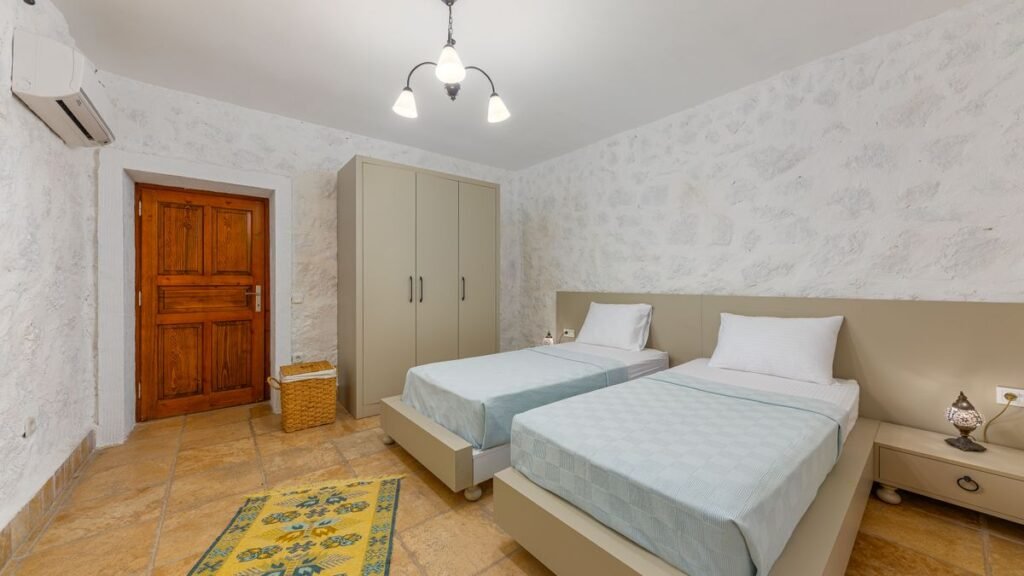
International hotel furniture supply logistics aren’t complicated, but they have specific mechanics that developers sourcing overseas for the first time often underestimate. Getting this stage right is what keeps your opening date intact.
Freight options and realistic shipping timelines
For large hotel projects, FCL (full container load) is the standard approach: it’s more cost-effective per unit, reduces handling damage risk, and gives you direct control over the container from origin to destination. LCL (less than container load) is appropriate for smaller supplemental orders or sample shipments, but the consolidation and deconsolidation process adds time. Air freight is reserved for urgent replacement pieces or last-minute samples, not production volumes.
Ocean transit from Guangzhou/Nansha port (serving Foshan) to Vancouver runs approximately 20, 30 days port-to-port. To Montreal, plan for 35, 45 days including the East Coast routing. Add 5, 10 business days for customs clearance, drayage, and last-mile delivery to site. For planning purposes, budget 30, 40 days door-to-door for Vancouver and 40, 55 days for Montreal. These ranges reflect typical conditions; port congestion, carrier scheduling, and routing choices can push timelines in either direction. Back-calculate your order commitment date from your opening date using the full door-to-door estimate, not just the ocean transit figure.
Canadian import duties and tariff considerations
Canada does not apply Section 301 tariffs to Chinese goods, which is a meaningful difference from the US market and makes factory-direct sourcing from China comparatively more straightforward for Canadian hotel developers. Under Canada’s MFN tariff schedule, most wood hotel furniture imports from China fall at 0% duty, while upholstered seating with wooden frames typically carries a 9.5% MFN rate. You’ll need a licensed Canadian customs broker to handle clearance, classify your HS codes accurately, and manage CBSA documentation. Build broker fees into your landed cost model from the start.
Protecting furniture through transit and delivery
Contract-grade hotel furniture requires proper export packaging to arrive in installable condition. This means corner protection, foam blocking between pieces, poly-wrapping for fabric and finish surfaces, and export-grade crating for high-value or fragile items. Marine cargo insurance is non-negotiable for large hotel shipments; understand the claims process and documentation requirements before anything ships. When evaluating hotel furniture supply partners, ask specifically how container packing, bill of lading documentation, and delivery scheduling are managed, a full-service manufacturer handles these as part of the project rather than leaving the developer to coordinate independently.
Hotel furniture supply: Installation and FF&E project management
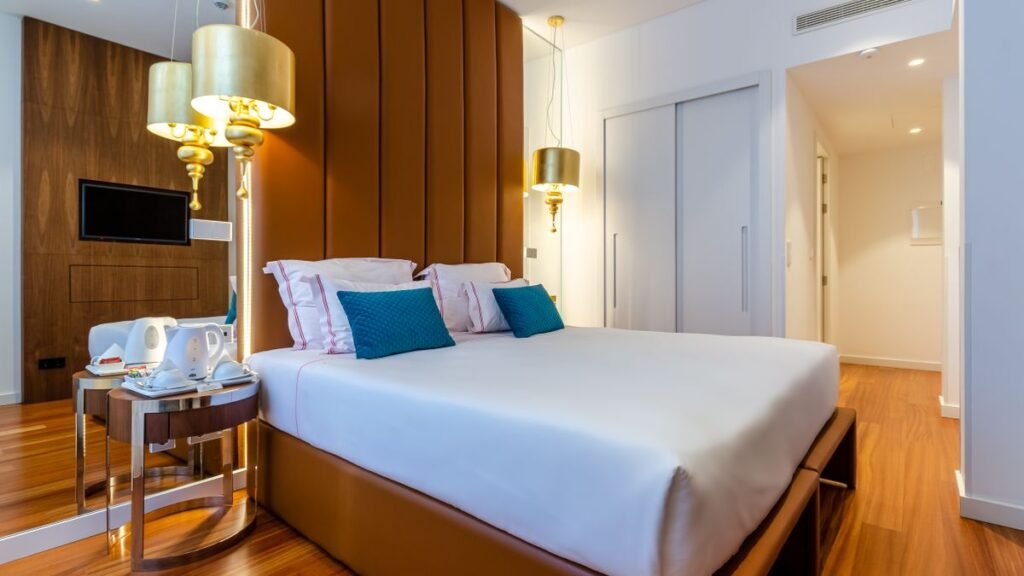
Furniture delivery and furniture installation are not the same thing. A supplier who ships to your loading dock is providing a product. A supplier who manages the installation process is providing a service. The difference in outcome is significant.
What full-service FF&E project management actually covers
Full-service FF&E project management typically includes several distinct functions that go well beyond freight delivery:
- Delivery scheduling tied to the construction timeline
- Room-by-room sequencing to prevent damage in unfinished spaces
- Installation crew coordination
- Punch-list documentation
- Post-installation inspection sign-off
Suppliers who don’t offer this leave developers managing a coordination gap between the moment freight arrives and the moment rooms are ready for brand inspection. That gap is where damage happens, timelines slip, and opening budgets absorb unexpected costs.
Coordinating installation with your general contractor
Rooms need to be finished, HVAC operational, and weather-tight before furniture installation begins. Construction delays on the GC side push furniture installation, which then compresses punch-list time ahead of opening. Experienced FF&E suppliers build buffer into their delivery scheduling and work directly with GCs to sequence installation room by room, rather than delivering a full container to an unprepared site. This is a coordination capability, not just a logistics function. Ask suppliers directly how they manage GC handoff during the RFQ process, and evaluate the specificity of their answer.
Warranty terms and after-sales support to negotiate before signing
Negotiate warranty terms in writing before production starts. Reasonable benchmarks for hotel contract furniture: structural warranties of 2, 5 years for casegoods and frames, fabric and finish warranties of 1, 2 years. Confirm in writing who covers replacement shipping costs for defective pieces, what the minimum order quantity is for replacement parts, and whether the supplier maintains inventory of matching materials for future refurbishment orders. A hotel that needs to replace six nightstands two years after opening shouldn’t have to source a new supplier to match the original spec.
Building your hotel FF&E supplier shortlist and RFQ
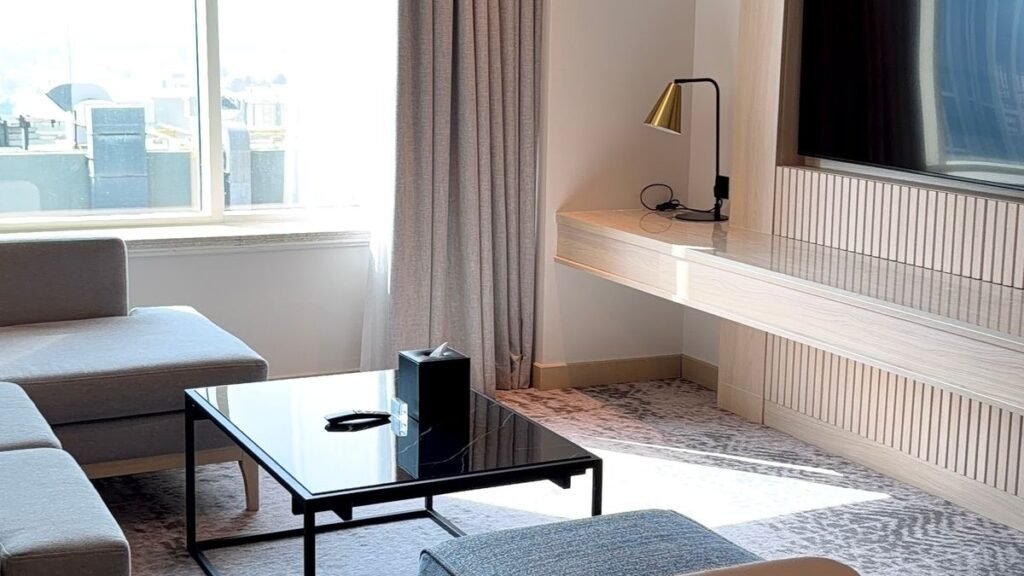
A strong RFQ process is what separates procurement managers who get comparable, useful supplier responses from those who spend six weeks chasing clarifications and still can’t make an apples-to-apples comparison.
Hotel furniture supply: Procurement checklist for your RFQ
Every hotel furniture RFQ should include the following elements. Use this as a working checklist before you send anything out:
- Project scope: room count, room types, area per room type
- Design intent documentation: concept boards, CAD drawings, or specification sheets
- Material and finish requirements with certifications specified
- Timeline milestones: sample approval date, production start, delivery window, installation schedule
- Payment structure expectations
- Warranty requirements
A detailed RFQ produces comparable responses you can evaluate objectively. A vague RFQ produces ballpark numbers that fall apart the moment you start negotiating a production contract.
How to evaluate supplier responses objectively
Use a simple scoring framework across six criteria: pricing competitiveness relative to your budget target, lead time credibility (is the timeline realistic given their stated production capacity?), certification documentation completeness, quality of sample work and project photography, reference quality from comparable hotel tier projects, and communication responsiveness during the RFQ stage. That last criterion is the most revealing. A supplier who takes three weeks to answer your RFQ is giving you an accurate preview of how they’ll communicate during production and installation.
Canadian and global suppliers worth putting on your shortlist
For Canadian-based options, four suppliers have established track records in the hospitality segment. Artco Hospitality Furnishings brings 40+ years of Canadian manufacturing experience across casegoods, upholstered pieces, and millwork. BermanFalk is design-led with a sustainability focus and offers model-room support. Foliot Furniture handles high-volume hospitality production with a focus on construction-specific requirements. BSG Inc. specializes in hotel room casegoods including headboards, nightstands, wardrobes, and vanities.
For factory-direct international sourcing, YM Furniture is a strong option for Canadian developers who need full custom production at scale, direct-factory pricing, and end-to-end project management from design through installation. As with any supplier, run your own due-diligence process: request current ISO certificate details, documented project references at your hotel tier, a model-room timeline commitment, and a landed-cost breakdown that accounts for freight, duty, and installation. YM Furniture’s hospitality focus and factory-direct model position it well against the standard evaluation criteria for FF&E suppliers Canada-side developers typically apply, but verify the specifics directly before committing.
Treat procurement as a process, not a transaction
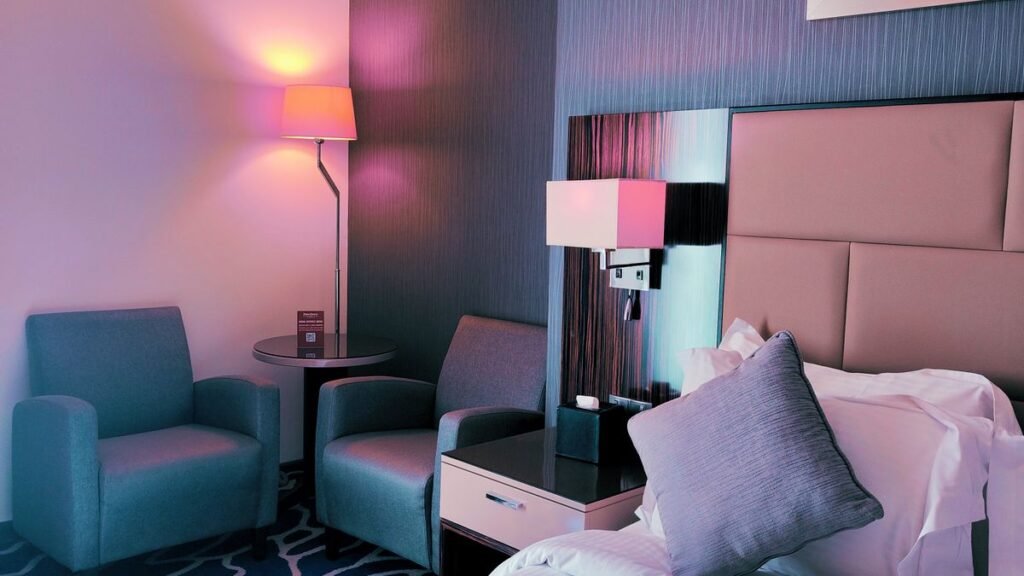
Hotel furniture supply rewards developers who approach it as a sequential supply chain rather than a purchasing event. Manufacturer selection, custom production, logistics, and installation are four distinct stages, each with its own timeline and risk profile. Decisions made at stage one have compounding effects on stage four. The developers who avoid costly surprises are the ones who plan accordingly.
The action items are clear: require third-party certifications rather than supplier claims, insist on a model room before committing to full production, back-calculate your order commitment date from your hotel opening date, and issue a detailed RFQ that gives you genuinely comparable responses. Whether you source domestically through hotel furnishing wholesalers or factory-direct internationally through hotel room furniture suppliers like YM Furniture, the criteria for a dependable hotel furniture supply partner don’t change: manufacturing ownership, proven hospitality references at your tier, documented certifications for your market, and a project management team that stays accountable through installation.
If you’re building your shortlist or preparing an FF&E budget for an upcoming hotel development, the YM Furniture team offers direct consultation for Canadian projects, including design review, sample coordination, and landed-cost estimates for factory-direct production. Reach out to start the conversation before your procurement timeline gets tight.