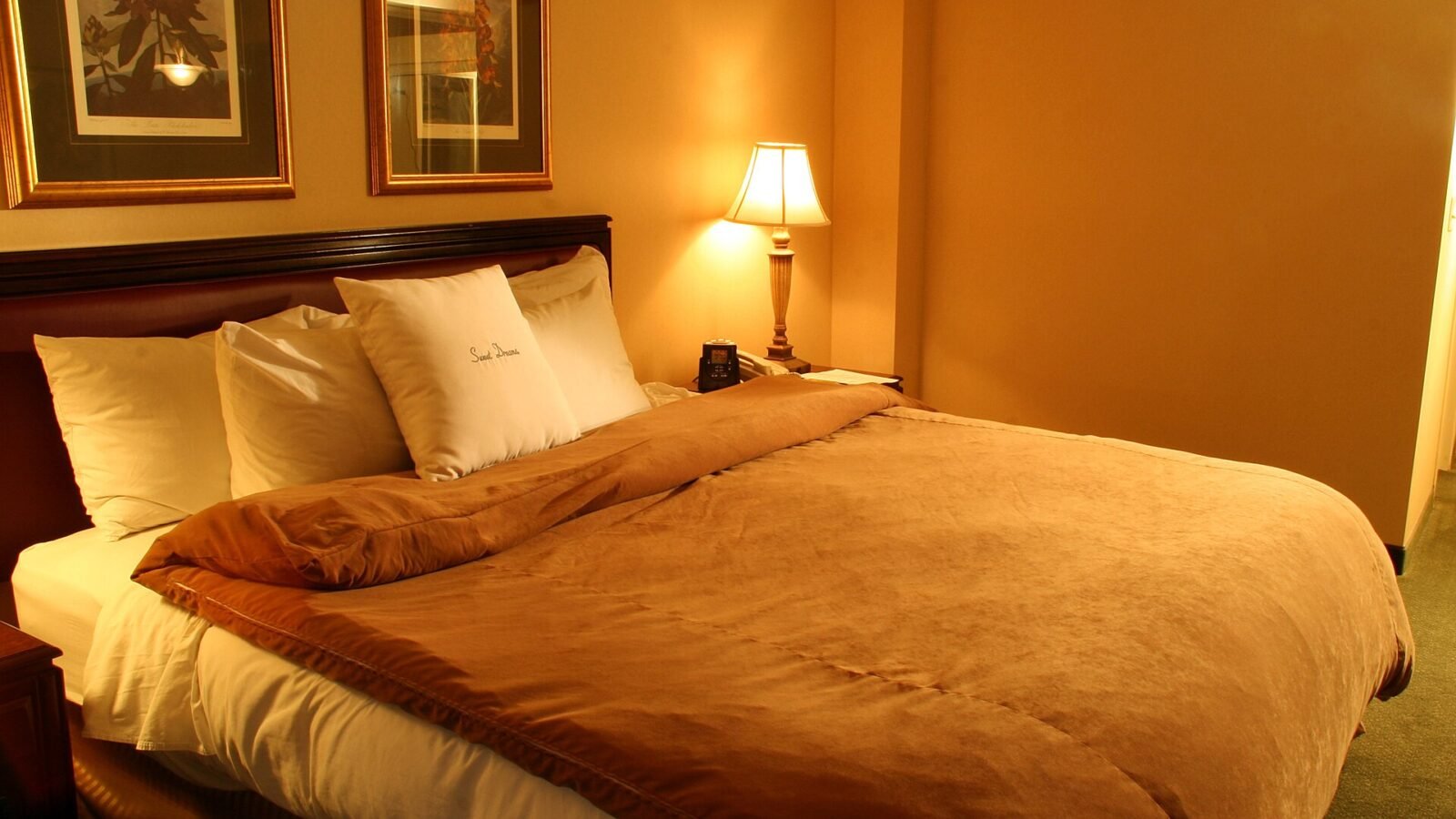
A hotel developer once furnished a 120-room midscale property using residential-grade bedroom furniture from a domestic trade supplier. The price point looked reasonable at the time. Eighteen months into operations, the nightstand drawers were warping, the headboard mounts were pulling out of the wall, and the dresser veneer was peeling from repeated exposure to housekeeping spray. The replacement bill ran into six figures, not counting lost revenue during room closures. That is a real and repeatable problem, and it comes from treating hotel bedroom furniture as a budget line rather than a commercial specification decision.
This guide is built for specifiers and procurement buyers who need to get that decision right the first time. It covers every key piece in a standard hotel bedroom furniture package, from bed frames and headboards to wardrobes and TV cabinets, with material specs, cost benchmarks, compliance requirements, and sourcing options for Canadian buyers. The sourcing landscape has expanded considerably: buyers today can access domestic trade channels or work directly with factory-direct manufacturers that deliver complete, certified, custom-finished hotel bedroom furniture packages at costs that can fundamentally change your per-room budget math. The right choice depends on your hotel tier, brand standards, project scale, and timeline. This guide walks you through all of it.
Why hotel bedroom furniture is a completely different category
The single most expensive mistake in hotel procurement is applying residential logic to a commercial environment. A hotel guest room bed is sat on, stood on, and slept in by hundreds of different guests every year. Nightstand drawers are yanked open by tired travellers at 2 a.m. Wardrobe interiors take daily exposure to luggage wheels, coat hangers, and housekeeping carts. Surfaces are wiped down with chemical cleaners every single day. Residential furniture is not designed for any of that, and it fails accordingly.
The commercial-grade threshold every specifier needs to understand
Contract-grade furniture in a hospitality context means something specific. It means weight ratings that reflect actual guest behavior, not average home use. It means reinforced joinery at stress points, dovetail construction, metal brackets, and thick plywood cores, rather than particleboard. It means surface finishes engineered to survive hundreds of cleaning cycles without delaminating, discoloring, or wearing through. This specification threshold is what separates hotel bedroom furniture that performs for 10 years from furniture that costs you a renovation at year two. Every procurement decision in a guest room should start from this commercial baseline, not from what looks good in a showroom.
The real cost of underspecifying your guest room furnishings
The cost-per-cycle argument is the right framework here. A nightstand that costs $200 less upfront but requires replacement in 24 months carries a lifecycle cost several times higher than a properly specified piece that runs for a decade. Procurement managers at established hospitality groups already build replacement cycles into their long-range budgets because they understand this tradeoff. If you are coming to hotel furniture procurement without that institutional knowledge, the lesson is straightforward: the per-unit price on a purchase order is almost irrelevant. The useful number is cost over the furniture’s service life, accounting for replacement, installation labour, and room downtime.
The essential pieces in a hotel bedroom furniture package
Before you can specify anything, you need a complete inventory of what a standard hotel guest room actually requires. This is not a residential bedroom list. Each piece carries specific commercial requirements that drive its specification independently.
Bed frames, headboards, and bedside storage
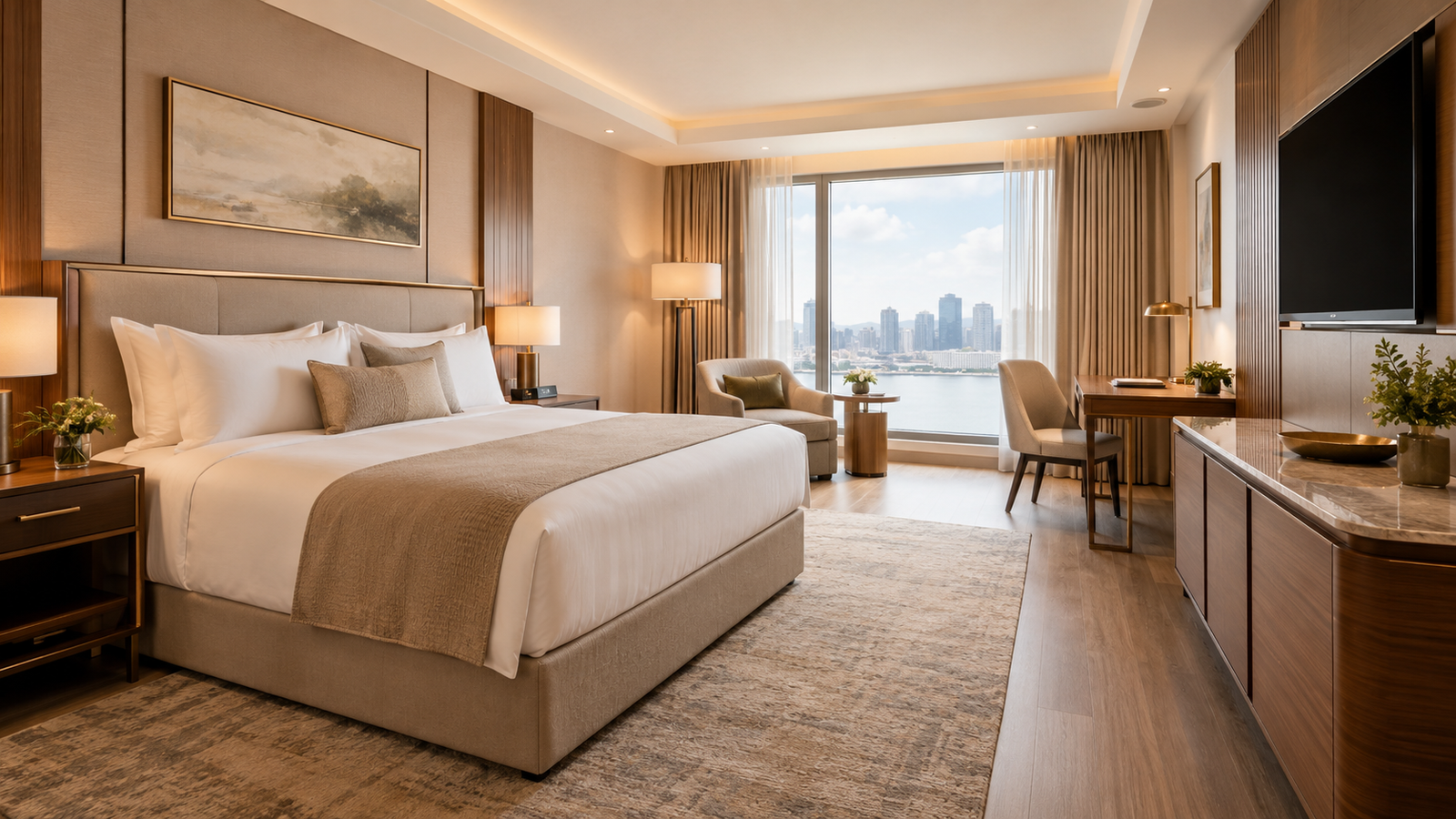
The bed frame is the highest-stress piece in the room. Commercial frames require center support legs, reinforced rail-to-leg connections rated for dynamic load, and a headboard mounting system designed for repeated impact rather than static installation. Headboard options for hotel use include fully upholstered panels, wood panel construction, and integrated platform designs that connect directly to the side tables to eliminate the gap where debris collects and guests damage the wall. Nightstands need cable management cutouts and integrated USB or wireless charging ports to meet the functional expectations of current guests, along with surface materials durable enough to handle wet glasses, electronics, and daily chemical cleaning without degrading.
Wardrobes, dressers, and luggage storage
The casegoods package covers storage in its various forms, and each piece has its own failure point to design around. Wardrobes for hotel use typically use sliding rather than hinged doors to reduce the risk of damage in tight room layouts, with interior rod and shelf configurations matched to the brand’s standard linen and luggage requirements. Dresser drawer slides should be rated for heavy commercial cycling, with soft-close mechanisms specified from the start rather than retrofitted later. The luggage bench deserves special attention: it is often the most structurally stressed piece in the room because guests routinely stand on them. A luggage bench built to residential load ratings will fail within months in a busy property.
TV cabinets, desks, and work surfaces
TV cabinet sizing needs to be confirmed against the brand’s approved screen size before production, not after. Cable management systems should route all cords invisibly while still allowing easy access for housekeeping and maintenance. Desk configurations have shifted in recent years as business travellers demand better work surfaces: a desk that cannot accommodate a laptop, a phone charger, and a coffee cup simultaneously is a guest satisfaction problem. Desktop surfaces need to be heat-resistant and scratch-resistant, with easy sanitization built into the finish specification. Open shelving adjacent to the TV unit is trending in boutique properties as a design element that also reduces manufacturing cost compared to fully enclosed casework.
Materials and construction methods that handle real commercial use
The material specification is where procurement decisions either protect your investment or expose it. This is not about aesthetics; it is about performance engineering at the construction level.
Structural core: solid hardwood vs. engineered wood for hospitality
Solid hardwood, specifically ash, oak, and rubberwood, is the preferred structural core for upscale and luxury hotel bedroom furniture because it offers long-term dimensional stability, strong joinery potential, and repairability over its service life. For midscale properties, quality plywood with full-ply cores is an acceptable and cost-effective alternative, provided the construction avoids hollow sections at stress points and uses proper edge sealing to prevent moisture ingress. Particleboard swells, delaminates, and fails under the repeated stress that commercial use generates. Specifying it to hit a lower per-room price is a false economy.
Surface finishes that survive housekeeping chemicals and heavy use
HPL (high-pressure laminate) is the benchmark surface finish for hotel casegoods. It is scratch-resistant and heat-tolerant, with genuine moisture resistance that holds up under daily cleaning with commercial-grade products. It is the right specification for desktops, nightstand tops, wardrobe exteriors, and dresser fronts across all hotel tiers. Wood veneer finishes can achieve a more premium aesthetic, but they require commercial-grade polyurethane sealing and more careful housekeeping protocols to hold up under daily chemical exposure. Low-gloss and matte finishes in both categories are significantly more forgiving of the surface micro-scratches that accumulate over years of use: high-gloss finishes show every contact mark, which creates the appearance of deterioration well before structural failure actually occurs.
Upholstery performance standards for headboards, benches, and chairs
Martindale rub count is the standard measure for hospitality upholstery durability. The minimum threshold for a standard hotel guest room is 30,000 cycles; high-traffic or higher-occupancy properties should specify 40,000 or above. Solution-dyed fabrics offer superior colorfastness because the pigment is built into the fiber rather than applied to the surface, which means they resist fading from both use and UV exposure more reliably than surface-dyed alternatives. Flame-retardant textile requirements apply to all upholstered pieces in commercial guest rooms. Vinyl or performance faux leather is a legitimate specification choice for budget-tier and health-focused properties because it wipes clean easily and eliminates fabric-related hygiene concerns entirely.
Design trends shaping hotel bedrooms in 2026
Aesthetic decisions in hotel bedroom furniture carry a commercial consequence: choose a trend that dates quickly and you face the cost of refreshing rooms years ahead of schedule. The most useful design guidance connects aesthetics directly to durability and longevity.
The quiet luxury direction and why it works commercially
The dominant boutique hotel aesthetic in 2026 is warm neutrals, natural materials, layered textures, and clean silhouettes, sometimes called quiet luxury. It has strong commercial logic behind it: natural-finish casegoods in oak or ash with matte lacquer age gracefully over a 10-year furniture cycle in a way that bold colors and heavy ornamentation simply do not. Properties built on this aesthetic can refresh their visual identity through soft goods, bedding, cushions, and art without replacing the furniture package itself. That flexibility is worth real money when PIP cycles and brand refreshes come around.
Biophilic design, curved forms, and the finishes that last
Specific material and form choices are moving toward rounded furniture edges, cork and stone-look surface accents, and bronze-toned hardware rather than the cooler chrome and brushed nickel finishes of the previous decade. Curved furniture forms cost more to produce than rectilinear geometry, but they photograph significantly better for marketing and tend to score well in post-stay guest surveys. The practical application for procurement is to invest in form at the headboard and upholstered seating, where guests interact with curves directly, and use simpler geometry for wardrobes and TV units where the complexity adds cost without proportional guest experience return.
Balancing trend-driven aesthetics with long replacement cycles
The most practical rule for hotel bedroom design procurement is to separate the durable base from the trend expression. Bed frames, casegoods, and wardrobes should be specified for a 10-year-plus service life using trend-resistant materials and finishes. Trend expression belongs in the soft goods: bedding, throw cushions, window treatments, and wall art can be refreshed at a fraction of the cost of furniture replacement. This approach lets a property update its visual identity on a shorter cycle without triggering a full hotel bedroom furniture procurement event every time brand standards or guest expectations shift.
Certifications and compliance requirements for Canadian hotel properties
Certification requirements are non-negotiable for branded properties and increasingly expected by lenders, insurers, and operators even at independent hotels across Canada. Knowing what to ask for, and what the documentation should look like, is a core procurement competency.
Structural and fire-safety standards to request from every supplier
For casegoods including nightstands, dressers, desks, and wardrobes, the applicable BIFMA standard is ANSI/BIFMA X5.9, which covers storage unit durability including drawer cycling, stability testing, structural load, and door and hinge durability. Request third-party test reports, not manufacturer self-declarations.
For upholstered pieces including headboards, luggage benches, and lounge chairs, specify CAL TB 117-2013 for residential-adjacent flammability compliance as a baseline, with CAL TB 133 applied where higher performance is required by the brand or local authority. Canadian mattress flammability compliance falls under CAN/CGSB-4.2 No. 27.7-2013. Third-party certification documents for each of these should be part of your purchase order requirements, delivered before production release.
Material certifications and sustainability documentation
CertiPUR-US certification for foam used in headboards and upholstered benches confirms that the foam meets standards for content, emissions, and durability. FSC-certified wood is worth specifying for properties with sustainability commitments or green building targets. GREENGUARD or equivalent low-emission certification for finishes and adhesives is increasingly relevant for enclosed guest rooms where VOC off-gassing affects indoor air quality.
At the manufacturer level, ISO 9001 is the baseline quality-management credential that confirms consistent production processes. Request it from any supplier, domestic or overseas, as a minimum condition of doing business.
Brand PIPs and accessibility compliance
Branded hotel properties operating under Marriott, IHG, Hilton, or similar flags are required to meet PIP specifications that override general market standards. These typically prescribe approved casegoods dimensions, approved finish schedules tied to the brand’s prototype room, fire safety compliance, and functional features like integrated charging and specific desk configurations. Accessibility requirements under the Canadian building code affect furniture clearances, bed heights, and wardrobe configurations in accessible rooms and must be confirmed against your project’s local authority requirements. Independent boutique properties have more design flexibility, but documenting compliance for each piece is still worthwhile for insurance and liability purposes.
What hotel bedroom furniture actually costs per room
Budget planning for hotel furniture without real benchmarks is how projects end up either underspecified or over budget. The numbers below reflect 2026 contract market pricing for a core casegoods package covering a bed frame, headboard, two nightstands, and a dresser or wardrobe unit.
Per-room cost benchmarks by hotel tier
The 2026 planning ranges for a standard hotel bedroom furniture package are:
- Budget/economy contract: $1,500 to $3,500 per room
- Midscale contract: $2,500 to $5,500 per room
- Upscale contract: $5,500 to $9,000 per room
- Luxury or fully custom: $10,000 to $40,000 per room, depending on material and customization
The key drivers of variation within each tier are material grade, hardware quality, degree of customization, and whether the price is factory-direct or routed through a trading company or domestic distributor. Properties that source through intermediaries typically pay 30 to 80 percent above factory-direct pricing for the same specification, a significant number when multiplied across 150 rooms.
The factory-direct pricing gap and what it means for your budget
Factory-direct sourcing from a specialized hospitality furniture manufacturer can reduce per-room furniture costs substantially compared to purchasing through Canadian trade channels, while maintaining the same commercial-grade specifications and certifications. The math works because the domestic trade channel adds intermediary margin at every layer between the factory and the buyer. This model is most effective for new builds and large-scale renovations where the order volume justifies the logistics overhead. Manufacturers that specialize exclusively in hotel furniture and offer complete guest room furniture packages with custom finishes, model room delivery, and single-point project management can change the per-room budget calculation entirely, often opening budget room for material upgrades that would otherwise be out of reach.
Sourcing options: domestic trade suppliers vs. factory-direct manufacturers
Canadian buyers have more sourcing paths available than most realize. Understanding what each channel actually delivers, and what it costs, is the foundation of a sound procurement decision.
Canadian and North American trade suppliers worth knowing
The established Canadian hospitality furniture trade channel includes suppliers like Canapy Furniture, BSG Inc., RHB Enterprises Inc., Nerval Corp, Artco Hospitality Furnishings, and Omland Hospitality. These suppliers offer genuine strengths: shorter lead times for smaller orders, easier returns processes, and no import logistics to manage on the buyer’s side. Their structural limitation is cost: domestic overhead and intermediary margins significantly raise the per-room price relative to what the same specification costs at the factory level. For small orders, boutique projects, or urgent timelines, the domestic channel may well be the right fit. For large-volume new construction, the cost difference is harder to justify.
Why factory-direct sourcing from China is worth serious consideration
A Canadian trade supplier sourcing hotel bedroom furniture is, in most cases, sourcing from the same manufacturing region, often Foshan, China, and marking it up before it reaches the buyer. Going factory-direct eliminates that layer. The critical variable is finding a manufacturer that operates as a full-service project partner rather than simply a product exporter. The attributes worth verifying are exclusive hospitality focus, in-house custom design capability, model room delivery for pre-production approval, ISO 9001 and ISO 14001 certification, and a verifiable project portfolio with named international brand references. A manufacturer that meets all of those criteria delivers the same outcome as a domestic trade supplier at a fraction of the total cost.
Canadian buyers also need to account for import costs when running the comparison. Wooden bedroom furniture from China typically falls under HS 9403 in Canada’s tariff schedule, with a base MFN duty rate of 0 to 9.5 percent depending on the specific item. A 25 percent surtax under Canada’s China Surtax Order may apply to certain categories, so confirming the applicable tariff treatment for your specific product mix with a licensed customs broker before placing an order is a necessary due-diligence step. Even with these costs factored in, the factory-direct total landed cost on large hotel projects typically remains well below domestic trade pricing.
YM Furniture: a factory-direct model room delivery example
YM Furniture (Foshan Yauming Furniture & Construction Co., Ltd.) is a strong example of what a factory-direct hospitality specialist looks like in practice. The company has operated exclusively in hotel and villa furniture for 17 years, completing more than 1,000 projects for internationally recognized brands including Marriott, Sheraton, and Pullman. The product range covers the complete hotel bedroom furniture package: bed frames, headboards, nightstands, wardrobes, TV cabinets, desks, and luggage benches, all available with custom finishes matched to brand standards or designer specifications.
The operational differentiator that matters most for procurement is the 20-day rapid model room delivery. Before full production begins, YM builds and delivers one complete furnished room for the buyer and design team to evaluate. Finish discrepancies, dimension issues, and specification gaps get resolved at the single-room stage rather than discovered across 150 production units. The facility backing this is a 70,000 square metre manufacturing plant with ISO 9001, ISO 14001, and ISO 45001 certifications, supporting factory-direct pricing that runs significantly below domestic market rates.
Buyers receive a single project management contact from design consultation through shipping and installation, which eliminates the multi-vendor coordination burden that typically inflates procurement overhead on large projects.
Building your hotel bedroom furniture specification and purchase checklist
All of the decisions covered in this guide need to come together in a written specification package before a purchase order is placed. A vague spec is an invitation to disputes and delays.
What to include in a complete specification package
A complete hotel bedroom furniture specification should document exact dimensions for each piece: bed frame height, nightstand width and depth, wardrobe interior layout including rod placement and shelf spacing. Material and finish specifications need to name the surface type, edge treatment, hardware grade, and any custom color or stain matching requirements.
- Performance certifications required, including BIFMA X5.9 for casegoods and CAL TB 117-2013 for upholstered items
- ISO documentation requested at the manufacturer level
- Finish samples and color-matching requirements confirmed and approved before production release
- Quantities broken down by room type rather than given as a single total
Questions to ask every supplier before placing an order
Before committing to any supplier, domestic or overseas, get answers to these questions in writing:
- Can you provide third-party test reports for the specific pieces in this order, not just for your product range generally?
- Do you offer a physical sample or model room before full production begins?
- What are your confirmed lead times for a 100-room or 200-room project?
- What does your warranty cover, and what is your replacement parts policy for items that fail during the warranty period?
- For factory-direct suppliers: what are the shipping incoterms, the port of entry for Canadian customs, and can you provide the documentation needed for CBSA clearance?
The model room approval process and why it protects your project
The model room process is the single most effective risk-management step available in hotel furniture procurement, and it is consistently skipped by buyers trying to compress project timelines. The supplier builds one complete furnished room; the buyer and design team physically evaluate it before approving full production. This step reliably catches the issues that a spec sheet cannot: how the headboard mount actually sits against the wall, whether the nightstand surface finish matches the approved sample under the room’s lighting conditions, whether drawer operation feels right under hand. Suppliers that offer a 20-day model room delivery timeline make this step financially viable even on tight project schedules, and the cost of building one sample room is trivially small relative to the cost of correcting a specification error across 100 production units.
Maintenance and lifecycle planning for hotel bedroom casegoods
The procurement decision does not end at delivery. How furniture is maintained, and how its replacement is planned, determines whether the investment performs over its full service life or burns through early.
Cleaning protocols that don’t destroy commercial finishes
A significant share of furniture finish failures in hotel environments are caused by housekeeping teams using the wrong cleaning chemicals, not by material defects. HPL surfaces are durable but should be cleaned with pH-neutral products rather than bleach-based or abrasive cleaners that degrade the surface over repeated use. Polyurethane-finished wood surfaces need similar care: ammonia-based products strip the protective coating over time, leading to premature wear that looks like a material failure but is actually a maintenance problem. Upholstered headboards should be vacuumed regularly and spot-treated with manufacturer-approved products. Specifying cleaning protocols in the housekeeping SOP at the same time as specifying the furniture is part of sound procurement practice.
Typical replacement cycles and how to plan for them
Reliable planning benchmarks for hotel furniture replacement by piece type:
- Solid wood casegoods and well-specified bed frames: 10 to 15 years with proper maintenance
- Upholstered headboards and luggage benches: 5 to 7 years due to fabric wear and surface degradation
- Soft-close drawer slides and hinges: servicing or replacement at 5 to 8 years depending on cycling volume
Properties operating under major brand flags often replace furniture on a shorter cycle than physical condition would require, driven by PIP refresh schedules. Matching your initial furniture specification to your expected PIP timeline, rather than to maximum possible lifespan, is a smarter approach to per-room budget allocation.
Extending furniture lifespan with the right supplier relationship
The practical value of sourcing from a manufacturer that maintains your production records extends well beyond the initial delivery. When a door panel gets damaged three years after installation, a supplier holding your finish code and hardware specification on file can supply a matching replacement component without a new production run. When a PIP cycle requires updating specific pieces, a supplier familiar with your property’s existing hotel bedroom furniture can integrate new pieces without creating visible mismatches. Factory-direct suppliers with dedicated hospitality product lines and long-term client relationships are better positioned to support this kind of ongoing after-sales need than catalog furniture companies that rotate their product lines seasonally and have no record of what they sold you four years ago.
The right furniture decision is a specification decision
Choosing the right hotel bedroom furniture is ultimately a commercial specification exercise, not a shopping trip. Specify commercial-grade from the start, match your material and certification requirements to your hotel tier and brand standards, and plan your per-room budget using real contract benchmarks rather than residential pricing assumptions. The quality of that specification work determines how long the furniture performs, how much it costs to maintain, and whether it supports or undermines your brand standards over a full PIP cycle.
Canadian buyers sourcing hotel bedroom furniture packages have more options than the domestic trade channel suggests. A factory-direct conversation at the specification stage costs nothing and can change your budget math significantly. Manufacturers like YM Furniture deliver complete, certified, custom-finished guest room furniture at costs that can meaningfully reshape the per-room budget without compromising commercial-grade quality or certification requirements. The model room approval process removes the risk that comes with first-time overseas sourcing, and single-point project management eliminates the coordination overhead that makes multi-vendor procurement expensive and slow.
Build your specification package using this guide as a framework. Request model room proposals from two or three shortlisted suppliers. Compare total delivered cost, including duty, freight, and installation, rather than unit price alone. That comparison will show you where the real value sits across the full hotel bedroom furniture market, and it will almost certainly surface sourcing options you had not previously considered. To understand what a complete factory-direct hotel bedroom furniture package looks like for your specific project, contact YM Furniture directly to discuss your room count, hotel tier, and timeline.