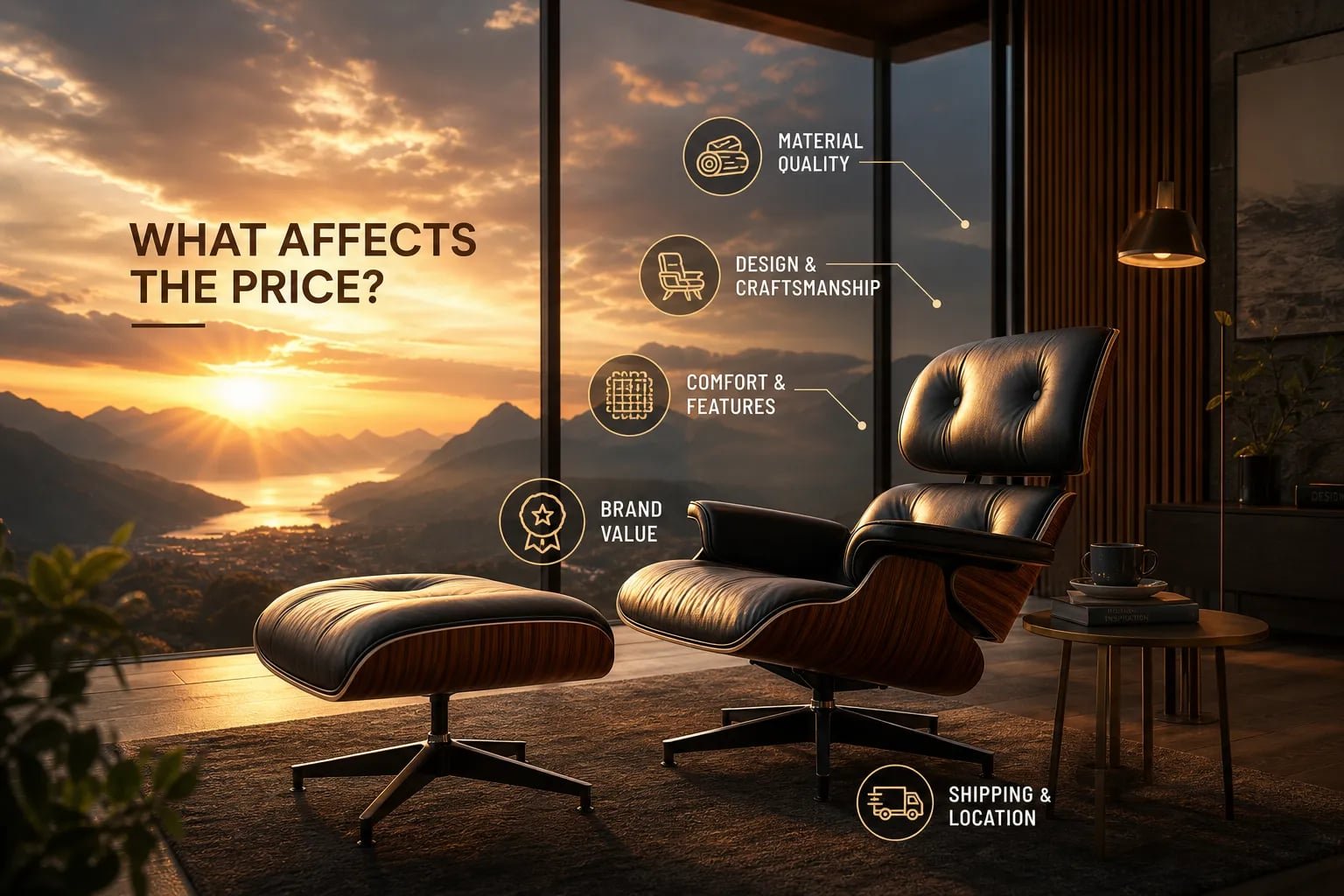
If you’re wondering how much lounge chairs are, prices typically run from $150 for a basic retail model to well over $20,000 for an iconic designer piece, and that gap is not random. Materials, construction method, manufacturing origin, customization level, and the channel you buy through all feed directly into that final number. Understanding which of those variables matters most for your specific use case leads to sharper purchasing decisions, whether you’re furnishing a single living room or sourcing hospitality-grade seating for a 200-room resort development.
Having worked across thousands of commercial furniture projects globally, I can tell you that many buyers pay more than necessary, not because quality chairs are inherently expensive, but because layered supply-chain markups (trading company markups alone typically run 40, 60%, compounding through importers and retailers) drive the final price well above production cost. This article breaks down every major cost factor, gives you real price ranges across quality tiers, and explains how to align your sourcing approach with what you actually need.
How much are lounge chairs: price spread by quality tier
Before getting into what drives cost, it helps to anchor your expectations with real numbers. The price range for lounge chairs is wider than most buyers expect, and where a chair lands on that range tells you a great deal about what you’re actually getting for your money.
Budget tier: what you get under $400
Entry-level indoor lounge chairs typically run $150 to $400 at major retail platforms. At this price point, expect thinner frames (often engineered wood or lightweight steel), lower-density foam that compresses relatively quickly, and simpler fabric construction. Budget outdoor chaise lounges sit even lower, commonly $50 to $150 at mass-market retailers. Budget does not mean unusable; for light residential use with modest durability expectations, these chairs perform adequately. Just be realistic about their lifespan under regular use.
Mid-range: the $400, $900 sweet spot for most buyers
This is where the majority of residential buyers land, and with good reason. The step up to mid-range delivers meaningful improvements: hardwood frames, higher-density foam, and noticeably better upholstery construction. Outdoor mid-range chaise lounges typically sit in the $150 to $500 range depending on material and weatherproofing. You start getting chairs that hold their shape over years of use rather than months, and frame joinery becomes significantly more robust.
Premium and luxury: $900 and well above
High-end indoor lounge chairs commonly run $900 to $2,000 or more. Designer-branded pieces from brands like DWR and Knoll typically sit in the $2,000 to $6,000 range, with DWR models spanning roughly $1,895 to $11,995 and Knoll offerings reaching $5,550 to $13,536. Iconic or collector-tier chairs from design legends can exceed $20,000. Commercial and hospitality-grade lounge chairs often occupy this upper space, not because of branding, but because the durability requirements for contract use demand a different level of construction entirely.
Indoor vs. outdoor: how the setting changes what you pay
Use environment is one of the first factors that splits lounge chair pricing. Outdoor and poolside chairs require weatherproof materials, UV-resistant finishes, and rust-resistant hardware, all of which add cost at the material sourcing and finishing stages.
Indoor lounge chairs and what drives their cost
For indoor chairs, upholstery quality, cushion depth, and frame aesthetics drive the majority of the price difference between tiers. A beautifully upholstered club chair with a kiln-dried hardwood frame and multi-density foam costs more to produce than a simple linen-covered chair on an MDF frame, even if both look similar at a glance. Indoor chairs are priced heavily on design appeal, fabric grade, and the finish quality of structural components that buyers never see directly.
How much are outdoor lounge chairs? Weatherproofing adds cost
Outdoor chaise lounge prices at major retailers span roughly $75 to $500 and above, with the variance driven largely by frame material and weatherproofing treatment. Aluminum frames resist rust without ongoing maintenance. Teak withstands moisture naturally due to its inherent oils. Synthetic PE rattan over aluminum frames offers a mid-tier option that balances aesthetics and durability at a lower price point than solid teak. Each step up in material and weatherproofing adds to the base production cost.
Why commercial-grade outdoor loungers cost more than retail equivalents
A patio lounge chair built for a homeowner’s deck and one built to survive a hotel pool deck for eight to ten years are two distinct products engineered to different standards. Commercial-grade outdoor loungers are built for hundreds of use cycles per year, repeated exposure to chlorine and sun, and the practical demands of hospitality environments where furniture damage translates directly into operational cost. Procurement for commercial properties follows different quality standards than retail shopping, and that difference shows up clearly in the per-unit price.
Materials that move the needle on lounge chair pricing
Material selection is one of the most concrete cost drivers, and it’s an area where you can make deliberate trade-offs based on your actual use requirements rather than buying on aesthetics alone.
Teak: the premium benchmark
Teak lounge chairs commonly run $800 to $3,400 or more, with premium models often landing in the $1,300 to $2,700 range and luxury offerings going higher. The premium reflects real production factors: teak’s density, natural oils, and rot resistance make it one of the most durable outdoor furniture materials available. It is the standard reference point at hospitality properties globally, particularly for pool decks and terraces where longevity under sun and water exposure is essential, and where replacement costs make long-term durability a financial priority.
Aluminum, wicker, and rattan: the mid-tier options
Aluminum is lightweight, corrosion-resistant, and sits below teak in cost while outperforming basic resin over time. Wicker and rattan chairs, based on select retailer listings, span roughly $487 to $1,397 depending on weave quality and frame construction. Natural rattan carries a higher price tag and lower outdoor durability compared to synthetic PE rattan, which brings cost down significantly while improving resistance to moisture and UV exposure. For commercial outdoor applications, PE rattan over aluminum frames is a commonly specified option that balances cost, aesthetics, and performance.
Upholstery and cushions: the visible cost layer
Fabric type shifts price meaningfully. Solution-dyed acrylic fabric, which resists fading and moisture at the fiber level, costs more than standard polyester upholstery. Leather sits at the top of the indoor upholstery cost curve. Cushions as an add-on can push the total cost of a lounge chair up by $200 to $600 or more, depending on foam density and cover material. For outdoor applications, the trade-off between aesthetic richness and weatherproof practicality is real: a beautifully upholstered cushion that degrades in one season is a poor investment at any price point.
Frame construction and build quality: the cost factor most buyers miss
Many buyers focus entirely on the visible surface of a lounge chair while overlooking the structural variables that determine how long it actually lasts. The difference between a chair that holds up for three years and one that holds up for fifteen is almost always in the construction, not the upholstery.
Frame materials and their structural role
Kiln-dried solid wood commands a production cost premium over engineered wood options like MDF or plywood, and that premium is justified by structural performance. Solid wood frames with mortise-and-tenon joinery withstand stress, humidity cycling, and repeated use at a level that glued MDF frames simply cannot match over time. Steel frames offer a different kind of strength and are common in commercial outdoor applications. Understanding what a frame is made of and how it is joined together is the single most important question you can ask when evaluating lounge chair price against expected longevity.
Foam density and cushion construction
High-density foam, generally 1.8 lb per cubic foot and above, costs more to source and manufacture but retains its shape over years of regular use. Low-density foam compresses and loses its support profile relatively quickly, which is a common failure point in budget seating. When reviewing product specifications, look for foam density ratings directly. If a retailer cannot provide that specification, that tells you something about the product tier.
Finishing quality and hardware detail
Sanding stages, lacquer layers, edge finishing, and the quality of fasteners all contribute to production cost in ways that are invisible at first glance. These details are exactly what separates a $400 chair from a $900 chair with similar dimensions and upholstery on the surface. A well-finished joint stays tight. A poorly finished one loosens under use and humidity. Hardware that rusts or strips after a year of use turns a reasonable chair into a recurring maintenance problem.
Designer vs. mass-market lounge chairs: what the premium actually buys
One of the most common questions buyers wrestle with is whether a designer-label lounge chair justifies its cost premium over a well-made mass-market model. The answer depends on what you’re actually paying for at each tier.
What mass-market pricing covers ($500, $1,500)
Retailers like Article offer solid lounge chairs in the $499 to $899 range. Wayfair spans a broad mid-range from roughly $300 to $900 and higher. Production at this tier is typically overseas, quality control is reasonable for the price point, and design is trend-informed rather than architecturally original. For residential buyers and light-commercial applications, this tier delivers strong value when you know what to look for in construction quality.
What the designer tier delivers ($2,000, $6,000)
At this level, the premium reflects original architectural design, premium material sourcing, manufacturing oversight, and brand association. These chairs hold resale value better than mass-market equivalents, and the design integrity tends to remain relevant over longer periods. You’re also paying for the showroom experience and brand positioning built into the price. For buyers who want a statement piece in a high-end residential or boutique hospitality setting, this tier is purpose-built for that use case.
When luxury and iconic pricing ($6,000, $20,000+) is justified
Signature pieces from design legends or heritage manufacturers reflect collectibility, craftsmanship, and provenance rather than just material cost. For high-end hospitality environments where the furniture is integral to the brand identity, this investment carries clear commercial logic. A lounge chair in a five-star lobby or signature suite that communicates design authority contributes directly to guest perception and positioning. At that scale, the chair is not just seating; it is part of the brand experience.
Where the chair is manufactured and how it directly affects what you pay
Manufacturing origin is one of the clearest explanations for why two lounge chairs with nearly identical specifications can carry dramatically different price tags. For buyers who want hospitality-grade quality without the layered retail price structure, understanding production geography and its cost implications is worth the attention.
Domestic manufacturing vs. overseas factory production
Chairs produced in the United States or Europe carry higher labor costs, overhead, and regulatory compliance costs, which push retail prices upward significantly. That reflects real production economics, not arbitrary pricing. The same chair specification built in an internationally certified overseas factory carries a materially lower production cost because labor and operating costs are structured differently. For project-scale buyers, that difference compounds across every unit in the order.
Trading companies vs. factory-direct manufacturers: where the markup hides
Most retail buyers pay through multiple layers of margin without realizing it. A typical furniture supply chain breaks down like this:
- The factory sells to a trading company at a 40, 60% markup.
- The trading company sells to an importer or distributor at another 20, 35%.
- The importer sells to a retailer at another 15, 25%.
- The retailer sells to the end buyer.
Each link adds margin that has nothing to do with the quality of the chair itself. A factory-direct manufacturer removes those intermediate layers entirely.
How factory-direct sourcing changes the cost equation
YM Furniture (Foshan Yauming Furniture & Construction Co., Ltd.) works directly with hotel developers, FF&E procurement teams, and large-scale project buyers, supplying hospitality-grade lounge chairs at factory cost. With 17 years of production experience and more than 1,000 completed projects across 30 countries, YM Furniture’s pricing can run 50, 70% below what the same quality chair costs through local retail or trading company channels. For a buyer furnishing 50 poolside loungers or 120 guestroom chairs, that difference doesn’t represent marginal savings, it restructures the entire project budget.
Customization and order scale: when they reduce cost per unit and when they inflate it
Customization is frequently misread as an automatic price inflator. In practice, the impact depends entirely on where in the supply chain you’re requesting it. The same custom specification costs very differently at the retail level versus the factory level.
Custom specifications at the retail level: expect a premium
Ordering a custom fabric, finish, or non-standard dimension from a retail brand typically means a significant upcharge, longer lead time, and often a minimum order quantity that smaller buyers cannot meet economically. Retail customization is essentially a bespoke service layered on top of a standard production line, and it is priced accordingly. For a single chair, this can add 20 to 40 percent to the base retail price with limited flexibility in what can actually be changed.
Custom specifications at the factory level: a different story
When customization happens at the manufacturing stage, it is built into the production run at minimal additional cost per unit. Frame dimensions, upholstery material, finish color, and hardware selection can all be specified before production begins. At project scale, custom upholstery or finish changes typically add 10 to 15 percent to the base unit cost, and more complex structural modifications might add 15 to 25 percent. Compared to the retail alternative, where customization can cost as much as the chair itself, factory-level customization is a different value proposition entirely.
How order volume changes unit cost
Project-scale procurement at 25, 50, or 100 units compresses per-unit cost at the factory level through real production economics. Larger orders allow manufacturers to optimize material cutting, reduce per-piece setup costs, and offer pricing structures that single-unit retail simply cannot approach. This dynamic is central to how hospitality developers and real estate project teams control FF&E budgets, and it is one of the primary reasons that commercial buyers who understand factory-direct sourcing can furnish at a fraction of what retail procurement would cost for the same quality specification.
Where you buy changes what you pay: a channel-by-channel breakdown
The same lounge chair specification sold through different channels can carry a price difference of 40 to 200 percent, a range that reflects the stacked markups described above (40, 60% at the trading company level, compounding through importers and retailers). Choosing the right channel is as important as choosing the right chair, particularly for buyers with a defined quality threshold and a budget to manage.
Mass-market retailers (Amazon, Walmart, IKEA, Costco)
Entry-level and mid-range lounge chairs at these platforms typically run $75 to $500. Selection is broad, lead times are short, and pricing is competitive within the budget tier. Customization is essentially zero, and quality control is inconsistent across product lines. This channel is best suited for single-unit, budget-conscious residential purchases where speed and convenience outweigh specification control.
Specialty furniture retailers and design showrooms
Pricing at channels like Wayfair, DWR, Knoll, West Elm, and Restoration Hardware runs from roughly $300 at the accessible end to $13,000 or more for premium pieces. West Elm typically positions its lounge chairs in the $700 to $3,000 range, Pottery Barn from about $800 to $4,000, and Restoration Hardware occupies a luxury tier starting around $1,500 and extending well above $6,000. You gain design curation and brand assurance at these channels, but you pay for showroom overhead, distribution margin, and brand positioning costs built into every price tag.
Factory-direct sourcing: the channel that changes the math for commercial buyers
For project buyers furnishing multiple spaces at hospitality-grade standards, sourcing factory-direct through a manufacturer like YM Furniture compresses cost at every level. There is no distributor margin, no retail overhead, and no trading company fee between the factory and the buyer. For lounge chairs that would retail at $900 to $2,000 per unit through standard channels, factory-direct pricing at project scale can bring that well below $500 per unit while maintaining the same material and construction specification. The buyer pays production cost plus logistics, not five layers of markup.
- Mass-market retail: $75, $500, no customization, inconsistent quality control
- Specialty and design retail: $300, $13,000+, curated selection, full distribution margin built in
- Factory-direct manufacturing: 50, 70% below retail equivalent for commercial-grade specification at project scale
Sale timing and seasonal discounts: when to buy for maximum savings
Retail pricing for lounge chairs follows predictable seasonal patterns. Knowing those windows can reduce what you pay by 20 to 50 percent without sacrificing quality, assuming the product in stock actually meets your specifications.
When discounts are deepest and why
Major design retailers commonly offer 20 to 30 percent off mainstream lounge chairs as ongoing promotional pricing, with clearance and end-of-season events pushing to 40 to 50 percent off on selected items. DWR, for example, runs items at 25 percent off across much of its lounge chair inventory, with outdoor models reaching up to 50 percent off during clearance windows. Semi-annual sale events, common at specialty furniture retailers, produce the broadest markdowns across the category and represent the best single opportunity for retail savings.
The best timing for outdoor and patio chaise lounge prices
Outdoor chaise lounge prices drop most significantly at the end of the warm-weather season, typically late August through October in the US, when retailers clear inventory before winter. This is the highest-value window for buyers who can plan ahead and are not working to a fixed project timeline. End-of-season clearance on outdoor furniture is one of the few retail discount patterns that is both predictable and genuinely significant in magnitude.
What sale timing cannot fix: quality and customization limits
Clearance pricing is only valuable if the product on sale meets your actual specifications. Discounted stock is almost always limited in color, size, and material options; you are buying what is left, not what you would have specified. For buyers with defined commercial requirements, especially for hospitality or real estate applications, waiting for a retail sale event rarely delivers more reliable value than negotiating a project-scale factory price from the start. The math works differently at volume, and that difference compounds across every unit in a large procurement order.
Matching the right price tier to your actual requirements
Lounge chair pricing is determined by a knowable set of variables, not by arbitrary market forces. A residential buyer with a $400 to $800 budget will find genuinely strong options in the mid-range market, particularly through specialty retailers during sale periods or on platforms that offer solid construction at accessible price points. That is a reasonable and well-served market segment.
A hospitality developer furnishing 50 poolside spaces or a real estate group outfitting luxury villa units needs a different sourcing approach entirely. For those buyers, how much lounge chairs cost ultimately comes down to where they sit in the supply chain relative to the factory. That is exactly where YM Furniture is built to help: factory-direct manufacturers with hospitality-grade production capabilities and a documented track record across international projects, YM Furniture among them, with 1,000+ completed developments globally, exist precisely to close that gap. The most effective cost reduction strategy for commercial or project-scale procurement is not waiting for a retail sale; it is removing the layers between factory and end buyer.
If you’re still asking how much lounge chairs are for your hotel, resort, villa development, or large residential project, get in touch with our team directly. That is exactly how we work at YM Furniture, with procurement specialists, interior designers, FF&E consultants, and hotel developers worldwide to deliver hospitality-grade custom furniture at production cost, with full project support from design consultation through logistics and installation.