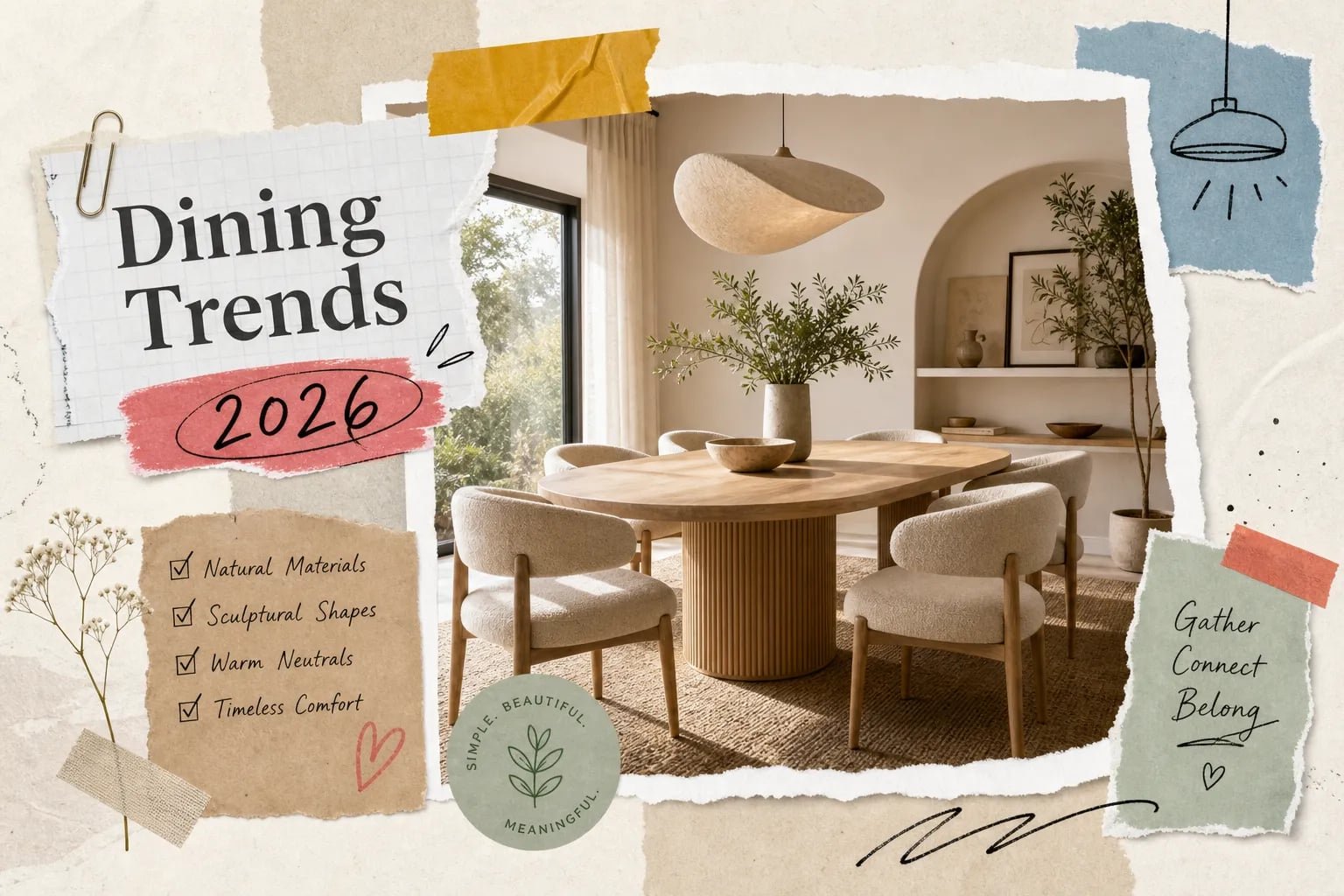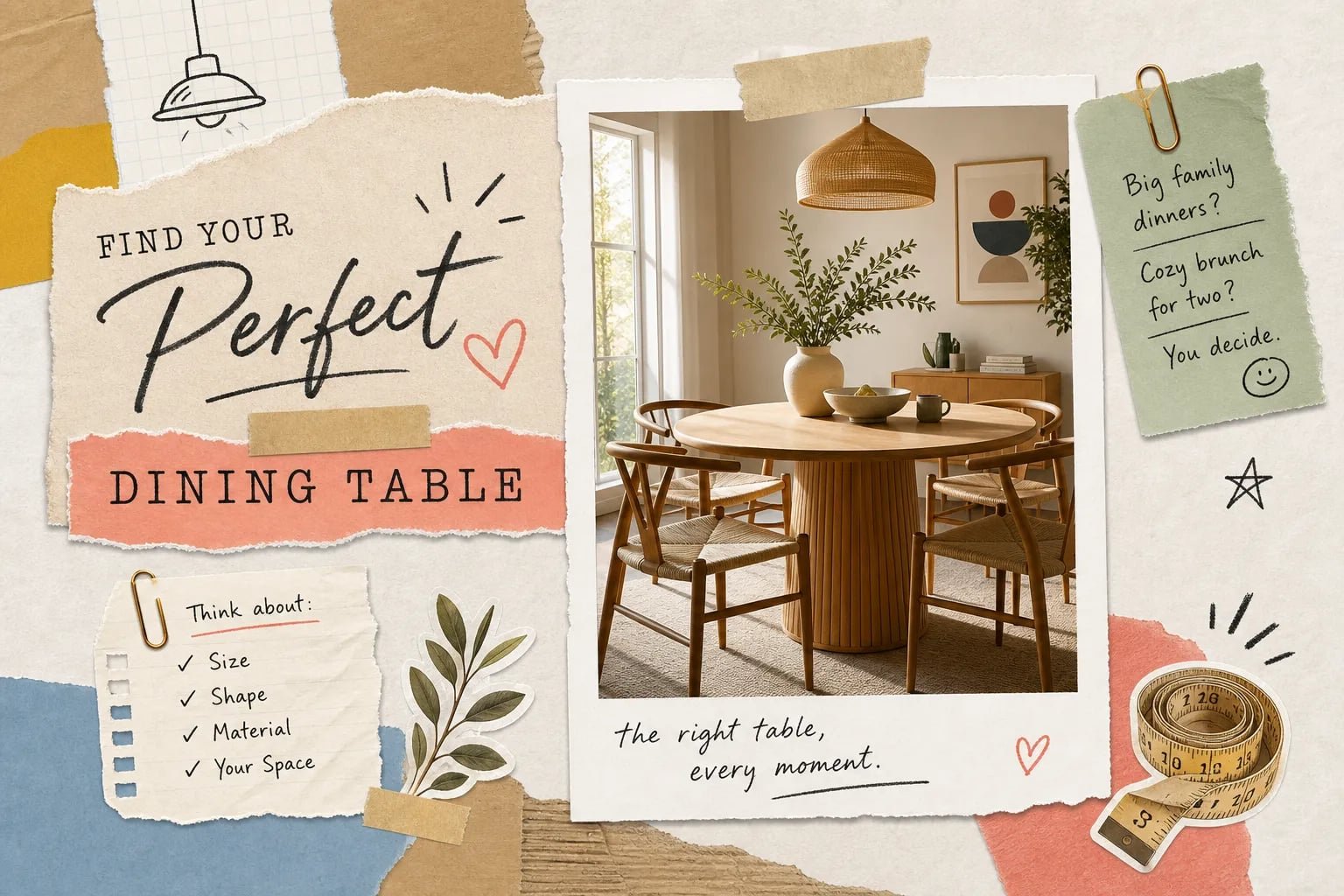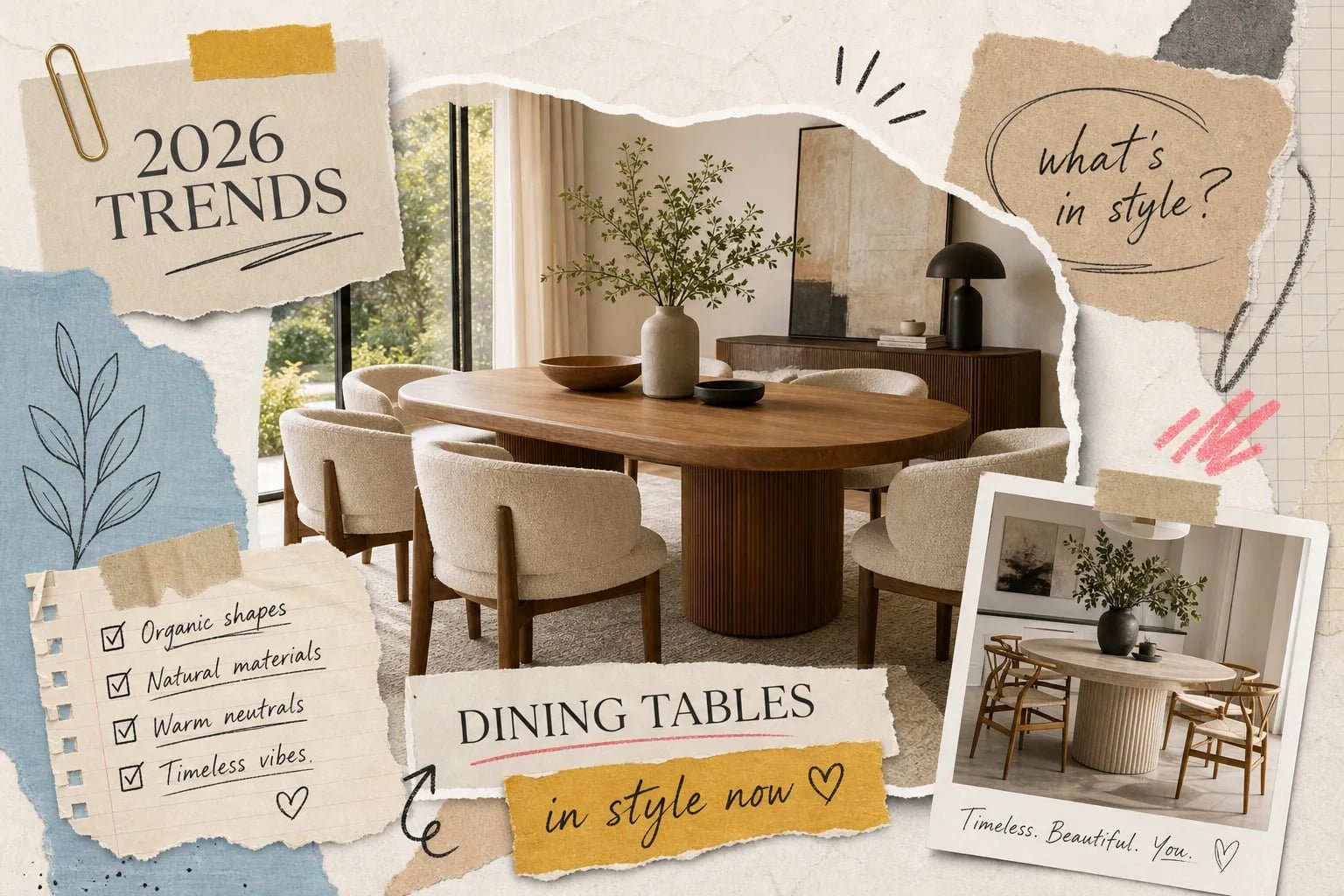
The dining table is the anchor piece in any serious interior project. Get it right and every other decision in the room flows from it; get it wrong and no amount of clever lighting or statement art will save you. So, what dining tables are in style now in 2026? For high-end hotel, villa, and apartment projects, the answer is more nuanced than it was five years ago. Shapes are softer, materials are bolder, and the gap between a table that looks fine and one that makes a room is now commercially significant in a way that clients actually notice.
The designers and developers getting the best outcomes right now are working with a clear picture of where the market currently stands: which shapes are leading and why, which surface materials are worth specifying and which are past their peak, and how to source custom pieces at a price point that makes financial sense for a large-scale project. This article gives you that picture, structured as a practical specification guide rather than a mood-board collection.
By the end, you will have a clear view of the dominant shapes, the material stories worth following, sintered stone, marble, engineered stone, and solid wood, the japandi and quiet luxury directions, the earthy palette shift, space-planning rules that hold in any layout, and a sourcing framework for when custom is the right call.
What dining tables are in style now: shapes leading the market in 2026
If you had to summarise the shape conversation in one sentence, it would be this: curves are winning, and oval is winning most of all. The shift has been building for several years, but in 2026 it has reached the point where oval dining tables are the most consistently specified shape across both luxury residential and hospitality projects. The reasons are practical as much as aesthetic.
Why oval has become the designer favourite
Oval combines the generous seating capacity of a rectangular table with the softer visual movement and improved circulation of a round. No sharp corner to catch a hip in a narrow space, no implied hierarchy at the head, and a silhouette that reads well in wide-angle photography and in daily use. For hospitality projects, that last point matters more than it might seem: a dining room that photographs well is a marketing asset, and oval tables are widely considered more photogenic by stylists and hospitality marketers than rigid rectangles. In our experience across hospitality briefs, oval is the most consistently specified shape right now across hotel dining rooms, villa projects, and high-end residential work internationally.
When a round table is still the right call
Round tables remain the preferred choice for square rooms, intimate dining spaces, and any project where a sense of equality around the table is a design priority. They are also the strongest option for compact footprints where a rectangular or oval table would feel forced. As a practical rule of thumb, a round table begins to lose its conversational intimacy somewhere around 1.5 metres in diameter; beyond that point, talking across the centre becomes uncomfortable and the table starts to feel like a boardroom rather than a dining room. That scaling limitation is precisely why oval has taken the lead in larger-format hospitality settings: it solves the scale problem without losing the softness.
The soft-edged rectangular: a credible modern compromise
Rectangular tables have not disappeared from the specification conversation, but the sharp-cornered, boxy silhouettes that defined a certain mid-2010s aesthetic are being replaced by tables with radiused corners and softer overall profiles. This works well in long narrow rooms, banquette-style dining layouts, and any project where maximising seating per linear metre is the priority. If a client needs a rectangular table, specifying one with subtly softened edges is the correct current call rather than a rigidly squared-off form.
What dining tables are in style now, materials worth specifying in 2026
Material selection is where a table either earns its specification or becomes a compromise. Material options in 2026 have split into three distinct and well-defined categories, and understanding what each does well makes the specification decision straightforward.
Sintered stone and porcelain: the fastest-growing surface
Sintered stone, produced by compacting and firing mineral particles at extreme heat, and large-format porcelain are among the most-specified dining table surfaces in 2026 for good reason. They offer extraordinary resistance to heat, scratching, and staining, require essentially no sealing or specialist maintenance, and are available in formats that convincingly replicate marble, concrete, and mineral aesthetics. For hotel dining rooms and F&B spaces where tables take daily punishment, sintered stone is becoming the default specification. It performs where marble would struggle and looks just as considered in the right design context.
Marble: still the ultimate luxury statement
Real marble remains the prestige choice for boutique hotels, private villas, and high-end residential dining rooms where the client is buying a statement rather than a workhorse. The trade-off is honest and worth stating plainly: marble etches, it is porous, and it requires regular sealing and careful use around acidic liquids. Specifying marble means specifying it to a client who understands and accepts the care routine. As a statement material rather than an everyday default, it is unmatched for perceived luxury and tactile richness. Custom marble tops to specific dimensions, edge profiles, and vein matches are one of the most common bespoke requests from designers working on high-end projects, and factory-direct custom manufacturing has made this specification considerably more accessible on cost than it once was.
Engineered stone and quartz: the practical workhorse
Quartz offers the closest practical performance to sintered stone, typically at a lower price point. It is non-porous, durable under everyday use, requires no sealing, and is available in finishes that convincingly mimic natural stone. For projects where the client wants the marble aesthetic without the marble maintenance commitment, quartz is the honest, well-priced answer. It does not carry the same prestige as real stone, but it does not cause the maintenance headaches either.
Japandi minimalism and the quiet luxury direction
The japandi aesthetic has moved firmly from residential interiors into boutique hospitality in 2026, and it is worth understanding precisely what it means for dining furniture specification rather than treating it as a vague mood-board direction.
What japandi means for dining furniture specification
Japandi draws from two distinct traditions: Japanese wabi-sabi, which values imperfection, natural materials, and deliberate negative space, and Scandinavian functionalism, which prioritises clean lines, honest construction, and restraint. In dining tables, this translates to solid oak or walnut tops with visible grain, matte or oiled finishes, slender tapered legs, no ornamental detail, and an overall profile that feels both minimal and warm. The distinction from purely Scandinavian design is important: Scandinavian tables tend to be lighter in tone, brighter in feel, and more obviously cheerful. Japandi is quieter, more grounded, and more contemplative in character.
The oak and walnut specification in practice
White oak and walnut are the dominant wood species in this direction. White oak gives a lighter, cooler tone with a more Scandinavian feeling; walnut reads richer, warmer, and more Japanese-influenced in character. Both species are correctly specified with a clear oil or hard-wax finish rather than lacquer, to preserve the natural grain character and maintain the tactile warmth that makes a japandi table feel distinct from a conventional wood piece. A high-sheen lacquer over walnut is a different specification entirely, closer to a 2010s luxury aesthetic than the 2026 direction.
Where japandi sits in the broader quiet luxury trend
Japandi is effectively the furniture expression of quiet luxury: no logos, no statement hardware, no gratuitous complexity. For developers positioning properties at a design-literate, discerning audience, a japandi dining table communicates considered taste without needing to announce itself. The styling logic that follows is consistent: pair with linen upholstery in oatmeal or flax, matte ceramics, natural-fibre rugs, and minimal tableware. The table does not compete with the setting; it anchors it.
Curved silhouettes: why soft edges define 2026 design
The move toward softer shapes is not limited to tabletop forms. It is a broader shift in the design language of furniture, worth understanding as a coherent trend rather than a series of disconnected product decisions.
The broader organic forms movement
Leg profiles, base designs, and the junction between top and apron are all softening in 2026. The cultural driver is a collective shift away from the sharp-edged, brutalist-influenced furniture that defined a particular post-2015 aesthetic, toward forms that feel more human, more comfortable, and more connected to natural references. This aligns directly with the broader architectural movement toward biophilic design and organic material palettes. Curves communicate comfort, and comfort is currently one of the strongest signals in high-end interior design.
Pedestal and sculptural bases as statement moments
Pedestal bases, whether a single central column or a tripod structure, are gaining significant ground, particularly in combination with oval and round tops. They free up legroom, simplify the visual profile of the table as a whole, and in premium versions become sculptural features that carry as much design weight as the top itself. Frequently specified materials include cast stone, painted steel, and turned solid wood. The design conversation in 2026 treats the base as an element of equal importance to the surface, not an afterthought.
Pairing curved tables with bold chair choices
A soft oval or round table creates a visual foundation that supports more expressive chair designs without the overall composition feeling chaotic. This is a practical styling principle: the table’s restraint in silhouette gives the seating licence to carry more personality. A sculptural chair that might overwhelm a busy rectangular table reads confidently alongside a clean oval. Use the table’s softness as permission to be bolder with the seating specification.
Colours, stains, and surface treatments designers are specifying
The palette shift in 2026 dining rooms is one of the clearest directional signals right now, and it is moving in a single coherent direction.
The earthy palette dominating 2026 dining rooms
Designers are moving away from grey-toned neutrals and toward warmer, more grounded colour directions: terracotta, ochre, clay, warm brown, olive, sage, deep green, navy, and oxblood. For stone and ceramic tops, this translates to beige mineral tones, warm concrete looks, and veined surfaces in caramel and cream rather than the cool blue-grey marble veining that dominated the previous design cycle. These palettes connect dining furniture to the broader earthy, biophilic direction of 2026 interiors, and they pair naturally with linen, bouclé, and wool-blend upholstery in oatmeal, flax, and muted taupe. The consistent design guidance is to match undertones carefully: warm stone tops sit with warm beiges, olives, and terracottas, not with cool greys or high-gloss whites.
Matte and oil-finish wood: the correct specification call
High-gloss lacquered wood finishes are fading from the leading edge of specification. In their place, matte, oil-waxed, and hand-finished surfaces are the designer choice for 2026. They age with character rather than against it, sit comfortably within the organic and tactile direction of contemporary interiors, and reward closer inspection in a way that gloss surfaces do not. For custom tables, specifying a hard-wax oil over natural-grade timber is the most reliable route to a result that feels genuinely premium and thoroughly current.
When high-gloss lacquer is still justified
There is a specific design context where gloss lacquer earns its place: bold, maximalist dining rooms where the table is intended as a deliberate visual punctuation mark. Deep teal, aubergine, and dark forest green lacquered bases paired with a natural stone top are appearing in boutique hotel dining rooms as a confident counterpoint to the dominant matte direction. It is a minority use case, but a valid and intentional one when the broader scheme supports it.
Sizing and flexibility: what dining tables are in style now for open-plan spaces
Space planning around a dining table is where good intentions frequently come undone. The table that looks right on a floor plan can feel cramped in practice, and the clearance rules exist precisely because designers have learned this lesson repeatedly.
The clearance rules every designer should apply
The non-negotiables: a minimum of 90 centimetres from the table edge to a wall or fixed obstruction for comfortable seating and egress, and 120 centimetres where that route also serves as a primary circulation path. Open-plan living and dining areas frequently have a usable zone that reads more generously on plan than it feels once furniture is in place. Confirming the table footprint before committing to a size is one of the most common errors in residential and hospitality dining layouts, and one that costs considerably more to rectify after installation than before it.
Extendable dining tables: when flexibility beats fixed
For projects where everyday dining serves two to four people but occasional entertaining requires more seats, an extendable dining table solves the brief without forcing a compromise on everyday proportion. The two main mechanisms are the butterfly leaf, which folds out from the centre, and the pull-apart insert, which adds a section between two halves. The best contemporary extendable tables are engineered to disguise their flexibility entirely, no visible gap or surface discontinuity when closed, and a seamless extension that maintains the visual quality of the table at any size. This remains a design objective rather than a universal standard, so it is worth requesting physical samples or detailed specifications from any manufacturer before committing. For hospitality projects with variable cover counts, the extendable dining table format is a specification well worth exploring.
Pedestal bases and the open-plan floor plan
Beyond their aesthetic appeal, pedestal bases are a genuinely useful space-planning tool. Four-legged tables create a fixed relationship between chair positions and structural legs that can cause real problems in tight or irregularly shaped dining areas. A pedestal design allows chairs to be placed freely around the entire perimeter, which matters whenever the room geometry does not align neatly with a conventional four-leg footprint. It is a functional specification advantage, not merely a stylistic preference.
Sourcing custom luxury dining tables without the local market markup
Understanding the trends is the first part of the specification process. Sourcing the right piece at the right cost is where the project either maintains its budget discipline or loses it.
Why custom is the right choice for high-end projects
Off-the-shelf dining tables rarely deliver on the precise dimensions, edge profiles, material specifications, and finish standards that interior designers and developers need for luxury hotel, villa, or apartment projects. The oval that reads correctly in a specific room may need to be 20 centimetres longer than any standard product available through a UK distributor. The marble top may need to match a specific vein pattern to align with stone already used elsewhere in the scheme. Custom manufacturing is the correct route for these projects, the question is where and how to source it without absorbing a significant local retail premium on top of the manufacturing cost.
Factory-direct manufacturing: what it actually means for your project
Factory-direct sourcing removes the importer, the distributor, and the showroom margin from the price. For custom marble dining tables, sintered stone tops, and solid wood japandi-style pieces, working directly with a manufacturer means the budget is going toward the table rather than the supply chain around it. This differential is especially significant at scale. Developers furnishing multiple villas or a hotel’s full dining provision see the cost advantage compound quickly across an entire FF&E package. The per-unit savings, even accounting for freight and duties, can be substantial across dozens of tables, and that adds up to a materially different project budget.
How YM Furniture fits into this specification process
YM Furniture, trading as Foshan Yauming Furniture and Construction Co., Ltd., is a factory-direct manufacturer based in Foshan, China, with over 17 years of experience delivering luxury hospitality furniture to projects internationally. Their production facility operates to ISO 9001, ISO 14001, and ISO 45001 certification standards, and their track record spans hotel, villa, and apartment projects across more than 30 countries.
For interior designers and developers working to current 2026 trend briefs, their capability covers the full range of what this article describes: oval marble tops with sculpted stone bases, japandi-influenced solid oak tables with hand-oiled finishes, sintered stone surfaces in contemporary mineral palettes, and high-gloss lacquered bases for statement dining specifications. Working direct from their facility removes the domestic supply chain markup, which can represent a meaningful cost advantage on large-scale custom orders, particularly when compared with sourcing equivalent bespoke pieces through UK distributors. Contact their team with your project brief and they will come back with a specification proposal built around your exact requirements, not a standard brochure response.
Building your shortlist: a practical specification framework
The challenge is translating the trends into confident decisions for a specific project. A structured approach to the shortlist saves time and produces better outcomes than browsing catalogues without a clear brief.
Matching table style to the character of the project
Hotel dining rooms and villa projects have different priorities that should drive the specification in different directions. A boutique hotel dining room prioritises durability, ease of maintenance, and a strong visual identity that performs in photography and in person across years of daily use. A private villa might prioritise the sensory experience of real marble, the warmth of oiled oak, or the flexibility of an extendable design for different party sizes across a week. Clarify the brief before selecting shape and material, not after. The trend direction is a framework, not a prescription.
A four-question shortlist framework
Work through these four decisions in sequence before approaching any supplier or manufacturer:
- Shape: Oval or round for social, contemporary, and photography-forward spaces; soft-edged rectangular for long rooms, banquette layouts, and large fixed cover counts.
- Material: Sintered stone or quartz for performance and low maintenance; real marble for prestige positioning where the client accepts the care routine; solid wood for warmth, tactility, and japandi alignment.
- Finish: Matte as the default in 2026; gloss lacquer only for deliberate statement moments in maximalist schemes.
- Flexibility: Fixed for permanent dining layouts with consistent cover counts; extendable where the space serves multiple functions or variable party sizes across the week.
This sequence matters because each decision narrows the field in a logical order. Shape determines the spatial relationship; material determines the performance and cost bracket; finish determines the aesthetic alignment with the broader scheme; and flexibility determines the functional specification. Answering them in order produces a clear brief that any quality manufacturer can work from directly.
What dining tables are in style now, and how to act on it
The stylistic direction for 2026 dining tables is unusually coherent: oval shapes, sintered stone and marble surfaces, japandi minimalism in solid wood, earthy and warm palettes, and matte finishes across almost every category. These signals are consistent across hospitality and high-end residential design, and they give designers a reliable framework to work within. The right specification, as always, depends on how the space is used, who uses it, and what level of care the client is genuinely committed to.
For interior designers and developers working on projects where the dining table needs to be truly custom to the design vision, the sourcing question is as important as the design question. Factory-direct manufacturing from a certified, experienced manufacturer closes the gap between what a high-end specification requires and what the budget can absorb. YM Furniture’s capability to deliver bespoke marble, sintered stone, and contemporary dining tables to precise, trend-specific briefs, at factory-direct pricing, makes the custom route significantly more accessible than sourcing through domestic supply chains.
If you are working on a hospitality or villa project and want to explore what factory-direct custom dining furniture looks like for your brief, reach out to the YM Furniture team with your project details. They will come back with a proposal built around your specification, not their standard range.