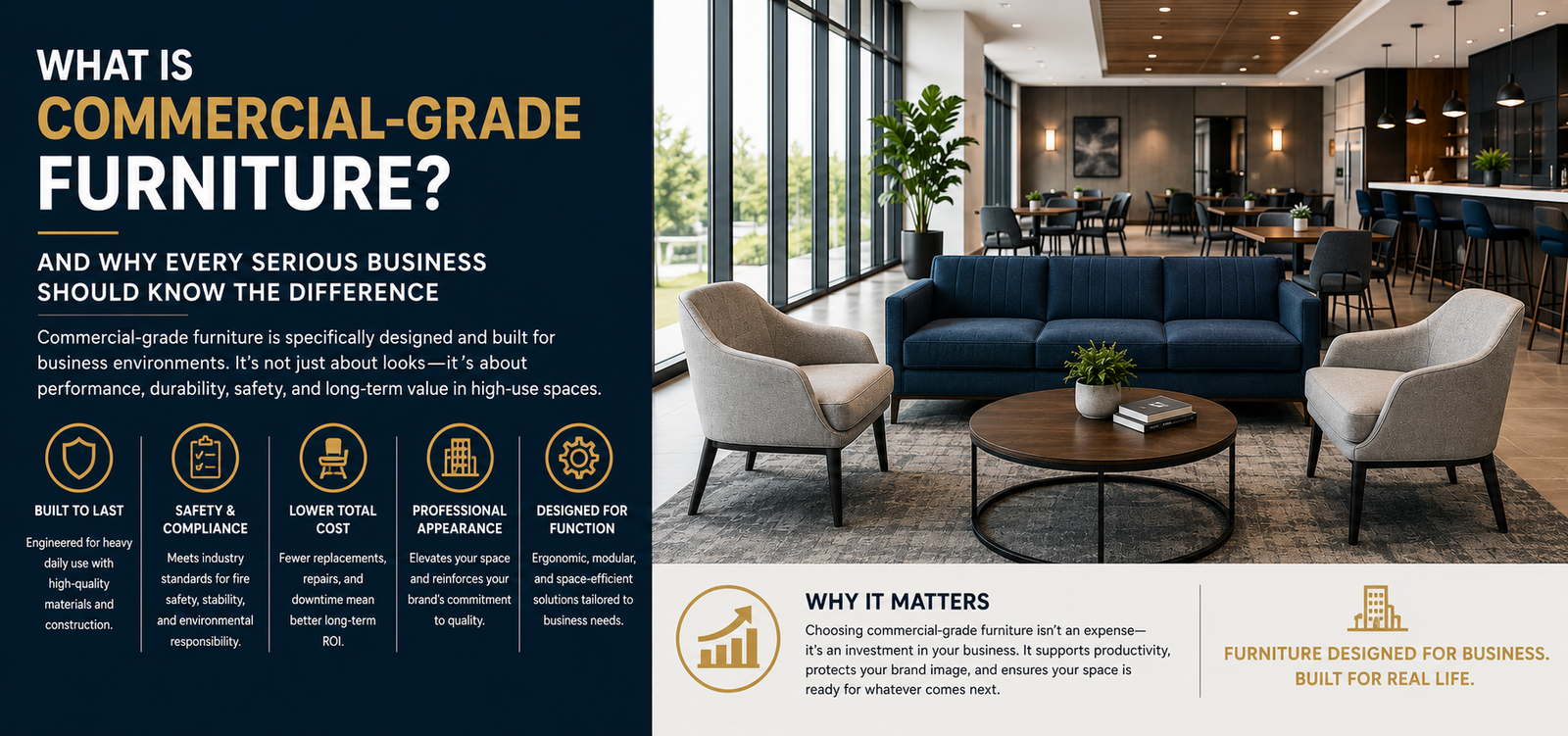
What Is Commercial-Grade Furniture and How Is It Different from Regular Furniture?

Walk into any thriving office, hotel lobby, restaurant, or school, and you will notice something: the furniture holds up. After years of daily use by hundreds of people, it still looks professional and functions flawlessly. That is not luck. That is commercial-grade furniture doing exactly what it was engineered to do.
If your business is preparing to furnish a workspace, upgrade an existing one, or place a bulk office furniture order for the first time, understanding the difference between commercial-grade and standard residential furniture is one of the most important decisions you will make. Get it right, and you will enjoy furniture that lasts a decade or more. Get it wrong, and you will be replacing desks and chairs every two or three years, paying far more in the long run.
What Does Commercial-Grade Actually Mean?

The term commercial-grade furniture refers to products specifically designed, engineered, and tested for use in high-traffic commercial environments. Unlike furniture sold in retail stores for home use, commercial-grade pieces are built to withstand repeated, intensive daily use by multiple people over many years.
The distinction is not just marketing language. It comes down to three core factors: materials, engineering standards, and third-party testing. Commercial furniture manufacturers select industrial-grade materials, including heavy-gauge steel frames, high-density foam rated for commercial use, commercial-grade fabrics with high rub counts, and solid hardwood or engineered wood panels designed for load-bearing applications.
Contract Furniture: A Closely Related Category
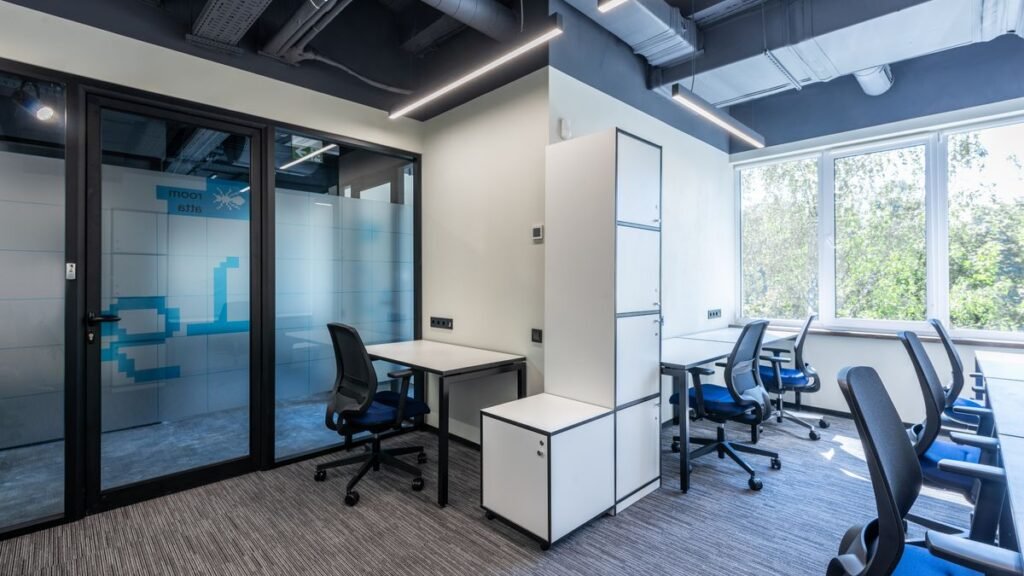
You will often hear the term “contract furniture” used alongside “commercial-grade furniture,” but there is a subtle distinction worth understanding. Contract furniture specifically refers to pieces specified and purchased through a formal procurement or design contract, typically for large-scale projects like office fit-outs, hotel builds, restaurant openings, or institutional refurbishments.
Contract furniture is almost always commercial-grade, but the contract element refers to the business relationship. The buyer works directly with a manufacturer or wholesale furniture supplier to specify custom configurations, finishes, and quantities. When businesses buy wholesale furniture through a contract arrangement, they gain access to volume pricing, customization options, and dedicated project management support that is not available through retail channels.
The Engineering Standards Behind Commercial Furniture
One of the most important things that separates commercial-grade furniture from residential alternatives is independent standards testing. In North America, the benchmark is ANSI/BIFMA, the American National Standards Institute in partnership with the Business and Institutional Furniture Manufacturers Association.
BIFMA standards, particularly the X5 series for seating and tables, establish rigorous testing protocols that furniture must pass before it can be certified for commercial use. Chairs are subjected to hundreds of thousands of cycles of weight loading, arm force testing, and back force testing to simulate years of daily use. Frames are tested for lateral stability. Tables and desks are tested for top load, leg shear, and concentrated load to ensure they will not wobble or collapse under real office conditions.
When sourcing wholesale furniture for a large commercial project, always ask suppliers whether their products meet BIFMA or equivalent international standards. Any reputable commercial furniture manufacturer will be able to provide documentation.
How Commercial Furniture Materials Differ from Home Furniture

The gap in material quality between commercial and residential furniture is substantial and visible in every component.
Seating: A commercial Luxury Office Chairs”>office chair starts with a reinforced nylon or die-cast aluminum base rated for daily commercial use. The foam inside the seat cushion is high-resilience, high-density foam rather than the softer, lower-density foam used in retail chairs that compresses and loses shape within a year. The upholstery fabric will carry a rub count of at least 30,000 to 100,000 cycles, compared to residential fabrics rated for 10,000 to 15,000.
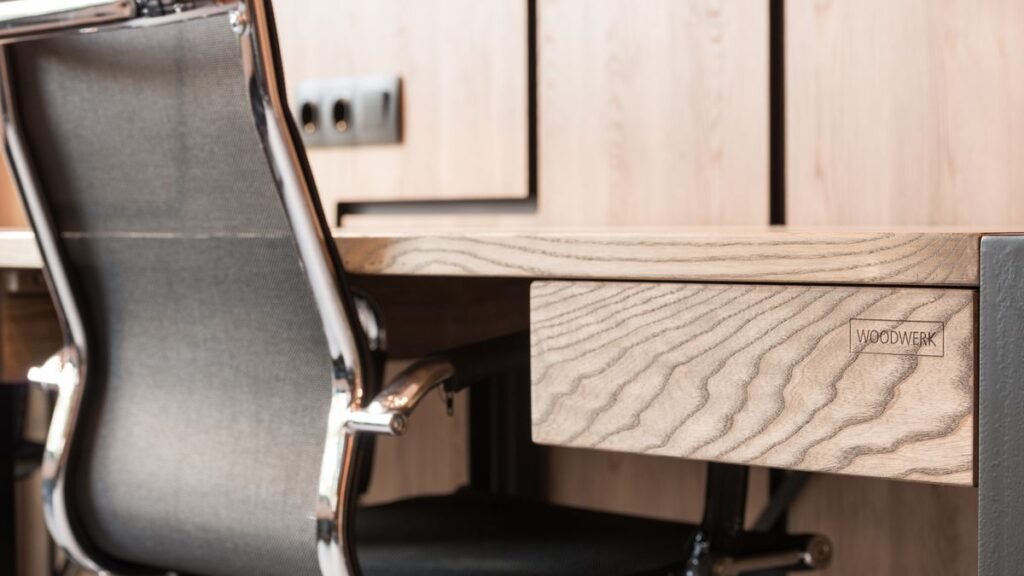
Desks and tables: Commercial work surfaces use thicker panels of 25mm or higher with commercial-grade laminates rated for heavy daily use, heat, and surface abrasion. Edge banding is applied to prevent chipping and moisture intrusion. Frame components are steel or heavy-gauge aluminum, not particleboard and lightweight metal legs common in retail furniture.
Storage and case goods: Commercial filing cabinets and storage units use full-extension drawer slides rated for thousands of cycles, solid steel bodies, and locking mechanisms built for daily use.
How Long Does Commercial Furniture Last?

Well-maintained commercial-grade furniture routinely lasts 10 to 20 years in active use. Some contract furniture pieces, particularly high-quality task chairs and steel-frame desks, remain functional and presentable for even longer.
Compare that with retail or budget furniture, which often begins showing wear within 2 to 3 years and requires replacement within 5. For a business furnishing 50 workstations, the difference in replacement cycles alone can represent tens of thousands of dollars in avoided costs.
Is Commercial-Grade Furniture Worth the Higher Upfront Cost?

The short answer is yes, almost universally. A commercial task chair might cost two to four times more than a comparable retail option. But if it lasts three times longer, requires no replacement parts for its warranty period, and keeps employees comfortable and productive throughout its life, the math strongly favors the commercial option.
For businesses sourcing bulk office furniture, the economies of scale make this decision even clearer. When you are buying 20, 50, or 200 units of the same chair or desk, the per-unit cost of commercial-grade products often comes within reach of what you would pay retail for inferior alternatives, especially when purchasing through a wholesale furniture supplier who offers volume pricing.
Frequently Asked Questions

Q: What is commercial-grade furniture?
Commercial-grade furniture is specifically designed, engineered, and tested for use in high-traffic commercial environments such as offices, hotels, healthcare facilities, and schools. Unlike residential furniture, it uses industrial-grade materials, passes rigorous BIFMA durability testing, and is built to withstand intensive daily use by multiple people over many years.
Q: What is the difference between commercial and contract furniture?
Commercial-grade refers to the quality and construction standard of the product. Contract furniture refers to furniture purchased through a formal procurement or design contract for large-scale projects. Contract furniture is almost always commercial-grade, but the contract element describes the business relationship and procurement process rather than the build quality.
Q: What BIFMA standards should commercial office furniture meet?
Commercial office furniture should meet ANSI/BIFMA X5 standards, which cover seating, tables, and desks. These standards test for structural durability, weight capacity, stability, and performance under years of simulated commercial use. Always ask suppliers for BIFMA test reports as documented proof, not just a verbal claim of compliance.
Q: How long does commercial furniture last compared to regular furniture?
Well-maintained commercial-grade furniture typically lasts 10 to 20 years in active use. By comparison, residential or budget-grade furniture in commercial settings usually requires replacement within 3 to 5 years, making commercial furniture a significantly better long-term investment.
Q: What warranty should I expect from commercial-grade furniture?
For commercial seating, expect a 5 to 12-year limited warranty on structural components, with some manufacturers offering lifetime frame warranties. Desks and tables typically carry 5 to 10-year warranties, and commercial storage units often come with 10-year warranties. Always review warranty documentation in full and confirm that replacement parts are available throughout the warranty period.