A high price tag does not make a luxury office desk chair. That distinction matters more than most buyers realize, especially when you’re specifying seating for an executive suite, a boutique hotel office, or a corporate buildout where the furniture needs to perform, not just photograph well. The chair that looks perfect in a catalogue can disappoint within 18 months if the materials, foam, and mechanism don’t match the marketing language on the spec sheet. The most reliable framework for evaluating high-end office seating comes from the commercial hospitality sector, where manufacturers like Foshan-based YM Furniture produce custom executive seating built to strict hotel-brand specifications, designed for heavy daily use across long-term commercial FF&E cycles. That standard is more honest than retail marketing, and it’s the lens this guide applies throughout.
Whether you’re sourcing a single chair for a principal’s office or specifying 200 units for a hotel renovation, the decision variables are the same: material grade, ergonomic depth, craftsmanship quality, and compliance credibility. This guide breaks each of those down so you can evaluate any luxury office desk chair confidently, regardless of what the price tag says.
What “luxury” actually means in office seating (and what it doesn’t)
The executive office chair market has a price-quality gap that catches buyers regularly. Some chairs marketed as luxury seating use mid-grade bonded leather, low-density foam, and glass-filled nylon bases despite carrying price points that suggest otherwise. The photography looks compelling, the product descriptions use words like “premium” and “executive,” and the chair collapses in feel within a year of daily use. True luxury office seating is defined by material integrity, manufacturing precision, and functional longevity. Price is a rough signal at best, not a guarantee.
The most reliable benchmarks come from commercial and hospitality FF&E procurement, where chairs must perform under heavy use, meet brand-compliance requirements, and maintain their appearance over a full depreciation cycle. Designers who understand these standards approach retail purchases very differently from buyers who rely on marketing copy. The specifications used by hotel brands and commercial developers give you a concrete evaluation framework because they’re built around measurable performance, not aesthetics alone.
One important distinction: ergonomic and luxury are separate claims. A chair can carry BIFMA certification without using premium materials, and a beautifully upholstered leather executive chair can lack adequate lumbar engineering entirely. Buyers need to evaluate ergonomics and material quality independently. A chair that excels on one axis but not the other is only half of what a genuine luxury desk chair should be.
Materials that separate genuine luxury office desk chairs from mid-range alternatives
Leather grade is the single most revealing material specification on any executive office chair. Full-grain leather preserves the hide’s natural surface layer intact, which means it resists abrasion well, develops patina with age, and can last decades with reasonable care. Top-grain leather is sanded and corrected to remove natural imperfections, a trade-off that sacrifices some durability for a more uniform appearance. It remains genuinely durable and supple and performs well in executive seating contexts. Both are legitimate choices in a luxury task chair.
Bonded leather is neither of those things. It’s a composite material made from leather scraps and binding agents, and it behaves like one: it peels, cracks at stress points, and delaminates within a few years of daily use. If a product description says “bonded leather,” “PU leather,” or simply “leather-look,” the chair is not luxury seating regardless of its price. When evaluating in person, press your thumb into the armrest pad and seat bolster. Full-grain and top-grain leather have a firm, consistent feel with visible natural grain; bonded alternatives often feel slightly hollow and have a surface texture that looks too uniform.
Frame and base construction matter more than most buyers check. Quality luxury office desk chairs use cast aluminum or reinforced metal bases that resist stress deformation over time and give the chair a weighted, stable feel when you shift your weight. Glass-filled nylon bases are a reasonable engineering choice in mid-range ergonomic seating, but they represent a real compromise in genuine high-end office seating. When you push down on the armrests and shift in the seat, a quality aluminum base has no flex or wobble; cheaper alternatives often show subtle movement under load.
Foam density: the specification most buyers skip
Foam density is a frequently skipped specification in the purchase decision. Commercial-grade ergonomic seating typically uses high-density polyurethane foam rated at 2.8 PCF (pounds per cubic foot) or higher, consistent with industry guidelines for commercial seating durability. Low-density foam bottoms out within 12 to 18 months of regular use, creating the characteristic flat, unsupported feeling in cheaper chairs. High-density foam retains its shape and support profile for years. When reviewing product specifications, look for explicit foam density ratings. When testing in person, sit for at least 10 to 15 minutes rather than the 30-second showroom test most buyers default to.
Ergonomic features worth paying for in a premium ergonomic chair

Lumbar support is the most impactful ergonomic feature for long-hour comfort. Fixed lumbar pads are common at the mid-range and do very little because users vary too much in height and build for a static pad to position correctly. Height- and depth-adjustable lumbar systems allow the support to actually sit where your lower spine needs it. Dynamic lumbar mechanisms, which self-adjust as you move through different postures, are a meaningful upgrade for users who sit for 8 to 10 hours daily. The Herman Miller Embody’s back mechanism and the Haworth Fern’s adaptive back system are strong examples of this done well.
Seat depth adjustment gets far less attention than it deserves from buyers focused on aesthetics. Without it, taller users can’t fully support their thighs, and shorter users end up with edge pressure behind the knees. Both scenarios cause fatigue over extended sitting sessions that no amount of cushion quality can fully compensate for. Tilt tension control, multi-position tilt lockout, and forward tilt options round out the adjustment set that separates a luxury task chair from a decorative executive model with no functional depth.
Four-dimensional (4D) armrests adjust for height, width, depth, and pivot angle, which makes a genuine difference for users who alternate between keyboard work and drawing, drafting, or tablet use. Height-only armrests, common in mid-range chairs, reduce shoulder and neck strain only marginally because arm position changes with task, not just with user height. For designers and executives who move between different work modes throughout the day, 4D armrests are a strongly recommended specification rather than an optional upgrade.
Craftsmanship details that signal quality construction
Stitching quality reveals more about manufacturing standards than most buyers know to check. Luxury executive chairs use precise, uniform stitching with consistent panel tension across the seat, backrest, and arm caps. The stitching holds the upholstery structure under repeated flexing, which is where cheaper chairs fail first. In a showroom, run your hand slowly across every seam line and panel edge. Visible stitch irregularities, puckering at seam intersections, loose piping, or misaligned panels are signs that the chair will not age well under daily use.
The mechanism housing, tilt control, hydraulic cylinder, and casters are equally important. High-quality tilt mechanisms move smoothly under load with no rattle or play. The height adjustment cylinder should hold position precisely without drift and respond to the lever without resistance. Casters should roll freely on both carpet and hard floors without requiring force to start moving. Cheap casters and loose mechanism housings are two of the fastest diagnostic indicators that a mid-range chair has been priced into luxury territory without earning it.
Brand-standard and compliance requirements for commercial and hospitality projects
For interior designers and procurement managers specifying executive seating for hotels, corporate offices, or multi-tenant commercial developments, the evaluation criteria extend well beyond comfort and appearance. ANSI/BIFMA X5.1 covers safety and durability for general-purpose office chairs, testing structural integrity, stability, and mechanism endurance across high-cycle load tests. This standard is voluntary in Canada but is treated as mandatory in most commercial tender documents because it benchmarks performance objectively. That distinction matters in practice.
Fire safety compliance is non-negotiable for hotel and corporate seating in Canada. The relevant Canadian standard is CAN/ULC S102.2, which governs surface flammability for upholstered furniture used in public and commercial spaces. BIFMA X5.1 does not cover fire safety, which means a chair needs to satisfy both standards independently. For common-area and assembly seating in hotels, CAL TB 133 or ASTM E1537 full-assembly fire tests are also frequently specified. The practical implication for procurement managers is straightforward: request third-party test reports for both durability and fire safety, not just a certificate that references one standard.
Factory-direct suppliers that produce seating for 5-star hotel brands build to the same material and compliance specifications as retail luxury brands, but without the retail markup chain. YM Furniture, which produces custom executive seating for Marriott, Sheraton, and Pullman-branded properties, works within exactly this framework: ISO 9001 certified manufacturing, custom leather and fabric specification to match design briefs, and full project management from sample approval through delivery. For hospitality developers or commercial office builds requiring 50 to 500 units of executive seating, sourcing factory-direct from a manufacturer with a verified hospitality track record can unlock significant per-unit savings against equivalent retail pricing without compromising the specification.
When sourcing at scale, your specification sheet should define the following before approaching any manufacturer: foam density grade (minimum PCF rating), leather type and grade, BIFMA load rating and test standard, color and finish approval process including physical sample requirements, and delivery schedule with production milestone checkpoints. The clearer your spec sheet, the fewer surprises you encounter at delivery. This is standard practice in hospitality FF&E procurement because hotel brands require it, and it’s the core of How To Choose The Perfect Luxury Chair For A 5-Star Space.
Luxury office desk chair price tiers explained for Canadian buyers

Under C$1,000, Canadian buyers get solid ergonomic performers rather than true luxury seating. The Haworth Breck at C$435 and Haworth Soji Mesh at C$545 are strong examples: reliable adjustability, credible brand backing, and good build quality for the price. These are appropriate specs for shared workspaces, general staff areas, or budget-conscious commercial builds where ergonomic function matters more than material refinement. They are not genuine luxury office desk chairs by material grade or mechanism quality.
The C$1,000 to C$3,000 range is where the true luxury office desk chair market lives for most Canadian buyers. The Steelcase Series 2, recognized by TechRadar as a top expert-rated pick for 2026, belongs in this conversation alongside the Herman Miller Aeron (C$2,415 and up depending on configuration), which stands as one of the dominant ergonomic benchmarks for breathable mesh seating with deep adjustability. The Haworth Fern (C$1,666 to C$1,960) appeals strongly to design-forward projects with its organic aesthetic and adaptive back system. The X-Chair X4 Leather Executive Chair occupies the leather executive aesthetic within this tier and suits boardrooms and hotel executive suites where the visual language of a traditional leather chair is part of the design brief.
At C$3,000 and above, buyers enter flagship territory. The Herman Miller Embody (C$3,115 to C$3,820) is the long-hour comfort leader in this range, with its bio-sync backrest technology distributing pressure across a wider contact surface than conventional chairs. The Herman Miller Cosm High Back (C$2,755 to C$3,465) is designed for executives who prefer fewer manual adjustments: it self-adjusts to user weight and posture, reducing the setup friction of a fully configurable system. This tier is genuinely right for executives logging 8 to 10 hours daily, or for high-profile design projects where the chair itself carries design intent. For procurement managers specifying multiple units, the value proposition thins considerably above C$3,000 per chair; factory-direct sourcing becomes a much stronger option at volume.
Top luxury executive chair models available in Canada
Herman Miller’s three flagship models serve different buyer priorities clearly. The Aeron suits users who prioritize breathable mesh, proven adjustability, and a long track record in commercial environments. It is available in three sizes and ships free from Herman Miller Canada, with showrooms in Toronto, Vancouver, and Montreal for in-person testing. The Embody is the right choice for users concerned above all with long-session comfort and spinal support; its bio-sync back system is the most engineered solution in the lineup. The Cosm is the strongest option for buyers who want luxury performance without configuring a dozen adjustment points; according to Herman Miller, it self-adjusts to user weight and posture automatically. All three carry a 12-year manufacturer’s warranty, which signals genuine confidence in material and mechanism quality.
The Haworth Fern is a standout for design-led projects. Its leaf-inspired back structure and organic silhouette photograph exceptionally well in high-end interiors, and its ergonomic performance is legitimate rather than decorative. The Steelcase Gesture earns its reputation as a go-to recommendation for users who shift between devices and working positions throughout the day; its arm system is designed specifically to support the upper body across multiple posture modes. Both are available through Canadian dealers, with the Haworth Fern also available direct through the Haworth Canada store with free shipping on orders over C$500.
The X-Chair X4 Leather Executive Chair fills a specific gap in the Canadian market: a designer desk chair with genuine ergonomic engineering, suited to boardrooms, hotel executive suites, and high-end home offices where the visual register of traditional executive seating is part of the design intent. TechRadar recognized it as a top luxury pick in 2026, citing its balance of traditional executive aesthetics and genuine adjustability depth. It sits in different aesthetic territory from Herman Miller’s mesh-dominant lineup, which makes it the right spec when a client’s brief calls for the look of a premium leather executive chair without sacrificing adjustability.
What to ask before you commit to a purchase
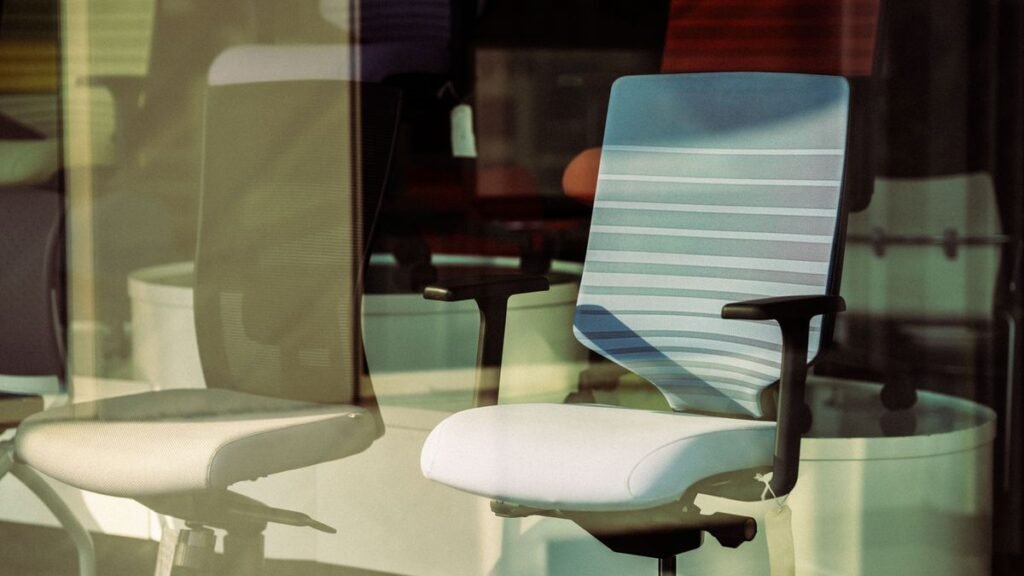
For an in-person evaluation, the checklist is straightforward. Sit in the chair for at least 10 to 15 minutes, not the brief test most showroom visits involve. Work through every adjustment with your hands: lumbar height, seat depth, tilt tension, armrest height and pivot. Check seam quality and leather grain on the seat, backrest, and arm caps. Push on the base and roll the casters on both carpet and hard flooring. Ask the dealer to confirm warranty terms in writing. A 10 to 12 year warranty, standard across Herman Miller and Haworth models, signals that the manufacturer backs material and mechanism quality with something more than marketing language.
For procurement managers sourcing multiple units, the evaluation shifts from individual testing to vendor qualification. Request material sample boards before committing to any upholstery specification; color and texture accuracy vary significantly between digital renders and physical production. Review ISO certification documentation and ask specifically which manufacturing processes are covered. Request a production-equivalent sample before approving the full production run, and clarify finish consistency tolerance across the entire batch. This is standard practice in hospitality FF&E procurement because hotel brands require it, and it’s precisely why manufacturers with a hospitality track record, like YM Furniture, are better equipped to handle commercial-scale custom orders than general furniture suppliers. Their operational experience with this qualification process translates directly into fewer surprises between specification approval and delivery.
The decision framework, simplified
A chair that genuinely earns a luxury designation does so through material grade, ergonomic engineering depth, craftsmanship precision, and compliance credibility. Price is a starting point, not a conclusion. Canadian buyers at every budget level have strong options: the Haworth Fern for design-forward projects, the Herman Miller Aeron for ergonomic benchmarking, the Embody for long-hour executives, and the X-Chair X4 when the brief calls for the leather executive aesthetic with real adjustability behind it.
For procurement managers and interior designers working on hospitality or large-scale commercial projects, factory-direct sourcing from manufacturers with a verified hospitality track record shifts the budget math entirely. The same specification standards that retail luxury brands charge a premium to deliver are built into the production process at the factory level, and the per-unit savings at volume are significant enough to redirect budget toward other project priorities without compromising the finished result.
Before you sign off on any executive seating purchase, run through the material, ergonomic, and craftsmanship checklist this guide covers. The luxury office desk chair you’re specifying will be used every day for years. Make sure the specification earns that commitment.