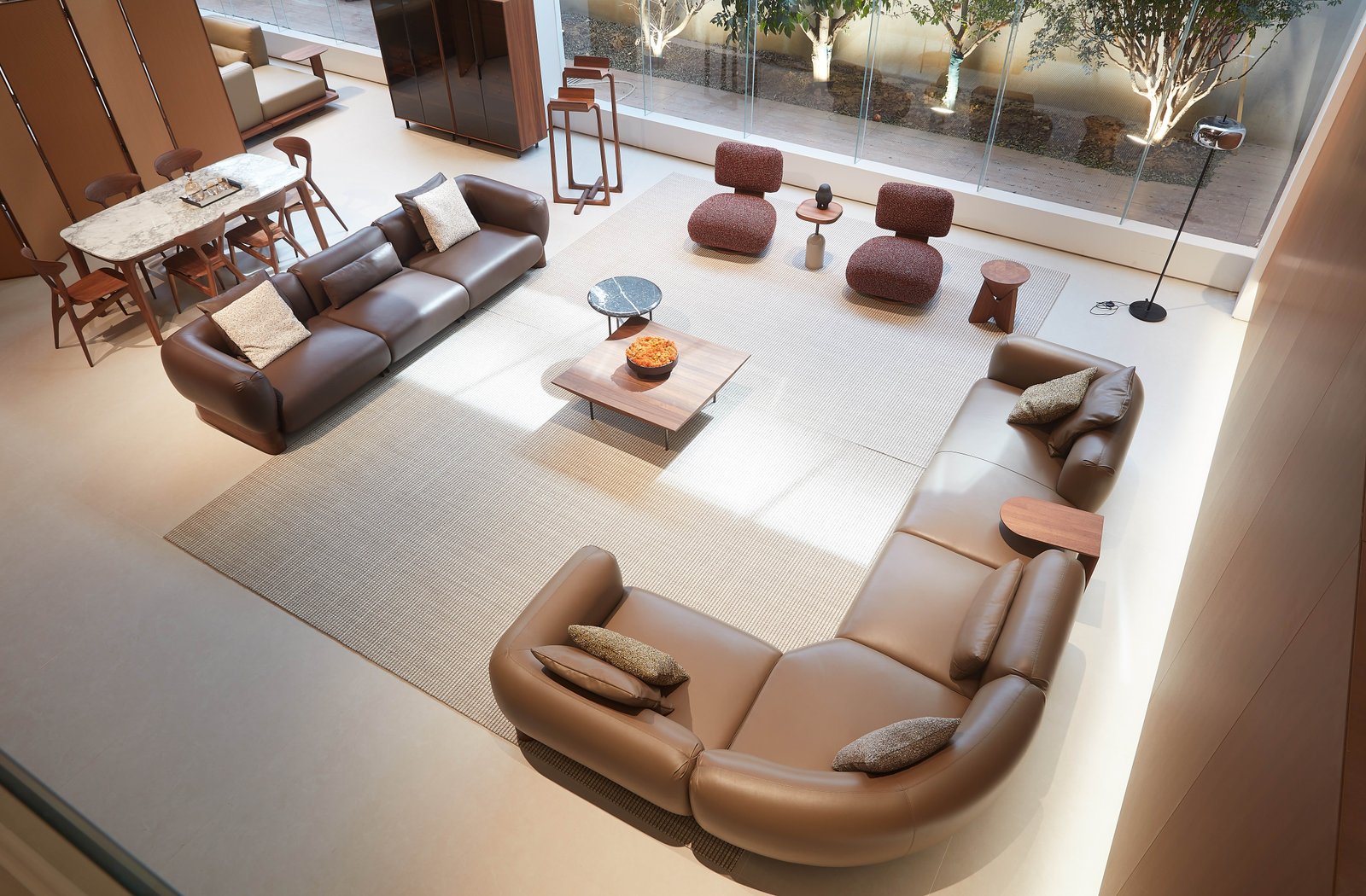
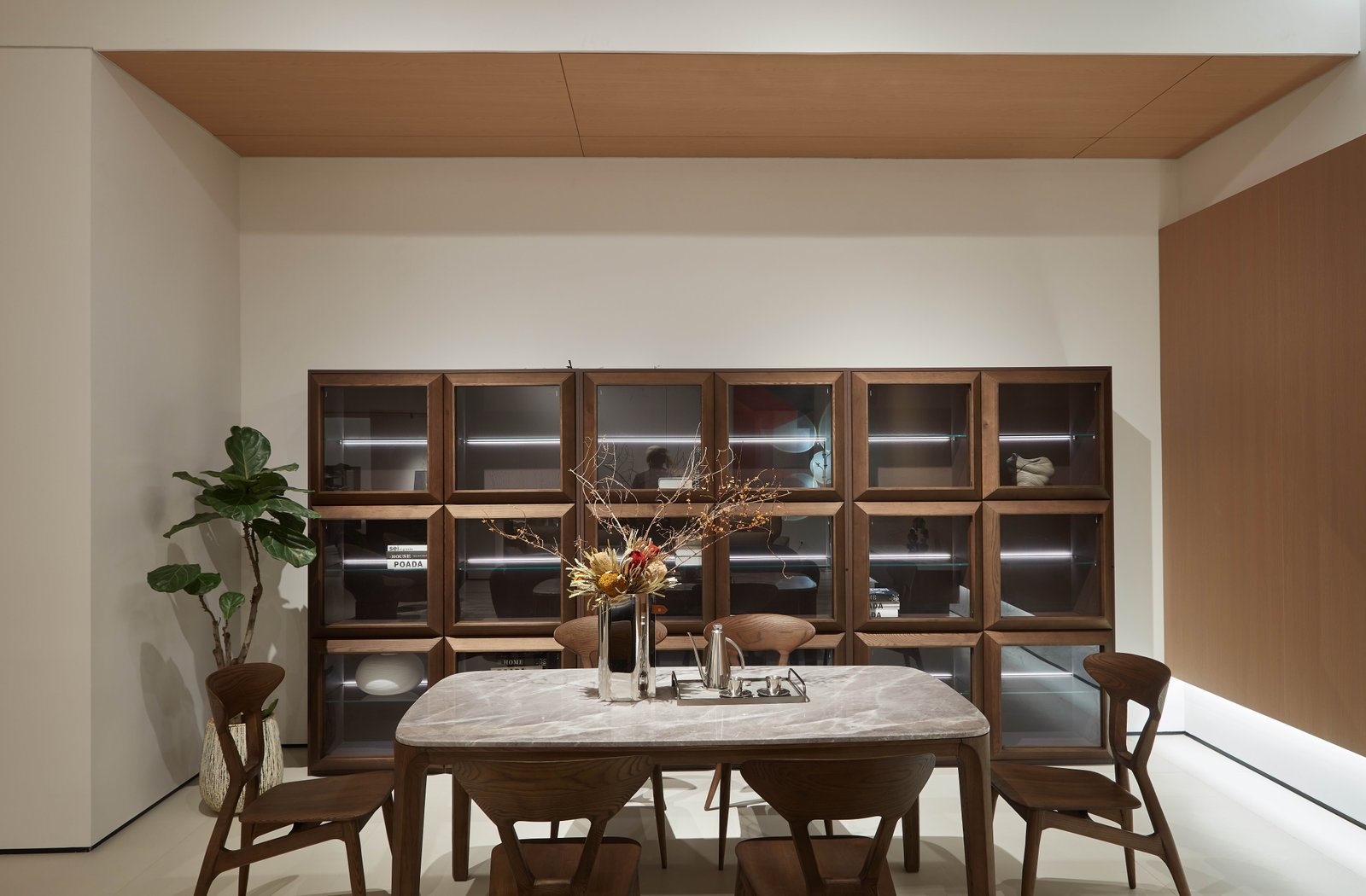
An ash wood sofa gives a trade buyer something uncommon in upholstered seating: a visible, honest frame made from one of the toughest hardwoods in regular furniture use. For retailers, hotel procurement teams and project designers, that combination matters twice. The wood has to survive daily sitting, and it has to look good while doing it.
This guide covers what buyers should compare before placing an order: species, frame strength against oak and teak, drying and joinery, finishes, styles, minimum order quantities, lead times and the cost drivers behind the price. It is written from the trade side, for people buying in volume rather than furnishing a single living room. Buyers who already know the basics can go straight to the luxury sofa collection and request a catalog.
What an Ash Wood Sofa Is, and Which Ash Species Matter
An ash wood sofa is a sofa whose frame, legs or exposed arms are made from solid ash, a pale hardwood from the genus Fraxinus. The label sounds precise, but in practice it covers a wide range of products, and the differences decide how the sofa performs over years of use.
Two groups dominate the trade. White ash (Fraxinus americana) is the North American species, and European ash (Fraxinus excelsior) is its counterpart in Europe. Both have a straight, regular grain and a light cream to pale brown colour that takes stain and paint cleanly. The grain is open and coarse, much like oak, which gives a finished ash frame its visible texture. Suppliers also use the word ash loosely for other Fraxinus species, so a buyer should ask for the exact species on the specification sheet instead of accepting a generic label.
The second question is how much of the sofa is actually ash. Product listings range from a 100 percent solid ash structure to frames that use ash only on the back, sides and legs, with veneer over engineered board elsewhere. Neither is automatically wrong, but they are priced and warrantied differently, and a wholesale buyer should know which one is on the quote.
Every structural member is solid ash. This is the strongest and most expensive build, and the one most suppliers mean by a solid wood frame sofa.
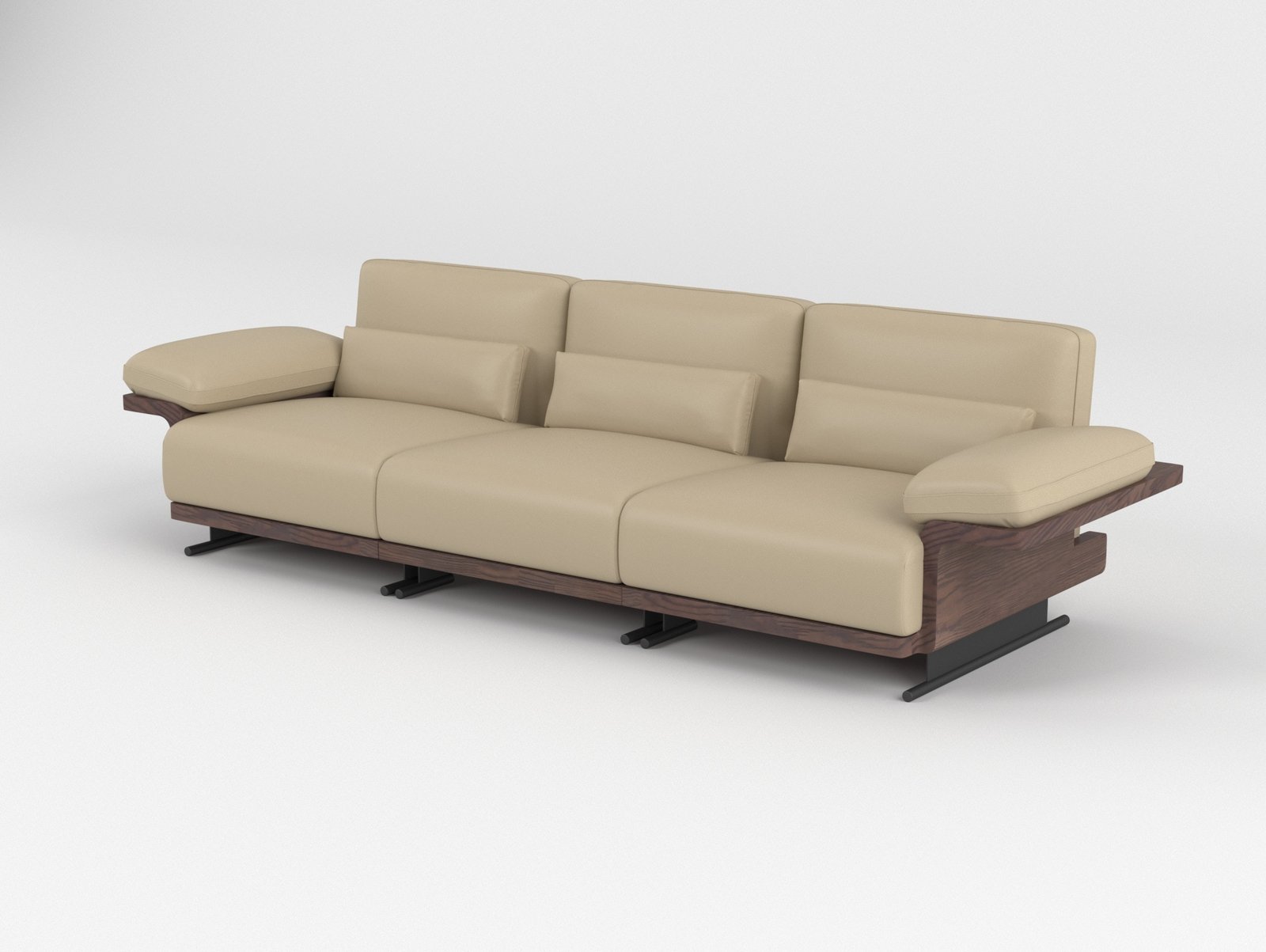
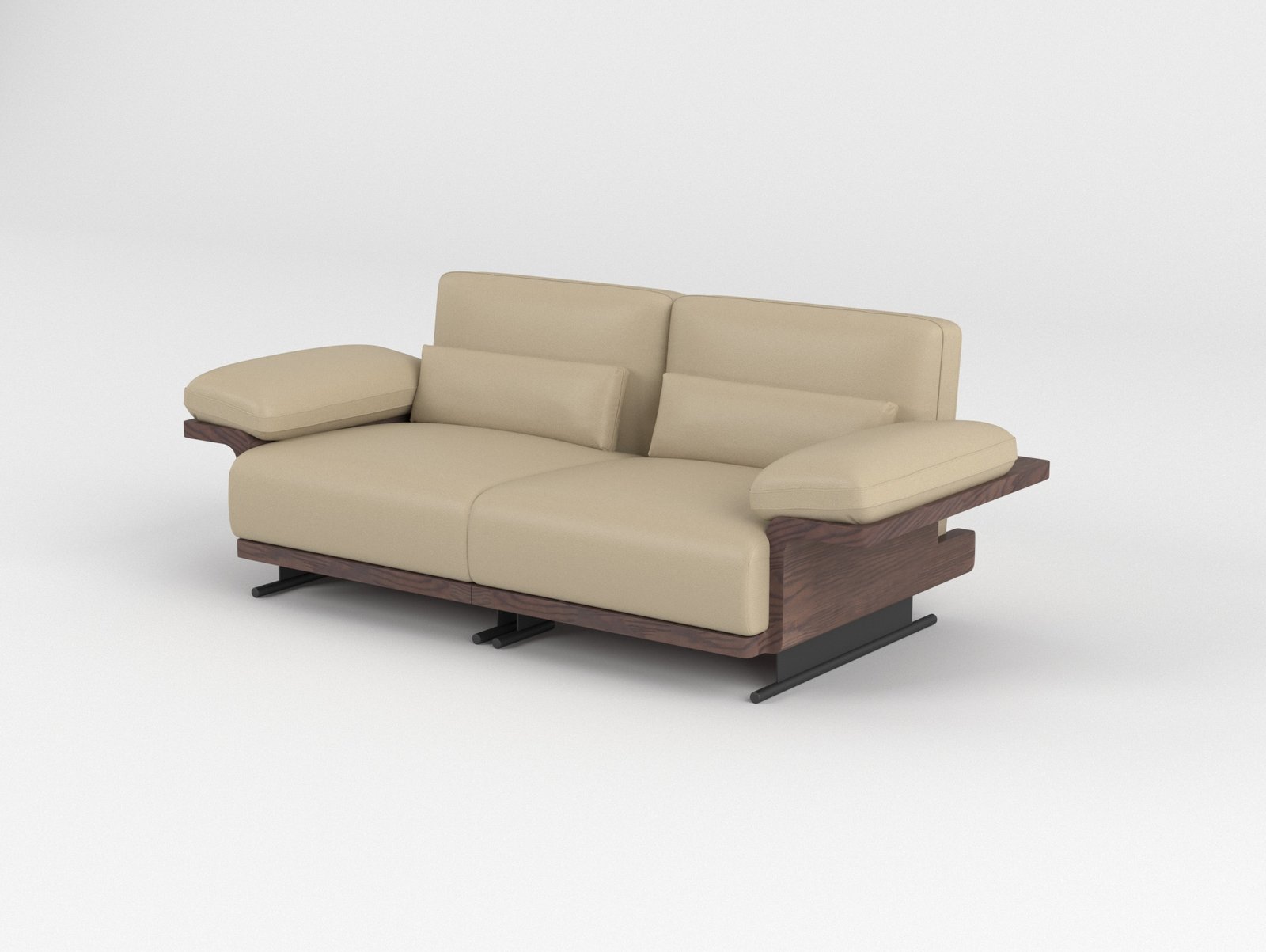
Solid ash legs, arms and rails stay visible, while the hidden structure uses another material. Common in upholstered designs with exposed wood.
A thin ash layer covers engineered panels. It gives the look at a lower cost, but it offers less repair potential if the surface is damaged.
Ash vs Oak, Beech, Teak and Pine as Sofa Frame Wood
Ash performs about as well as oak as a sofa frame wood and clearly better than any softwood. On the Janka scale, which measures the force needed to press a steel ball into the wood, white ash rates about 1,320 lbf, against roughly 1,360 lbf for white oak and 1,290 lbf for red oak. In real use, that gap is too small for a sitter to notice.
The real choice in the ash wood vs oak furniture question is about appearance and workability. Ash is paler and has a more even tone, and it bends well under steam, which suits curved arms and rounded legs. It also accepts stain and paint evenly, so a single frame can be offered in natural, grey or black finishes. Oak tends to show a stronger ray figure, especially when quarter sawn, and sits slightly higher on the hardness chart.
Beech is close to ash in hardness and has a finer, more uniform grain, which some designers prefer for painted frames. Teak is softer than most people expect, but its natural oils give it far better resistance to moisture, so it keeps its place for outdoor sofas. Pine and other softwoods are cheaper and lighter, yet their low hardness means more dents and weaker screw holding, so they usually end up in hidden frames, not visible ones.
| Wood | Approx. Janka hardness | Look | Best suited to |
|---|---|---|---|
| White ash | 1,320 lbf | Pale, straight open grain | Indoor frames, legs, exposed arms |
| White oak | 1,360 lbf | Light to mid brown, strong figure | Indoor frames, some outdoor use |
| Red oak | 1,290 lbf | Pinkish brown, open grain | Indoor frames |
| American beech | 1,300 lbf | Pale, fine uniform grain | Painted or stained frames |
| Teak | 1,000 to 1,155 lbf | Golden brown, naturally oily | Outdoor and humid settings |
| Southern yellow pine | 690 to 870 lbf | Yellow, resinous, soft | Hidden frames, budget builds |

Strength and Durability: Why Ash Holds Up Under Daily Use
Ash is a dense, tough hardwood that absorbs repeated shock without cracking, which is why it also appears in tool handles, bats and oars. For ash wood furniture durability, that toughness is the point: a sofa frame is loaded and unloaded thousands of times, and the wood has to flex slightly and return to shape.
Species is only half of the picture, though. A well chosen wood in a badly built frame still fails at the joints. Buyers should treat lifespan claims from sellers with some caution, since figures such as 15 to 25 years depend entirely on how the frame is assembled and how the sofa is used. A hotel lounge with constant traffic ages a sofa far faster than a guest room does.
Commercial buying guides commonly point to a capacity of 250 to 300 pounds per seat for contract seating. A supplier that can quote a tested load rating and explain the build is easier to trust than one that only says the frame is strong.
Ask for the cross section of the rails and legs. Thin members in a strong species still flex too much.
Glued and doweled joints, with corner blocks in the stress points, hold up far better than stapled or screwed-only frames.
Request a tested figure, particularly for hospitality and office orders where seats see heavy daily use.
A hard-wearing lacquer or oil on legs and arms protects against scuffs, which is where most visible wear starts.
Kiln Drying, Moisture Content and Joinery to Ask Suppliers About
Moisture is the quiet reason many wooden frames fail. Wood swells and shrinks as the air around it changes, and a frame built from lumber that is still too wet will loosen, crack or twist after it ships. Furniture lumber for indoor use is normally kiln dried to roughly 6 to 8 percent moisture content, and that is the first number a buyer should ask an ash wood furniture manufacturer to confirm.
The risk grows with distance. A sofa built in a humid region and delivered to a dry, air-conditioned hotel in another climate goes through a real moisture swing. Good suppliers account for this in how they dry, store and assemble the wood, and they are usually happy to explain it. A vague answer is a warning sign in itself.
Ask for the measured moisture content of the lumber when the frame is glued up, not just a general claim of kiln drying.
Kiln drying gives more consistent results than air drying alone. Ask which method the supplier uses and who controls it.
If a project requires sustainability proof, ask for chain-of-custody documents before the order, not after.
Agree on a sample sign-off and a check of joints, finish and dimensions before the container is sealed.
Finishes and Colours: Natural, Grey, Black and Stained
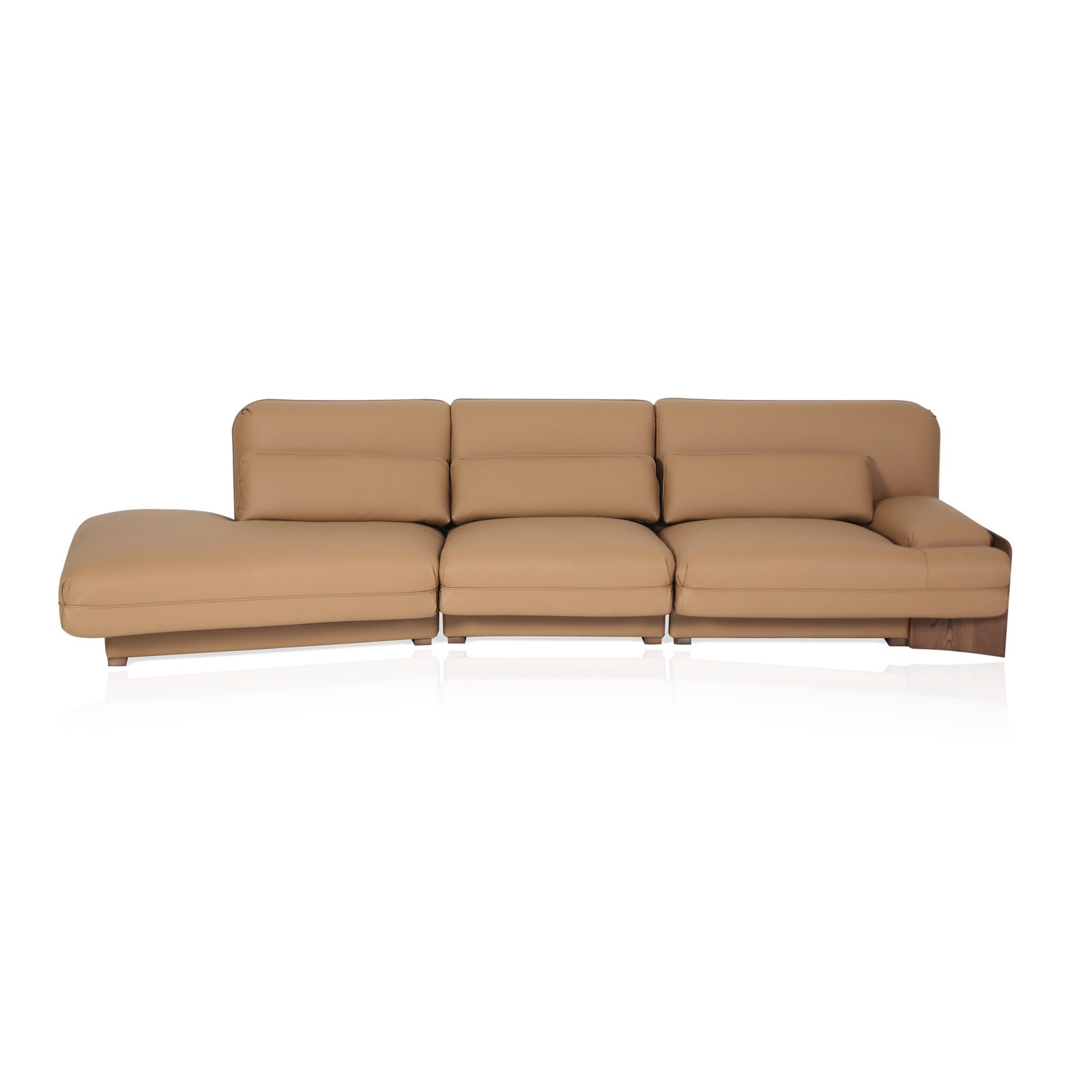
One of the best commercial features of ash is how many looks a single frame can carry. Its pale base takes stain, oil and lacquer evenly, so a supplier can offer the same sofa in several colourways without changing the structure. Designers use this too: Dezeen covered the Portus sofa system by Lammhults, whose legs come in natural or stained solid ash. That flexibility helps buyers who need to match a project palette or stock a range with fewer base models.
The main decision is whether the grain stays visible. Because ash has an open grain, a clear lacquer, oil or light stain lets the texture show, while grey ash wood furniture finished with a thin wash still reads as wood. A solid paint or opaque black covers the grain completely and gives a flatter, more graphic look. Both are valid, but they suit different rooms and different price points, and buyers should see the finish on a real ash sample, not a colour chip.
Tone varies naturally from one board to the next, even within a single batch. For large orders, sign off a physical finish sample before bulk production starts and keep it as the reference, so every sofa in the delivery can be judged against the same standard.
Finishes that show the grain
- Clear lacquer in matte or satin
- Natural oil or wax
- Light wash or whitened finish
- Grey or brown transparent stain
Finishes that cover the grain
- Solid colour paint
- Opaque black lacquer
- Heavy pigment finishes
- Veneer or wrap over board

Design Styles: Nordic, Mid-Century, Luxury, Cane and Carved
Ash has a long history in seating design. Danish makers used it for mid-century sofas in the 1960s, and it still sits comfortably in modern interiors today, from the ash wood sled legs on the Giro Soft sofa by Alfredo Häberli for Andreu World to everyday hospitality ranges. For buyers, the useful question is which style sells in their market, because the same wood looks quite different depending on the shape around it.
Slim legs, light natural finishes and low profiles. Popular for residential ranges and boutique hotels.
Tapered legs, rounded arms and exposed wood rails. A reliable seller in retail collections.
Deeper stains, sculpted arms and rich fabric. This is where a luxury wooden sofa set earns its premium.
Cane panels set into an ash frame add texture and a lighter look, especially for lounge and resort spaces.
Many buyers pair a sofa with matching accent seating so a lounge reads as one collection. The ash wood furniture range and the lounge chair range are built to sit together, which keeps finishes consistent across a full room order. An ash wood couch in a darker stain also works well as the anchor piece, with lighter chairs around it.

Ash Wood Sofas for Hotels, Restaurants and Offices
Contract buyers care about three things more than anyone else: how a sofa wears, how easily it is repaired and how well it looks after years of traffic. Solid ash scores well on all three. Scuffs on legs and rails can be refinished, a loose joint can be reglued, and the pale base keeps the room looking light and warm.
Lobby and lounge seating needs strong frames and finishes that hide small marks. Matching sofas and chairs help a lobby read as one design.
Booth and bench seating takes constant use. Wipe-clean upholstery and a tough lacquer on exposed ash are the practical pairing.
Neutral ash tones suit corporate palettes, and modular lengths make it easy to fit awkward reception layouts.
Project buyers can also browse the hotel furniture page. For any project, ask about fire-safety requirements for the foam and fabric early, since rules differ by country and venue type. The wood frame is rarely the issue; the upholstery usually is.
MOQ, Lead Times, Customization, Packaging and Shipping
Trade buyers deal with these four items on every order, and they decide whether a supplier is workable long before price does. Minimum order quantity depends on how much of the sofa is custom. A standard model in a stock finish usually has a lower MOQ than a new size, a new fabric or a custom stain. At YM FURNI, the minimum for each model is available on request.
Lead time follows the same logic. Production time grows with customization, and sea freight adds its own weeks on top. YM FURNI confirms lead time per order, and shipping time depends on the destination port. Buyers planning a hotel opening or a seasonal launch should work backward from the delivery date and leave a buffer.
Share quantities, sizes, finish and destination so the quote covers the full landed picture.
Approve a physical sample of the frame, finish and fabric before bulk production begins.
Request progress photos and a pre-shipment inspection of joints, finish and dimensions.
Confirm carton protection, corner guards and container loading plan to limit transit damage.
Care and Maintenance: Indoor vs Outdoor Use
Ash is easy to look after indoors. A soft, slightly damp cloth removes everyday dust and marks, and a dry cloth afterward prevents water from sitting on the finish. Direct sunlight over long periods can change the tone of the wood, and strong heat or sharp humidity swings can stress the joints, so placement away from radiators and large south-facing windows helps.
Outdoors is a different story. Ash is not naturally rot resistant, so it is best kept indoors or on a covered terrace. A buyer who needs seating for a poolside or open-air setting is better served by teak or a properly treated alternative, and an honest supplier will say so.
What Drives the Price of an Ash Wood Sofa
Is ash wood furniture expensive? It sits in the middle of the hardwood range, and the final price depends far more on the build than on the species. Two sofas that look identical in a photo can differ by a wide margin once the frame, foam and finish are compared, which is why a like-for-like specification matters when collecting quotes.
Factors that raise the price
- Fully solid ash frame
- Clear, knot-free board grade
- Complex carved or curved parts
- Leather or premium performance fabric
- Custom sizes and custom stains
Factors that lower the price
- Ash show-wood on a hidden frame
- Standard sizes and stock finishes
- Simple straight-line designs
- Larger order volumes
- Flat-pack or consolidated shipping
The cheapest quote is rarely the lowest cost. A thinner frame or a weaker joint saves money on day one and costs far more in returns and replacements later, so buyers should compare structure first and price second.
Frequently Asked Questions
What is ash wood furniture?
Ash wood furniture is made from solid ash or ash veneer, a pale hardwood from the Fraxinus genus that is valued for its strength, straight grain and ability to take stain.
Is ash wood good for furniture?
Yes. Ash is hard and shock resistant, with a Janka rating of about 1,320 lbf that sits close to oak, so it suits sofa frames, legs and arms indoors.
Is ash wood furniture expensive?
Ash sits in the middle of the hardwood range. The final price depends more on the frame build, finish and upholstery than on the species itself.
What does ash wood furniture look like?
Ash has a pale cream to light brown colour with a straight, open grain similar to oak. It can be left natural or finished in grey, black or darker stains.
Can ash wood be used outdoors?
Generally not. Ash is not naturally rot resistant, so it suits indoor or covered spaces, and teak is the better choice for open-air seating.
Can ash wood be stained?
Yes. Ash accepts stain, oil and paint evenly, which is why one frame can be offered in natural, grey and black finishes.
How do you clean ash wood furniture?
Wipe it with a soft, slightly damp cloth and dry it straight away. Avoid harsh chemicals and standing water on the finish.
The Bottom Line
A good ash wood sofa comes down to four checks: the species and how much of the frame is solid, the drying and joinery, a finish that suits the project, and a supplier who can explain all of it clearly. Buyers who compare structure first and price second end up with sofas that last through real commercial use.
YM FURNI supplies ash wood sofas, leisure chairs and luxury living room furniture to trade buyers. To discuss a project, request a catalog or ask for a quote through the contact page.
Last updated: November 2026