Picture a hotel developer sitting with two furniture quotes for the same 200-room guestroom package. The Foshan factory’s FOB price looks dramatically lower on paper. The US manufacturer’s proposal includes everything delivered to site. The developer assumes the US quote is more transparent because it’s simpler. That assumption costs projects tens of thousands of dollars every year. This article compares a China furniture manufacturer vs US supplier across every variable that actually matters, so you can make that call with real numbers rather than assumptions.
Choosing between a Chinese furniture manufacturer and a US supplier is not a straightforward price comparison. The factory price is only the first number in a multi-part equation, and US convenience is not the same as superior quality or superior service. Both assumptions collapse when you run the full numbers on a large hospitality FF&E project. The comparison holds whether you’re outfitting a 5-star hotel, a serviced apartment complex, or a luxury villa development.
This article works through every variable that actually matters: total landed cost, lead times, quality control, customisation depth, hidden charges, and supplier due diligence. By the end, you’ll have a clear decision framework and a practical checklist ready to apply to your next project. One thing to note upfront: not all Chinese manufacturers are created equal, and that distinction is at the heart of everything that follows. All figures in this article are quoted in US dollars (USD).
China furniture manufacturer vs US supplier: factory price versus total landed cost
What the factory price actually tells you
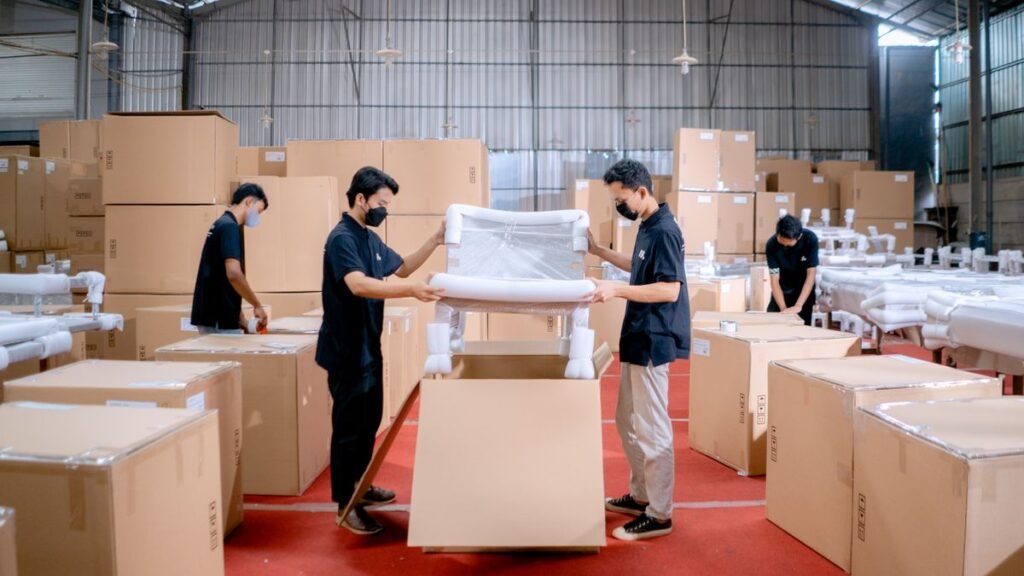
At factory level, Chinese-made furniture typically prices 20%, 50% lower than equivalent US production, with specific categories sometimes showing gaps of up to 65%. Sourcing guides cite Chinese FOB prices of roughly $120, $280 for fabric-upholstered sofas and $180, $350 for PU leather models, compared to approximately $570 FOB for a comparable US-made sofa. On dining tables, a solid-wood model priced at around $500 FOB from a Chinese factory often has a US equivalent running $1,200, $1,500, placing Chinese production roughly 58%, 67% cheaper at factory level for that category. These figures are compelling, but they are also incomplete without accounting for what happens between the factory gate and your hotel site.
How freight, duties, and tariffs reshape the number
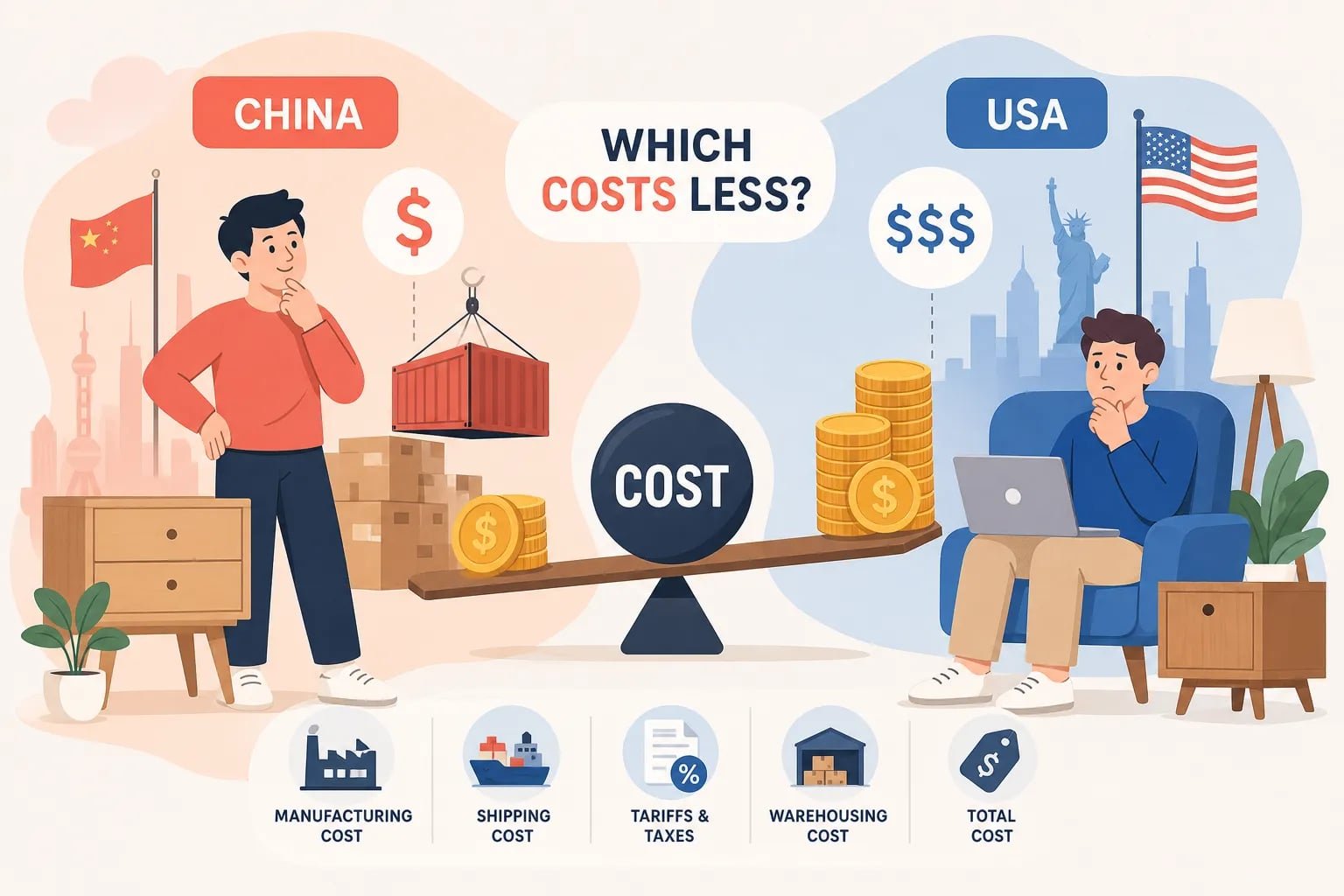
The full landed-cost formula includes FOB price, ocean freight, marine insurance, Section 301 tariffs, customs brokerage, port handling, and inland drayage to site. For furniture imported from China to the US, Section 301 tariffs currently sit at 25% for most categories under Chapter 94, covering seats, upholstered sofas, tables, beds, and case goods. A practical worked example: a 40ft container of hotel guestroom furniture with an FOB value of $40,000 adds roughly $3,750 in ocean freight to Los Angeles, $400 in insurance and handling fees, $10,000 in Section 301 duties, $850 in customs brokerage and port charges, and $900 in inland drayage. That brings the all-in figure to approximately $55,900 before any warehousing cost. On large hospitality bulk orders, the China-sourced option can still land substantially below an equivalent US-supplied package, though the precise gap varies considerably by specification, volume, and current freight rates. Buyers should work through a full landed-cost model for their specific project rather than relying on generalised percentage estimates.
Where US suppliers genuinely close the gap
For smaller orders, urgent replacements, or single-piece procurement, the cost advantage from China narrows quickly. Container minimums, longer commit cycles, and tooling charges dilute the savings when order volumes drop below 50 units per SKU. The China cost advantage is most pronounced at scale: full-container shipments, standardised specifications across 100 or more units, and projects with lead times long enough to absorb the production and freight window. For anything smaller, US sourcing often competes more effectively on total cost once you strip out the import overhead.
Lead times: China furniture manufacturer vs US supplier comparison

What Chinese factories realistically quote
Standard and catalogue items from Chinese factories typically run 15, 45 days in production. Custom OEM work, complex upholstery builds, or solid-wood constructions extend that range to 30, 90 days. MOQs for custom hotel furniture generally sit at 50, 200 units per SKU, though established factories working across a full hotel project will often negotiate flexibility on this when the overall order value justifies it. Ocean freight from Foshan to US West Coast ports typically adds 25, 40 days in transit, plus a customs clearance buffer on arrival. That means the realistic planning window from order confirmation to on-site delivery runs a minimum of 10, 16 weeks for custom work, based on production at the longer end of the range plus transit and clearance time. Factor in a sample approval round and that extends to 13, 20 weeks, so conservative planning is essential.
What US suppliers offer and where their limits show
US suppliers can turn around stocked or semi-custom items in 7, 21 days, making them genuinely competitive for pilot rooms, urgent replacements, or supplementary items outside the main production run. MOQs are typically lower and more flexible, supporting smaller trial orders without the constraint of filling a container. However, for 200, 500-unit hotel rollouts on a made-to-order basis, US production lead times often extend to 8, 14 weeks, substantially narrowing the speed advantage. Capacity constraints during peak commercial build seasons can push those timelines further, particularly for upholstered goods.
How to structure your FF&E schedule around each option
Commit to Chinese factory production at least 20, 24 weeks before your required on-site delivery date. This planning window accounts for production lead time (typically 30, 90 days for custom work), ocean transit (25, 40 days), customs clearance, and a contingency buffer. Build in a dedicated sample approval round of 3, 4 weeks and a pre-shipment inspection window before the container is sealed. Most experienced FF&E consultants structure their procurement timeline by locking in the Chinese factory order at the 24-week mark and maintaining a US supplier relationship to cover anything that shifts after that point: last-minute lobby pieces, specification changes, or top-up orders that cannot wait for a new production run. Major hotel brands expect FF&E vendor contracts to be in place 12, 18 months before opening, which means planning early enough to absorb the full China timeline comfortably.
Quality control: separating documented reality from assumption
What the public QC data shows for Chinese-made furniture
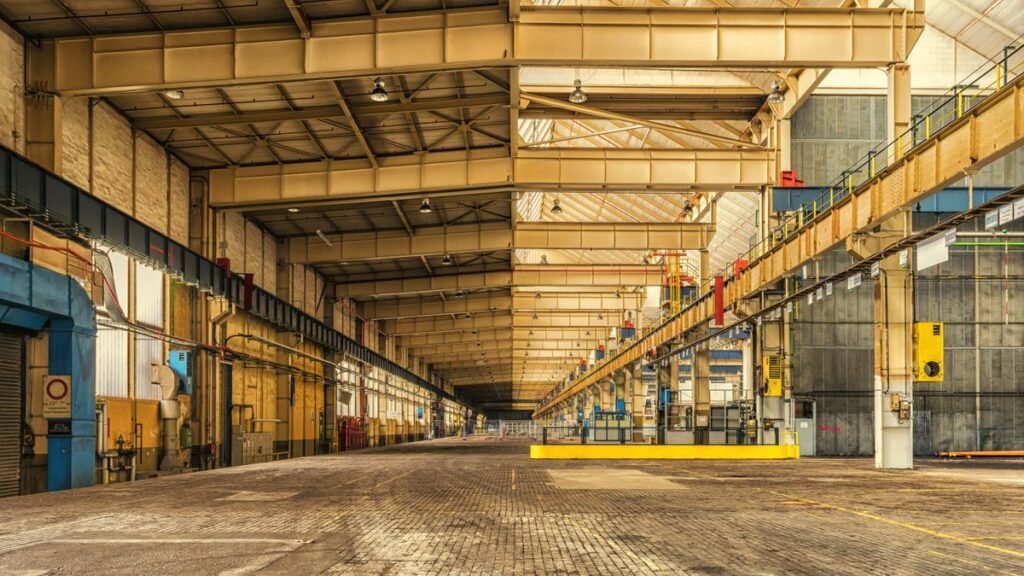
China’s State Administration for Market Regulation reported a 20% failure rate across a 2022 national furniture spot-check, with wooden furniture at 12.3% and certain consumer subcategories reaching significantly higher figures. A 2022 e-commerce sweep of wooden furniture found failure rates reaching 40% in that channel. These numbers are frequently cited in discussions about Chinese manufacturing quality and they deserve context. National surveys of this type include low-end consumer goods, unverified online sellers, and manufacturers operating across an enormous range of quality standards. The relevant question for a hotel developer is not what the national average looks like across all Chinese furniture production, but what failure rates look like at ISO-certified, hospitality-grade manufacturers with documented QC processes and verifiable track records with international hotel brands.
How certified manufacturers close the quality gap
ISO 9001 (quality management), ISO 14001 (environmental management), and ISO 45001 (occupational health and safety) serve as a baseline filter for serious manufacturers. These certifications are not cosmetic: they require auditable QC frameworks, documented processes, and regular external review. On the compliance side, buyers sourcing upholstered furniture for US hotel guestrooms must confirm adherence to 16 CFR Part 1640, which adopts California TB 117-2013 for indoor upholstered furniture flammability. Structural performance for contract-grade seating and case goods is typically benchmarked against BIFMA or ASTM standards, and composite wood components require CARB/EPA TSCA Title VI compliance. Qualified Chinese manufacturers producing hospitality-grade furniture at scale can and do supply test certifications for all of these requirements. A vetted, certified manufacturer is a fundamentally different risk profile from an unverified trading company operating without documented QC controls.
Inspection protocols every buyer should insist on
Three inspection stages cover a large order properly: a pre-production material inspection, in-line QC checks during production, and a pre-shipment final inspection before the container is loaded and sealed. Third-party inspection via firms such as SGS or Intertek typically costs $200, $800 per visit, a modest insurance cost relative to any order exceeding $50,000. Build inspection milestones into the supply contract itself, not just into the email correspondence. A factory that resists contractual inspection access should be disqualified from consideration regardless of how competitive its pricing appears.
Customisation depth and design flexibility

Where factory-direct China sourcing leads
Large Chinese factories operating at hospitality scale can match precise brand specifications across custom dimensions, bespoke upholstery fabrics, signature finishes, marble tops, and branded stitching patterns. OEM and ODM capabilities at this level are difficult to replicate at most US mid-market manufacturers without a significant price premium. Leading factories maintain international design teams dedicated to 4-star and 5-star hotel clients, providing full CAD drawings, 3D renders, and physical mock-up room builds before mass production begins. That is a service level historically associated with premium suppliers and now standard practice among the better Chinese hospitality furniture manufacturers.
What US suppliers do well on customisation
Proximity allows for easier in-person design reviews, faster sample iterations, and simpler back-and-forth on specification changes. US suppliers often excel at smaller bespoke runs, material substitutions, and compliance-specific modifications that benefit from being close to the design team. The trade-off is straightforward: bespoke capability at US labour rates means custom unit prices are materially higher, which makes large hospitality rollouts of 200, 500 rooms economically difficult to justify through a US manufacturer for most cost-sensitive developers.
The mock-up room test: why it matters for large projects
A physical mock-up room allows a hotel developer to review a fully assembled and dressed guestroom before mass production is committed. For a 300-room hotel, catching a finish inconsistency, a dimensional error, or a specification misalignment at the mock-up stage costs a fraction of what it costs after 300 rooms have been produced and shipped. This capability is now standard among leading Chinese hospitality furniture manufacturers, and a factory with a dedicated showroom and full room-set display should be a requirement in any RFQ for a large project. If a factory cannot accommodate a physical or virtual mock-up review before committing you to full production, that is a risk most hotel developers cannot afford to accept.
The hidden costs buyers consistently underestimate
Tooling, samples, and inspection costs
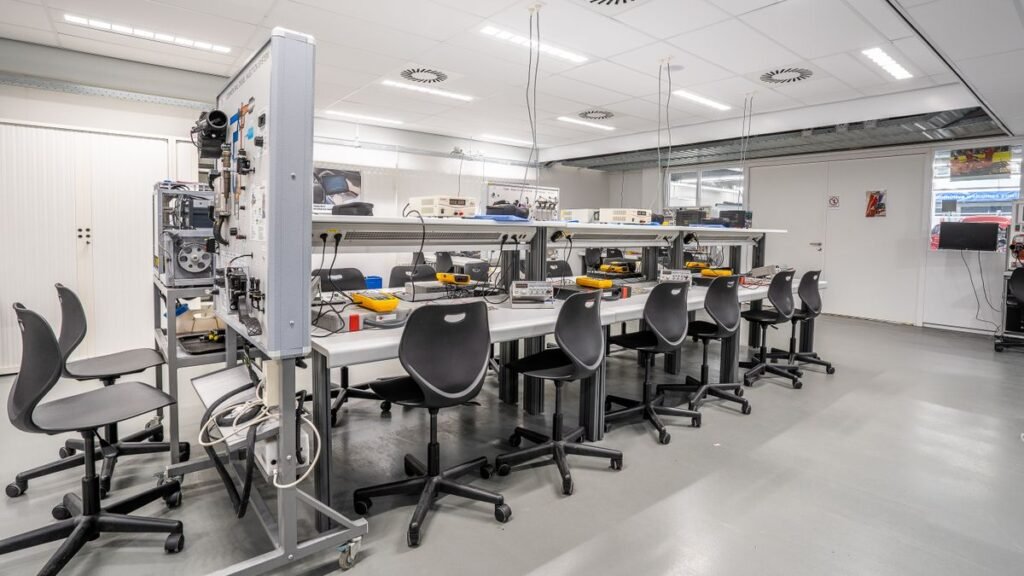
Tooling for custom hardware, mould-specific components, or bespoke metal fittings typically ranges from $500 to $20,000 or more per item, depending on complexity, a range consistent with industry procurement guides for hospitality FF&E. Sample production costs run $50, $500 per piece, and sample shipping adds $40, $150 per round; most projects require two to three approval rounds before mass production is authorised. Third-party inspections add $200, $800 per visit, and a properly covered large order warrants at least two visits. On a significant hotel FF&E programme, pre-production costs can easily total $10,000, $30,000 before a single unit ships, and these figures are routinely absent from a factory’s initial quote.
Tariff exposure and HS code misclassification risk
Section 301 tariffs on Chinese furniture currently run at 25% for most categories in Chapter 94. Misclassifying an HS code either means overpaying on duty or creating a compliance risk at US customs that can delay clearance and trigger penalties on a time-sensitive hotel opening. Antidumping and countervailing duty (AD/CVD) exposure also applies to specific wooden furniture categories, and buyers must confirm which codes apply to their specific order before the shipment is structured. The practical solution is to budget for a licensed customs broker to review your product classification before committing to a container. That typically costs $200, $600 and avoids problems that can cost multiples of that figure to resolve once goods are at port.
Rework, defects, and replacement freight
Industry data suggests defect allowances of 1%, 8% of FOB value on typical Chinese furniture import orders. A practical planning reserve of 3%, 5% of total order value is a reasonable figure for large hospitality projects. Furniture returns are disproportionately expensive because of volumetric shipping costs: the cost of returning or replacing a damaged batch can approach or exceed the value of the affected goods. Always negotiate a clear defect-replacement clause, a warranty period, and a replacement lead-time commitment into the supply contract before placing an order, not after damaged goods have already arrived on site.
Communication, project management, and service expectations

The service gap myth: what modern Chinese manufacturers now offer
The opaque Chinese factory of twenty years ago is not an accurate picture of manufacturers operating at hospitality scale in 2026. Leading Chinese hospitality furniture manufacturers now employ international sales and project management teams, assign dedicated project coordinators to each order, and use shared tracking platforms that give buyers real-time visibility into production milestones. Some maintain bilingual design staff who work directly with overseas FF&E consultants to translate brand standards into production specifications without loss of detail or intent. The service gap that once made US sourcing feel safer has narrowed considerably at the top end of the Chinese manufacturing market.
YM Furniture: what a full-service manufacturer looks like in practice
YM Furniture (Foshan Yauming Furniture & Construction Co., Ltd.) illustrates what factory-direct sourcing looks like when it operates at a genuinely professional level. Their international design team works directly with FF&E consultants on custom specifications, a dedicated project manager is assigned to each contract, and a structured workflow covers design consultation, production, quality control, logistics, and on-site installation under a single commercial relationship. The company reports a track record spanning over 1,000 completed hospitality projects, including properties operating under brands such as Marriott and Sheraton, across more than 30 countries; buyers are encouraged to verify client references independently as part of their due diligence process. A 5,000m² showroom with full mock-up rooms supports the pre-production visualisation that large hotel developers require before committing to a full production run. This is a useful benchmark when evaluating any Chinese manufacturer: not whether a factory is located in China, but whether it operates with the systems, certifications, and service infrastructure that a large hospitality project demands.
What you should expect from a full-service manufacturing partner
A capable manufacturer should assign a named project coordinator from day one, provide weekly production progress updates with photographic documentation, share pre-shipment inspection reports before the container is sealed, and assist with freight forwarding documentation and customs paperwork. If a factory cannot commit to these basics in writing as part of the contract, that is a disqualifying signal regardless of how attractive the unit pricing appears on the initial quote.
How to vet your supplier before you commit
Factory versus trading company: knowing who you’re dealing with
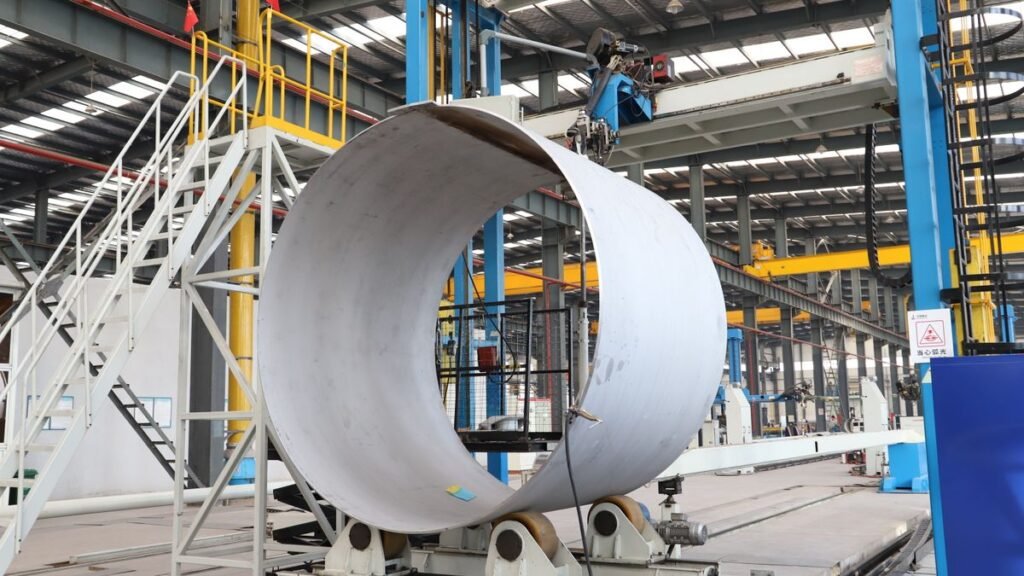
A factory manufactures directly. A trading company sources from multiple factories and marks up the price, acting as an intermediary with a margin built in. Trading companies are not always the wrong choice: they can offer single-point contact for multi-category orders and absorb some coordination complexity. But you pay more per unit and have less direct control over QC at production floor level. Always request the manufacturer’s production address and cross-reference it against the registered business address. A supplier that cannot or will not provide a verifiable factory address is almost certainly a trading company. Request a video factory tour and a live production floor walkthrough during the qualification stage; any credible manufacturer will accommodate this without hesitation.
The due diligence checklist for a Chinese furniture supplier
Before placing any substantial order, confirm the following items are in place:
- ISO 9001 quality management certification and ISO 14001 environmental certification as a minimum baseline
- US flammability test certificates for upholstered items (16 CFR Part 1640 / California TB 117-2013) and structural performance documentation to BIFMA or ASTM standards
- CARB/EPA TSCA Title VI compliance documentation for any composite wood components
- Third-party factory audit report from a recognised auditor completed within the past 24 months
- A reference list of completed hospitality projects with verifiable client contacts you can call
- Contractual terms covering defect rates, replacement obligations, lead time milestones, and tooling ownership
- Payment terms structured to retain commercial leverage: deposit on order confirmation, milestone payment at pre-shipment inspection approval, balance released against bill of lading
Red flags that should end the conversation immediately
No ISO certification and no willingness to facilitate a third-party audit is a strong red flag, and, depending on your brand or contract requirements, a disqualifying one. So is an inability to provide a verifiable physical factory address or a refusal to conduct a video walkthrough. A proposed contract with no inspection milestones, no defect-rate provisions, and no replacement obligations places all the risk squarely on the buyer. Prices that are implausibly low relative to comparable suppliers signal material substitution risk, one of the most expensive problems to discover after a 300-room hotel has been furnished and the guests have started checking in.
Making the right call for your project
When a China furniture manufacturer makes clear sense
Large-scale hospitality projects of 100 or more rooms are where the economics of factory-direct Chinese sourcing are most compelling. The landed-cost savings at that volume are material to project economics, and they scale with order size, though buyers should build a full landed-cost model for their specific specification rather than applying any single percentage figure. Projects requiring bespoke customisation, custom upholstery, branded finishes, signature case goods, marble or leather elements across a consistent specification, are well served by large Chinese factories with genuine OEM depth and dedicated design teams. Buyers working with experienced FF&E procurement teams, established import logistics partners, or a qualified project consultant who can manage the sourcing process will find the operational complexity manageable and the economics difficult to argue against.
When a US supplier is the better fit
Small-run orders, urgent replacements, and pilot room builds are genuinely better served by a US supplier when speed matters more than unit cost. Projects where compliance requirements shift frequently, or where close supplier proximity is a genuine operational asset for design iteration and rapid approval cycles, also favour a US relationship. Buyers without any import logistics experience who are placing their first large overseas order may find it worthwhile to start with a US supplier on a smaller project before building the process knowledge to manage a full Chinese factory programme effectively.
The hybrid approach most experienced buyers use
Most seasoned FF&E consultants use a Chinese factory for the high-volume, standardised elements: guestroom beds, case goods, dining chairs, and upholstered seating across a consistent specification. They maintain a US supplier relationship for lobby statement pieces, items requiring frequent local service, or last-minute additions that cannot wait for a new production run and ocean freight cycle. This balances cost efficiency with operational flexibility and reduces concentration risk. The decision is not binary; the right answer for most large hospitality projects is a structured split that plays to each supplier type’s genuine strengths rather than an all-or-nothing commitment in either direction.
What you now know that changes the decision
The cost advantage from sourcing furniture in China is real, but only when you account for total landed cost, build proper lead times into your schedule, and choose a manufacturer that operates to the certifications and service standards your project requires. Quality is a function of the manufacturer you select, not the country it is located in, and vetting is the non-negotiable step that separates a successful project delivery from an expensive lesson learned the hard way.
The gap in service standards between leading Chinese manufacturers and US suppliers has narrowed considerably. Buyers who understand the full landed-cost picture, structure their procurement timelines accordingly, and apply a rigorous supplier qualification process are the ones consistently delivering hotel and villa projects on budget and on time. When weighing a China furniture manufacturer vs US supplier for your hotel FF&E programme, the comparison has never been more nuanced or more navigable for an informed buyer, use the framework above to make the call with confidence.
Manufacturers like YM Furniture demonstrate what factory-direct sourcing looks like when it is done at a genuinely professional level: ISO-certified production, a dedicated project management structure, full-service customisation capability, and a track record across globally recognised hotel brands. That is the standard worth holding any manufacturer to, wherever in the world they happen to be located.