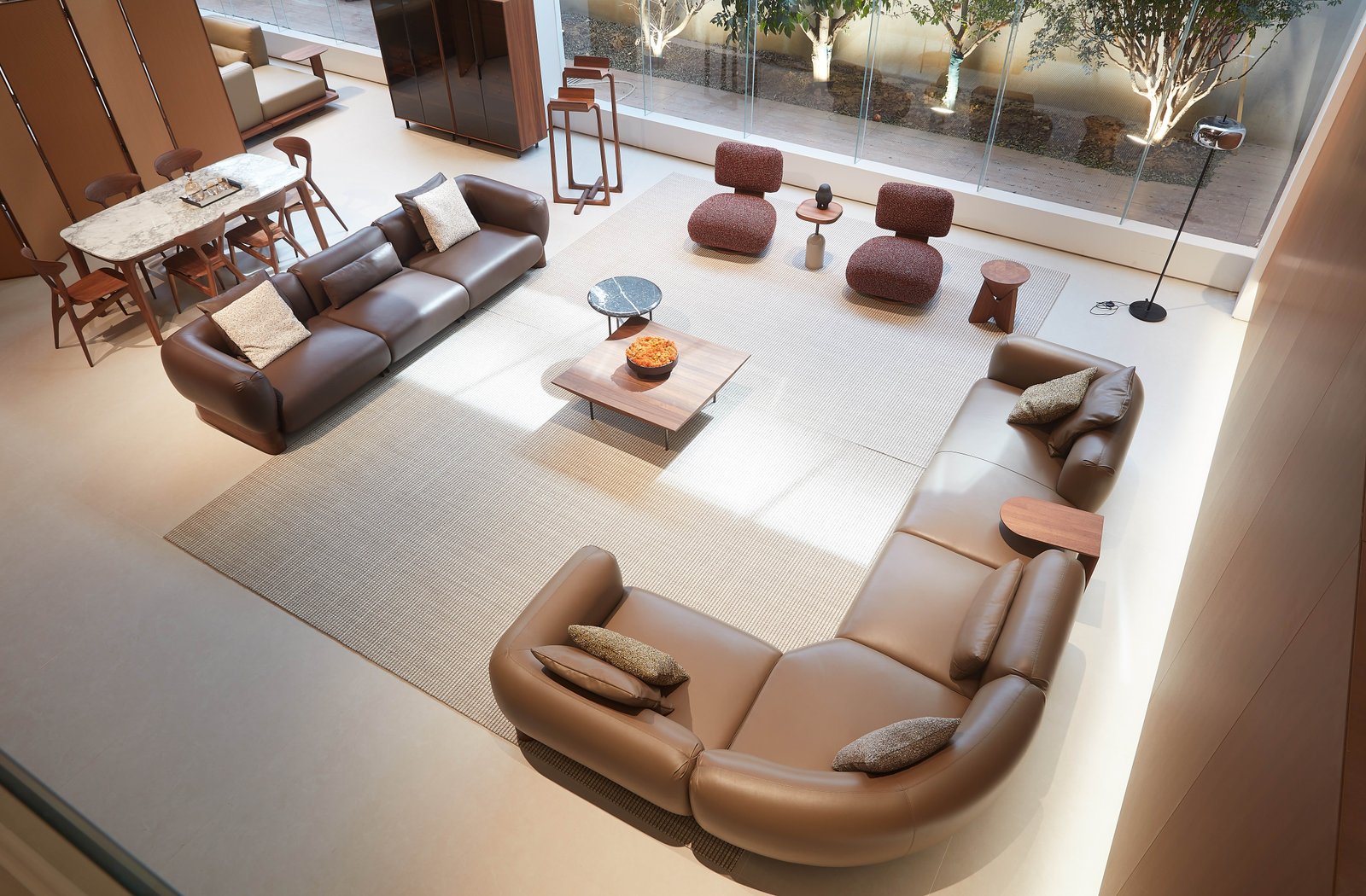
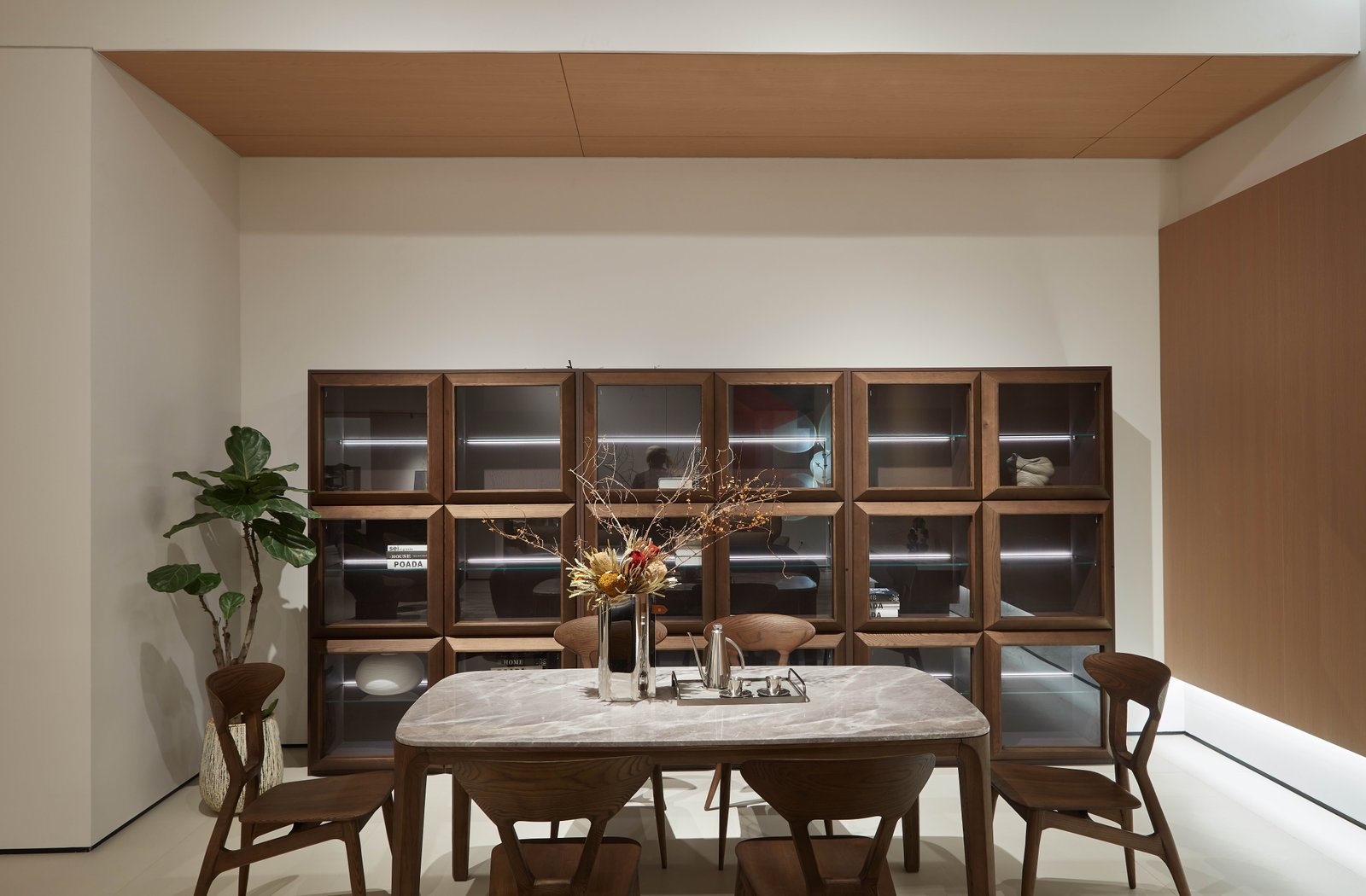
An ash sideboard combines the storage a dining room needs with a wood that stays light, strong and easy to finish. For trade buyers, that mix makes it one of the more versatile case pieces to stock or specify, because the same cabinet can be offered in natural, grey or black without changing the build.
This guide covers what separates a good ash sideboard from a weak one: how it differs from a buffet or credenza, why ash suits case furniture, solid wood against veneer builds, finishes, sizes, layouts, hardware, commercial use, ordering terms and price drivers. It is written for retailers, hospitality buyers and project designers who need clear specifications, and it pairs with the earlier ash wood sofa guide for buyers putting together a full collection.
What an Ash Sideboard Is, and How It Differs From a Buffet or Credenza
An ash sideboard is a low storage cabinet made from ash wood, with doors, drawers or both, that stands against a wall in a dining room, living room or hallway. It holds tableware, linens and serving pieces, and its top doubles as a surface for lamps, trays and display.
The names overlap in everyday use, which causes confusion on specification sheets. Shoppers comparing a sideboard vs a buffet are usually looking at the same family of furniture, with small differences in height, layout and origin of the word. Clear naming in a catalog saves buyers time and reduces returns.
Usually low and wide, with doors and drawers. Built for dining rooms and hallways.
Often a near synonym in the United States. Sometimes taller, or paired with a hutch for display.
A long, low cabinet, often with flat or sliding doors. Common in living rooms and offices as well as dining spaces.
For a range, choose one main term and use it consistently, then mention the others once in the description so searches using either word still find the page. The tall ash wood sideboard in the YM FURNI range sits at the storage-heavy end of this family.

Why Ash Works for Sideboards: Strength, Grain and Weight
Ash suits sideboards because it combines high hardness, a clear grain and moderate weight, so the cabinet stands up to daily use without looking heavy or dark.
White ash rates about 1,320 lbf on the Janka scale, close to white oak at roughly 1,360 lbf (see the Janka hardness test reference for the scale). That is enough to resist the knocks a sideboard takes from trays, bags and moved tableware. The grain is open and straight, so even a clear finish shows texture, and the wood accepts stain evenly, which is why black ash and grey ash sideboards look consistent from one panel to the next.
Wood durability standards place ash in the lowest natural durability class, which is why it belongs indoors and not outside. For a sideboard that stays in a dining room or lounge, that makes no practical difference, and it is one more reason to keep outdoor claims off the product page.
Compared with oak, ash is paler and usually lighter in feel, which suits modern interiors and smaller rooms. Compared with walnut, it costs less and takes a wider range of colours, though it lacks walnut natural depth of tone. For buyers building a range, ash often works as the flexible middle option: strong enough for daily use, neutral enough to dress up or down, and easy to match with sofas, chairs and tables made from the same wood.

Solid Ash, Ash Veneer and Thermo-Treated Ash: Construction Options
Most ash sideboards fall into five build types, and each suits a different price point and use. Buyers should match the build to the project instead of simply choosing the cheapest quote.
| Build | How it is made | Strengths | Watch for |
|---|---|---|---|
| Solid ash | Panels and frame parts are all solid ash | Repairable, refinishable, most durable | Highest cost, panels move with humidity |
| Ash veneer on plywood | Thin ash layer glued over plywood | Stable panels, good value, lighter | Limited sanding depth |
| Ash veneer on MDF | Ash layer over MDF boards | Smooth flat surfaces, lower cost | Weaker screw holding, edge damage |
| Ash fronts on painted MDF carcass | Ash on visible doors and sides only | Premium look at a lower cost | Interior and back are not ash |
| Thermo-treated ash | Ash heated to darken tone and improve stability | Deep brown colour without stain | Can be more brittle, colour is fixed |
Veneer and mixed builds are not defects when they are priced and described honestly. Problems start when a listing says solid ash for a veneered cabinet. A written material specification on the quote avoids that dispute before it begins.
Finishes: Natural, Light, Dark, Black and Grey Ash
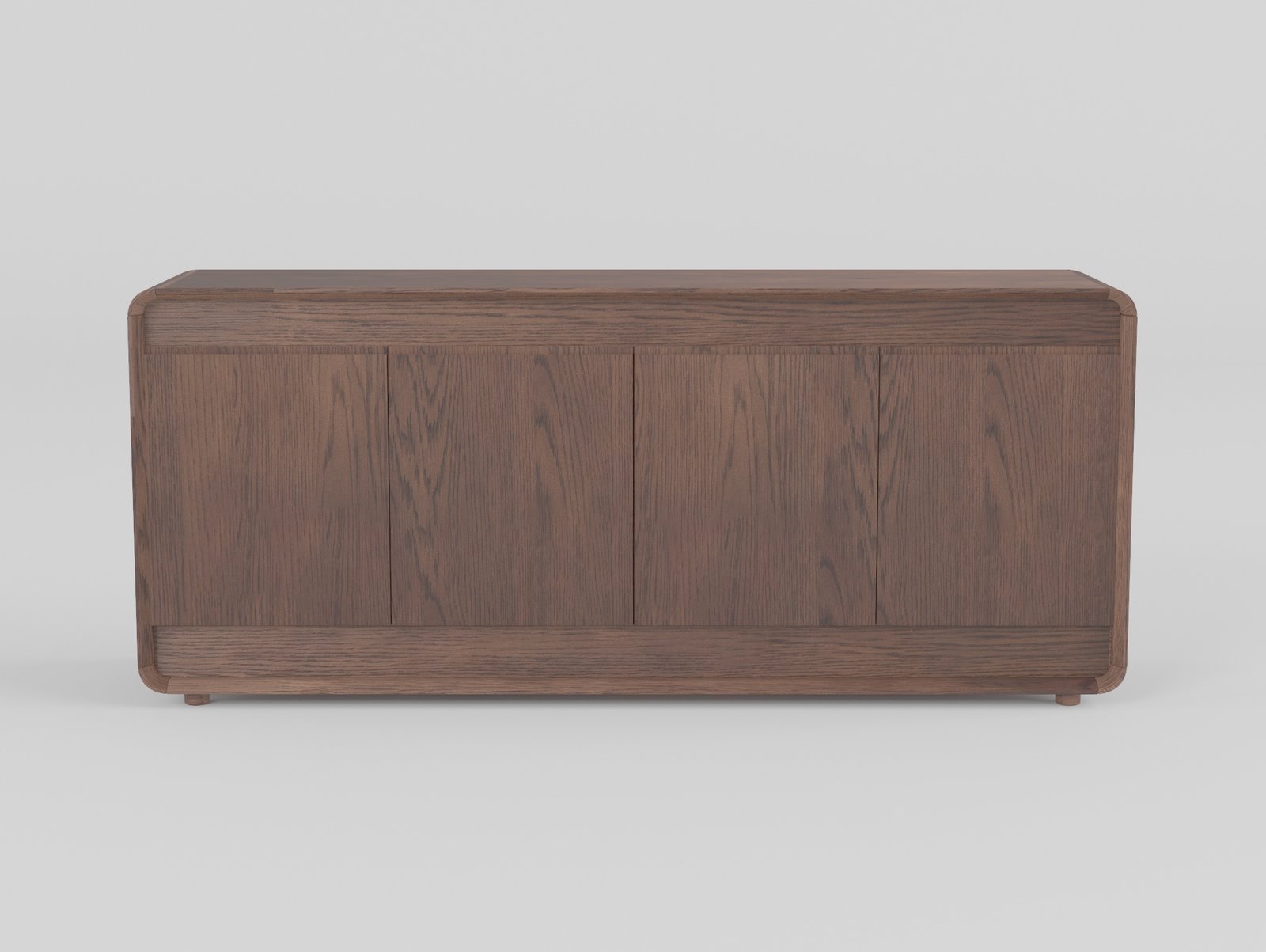
Ash takes natural, light, dark, black and grey finishes well, so one cabinet shape can serve several project palettes. That is a real commercial advantage: a buyer can stock a single carcass and offer it in two or three colourways.
Light and natural finishes use clear lacquer, oil or a whitewash that keeps the pale tone and shows the grain. A light ash sideboard suits Nordic and minimal rooms and brightens small dining spaces. Darker finishes work the other way. A dark ash sideboard in a walnut-toned stain feels warmer and more formal, and it hides fingerprints better in busy rooms.
A black ash sideboard is the most dramatic option, and it comes in two versions. Black stain lets the open grain show through as fine lines, while opaque black lacquer covers the grain for a flatter, more graphic look. Both sell, but they should be shown separately in the catalog because customers expect different results.
Light and natural finishes
- Clear matte or satin lacquer
- Natural oil or wax
- Whitewashed ash
- Pale grey wash
Dark and black finishes
- Walnut-toned stain
- Black stain with visible grain
- Opaque black lacquer
- Thermo-treated brown ash
One practical point catches many buyers out. Solid ash parts and ash veneer panels can absorb stain slightly differently, so the cabinet body and the doors may not match perfectly. Sign off a finished sample of the real construction before bulk production, and keep it as the reference for the whole order.

Sizes and Layouts: How Long Should a Sideboard Be
A dining room sideboard is usually the same length as the table or slightly shorter, with clear space on both sides so it does not look crowded. That is a common design rule, not a fixed standard, and it works because the two pieces then read as a pair along the wall.
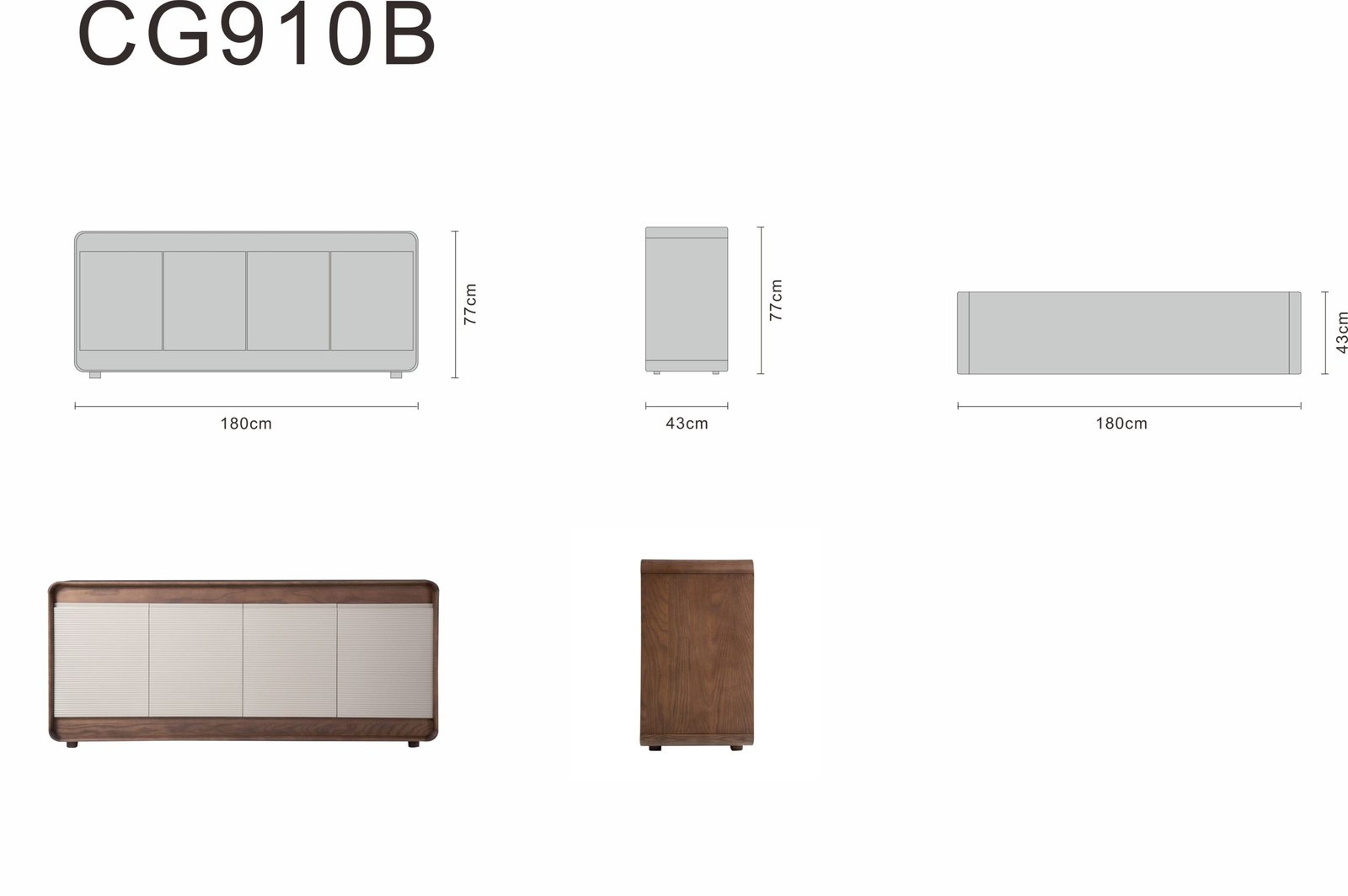
Typical ranges are a height of about 75 to 90 cm, a depth of about 35 to 50 cm and a length from about 120 to 200 cm. Exact sizes vary by model, so confirm the figures for each piece. The 180 cm ash wood sideboard in the YM FURNI range sits near the longer end of that span. Made-to-measure ranges exist too, and some makers let customers choose height, width and depth freely, which sets the expectation for what project buyers may ask for.
Record the free wall length and the clear space beside doors, radiators and windows.
Keep the sideboard equal to or a little shorter than the dining table.
Hinged doors and deep drawers need space to open without hitting chairs or walls.
Check the top against wall art, lamps and any screen if the unit doubles as a media console.
Doors, Drawers and Glass: Storage Layouts That Sell
The layout inside an ash sideboard decides how useful it is, and it is the feature customers compare most after size. The main choice is how drawers, doors and open space share the front.
Best for cutlery, linens and small items. Look for full-extension runners and soft-close action.
Best for platters and glassware. Adjustable shelves make the space flexible across ranges.
Drawers above doors, such as three drawers over two doors, covers most household needs in one cabinet.
An ash wood sideboard with glass doors turns storage into display and suits crockery and bar pieces.
Glass doors raise a few extra questions. Ask for safety glass, check how the panels are fixed, and confirm whether the shelves inside are glass or wood. Sliding doors save floor space in tight rooms, while hinged doors give fuller access, so the right choice depends on where the unit will stand.
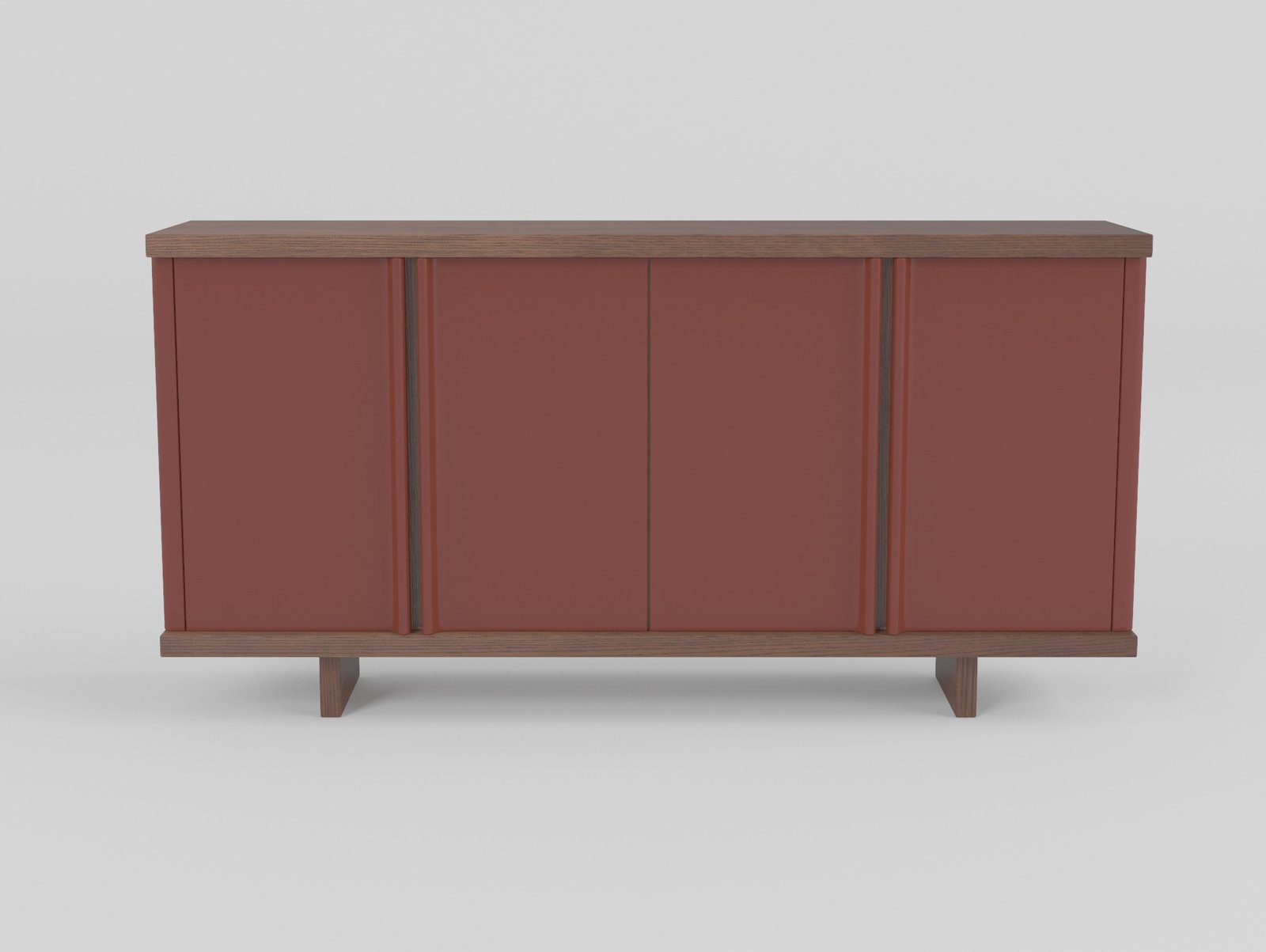
Hardware and Details Buyers Should Inspect
Two ash sideboards with the same wood and finish can feel completely different in use, and the difference is almost always in the hardware and hidden construction. These are the details that decide whether a cabinet still feels solid after years of opening and closing.
| Detail | What good looks like | Why it matters |
|---|---|---|
| Hinges | Concealed, adjustable, soft-close | Doors stay aligned and close quietly |
| Drawer runners | Full extension, soft-close, rated load | Drawers carry cutlery and linens without sagging |
| Back panel | Fixed firmly, not loosely pinned | Keeps the carcass square under load |
| Shelves | Adjustable, with solid supports | Heavy platters and glassware stay stable |
| Feet | Adjustable or levelling feet | The cabinet stands steady on uneven floors |
| Edges | Smooth, sealed edges on veneered parts | Prevents chipping and moisture damage |
Tall units add one more check. A tall ash sideboard should come with wall fixings, because storage cabinets with a higher centre of gravity are safer when anchored. Including the fixings and a short instruction in the carton is a small step that avoids complaints. It also helps to check the unit on a flat surface before sign-off, opening every door and drawer fully, since alignment problems show up immediately and are far cheaper to fix before shipping.
Ash Sideboards for Hotels, Restaurants and Residential Projects
Ash sideboards work across commercial and residential projects because they are hard wearing, easy to refinish and available in finishes that fit very different interiors. The same product can serve a boutique hotel room and a family dining room with only a change of colour.
Works as a console in suites, a breakfast buffet base or a lobby display. Durable fronts and easy-clean finishes matter most.
Acts as a service station for cutlery, linens and glassware. Drawer hardware and a tough top finish take the daily wear.
Suits dining rooms, hallways and living rooms. Light and dark finishes let designers match a wide range of palettes.
Project buyers who also need seating can browse the hotel furniture page for matching pieces, and the ash wood sofa guide explains how the same wood performs in upholstered frames.
For project work, consistency matters more than any single piece. A hotel fitting out forty rooms needs every sideboard to match in tone, hardware and size, and a repeat order a year later must still match the first. Ask whether the supplier keeps approved finish samples on file and can reproduce them, because that is what protects a project across deliveries.

MOQ, Lead Times, Packaging and Shipping
Ordering terms decide whether a supplier is workable long before the price does. Minimum order quantity usually rises with customization, so a standard sideboard in a stock finish has a lower minimum than one with a new size or a custom stain. At YM FURNI, the minimum for each model is available on request, and lead time is confirmed per order.
Packaging deserves as much attention as production. Cabinets with glass doors, thin veneered edges or tall frames are the most exposed in transit, so ask for corner protection, foam around glass and a loading plan before the container is sealed.
Share quantities, sizes, finishes and destination so the quote covers the full delivered cost.
Approve a finished sample of the real construction, including hardware, before production starts.
Request progress photos and a pre-shipment check of doors, drawers, finish and dimensions.
Confirm carton protection and the container loading plan to limit transit damage.
Shipped assembled
- Fewer assembly errors on site
- Better for hotels and projects
- Bulkier cartons and higher freight
- More exposure to transit damage
Shipped knock-down
- Lower freight cost per unit
- Smaller, easier-to-handle cartons
- Needs assembly and instructions
- Hardware must be counted and checked
Care, Maintenance and What Drives the Price of an Ash Sideboard
Ash is easy to look after indoors. Dust it with a soft cloth, wipe spills straight away, use felt pads under lamps and ceramics, and keep the cabinet away from radiators and long direct sunlight. Steady room humidity protects the joints and the finish, and ash should stay indoors or under cover.
Is ash wood furniture expensive? It sits in the middle of the hardwood range, and the price of a sideboard depends far more on construction, hardware and finish than on the species. Comparing quotes only works when the specifications match line by line.
Factors that raise the price
- Solid ash construction
- Thermo-treated or hand-finished ash
- Soft-close hinges and runners
- Glass doors and lighting
- Custom sizes and custom stains
Factors that lower the price
- Ash veneer on plywood or MDF
- Standard sizes and stock finishes
- Simple flat door fronts
- Larger order volumes
- Knock-down shipping
The cheapest quote often hides weaker hardware or a thinner veneer. Buyers who compare construction first and price second tend to avoid costly replacements later.
Frequently Asked Questions
What is the difference between a sideboard and a buffet?
The two terms overlap heavily. A sideboard is usually a low cabinet with doors and drawers, while a buffet is often the United States term for the same piece and is sometimes taller or paired with a hutch.
How long should a sideboard be?
In a dining room, a sideboard is usually the same length as the table or slightly shorter, with clear space on both sides. Common lengths run from about 120 to 200 cm.
Is ash wood good for furniture?
Yes. Ash is hard, with a Janka rating of about 1,320 lbf, and it has a clear grain that takes stain and lacquer evenly, so it suits indoor case furniture such as sideboards.
What are the pros and cons of ash wood?
The pros are hardness, a pale and even tone and good finishing. The cons are that it is not suited to outdoor use, its open grain needs filling for a perfectly smooth painted finish, and tone varies from board to board.
Is ash wood furniture expensive?
Ash sits in the middle of the hardwood range. The final price depends more on the build, hardware and finish than on the wood species.
Can an ash sideboard be black?
Yes. A black ash sideboard can use black stain, which keeps the grain visible, or opaque black lacquer, which covers it for a flatter look.
How do you clean an ash sideboard?
Dust with a soft cloth and wipe spills at once with a slightly damp cloth, then dry the surface. Avoid harsh chemicals and standing water on the finish.
The Bottom Line
A good ash sideboard comes down to five checks: whether the build is solid, veneer or mixed, a finish that suits the project, a size and layout that fit the room, hardware that holds up, and clear ordering terms. Buyers who check these in order end up with cabinets that sell well and keep their looks.
YM FURNI supplies ash wood furniture, sofas and luxury living room pieces to trade buyers. To discuss a project, request a catalog or ask for a quote through the contact page.
Last updated: November 2026