Last Updated: November 2, 2026
A hotel headboard does three jobs at once. It anchors the design of the room, it protects the wall behind the bed from daily wear, and it often carries the lighting, power, and controls that guests actually use. Specifying one badly is expensive, because the same mistake gets repeated across every room in the property.
This guide covers the main types of hotel headboards, the sizes and materials that matter, how the specification process works, and what to check before approving a production run. It is written for developers, designers, and FF&E teams buying hotel headboards at volume.
What Counts as a Hotel Headboard?
A hotel headboard is a commercial-grade panel or frame fitted behind a bed to support guests sitting up, protect the wall, and set the visual tone of the room. Unlike a residential headboard, it is built to be cleaned often, to take daily contact from pillows and shoulders, and to hold its shape through years of guest turnover.
The term covers several different products that buyers often mix up. A headboard can be attached to the bed frame, fixed to the wall, or built as part of a full wall system with side panels, lighting, and power. Which one you choose changes the price, the installation method, and what happens when a panel needs replacing.
Types of Hotel Headboards
Most hotel headboards fall into four types. They are alternatives, not steps, so the right one depends on the room, the wall, and how the property is serviced.
Fixed to the wall on a hanging cleat or bracket, independent of the bed. They keep the floor clear for housekeeping and let the bed move without disturbing the panel. The wall must be checked first, since it has to carry the weight.
Bolted to the bed frame and standing on the floor or on legs. Simple to install and easy to swap, but the headboard moves with the bed and can scuff the wall or leave a gap if it is not fixed properly.
A full-width treatment combining the headboard panel, side panels, bedside lighting, and sometimes integrated power and controls. It has the highest visual impact and needs the most coordination, so it is usually built as part of a custom guest-room package.
Taller or wider than the bed, used in suites and feature rooms where the headboard is the focal point. They need more wall space and careful scaling against ceiling height and any wall lights.
Hotel Headboard Sizes and Dimensions
Headboard width is usually set by the bed, and most headboards are the same width as the mattress or two to four inches wider. Heights vary far more, and published guides disagree on what is standard, so the safe approach for a hotel project is to fix the floor-to-top height in the design brief instead of relying on a generic number.
| Bed Size | Mattress (inches) | Typical Headboard Width (inches) |
|---|---|---|
| Twin | 38 x 75 | About 41 |
| Full | 54 x 75 | About 56 |
| Queen | 60 x 80 | About 62 |
| King | 76 x 80 | About 80 |
| California King | 72 x 84 | About 74 |
Wall-mounted panels and headboard wall systems are often wider than the bed, to frame it and cover the gaps on either side. In those cases the width is a design decision, not a bed-size lookup.
For height, published floor-to-top figures for queen and king beds run roughly from the high 40s to the mid 60s in inches, with statement headboards going above that. Check the height against the ceiling, the window sill, any wall lights, and the top of the nightstand before it is locked.
Bed sizes also differ by market. A US king, a UK king, and a standard bed in the Middle East or Asia are different widths, so confirm the mattress size for each destination before drawings start.
Headboard Styles and Finishes
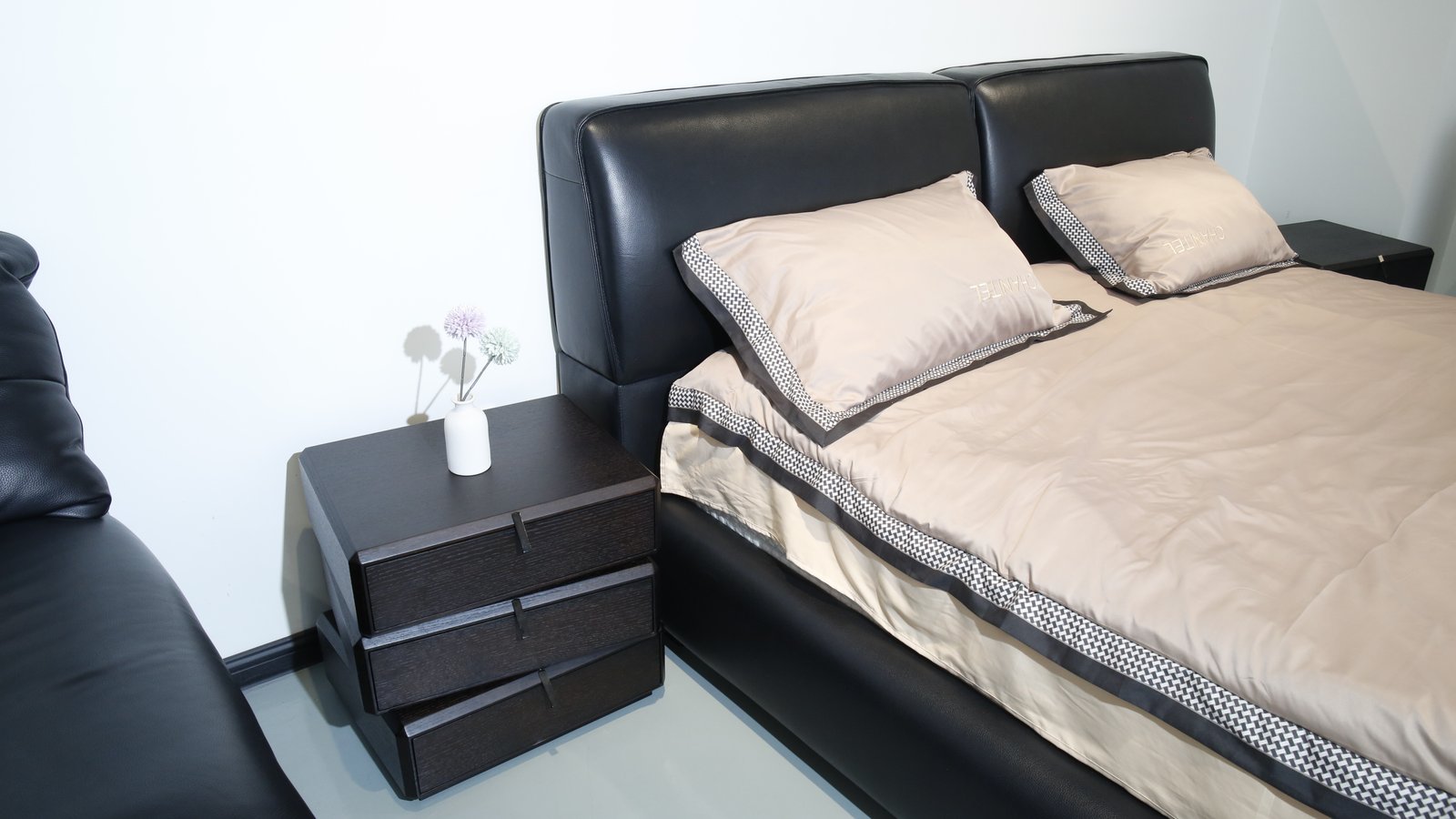
Style decides how a headboard looks, but it also decides how hard it is to clean and how it ages. Some styles hide wear well, and others show every mark.
| Style | Look | Practical Note |
|---|---|---|
| Flat panel | Clean, minimal upholstered or veneered surface | Easiest to clean and to match across rooms. Seams and edges show wear first. |
| Channel or vertical tufting | Vertical ribs in the upholstery | Hides minor marks and adds depth. Needs consistent stitching across a large run. |
| Button tufting | Classic, textured surface | Dust collects in the recesses, so it takes more effort to clean. Buttons can loosen over time. |
| Slatted or wood panel | Vertical or horizontal wood strips | Durable and easy to wipe. Grain and colour need controlling across batches. |
| Curved or wingback | Soft shape that wraps the bed | Strong visual impact. Costs more to build and ship because of the shape. |
Whatever the style, the finish has to match across the whole production run. Fabric dye lots and wood veneer batches can vary, which is why approved samples, and a reference piece held back for comparison, matter on a large order.
Materials and Construction
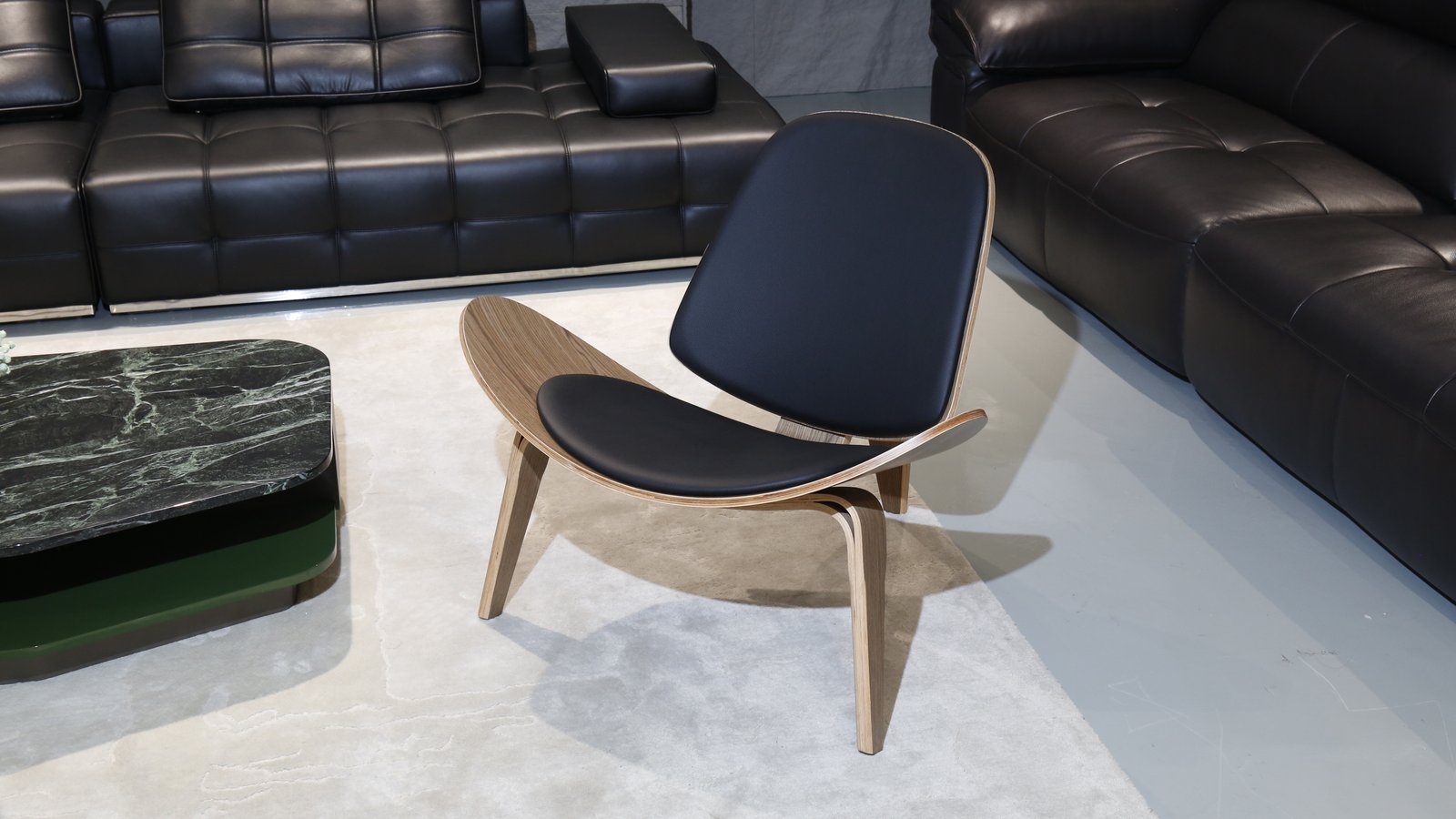
A headboard is a stack of layers, and it fails at the weakest one. The upholstery gets the attention, but the backing board, the foam, and the fixings decide whether the panel still looks right after three years of turnover.
| Component | Common Options | What to Check |
|---|---|---|
| Backing and frame | Plywood, solid wood, engineered board | Plywood and solid wood hold fixings better than low-density board. Composite panels should meet formaldehyde limits for the destination market. |
| Padding | High-density foam, foam with a fibre wrap | Ask for the foam density and thickness in writing. “High density” on its own is not a specification. |
| Fabric | Commercial-grade performance fabric | Look for a commercial abrasion and cleanability rating, not a decorative fabric. |
| Vinyl or leather | Commercial vinyl, leather-look finishes, leather | Wipes clean and resists staining, which suits high-turnover rooms. Quality varies widely between suppliers. |
| Panel finish | Wood veneer, HPL laminate | Easier to clean than fabric and suited to wall-system panels. Edges can show wear first. |
| Fixings | Metal cleats and brackets | Rated for the panel weight and set into a wall that can carry it. |
Composite wood panels sold in the US need to comply with the EPA formaldehyde emission standards (TSCA Title VI), and FSC certification covers responsible wood sourcing where a hotel brand requires it. Ask the supplier for the paperwork, not just a statement that the board is compliant.
Lighting, Power, and Controls
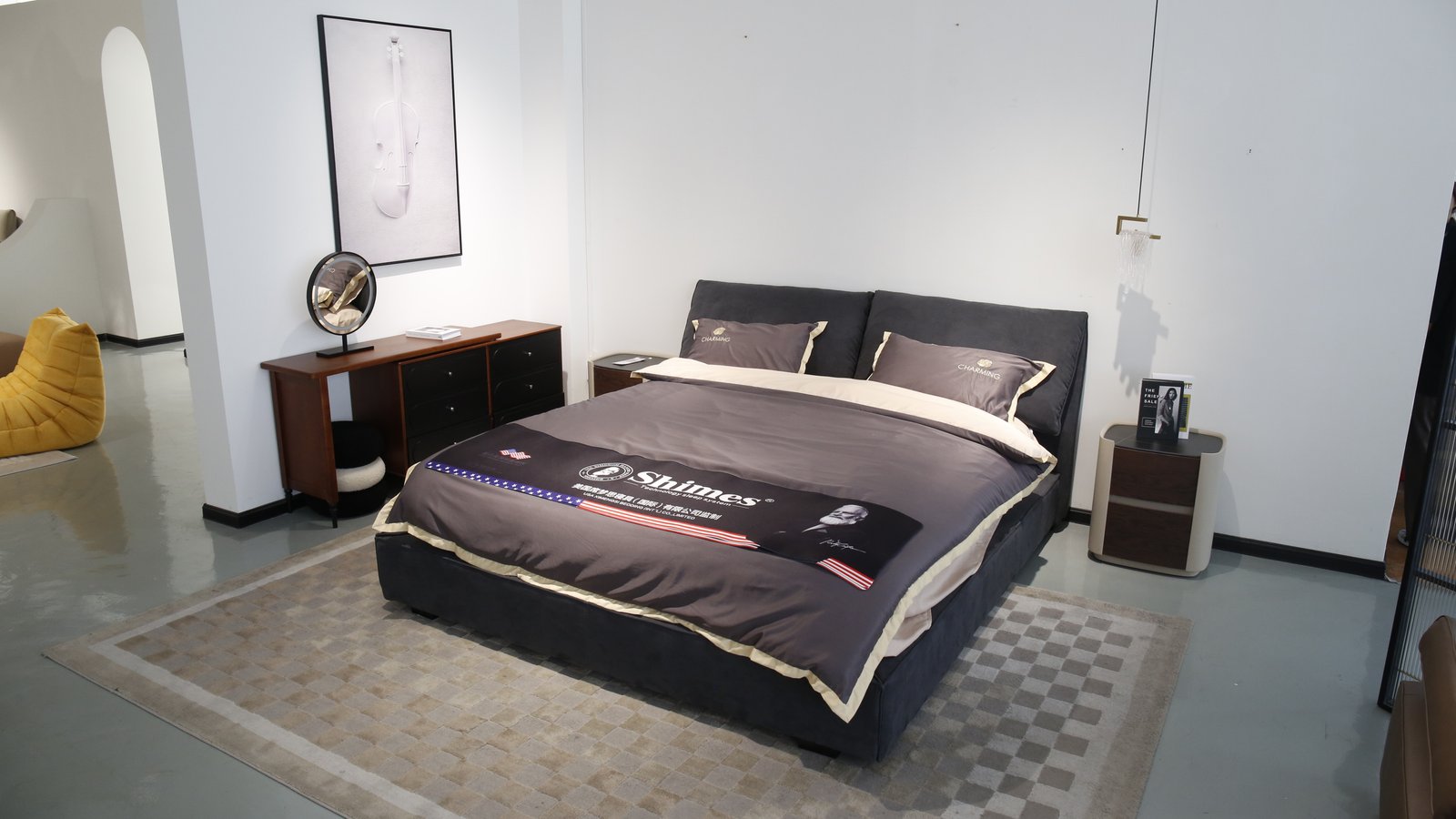
Guests judge a headboard partly by what it does. Reading lights, charging ports, and bedside switches are now common requests, and each one adds electrical certification, wiring, and installation coordination to the order.
- Reading lights, either wall-mounted beside the panel or integrated into it
- USB-A and USB-C charging ports and mains sockets
- Switch panels for lights, curtains, or room controls
- Cable routing and an access point for service
Integrated electrical components should carry the listing required in the destination market, such as UL or ETL in North America. Design the panel so that a failed light or socket can be replaced without taking the whole headboard off the wall.
Cleaning, Maintenance, and Replacement
A hotel headboard is cleaned far more often than a residential one, and a stained or sagging panel is one of the first things a guest notices. Planning for maintenance at the specification stage is cheaper than reacting to it later.
- A written cleaning method matched to the fabric or finish, so housekeeping does not damage the upholstery
- Replaceable panels where possible, so a damaged section can be swapped without replacing the whole headboard
- Spare panels or fabric from the same production batch, since colours can differ between dye lots
- Access to lights and wiring without removing the panel
Ask the supplier how a damaged panel gets replaced and whether spare fabric or panels can be held back from the original order. That one question tells you a lot about how the headboard was designed to be serviced.
How to Specify a Hotel Headboard, Step by Step
Most headboard problems start as skipped steps. Working through the sequence below, in order, catches them before they are repeated across a hundred rooms.
Set the mattress size, bed position, and wall fixing points for each room type.
Pick wall-mounted, bed-attached, or a full headboard wall system.
Fix the backing board, foam specification, and fabric or finish.
Define lights, sockets, controls, and cable routing with service access.
Check a built sample in a real room before bulk production starts.
The last step matters most. A headboard can look correct in a drawing and still clash with the bed, the lamp, or the nightstand once it is in place. A model room review catches that while it is still cheap to change.
What to Prioritise by Hotel Tier
The right headboard depends on the property. A specification that suits a limited-service hotel would be wrong for a luxury resort, and the reverse is just as true.
Budget and Limited-Service Hotels
Durability and easy cleaning come first. Flat panels in commercial vinyl or performance fabric, simple fixings, and a small number of room types keep both cost and maintenance low.
Upscale and Full-Service Hotels
Visual quality and guest comfort start to matter more. Upholstery with a clear commercial rating, integrated lighting, and consistent finishing across the whole property are typical priorities.
Luxury Hotels, Resorts, and Villas
Material quality and design identity lead. Custom shapes, premium fabrics or leather, hand-finished details, and full wall systems are common, which makes sampling and a model room review more important, not less.
Hotel Headboard Cost, MOQ, and Lead Time
There is no honest single price for a hotel headboard. Cost moves with size, upholstery, finish complexity, any integrated electrics, order volume, and freight. A plain upholstered panel and a lit, veneered wall system are different products, even if both are called a headboard.
| Headboard Type | Typical MOQ per SKU | Typical Lead Time (Ex-Factory) |
|---|---|---|
| Upholstered headboards | 10 to 100 units | 12 to 22 weeks |
| Wood or panel wall systems | 50 to 300 units | 10 to 18 weeks |
Smaller runs cost more per unit, because tooling and setup are spread across fewer headboards. The reasoning is the same as for any custom order, and our guide to custom furniture MOQs from China explains what raises or lowers those minimums.
What a Headboard Quote Should Include
Two headboard quotes are only comparable if they describe the same product. Ask every supplier to state the following in writing before you compare prices.
- Fabric or finish name, grade, and colour code
- Foam density and thickness, and the backing board material
- Exact dimensions, including floor-to-top height
- Brackets and fixings, and what wall they are rated for
- Any lights, sockets, and the listings they carry
- Packing method, trade term, lead time, and payment milestones
Common Hotel Headboard Specification Mistakes
These five mistakes account for most of the headboard problems that surface after installation, when they are slowest and most expensive to fix.
A wall that cannot carry the weight, or fixing points that do not line up with the backing, can force a redesign after panels are already made.
A decorative fabric can pill, stain, or wear through in a high-turnover room. The commercial rating and the cleaning method belong in the choice.
Lights and sockets fail. If the panel cannot be opened or lifted, a small repair becomes a full removal.
A headboard that looks right on a workshop table can clash with the bed, the lamp, or the nightstand once it is in the room.
Mattress and frame widths differ by market. Confirm them for each property before drawings begin.
Checklist Before Approving Production
Before Drawings
- Confirm mattress sizes and bed positions for every room type
- Check the wall construction and fixing points
- Set the floor-to-top height in the design brief
Before Production
- Get the foam density, backing board, and fabric rating in writing
- Confirm electrical listings for any lights or sockets
- Approve a built sample in a real room
Before Shipment
- Check the finished order against the approved sample
- Confirm packaging protects upholstery and edges in transit
- Keep compliance documents on file for the destination market
Frequently Asked Questions
What size headboard do I need for a king bed in a hotel?
A king headboard is typically about 80 inches wide for a 76-inch mattress. Wall-mounted panels and headboard wall systems are often wider, because they frame the bed and cover the gaps on either side.
How high should a hotel headboard be?
Published floor-to-top heights for queen and king beds run roughly from the high 40s to the mid 60s in inches, and statement headboards go higher. Because sources disagree, fix the height in the design brief after checking the ceiling, wall lights, and nightstand.
Are wall-mounted hotel headboards better than bed-attached ones?
Wall-mounted headboards keep the floor clear for cleaning and let the bed move independently, but they need a wall that can carry the load. Bed-attached headboards are simpler to install and swap, though they move with the bed and can mark the wall.
What material lasts longest on a hotel headboard?
Commercial-rated performance fabric or wipe-clean vinyl over a plywood or solid wood backing and high-density foam holds up best in high-turnover rooms. Wood veneer or HPL panels are easier to clean but can show wear at the edges.
Can hotel headboards include lights and USB ports?
Yes. Reading lights, USB ports, and switches can be built into the panel, provided the components carry the electrical listing required in the destination market and the panel allows service access.
How long does it take to order custom hotel headboards from China?
Custom upholstered headboards typically take 12 to 22 weeks ex-factory, and wood or panel wall systems 10 to 18 weeks. Add roughly 4 to 8 weeks for ocean freight and customs clearance.
The Bottom Line
A good hotel headboard comes from a short list of decisions made in the right order: bed size and wall first, then type and mounting, then materials, then lighting and power, then a sample checked in a real room. Skipping the order is what turns a simple panel into a costly repeat mistake.
YM Furniture (Foshan Yauming Furniture & Construction Co., Ltd.) is a factory-direct manufacturer based in Shunde District, Foshan, making custom headboards and full guest-room furniture packages for hotel and villa projects. For the wider picture, see our custom hotel furniture guide, our walkthrough of how hotel developers source furniture, and our guide to vetting a Foshan furniture factory.